About Ebykr
Ebykr celebrates classic and vintage lightweight bicycles through provocative imagery and opinion. Ride along with us.
About Ebykr
Ebykr celebrates classic and vintage lightweight bicycles through provocative imagery and opinion. Ride along with us.

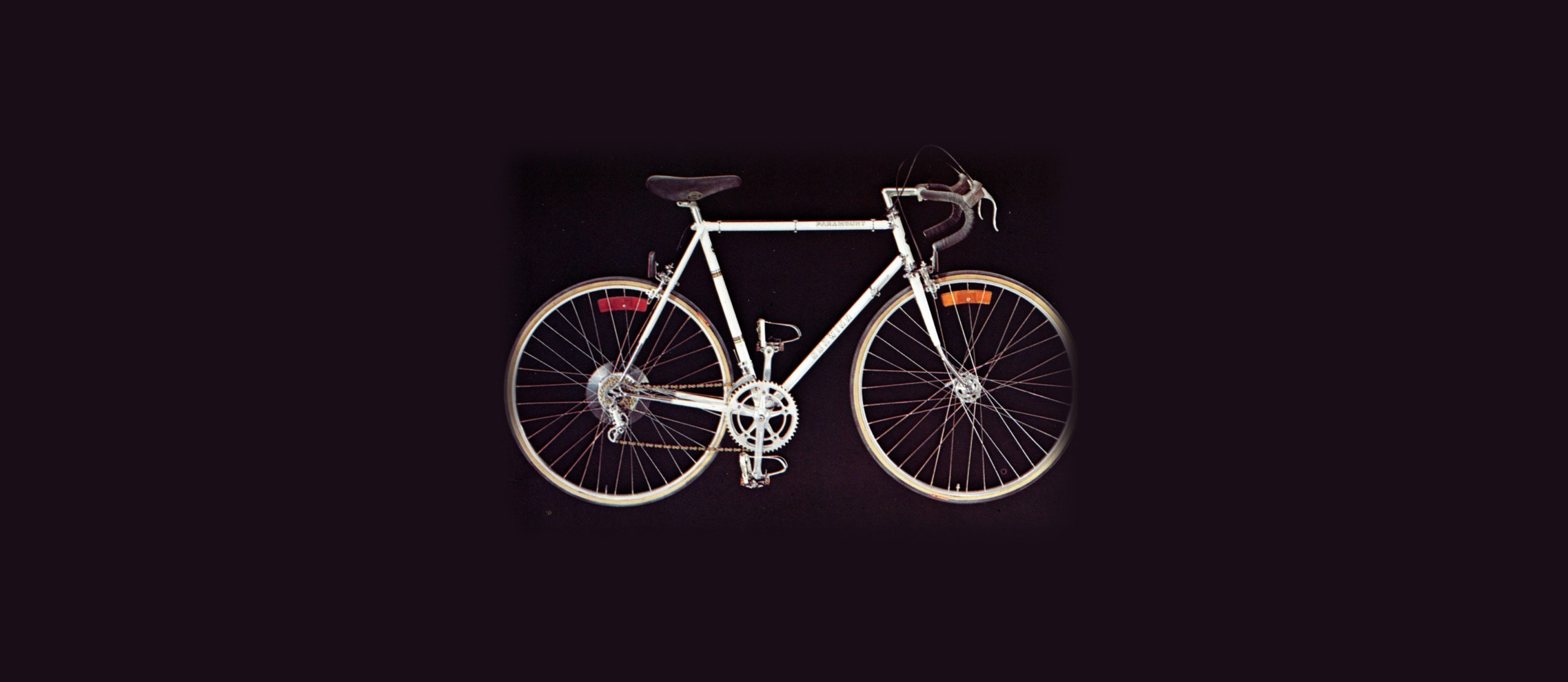
A practical guide to dating a vintage Schwinn: telling a Chicago-built Schwinn from a Paramount and an import, finding the frame number, reading it with the right table and confirming the year with the catalogs and the components.
Rejoice! Of all American makers, Schwinn is the one most likely to give you a real year from a frame number. A Chicago-built Schwinn of the 1960s and 1970s carries a code whose first two characters name the month and year its frame was made, and the Paramount has a numbering history of its own that collectors have traced back to the first frames of 1938. Few classic marques are this generous in their build code coverage.
The catch is that “Schwinn” covers three different kinds of bicycle and each reads differently. An electro-forged Varsity, a hand-built Paramount and a Japanese-built Le Tour all wear the same name and follow three different numbering systems. So the method is to work out which Schwinn you have, find its number, read it with the right table and then let the catalog and components confirm it. Ready to go?
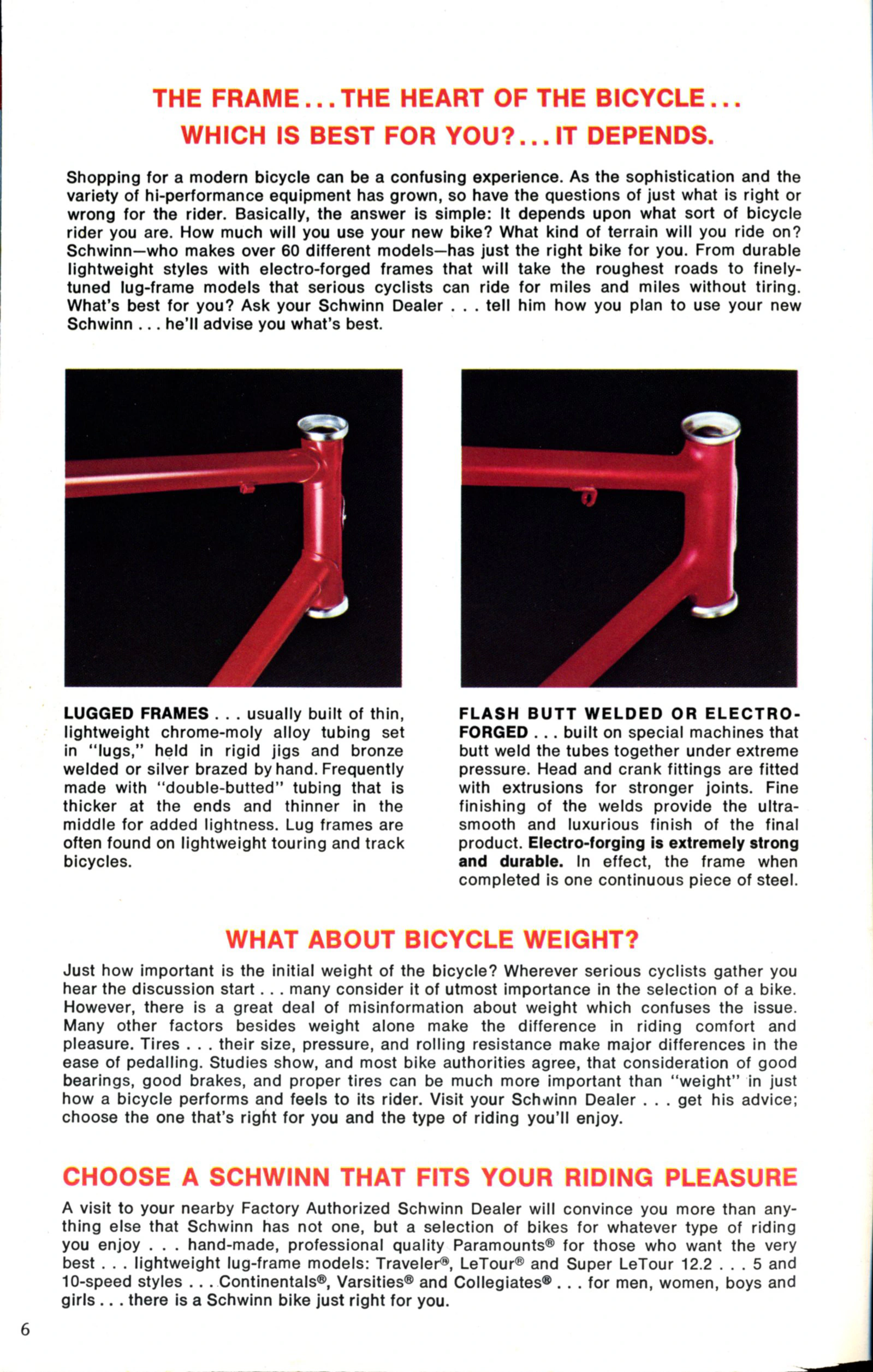
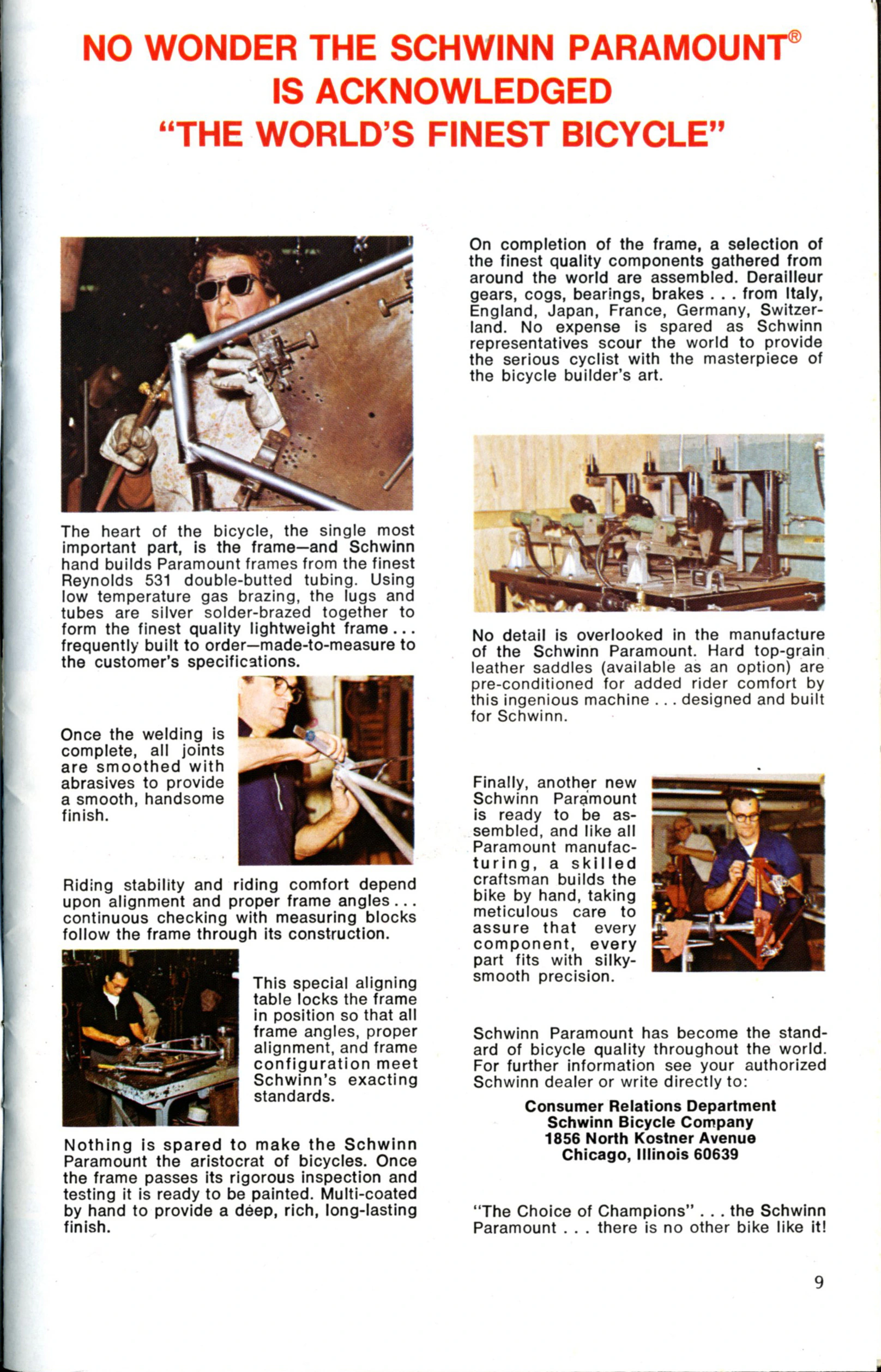
Schwinn explained its own construction classes in print. The 1976 catalog sets a lugged frame beside an electro-forged one and describes each, and the frame joints are still the quickest way to tell the families apart.
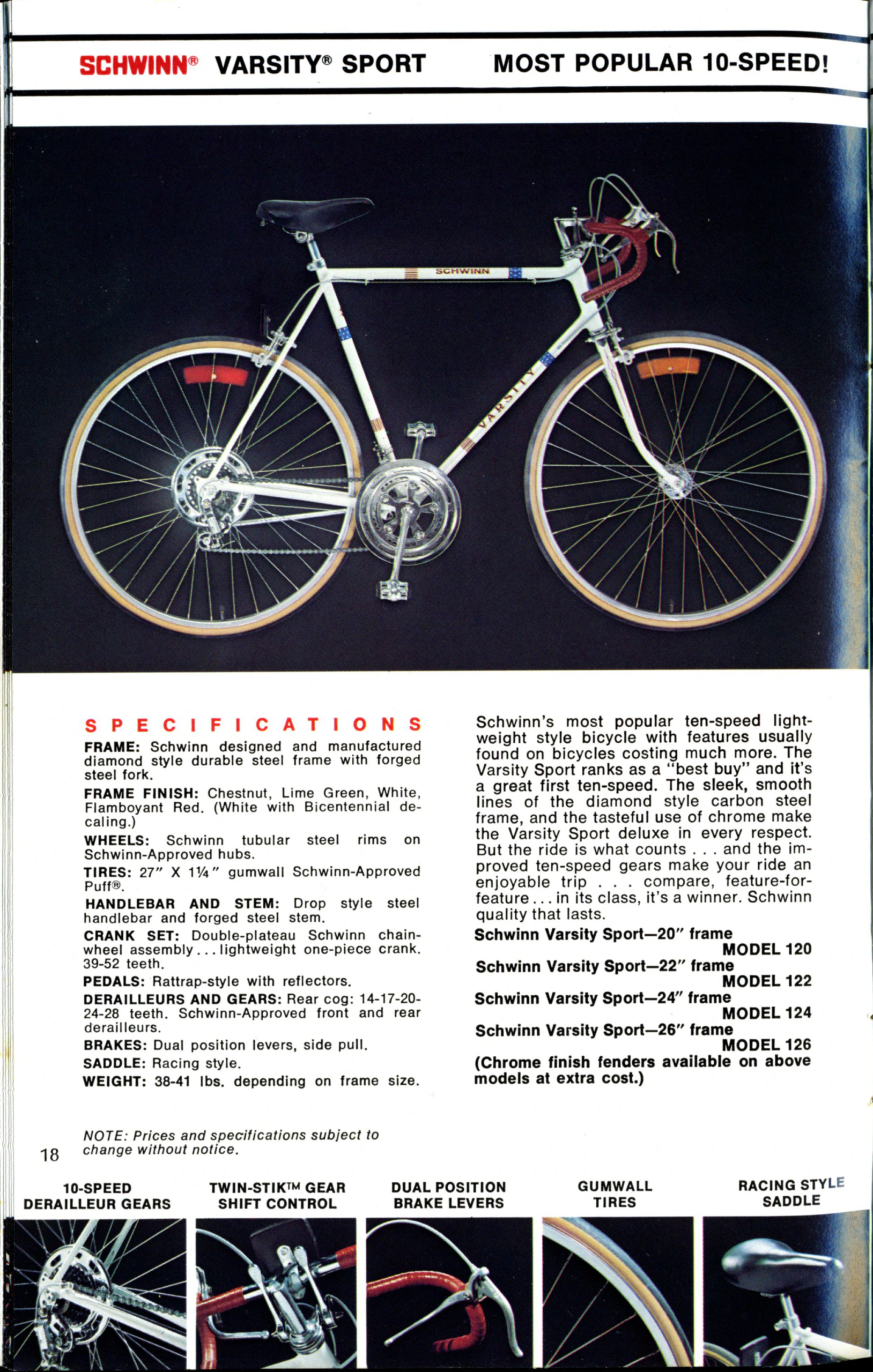
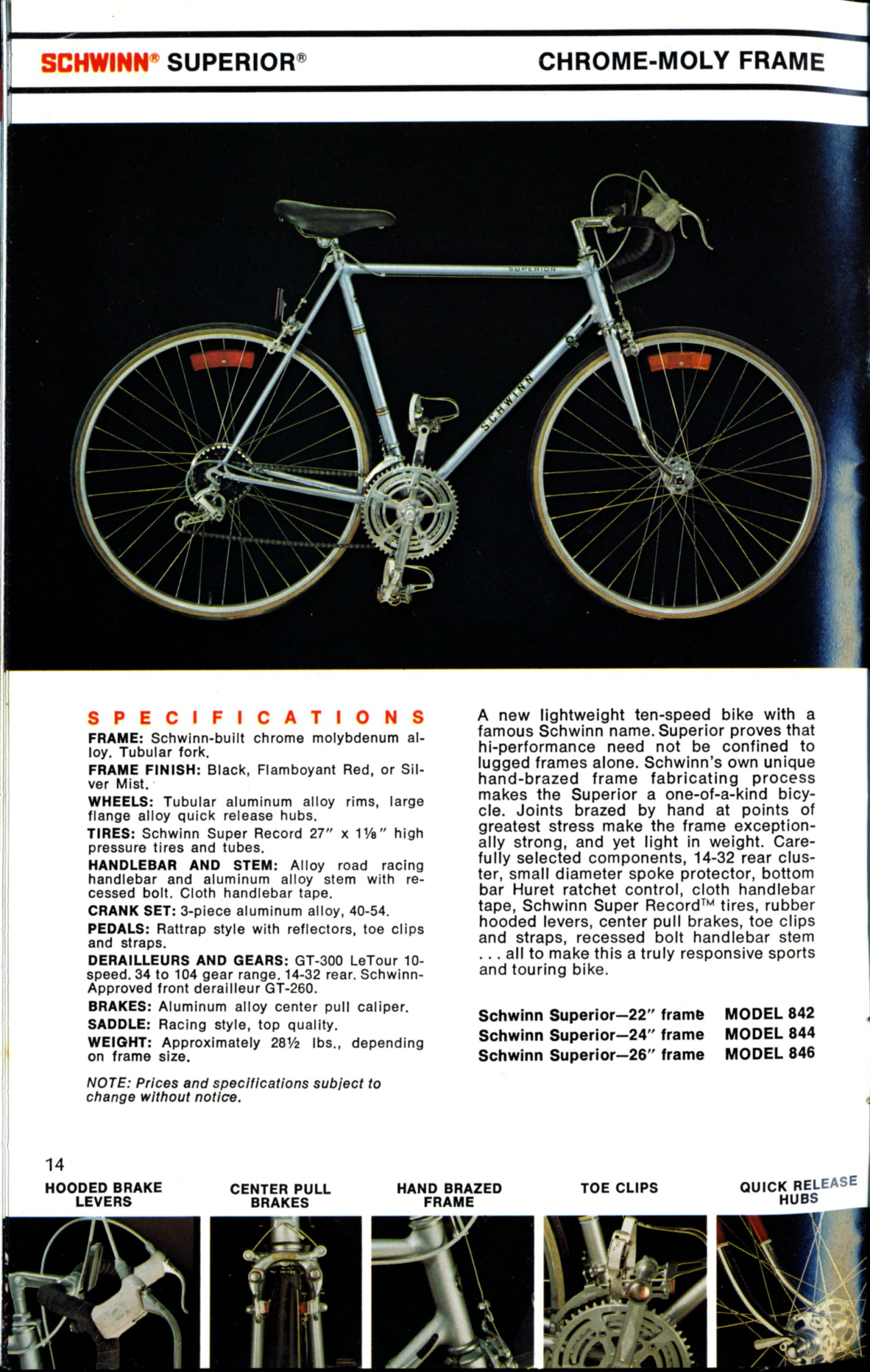
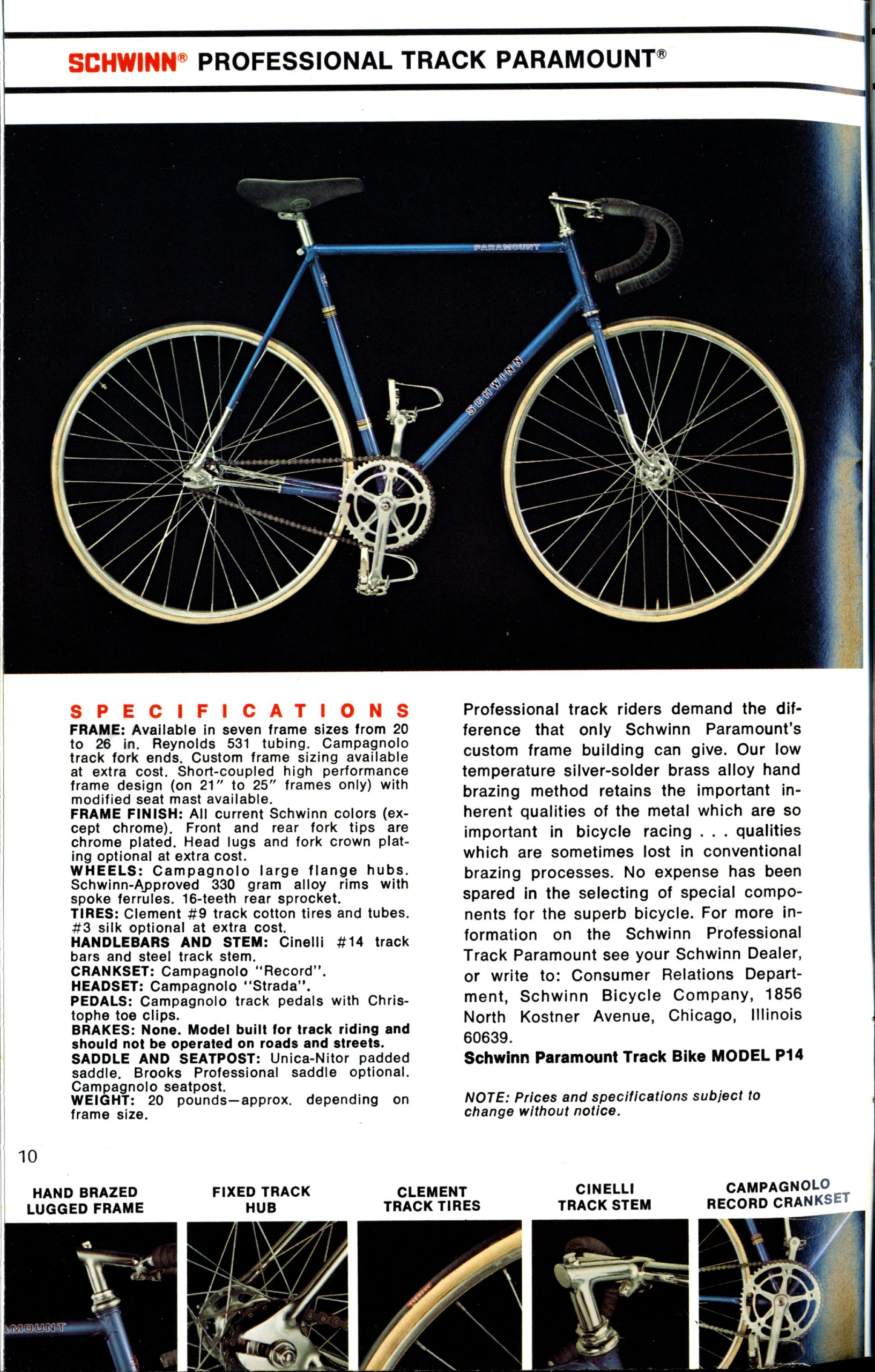
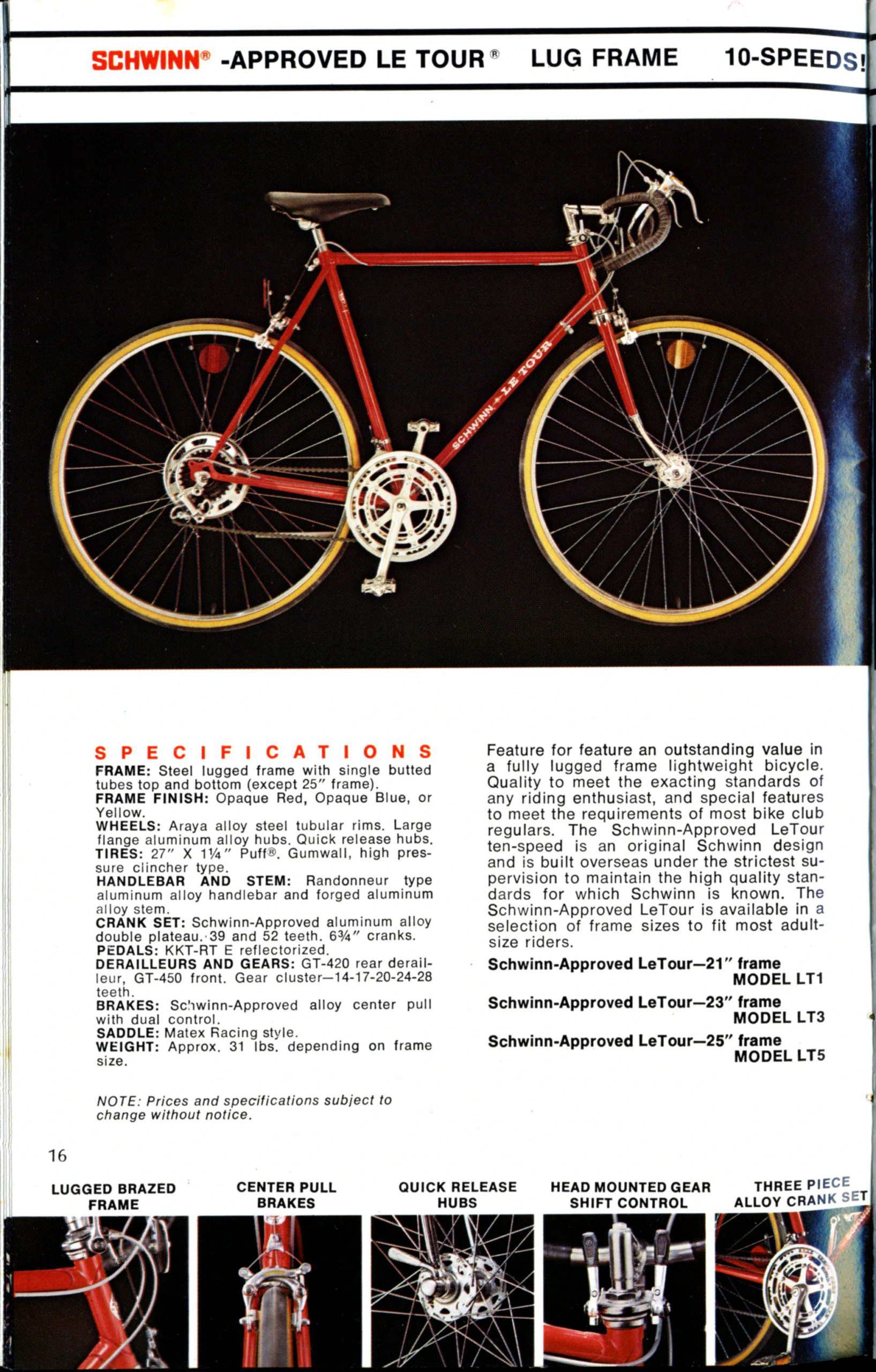
The fuller story of each family, and of why Schwinn never quite sold its fillet-brazed frames for what they were, is in Schwinn: An American Giant and Its Hand-Built Lightweights.
Schwinn moved its frame numbers around, so where you find the number is itself a clue. On a Chicago-built bicycle of the 1960s it sits on the left rear dropout (Schwinn’s “axle hanger”) or the fork end. From April 1970 it moved to the head tube, low down, where the fork enters the frame from below. The fillet-brazed frames of the 1960s kept their numbers on the left rear dropout, in a format of their own.
A Paramount is different. The early frames carry their numbers on the bottom bracket shell; from 1959 the number is on the left, non-drive-side rear dropout, where a thick coat of paint can hide it. On an imported Schwinn, try the left rear dropout, the bottom bracket shell and the lower head lug of a Japanese frame, or the right rear dropout and the bottom bracket shell of a Taiwanese one.
One rule applies to all of them: the number dates the frame, not the model year. Schwinn’s season turned over in the fall, so a frame dated late in one year was often sold as the following year’s model.
The most widely used table is Bob Hufford’s, published in his Schwinn Lightweight Data Book. It is a collector’s compilation rather than a document Schwinn printed, and no Schwinn-printed key has surfaced, but it is consistent with dated bicycles and has stood for a quarter of a century. Read the first two characters of the number:
| Letter | Year | Letter | Year | Letter | Year |
|---|---|---|---|---|---|
| A | 1965 | F | 1970 | L | 1975 |
| B | 1966 | G | 1971 | M | 1976 |
| C | 1967 | H | 1972 | N | 1977 |
| D | 1968 | J | 1973 | P | 1978 |
| E | 1969 | K | 1974 | Q | 1979 |
So a number beginning LE was made in November 1969, and one beginning DM in April 1976. The digits that follow are a sequence number, not a date. Hufford’s table stops at December 1979. Other compilers continue the year letters as R for 1980, S for 1981 and T for 1982, the last years of Chicago production; that extension is not in Hufford, so treat it as likely rather than proven and check it against the bicycle’s parts.
Two exceptions catch people out. The fillet-brazed Superior of 1962 and 1963, the Super Sport of 1964 to 1969 and the Sports Tourer of 1968 use a month letter, the last digit of the year and a three-digit build number: Hufford’s example, K6018, is the 18th frame built in October 1966. And some 1970 Super Sports with Huret dropouts use a two-digit year, so C70204 is the 204th frame of March 1970. Numbers before 1960 follow older series that only a lookup can place; bikehistory.org runs one for 1948 to 1982, and notes that Schwinn’s records before 1948 were lost in a factory fire.
1960 to 1964
Reads January 1960
1965 to 1979
Reads November 1969
1965 to 1979
Reads April 1976
Fillet-brazed Superior, Super Sport and Sports Tourer, 1962 to 1969
Reads October 1966, the 18th frame
The month letter skips I
Every reading here comes from “Reading a Chicago number, 1960 to 1982” in this guide.
The Paramount has its own numbers, and the best account of them is Kurt Kaminer’s, adapted for the years after 1959 from information supplied by Richard Schwinn of Waterford, where Paramount production moved from Chicago. Before 1959, Kaminer notes, no Schwinn records survive, so those dates are estimates.
| Years | Format | How to read it |
|---|---|---|
| 1938 to 1941 | A + number | The Wastyn-built frames, A118 to A933 recorded |
| 1945 to 1948 | P or PT + number | Postwar frames, P10 to P290 recorded |
| 1950 to early 1959 | Three digits | About 30 to 992; no Schwinn records |
| 1959 to 1965 | Block letter + two digits, A10 to Z99 | The letter is a production block, not a month: A10 is about April 1959 |
| 1966 to 1970 | Month letter + year digit + two digits | J714 is the 14th frame of September 1967 |
| 1970 to 1983 | Month letter + two-digit year + two or three digits | A7601 is the first frame of January 1976 |
| Waterford, later 1980s to 1990s | Size, model and factory letters, month, year, number | 540AKWE91042 is a 54 cm road Paramount built at Waterford, 42nd frame of May 1991 |
The month letters skip I, as on the Chicago bicycles. The blocks of 1959 to 1965 have to be looked up: Schwinn’s production records date the first frame of each, so the T block, for example, began on 17 June 1964 and the U block on 19 August 1964. Until it closed in 2023, Waterford also wrote provenance letters for owners from the Chicago-era records it held.
Do not confuse the frame number with the model number. Paramount P-numbers name the model, not the date: P11 was the tourist, P12 the road racer, P13 the deluxe road machine and P14 the track frame. The range was reshuffled between 1969 and 1973, and the P11 and P12 were gone from the 1969 catalog. In 1970 the P13 became the Professional Road Racing Paramount and the P15-9 was added. In 1973 the P10-9 followed as the 10-speed version of the P15. Ladies’ models carried P60 and P65 numbers into 1979. The Schwinn article here on Ebykr tells that story in full.
1959 to 1965
Reads The T block, 17 June to 19 August 1964
1966 to 1970
Reads The 14th frame of September 1967
1970 to 1983
Reads The 50th frame scheduled in November 1975
Waterford, later 1980s to 1990s
Reads A 54 cm road Paramount built at Waterford, the 42nd frame of May 1991
Every reading here comes from “Reading a Paramount number” in this guide.
From 1973 the Schwinn name went onto bicycles built in Japan and later in Taiwan, and their numbers follow their makers’ habits rather than Chicago’s. Hufford gives the usual patterns:
A single year digit always leaves the decade open, so an imported Schwinn needs its components and its catalog more than a Chicago one does to identify.
Two track Paramounts in the Ebykr Serial-Number Registry show the Paramount tables at work, and both agree with the year recorded for the bicycle.
The two words on a part tell you where it came from. Components stamped simply Schwinn were made in the Chicago factory, while parts marked Schwinn Approved were made elsewhere to Schwinn specification. The same distinction runs through the bicycles: in the 1976 catalog the Chicago models are “Schwinn designed and manufactured” or “Schwinn-built,” and the imports are “Schwinn-Approved.” Even a Chicago Paramount of that year rolled on “Schwinn-Approved alloy rims,” so the mark dates nothing on its own, but a bicycle whose name, frame and parts all disagree has had a life worth investigating.
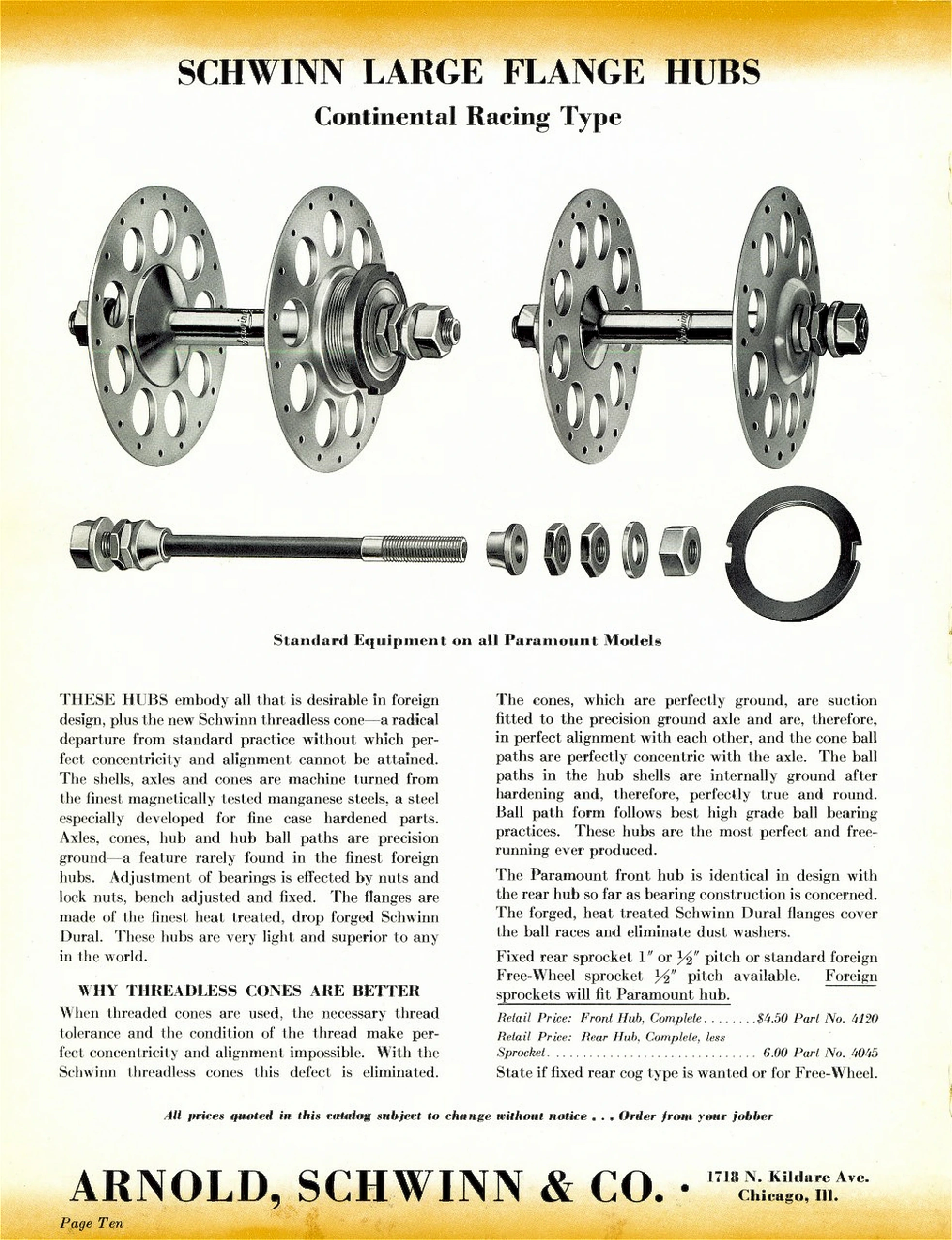
Older parts are even more explicit. The 1938 Paramount and Superior catalog shows hubs lettered “MADE IN U.S.A.” and “BY ARNOLD SCHWINN & CO. CHICAGO,” and tools stamped with a circled AS monogram. The company name is like a clock for paperwork, too: Arnold, Schwinn & Company in the 1938 book and the Schwinn Bicycle Company in 1976.
Head badges are a weaker clock than many collectors hope. They were easy to swap, and no badge sequence we have found is tied to dated Schwinn documents, so this guide gives none. Use a badge to support a reading, never to make one.
A frame number gives you the month the frame was made. The catalog tells you whether the bicycle in front of you is what Schwinn sold around that date. The Ebykr Catalog Archive holds Schwinn’s 1938 Paramount and Superior catalog, the New World series catalog and the complete 1976 catalog with its price list, every model on its own page with its model numbers and specification. Browse them all at the Ebykr Catalog Archive.
Components then close the gap. A Sturmey-Archer hub on a Chicago three-speed is stamped with its year and month. Shimano parts on an imported Schwinn carry a two-letter date code. A Paramount’s Campagnolo components carry their own clues. How to Date a Vintage Bicycle by Its Components reads them all, and the Campagnolo guide and the Reynolds tubing guide cover the Paramount’s equipment and tubes. When the frame number, the parts and the catalog agree, you have your year with a high degree of confidence.
Every dated Schwinn makes the tables more reliable, especially for the gaps: the Chicago years after 1979, the early Paramount numbers and the imported bicycles. Log your frame number in the Ebykr Serial-Number Registry with its location and the parts that confirm it, and bring your questions to the Ebykr forums. For the company’s story, read Schwinn: An American Giant and Its Hand-Built Lightweights and the Schwinn Timeline.
The Ebykr Identify and Date series also covers Raleigh, Peugeot, Fuji and Pierce, with every guide gathered on the Identify and Date hub.
Bob Hufford — Schwinn Lightweight Data Book: Serial Numbers
Kurt Kaminer — Paramount Serial Number Decoding (The Headbadge)
Fleet Velo — Determine the Manufacturing Date
Bikehistory.org — Vintage Schwinn Serial Number Lookup
BMX Museum — Schwinn Serial Number Info
Sheldon Brown — Chicago Schwinns
Schwinn catalogs in the Ebykr Catalog Archive: 1938 Paramount and Superior, New World series and 1976
Ebykr — Schwinn: An American Giant and Its Hand-Built Lightweights
Ebykr — Schwinn: A Timeline of an American Bicycle Giant
Ebykr — How to Date a Vintage Bicycle by Its Components
 Schwinn
Ebykr documents this marque across the archive. Here is the rest of it.
The Ebykr Digest
New articles, timelines, catalog finds and registry activity — assembled from the archive once a month. Your address is never shared.
Double opt-in. One email per month. Unsubscribe at any time with one click.