About Ebykr
Ebykr celebrates classic and vintage lightweight bicycles through provoking imagery and opinion. Let's roll together!
About Ebykr
Ebykr celebrates classic and vintage lightweight bicycles through provoking imagery and opinion. Let's roll together!

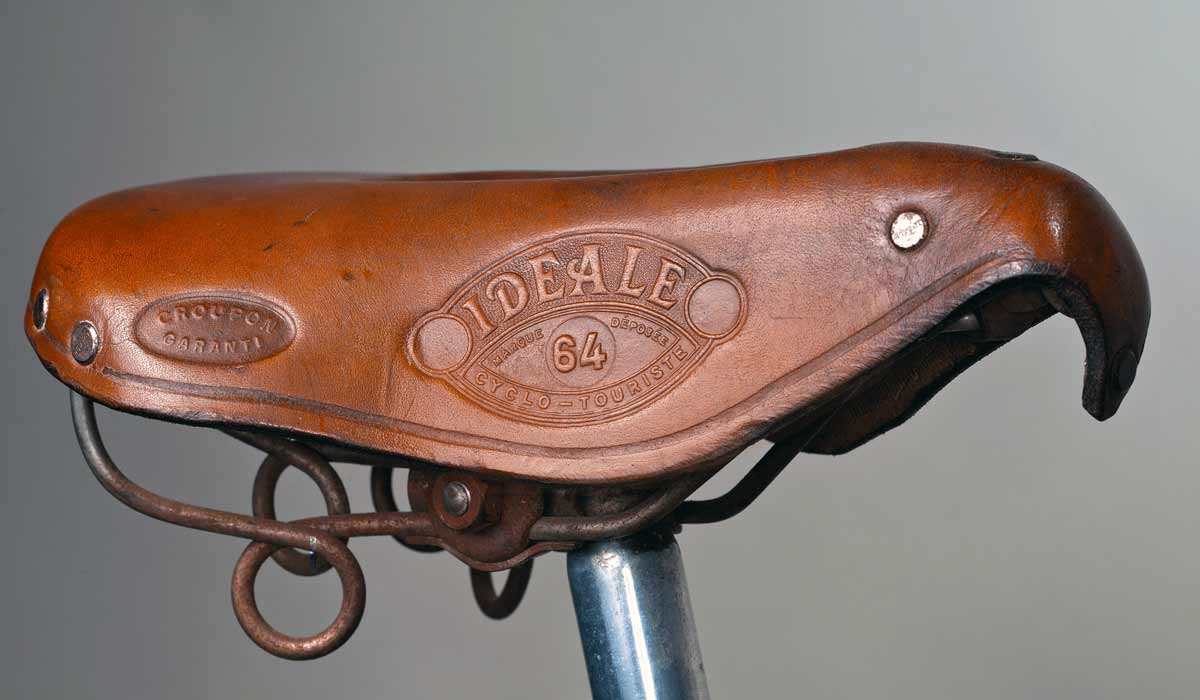

The history of Idéale is a century-long narrative of industrial perseverance and technical mastery that transformed a modest Parisian stamping workshop into the emblematic brand of the French saddle. Founded in 1890 by Jean-François Tron, the company’s trajectory was defined by an uncompromising commitment to quality, from the early development of proprietary waterproofing processes to the pursuit of extreme lightness through Duralumin and Titanium chassis.
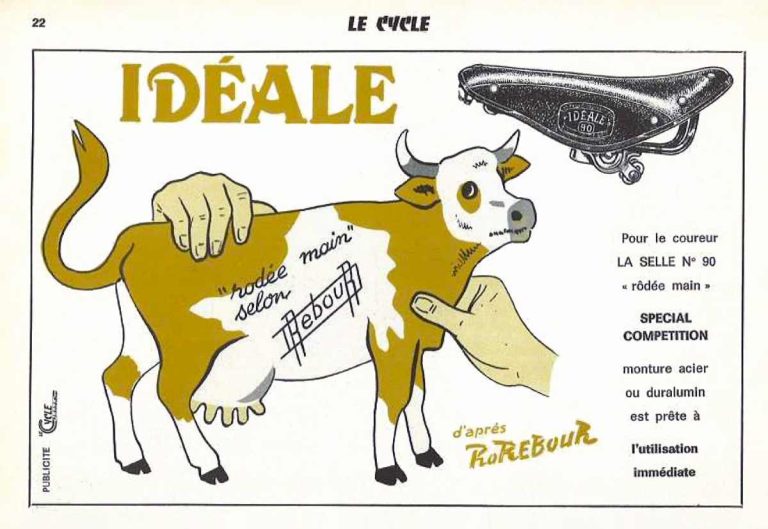
This timeline chronicles the milestones of a marque that moved from the hydraulic power of a former wool mill in Pont-Saint-Pierre to the absolute heights of professional cycling, bolstered by the racing pedigree of Marcel Berthet and the comfort-focused leather innovations of Daniel Rebour. Today, Idéale remains a symbol of French cyclo-touring and randonneuring, characterized by a persistent refusal to sacrifice hand-worked excellence for the convenience or economy of mass production.
| Event Date(s) | Event Type | Event Description |
|---|---|---|
| 1851 | Founder Birth | Jean-François Tron is born in Cuneo, Italy; his family later emigrates to Marseille, France. |
| 1888 | Founder Milestone | Tron completes his military conscription and returns to mechanics with the goal of operating his own factory. |
| 1890 | Company Founding | Tron procures a small stamping workshop in Paris; he initially manufactures small metal parts and a “skirt-lifting” device. |
| 1891 | Strategic Pivot | After a commercial dispute with M. Bauriat over a 20,000-unit chassis order, Tron decides to manufacture complete bicycle saddles himself. |
| 1894 (Jan 27) | Technical Milestone | Tron and partner Baillard debut an incredibly lightweight 250g racing saddle at the inaugural Salon Du Cycle in Paris. |
| Late 1890s | Corporate Change | Tron and Baillard part ways; Tron continues independently, investing in friction presses and enameling equipment. |
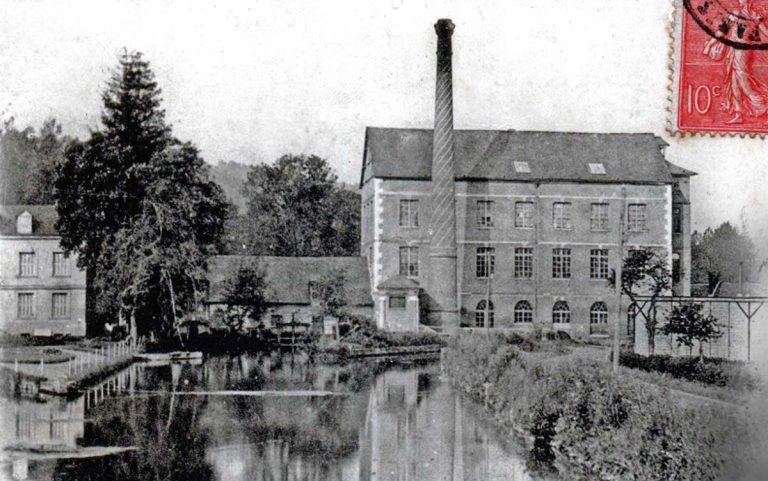
| 1900 | Infrastructure Expansion | Tron relocates from Paris to Pont-Saint-Pierre (Eure), occupying a former wool spinning mill driven by hydraulic power. |
| 1901 | Brand Identity | Operations are fully established in the new factory; the company is renamed “F. Tron & Cie.” |
| 1904 | Product Diversification | The firm briefly produces single-passenger automobiles with De Dion Bouton engines and articulated steering wheels. |
| 1907 | Competitive Milestone | Future leader Marcel Berthet sets his first UCI hour record at 41.620km. |
| 1908 | Infrastructure Expansion | Tron purchases the neighboring “La Baleine” factory to increase manufacturing capacity. |
| 1912 | Technical Milestone | Tron installs a water turbine and special leather presses; he begins in-depth studies on leather tanning and waterproofing. |
| 1913 | Competitive Milestone | Marcel Berthet sets his third UCI hour record at 43.755km. |
| 1914–1918 | Strategic Pivot | During WWI, the factory produces artillery shell bodies; leather scarcity forces Tron to refine his in-house tanning methods. |
| 1922 | Production Milestone | Post-war saddle production rises to a robust 200,000 units annually. |
| 1926 | Infrastructure Expansion | Construction of an altogether new factory at the Pont-Saint-Pierre site to cement Tron’s industrial legacy. |
| 1927 | Corporate Leadership | Jeanne Tron marries Marcel Berthet; the family business is converted into a Société Anonyme to allow for joint stock ownership. |
| 1931 | Corporate Leadership | Jean-François Tron dies; leadership passes to his children, Jean Tron and Jeanne Berthet. |
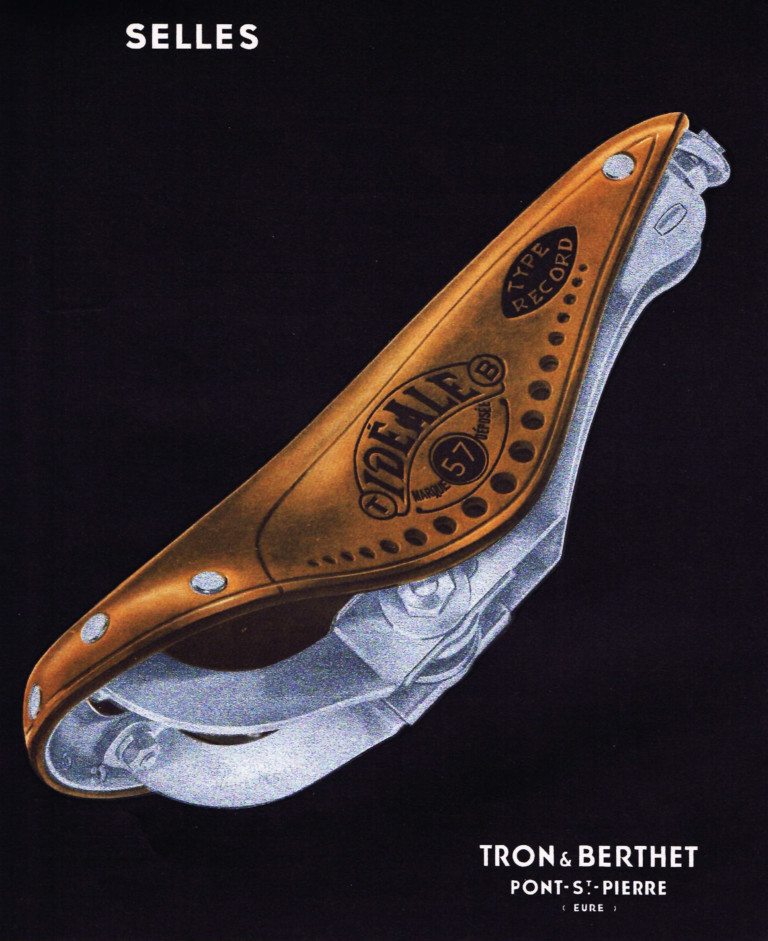
| 1933 | Corporate Leadership | Marcel Berthet assumes full leadership; he renames the firm Tron & Berthet S.A. and positions it for the luxury market. |
| 1933 (Nov) | Technical Milestone | Berthet pilots the aluminum “Vélodyne Streamliner” to a record 49.992km/h at the Monthléry motor speedway. |
| c. 1936 | Production Peak | Annual production reaches a staggering 500,000 units; the firm employs 220 people. |
| mid-1930s | Technical Milestone | Introduction of the Duralumin chassis (produced by Cégédur) and the Idéale-Dunlop rubberized range. |
| 1940–1945 | Strategic Pivot | WWII leather shortages lead to widespread adoption of the Idéale-Dunlop weatherproof rubber saddles. |
| 1969 | Corporate Leadership | Pierre Berthet (grandson of the founder) takes over; he initiates expansion into the U.S. and Japanese markets. |
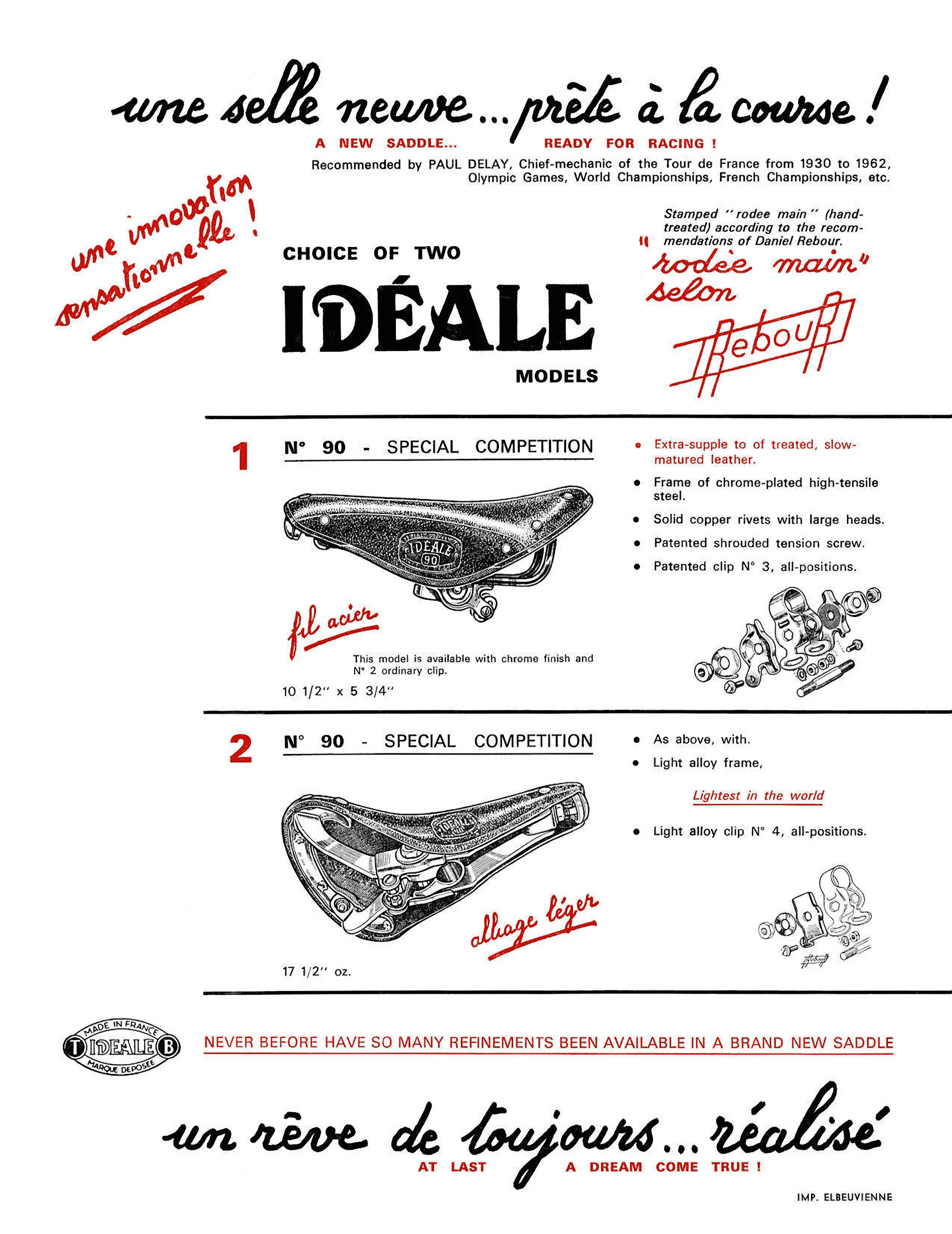
| 1969 | Technical Milestone | Introduction of the “Rodée Main” (hand-broken) process, a “sensational innovation” developed by Daniel Rebour. |
| 1975 | Production Milestone | Employment reaches 110 people; exports flourish, particularly to major manufacturers in Japan. |
| Late 1970s | Technical Milestone | High-performance models (2003, 2004) introduce Titanium frames, offering a 43% weight savings over steel. |
| 1981 | Corporate Tragedy | Facing low-priced plastic competition, the company enters compulsory liquidation with 42 remaining employees. |
| 1981 | Product Milestone | Production of the Profil TB1, the final original model designed with an aesthetic line parallel to the frame tube. |
| 1985 (Oct) | Brand Relaunch | After a sale to an outside group, the brand is briefly relaunched in Pontault-Combault; mechanization efforts fail within months. |
| 2013 | Brand Renaissance | Frédéric Ducès relaunches the brand in Toulouse after acquiring technical knowledge from former Pont-Saint-Pierre employees. |
| 2017 (June) | Production Milestone | Ducès begins manufacturing high-end No. 90 Spéciale Compétition saddles at a rate of one per day. |
Idéale’s legacy is defined as much by its industrial decline in the face of plastic-based competition as it is by its technical triumphs. While the original factory in Pont-Saint-Pierre fell victim to shifting market demands and a failed attempt at mechanization in the 1980s, the brand’s “Croupon Garanti” mark never lost its prestige among the most discerning collectors.
The current renaissance in Toulouse, led by Frédéric Ducès, serves as a bridge between this forgotten past and the modern era, ensuring that the manual artistry of the “Rodée Main” process continues to support a new generation of riders. More than just a component, an Idéale saddle remains the primary, personal interface between bicycle and bicyclist – or what can feel like a dream come true that goes on and on, through hand-worked leather and timeless French craftsmanship.
Whether you’re breaking in a Model 90 or preserving a genuine ‘Rebour’ hide, your experience is invaluable. Join our technical thread to share preservation tips and date-code discoveries.
https://histoireduvaldepitres.blogspot.com/2017/12/tron-et-berthet-la-selle-ideale.html
https://grubb1937.blogspot.com/2014/02
http://velovintagefrancais.e-monsite.com/pages/matos/ideale.html
http://www.conceptcarz.com/vehicle/z10259/De%20Dion_Bouton/default.aspx
https://fampeople.com/cat-paul-de-vivie
http://www.randonneurs.bc.ca/history/cyclo-tourism_velocio_clifford-graves.html
http://www.bikecult.com/bikecultbook/groups_all.html
https://en.calameo.com/books/0005441137daafd523e6e
http://www.pont-saint-pierre.fr/
https://fr.wikipedia.org/wiki/Maurice_Noirot
http://fr.wikipedia.org/wiki/Pont-Saint-Pierre
http://fr.wikipedia.org/wiki/Marcel_Berthet
http://en.wikipedia.org/wiki/Hour_record
Other Idéale References:
http://www.cyclepublishing.com/cyclingbooks/his13.html
Special Thanks
Frédéric Ducès of Idéale Saddles