About Ebykr
Ebykr celebrates classic and vintage lightweight bicycles through provocative imagery and opinion. Ride along with us.
About Ebykr
Ebykr celebrates classic and vintage lightweight bicycles through provocative imagery and opinion. Ride along with us.

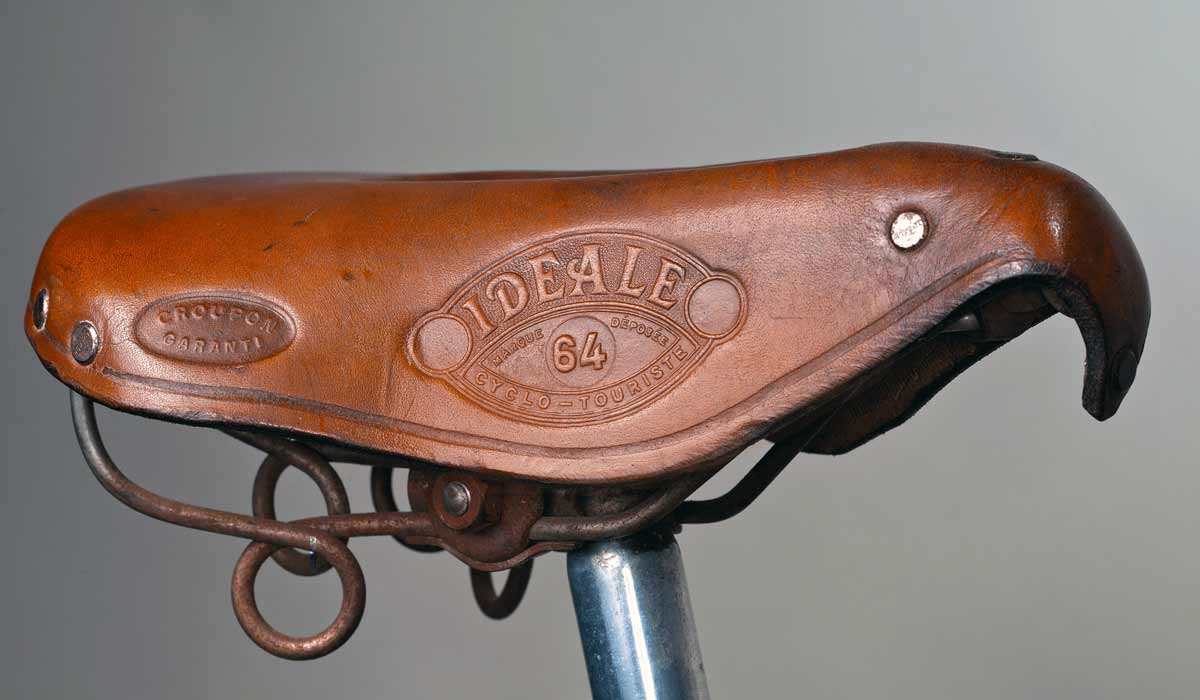
The history of Idéale is a century-long narrative of industrial perseverance and technical mastery that transformed a modest Parisian stamping workshop into the emblematic brand of the French saddle. Founded in 1890 by Jean-François Tron, this timeline traces its pursuit of extreme lightness through Duralumin and Titanium chassis and its racing pedigree under Marcel Berthet.
The history of Idéale is a century-long narrative of industrial perseverance and technical mastery that transformed a modest Parisian stamping workshop into the emblematic brand of the French saddle. Founded in 1890 by Jean-François Tron, the company’s trajectory was defined by an uncompromising commitment to quality, from the early development of proprietary waterproofing processes to the pursuit of extreme lightness through Duralumin and Titanium chassis.
This timeline chronicles the milestones of a marque that moved from the hydraulic power of a former wool mill in Pont-Saint-Pierre to the absolute heights of professional cycling, bolstered by the racing pedigree of Marcel Berthet and the comfort-focused leather innovations of Daniel Rebour. Today, Idéale remains a symbol of French cyclo-touring and randonneuring, characterized by a persistent refusal to sacrifice hand-worked excellence for the convenience or economy of mass production.
Idéale’s legacy is defined as much by its industrial decline in the face of plastic-based competition as it is by its technical triumphs. While the original factory in Pont-Saint-Pierre fell victim to shifting market demands and a failed attempt at mechanization in the 1980s, the brand’s “Croupon Garanti” mark never lost its prestige among the most discerning collectors.
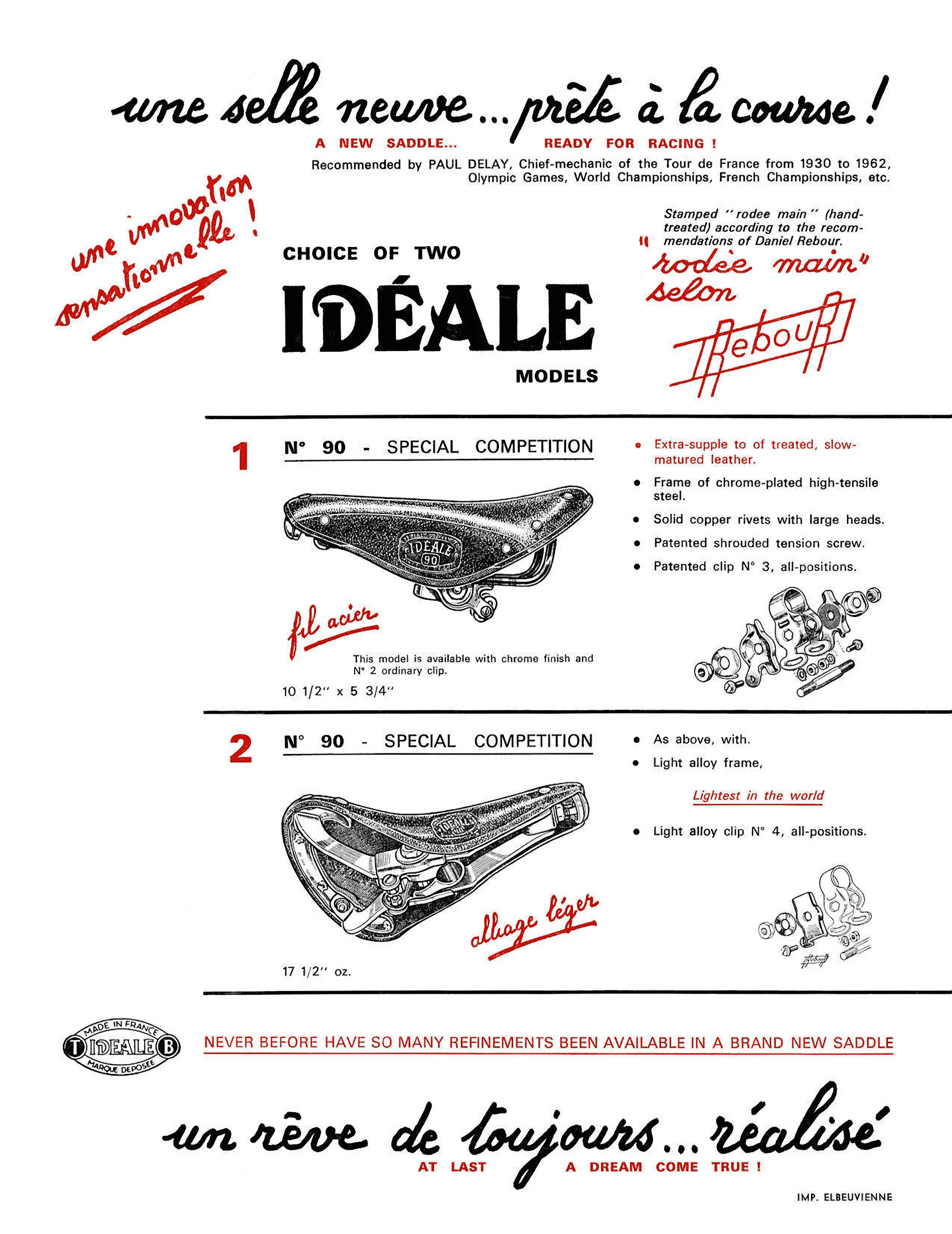
The current renaissance in Toulouse, led by Frédéric Ducès, serves as a bridge between this forgotten past and the modern era, ensuring that the manual artistry of the “Rodée Main” process continues to support a new generation of riders. More than just a component, an Idéale saddle remains the primary, personal interface between bicycle and bicyclist – or what can feel like a dream come true that goes on and on, through hand-worked leather and timeless French craftsmanship.
Whether you’re breaking in a Model 90 or preserving a genuine ‘Rebour’ hide, your experience is invaluable. Join our technical thread to share preservation tips and dating discoveries.
https://histoireduvaldepitres.blogspot.com/2017/12/tron-et-berthet-la-selle-ideale.html
https://grubb1937.blogspot.com/2014/02
http://velovintagefrancais.e-monsite.com/pages/matos/ideale.html
http://www.conceptcarz.com/vehicle/z10259/De%20Dion_Bouton/default.aspx
https://fampeople.com/cat-paul-de-vivie
http://www.randonneurs.bc.ca/history/cyclo-tourism_velocio_clifford-graves.html
http://www.bikecult.com/bikecultbook/groups_all.html
https://en.calameo.com/books/0005441137daafd523e6e
http://www.pont-saint-pierre.fr/
https://fr.wikipedia.org/wiki/Maurice_Noirot
http://fr.wikipedia.org/wiki/Pont-Saint-Pierre
http://fr.wikipedia.org/wiki/Marcel_Berthet
http://en.wikipedia.org/wiki/Hour_record
Other Idéale References:
http://www.cyclepublishing.com/cyclingbooks/his13.html
Special Thanks
Frédéric Ducès of Idéale Saddles
 Idéale
Ebykr documents this marque across the archive. Here is the rest of it.
The Ebykr Digest
New articles, timelines, catalog finds and registry activity — assembled from the archive once a month. Your address is never shared.
Double opt-in. One email per month. Unsubscribe at any time with one click.