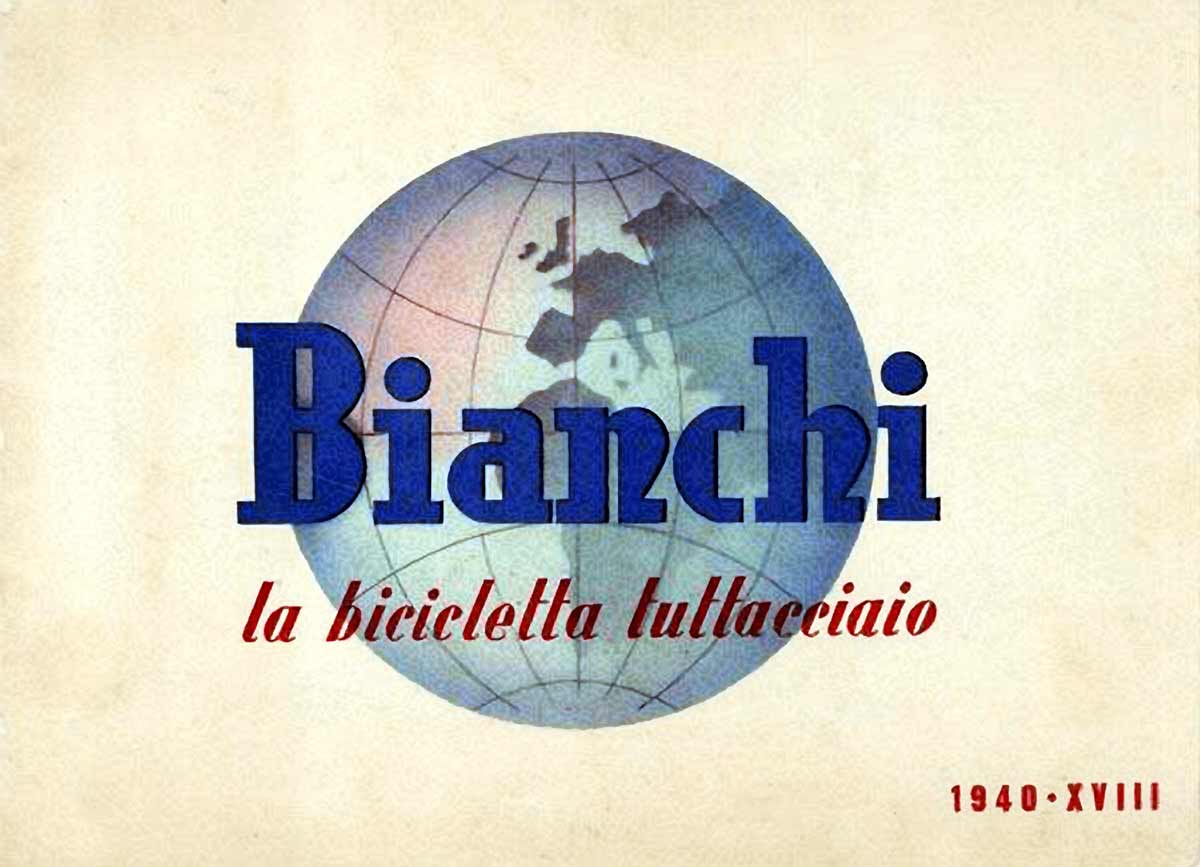
Bianchi 1940 La Bicicletta Tuttacciaio 1200px

Bianchi History: A Timeline of Key Corporate and Technical Events

4 minute read

A Century of Celeste: Key Corporate and Technical Milestones of the World’s Oldest Bicycle Empire

From its modest origins in a Milanese workshop at Via Nirone 7 to the absolute heights of professional cycling’s “Double-Double,” the history of Bianchi is a masterclass in industrial resilience and technical proof-of-concept. Founded in 1885 by the visionary Edoardo Bianchi, the brand transformed the primitive velocipede into a precision racing instrument while simultaneously conquering the frontiers of motorcycles, luxury automobiles and even aviation engines. This timeline chronicles the milestones of the “Eagle of Milan”—the world’s oldest continuously operating bicycle manufacturer—as it evolved through royal warrants, wartime grit, and the legendary eras of Coppi and Gimondi to become a permanent icon of the cycling world.

46 of 46 events

1883–Present
Historical Record
The chronological span of documented Bianchi-related imagery and archives, tracking the firm from its pre-founding mechanical roots to the modern era.
1885
Company Founding
Edoardo Bianchi, at age 20, opens his first mechanical workshop at No. 7 Via Nirone, Milan, fixing scales, wheelchairs and surgical instruments.
1885–1886
Product Innovation
Introduces the “safety” bicycle with wheels of nearly equal size and a chain drive, based on emerging British standards.
1888
Technical Milestone
Becomes the first in Italy to adopt Dunlop’s pneumatic tires with inner tubes and Pirelli tires on safety framesets.
1890
Infrastructure Expansion
Outgrows previous quarters and opens a larger factory on Via Borghetto, Milan.
c. 1893–1895
Royal Patronage
Summoned to the Villa Reale in Monza to teach Queen Margherita how to ride; creates the first purpose-built women’s bicycle with a modified frame.
1895
Brand Recognition
Awarded the title “Supplier of the Real House,” granting use of the Savoy red-crusader coat of arms on its products.
1896
Reparto Corse Founded
Establishes the “Racing Department” to use professional cycling competitions as a proving ground for new technical solutions.
1897
Product Diversification
Launches motorcycle production, leveraging mechanical expertise beyond bicycles.
1899
Major Racing Victory
Giovanni Tommaselli wins the Grand Prix of Paris, the brand’s first major international racing triumph.
1900
Product Diversification
Debut of the first Bianchi cars and motorized tricycles; early models featured De Dion-Bouton engines.
1901
Brand Identity
Registers the first trademark featuring the crowned eagle, a symbol of strength and vision.
1901
Patent Milestone
Patents a cardan (shaft-drive) transmission system for bicycles, based on a Girolamo Cardano design.
1905
Corporate Reorganization
Firm formally becomes a joint stock company by notarial deed: Fabbrica di automobili e velocipedi Edoardo Bianchi & C.
1909
Product Diversification
Expansion into the aerospace sector with the production of aviation engines.
1911
Grand Tour Victory
Carlo Galetti wins the third edition of the Giro d’Italia riding for Team Bianchi.
c. 1911–1915
Military Innovation
Conceives the first mountain bike for the Bersaglieri light infantry, featuring active frame/fork suspension and a folding system.
1913
Technical Milestone
Introduction of front caliper brakes with pads and arms on select models, significantly improving safety and control.
1913
Brand Identity
The famous “celeste” (teal/sky blue) color first appears on frames, though it was not yet the signature hue.
1913–1932
Production Milestone
Production era of the iconic “Giro d’Italia” Type M model, featuring integrated oilers by 1928.
1914
Production Peak
Annual production reaches a staggering 45,000 bicycles, 1,500 motorcycles, and 1,000 cars.
1924–1938
Market Dominance
Bianchi holds the largest share of the booming Italian bicycle market, selling hundreds of thousands of units.
1927
Brand Storytelling
Publication of “The Eagle and the Bianchi Bicycle,” a short story mythologizing the brand’s right to bear the eagle image.
1940
Racing Legend Signed
Fausto Coppi, “Il Campionissimo,” joins Team Bianchi and wins his first Giro d’Italia.
1940
Technical Milestone
Introduction of the Folgore model, the first to adopt the Campagnolo two-stick gearbox.
1942
Competitive Milestone
Fausto Coppi sets the world hour record on a Bianchi.
1943
Corporate Tragedy
The Bianchi steel processing factory is destroyed by aerial bombings during WWII.
1946 (July 3)
Corporate Leadership
Founder Edoardo Bianchi dies in a car accident; leadership passes to his son, Giuseppe Bianchi.
c. 1946
Strategic Pivot
Secures a $1,000,000 international loan from the U.S. to retool the factory and resume production.
1949
Grand Tour Dominance
Coppi achieves the historic “Double” (winning the Giro and Tour in the same year).
1950
Market Innovation
Introduction of the Aquilmotoro, a retrofit engine designed to be mounted onto existing bicycle frames.
1950–1951
Product Milestone
Launch of the Paris-Roubaix model, renamed to honor Coppi’s victory in the “Hell of the North.”
1952
Technical Milestone
Tour de France model introduced, equipped with the modern Campagnolo Gran Sport derailleur.
1953
Racing Victory
Coppi wins the World Championships on a Bianchi featuring a pioneering integrated headset.
1953–1954
Product Milestone
Introduction of the Campione del Mondo racing model.
1955
Strategic Retreat
Vehicle division merged with Fiat and Pirelli to create Autobianchi; Bianchi begins exiting car manufacturing.
1958
Racing Icon Debuts
The Specialissima racing model arrives, featuring the Campagnolo Record groupset and a 27.2mm seatpost.
1960 (Jan)
Loss of an Icon
Fausto Coppi dies from malaria, stripping the brand of its most powerful public figurehead.
1964
Corporate Liquidation
Non-cycling divisions liquidated to forestall bankruptcy; the bicycle division survives independently as Officine Metallurgiche Edoardo Bianchi SpA.
1965
Racing Milestone
Felice Gimondi wins the Tour de France on a Bianchi, signaling a brand renaissance.
1967
Infrastructure Milestone
Inauguration of a modern factory in Treviglio, Italy, which remains the brand’s home.
1980
Acquisition
Bianchi becomes part of the Piaggio industrial group.
1985
Centennial Milestone
Release of the limited Centennial (Centenario) model to celebrate 100 years of history.
1988
Product Innovation
Launch of the X4 model, showcasing peak steel craftsmanship with black chroming and custom engravings.
Late 1980s
Manufacturing Shift
Reparto Corse begins experimenting with titanium and carbon; mass production of certain lines moves to Japan.
1997/1998
Acquisition
Brand is purchased by the Swedish Cycleurope group (Grimaldi Industri AB).

Join the Bianchi Heritage Discussion!

Help us document the evolution of the Passione Celeste. Share your serial numbers and high-res frame details from the Reparto Corse era in our dedicated Bianchi forum.

Leave a Reply

Join the conversation below, or bring longer discussions and photos to the Ebykr Forums.

Your email address will not be published. Required fields are marked *