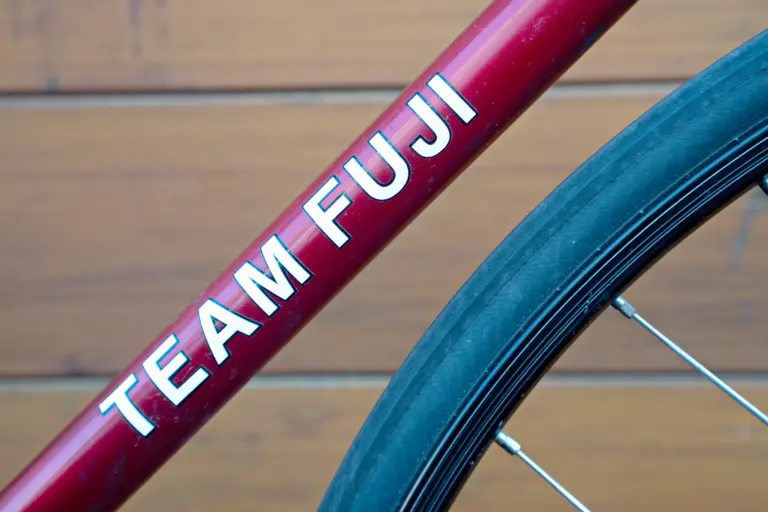
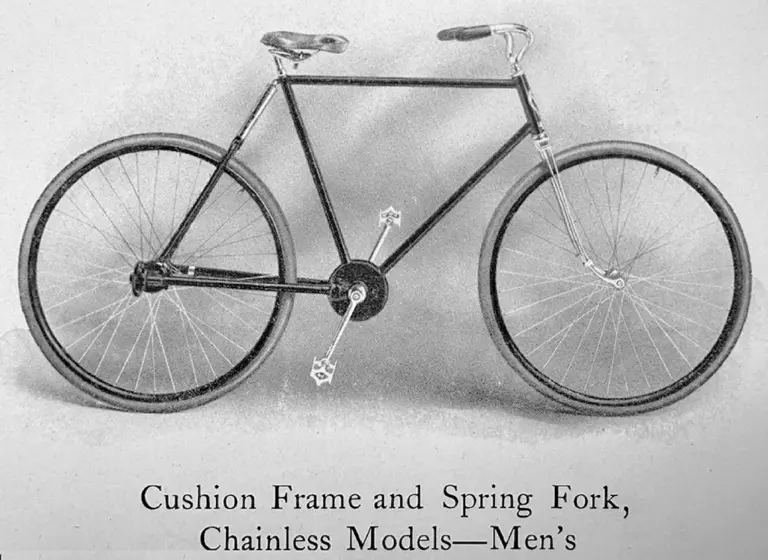
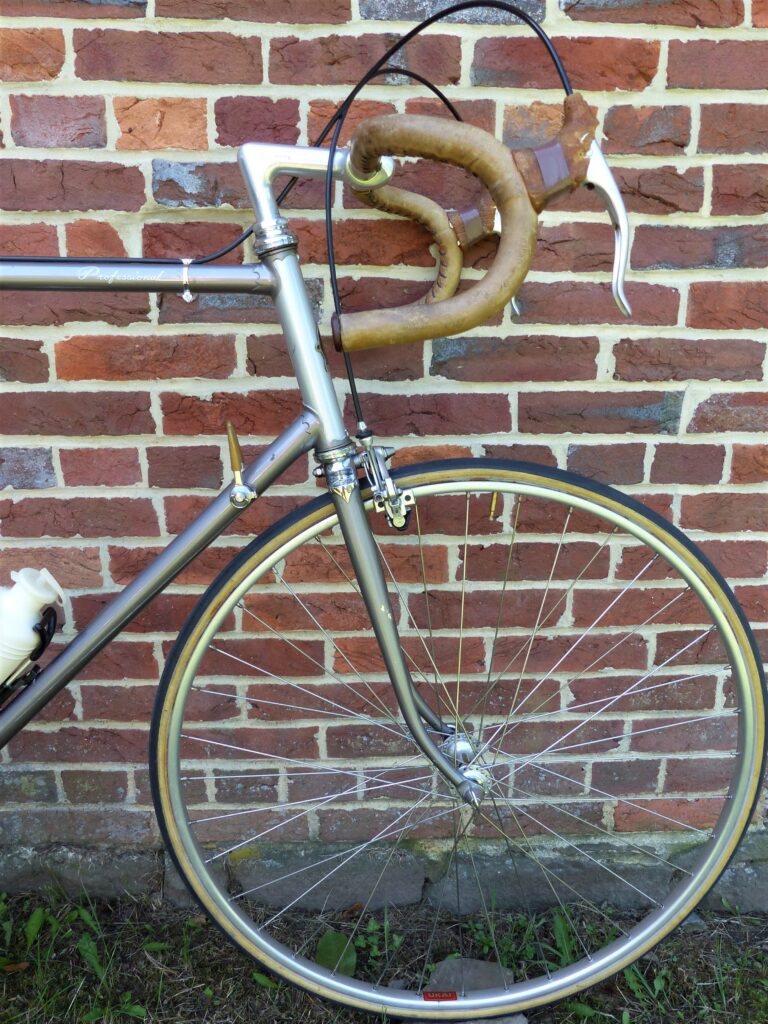
Founded in 1899 as a Tokyo import house trading under a name that meant Japan-America, Fuji is one of the oldest bicycle names still in use anywhere. This timeline follows it from Meiji-era importing through domestic manufacture, a wartime renaming, three Olympic Games, the S10-S that changed the American market, Valite tubing and an early titanium frame, to two bankruptcies and the brand's latest change of hands.
Founded in 1899 as a Tokyo trading house importing American goods, Fuji is one of the oldest bicycle names still in use anywhere in the world. Its history runs from Meiji-era importing through domestic manufacture, a wartime renaming, three Olympic Games, the model that persuaded America that Japanese lightweights were serious machines, an early production titanium frame, two bankruptcies and a series of owners on three continents.
Here is a chronological timeline of key corporate and product events at Fuji, spanning 1899 to 2026, drawn from the sources used for the accompanying Ebykr article on the marque’s history, “Fuji: The Japanese Lightweight That Changed America’s Mind.“
35 of 35 events
1899
Company Founding
Okazaki Kyūjirō established the business in Japan that would become Fuji, at a moment when the country was industrializing rapidly and had no bicycle industry of its own.
1900
Company Naming
The firm took the trade name Nichibei Shōkai, the Japan-America Trading Company, importing American goods including bicycles.
1900s–1920s
Strategic Pivot
Importing gave way to assembly and then to manufacture in Japan under the Fuji name. By the late 1920s Fuji was the most popular bicycle in the country.
1930s
Racing Program Launch
Fuji established the first national stage race in Japan, run between Osaka and Tokyo, and sponsored the winning team. The event is the ancestor of the modern Tour of Japan, still one of Asia’s premier races.
1939–1945
Company Naming
A company trading under a name meaning Japan-America was untenable in wartime. The firm was renamed Dainippon Cycle for the duration of the Second World War.
post-1945
Corporate Reorganization
The company reverted to its earlier identity as the Nichibei Fuji Cycle Company and resumed bicycle production.
1951
Racing Milestone
Shoichiro Sugihara won at the Asian Games in New Delhi riding a Fuji, before joining the company as chief engineer and designer.
1950s
Distribution
Toshoku America acquired the United States distribution rights. Fuji-built bicycles were sold as private-label goods through Sears, Roebuck and Montgomery Ward, so American households owned Japanese-built machines without the Fuji name appearing anywhere on them.
1964
Olympic Program
Dr. Shoichiro Sugihara designed the bicycles for the Japanese national team at the Tokyo Olympics and coached the squad.
1968
Olympic Program
Sugihara again designed the Japanese national team bicycles, for the Mexico City Olympics.
1971
Distribution
Fuji America was established to distribute Fuji-branded bicycles across the United States under the company’s own name for the first time.
1971
Product Launch
The S10-S reached the American market: a double-butted high-tension steel ten-speed with notably clean lug brazing and 73 by 73 degree racing geometry, equipped throughout with SunTour, Sugino, Dia-Compe, Nitto, Sunshine and Ukai components. Reviewers were emphatic, and the model is widely credited with ending the assumption that a serious lightweight had to be European.
1971–1972
Product Launch
The Newest arrived above the S10-S on double-butted chrome-molybdenum with a tighter 74 degree parallel geometry, taking higher-grade SunTour equipment from 1973.
1972
Olympic Program
Sugihara designed the Japanese national team bicycles for a third consecutive Games, at Munich.
1974
Critical Recognition
Fuji placed first in Consumer Reports bicycle testing, repeating the result in 1976 and 1980. Richard Ballantine recommended Fuji road bicycles across several price bands in the 1974 edition of Richard’s Bicycle Book, then the most influential cycling book in English.
mid-1970s
Product Innovation
Fuji introduced the S12-S, which the company claims as the first successful mass-production twelve-speed, enabled by a redesigned rear axle.
1975
Product Launch
The America appeared as a purpose-built touring model on 73 degree parallel geometry with eighteen-speed gearing, advertised on the strength of long-distance testing.
1977
Product Revision
The America moved from 27 inch wheels to 700C, a useful dating marker on surviving frames.
1978
Racing Program
Fuji supported what the company describes as the first American women’s professional racing team.
early 1980s
Product Line
Fuji developed its touring range and introduced Valite tubing, a seamless quad-butted chromium-vanadium alloy whose decal number states the wall schedule directly, so Valite 1769 denotes 1.0, 0.7, 0.6 and 0.9 mm walls.
1986
Product Innovation
Fuji began manufacturing frames in titanium, among the first to do so in production. The resulting Titanium Dura-Ace model used commercially pure titanium, came in about a pound lighter than the Opus it replaced at the top of the range and is the marque’s high-water mark as a manufacturer.
1980s
Market Shift
The mountain bike boom went to Specialized, Giant and Trek, working with low-cost Taiwanese production. Fuji was slow into what quickly became the largest category in the market.
early 1990s
Market Shift
A sharply appreciating yen priced Japanese-built Fujis above their competitors. Moving production to Taiwan solved the cost problem and created a perception problem: American buyers associated the Fuji name with Japanese manufacture and treated the Taiwanese-built bicycles as a lesser product.
1997
Bankruptcy
Toshoku America, Fuji’s long-standing United States distributor, filed for bankruptcy.
1998
Bankruptcy
The Nichibei Fuji Cycle Company filed for bankruptcy, ninety-nine years after Okazaki Kyūjirō opened his trading house.
1998
Acquisition
Advanced Sports International was established in Philadelphia and acquired Fuji America’s assets and worldwide distribution rights, moving the brand out of the sporting-goods channel and back toward independent bicycle dealers.
1999
Racing Program
Fuji supplied the American Mercury Cycling Team, returning the name to professional road racing.
2004
Acquisition
Ideal Bike Corporation, Taiwan’s third largest complete-bicycle manufacturer, acquired a 17 percent stake in Advanced Sports International Asia. Production settled across Taichung, Dong Guan and Kutno in Poland.
2008–2015
Corporate Expansion
ASI assembled a portfolio around Fuji: Breezer in 2008, Oval Concepts in 2009 and Phat Cycles in 2015, alongside Kestrel, SE Bikes and Tuesday Cycles. Revenue grew from roughly $50 million in 2007 to about $105 million by 2015.
2009
Racing Program
Fuji equipped Fuji-Servetto, formed from the former Saunier Duval squad, followed by Team NetApp-Endura in 2013 and 2014 and Amore & Vita-Prodir in 2018.
August 2016
Acquisition
ASI purchased Performance Bicycle and its Nashbar e-commerce business, creating a parent company, Advanced Sports Enterprises, to oversee the combined operation.
November 2018
Bankruptcy
Advanced Sports Enterprises filed for Chapter 11 with debts of more than $100 million.
February 2019
Corporate Liquidation
ASI was sold at auction for $16.1 million and split three ways: Amain.com took Performance and Nashbar, K&B Investment Corporation took the real estate and BikeCo, a partnership involving Tiger Capital Group, took ASI and the wholesale brands including Fuji, Kestrel and SE.
December 2025
Distribution
Pacific Glory Worldwide, owned by Ideal Bike Corporation, announced a dedicated United States distribution arm, PGW USA, to take over sales and support for Fuji, SE and Tuesday, with a go-live of 1 January 2026 and dealer-direct selling planned through the year. The announcement raised immediate questions in the trade about how the new arm would sit alongside BikeCo, which had handled the brands since 2019.
2026
Corporate Transition
The Taiwanese manufacturer that had built Fuji bicycles for two decades moved to take direct control of the brand in its most important market, against a backdrop of tariff-driven production shifts and a reported Ideal net loss of NT$360 million, roughly $11.4 million, across the first three fiscal quarters before the announcement.
Join the Fuji Discussion!
Do you ride an S10-S, a Newest, an America or a Team Fuji? Fuji serial numbers encode the month and year directly, so decode yours and share the machine, the tubing decal and your dating questions with the community.

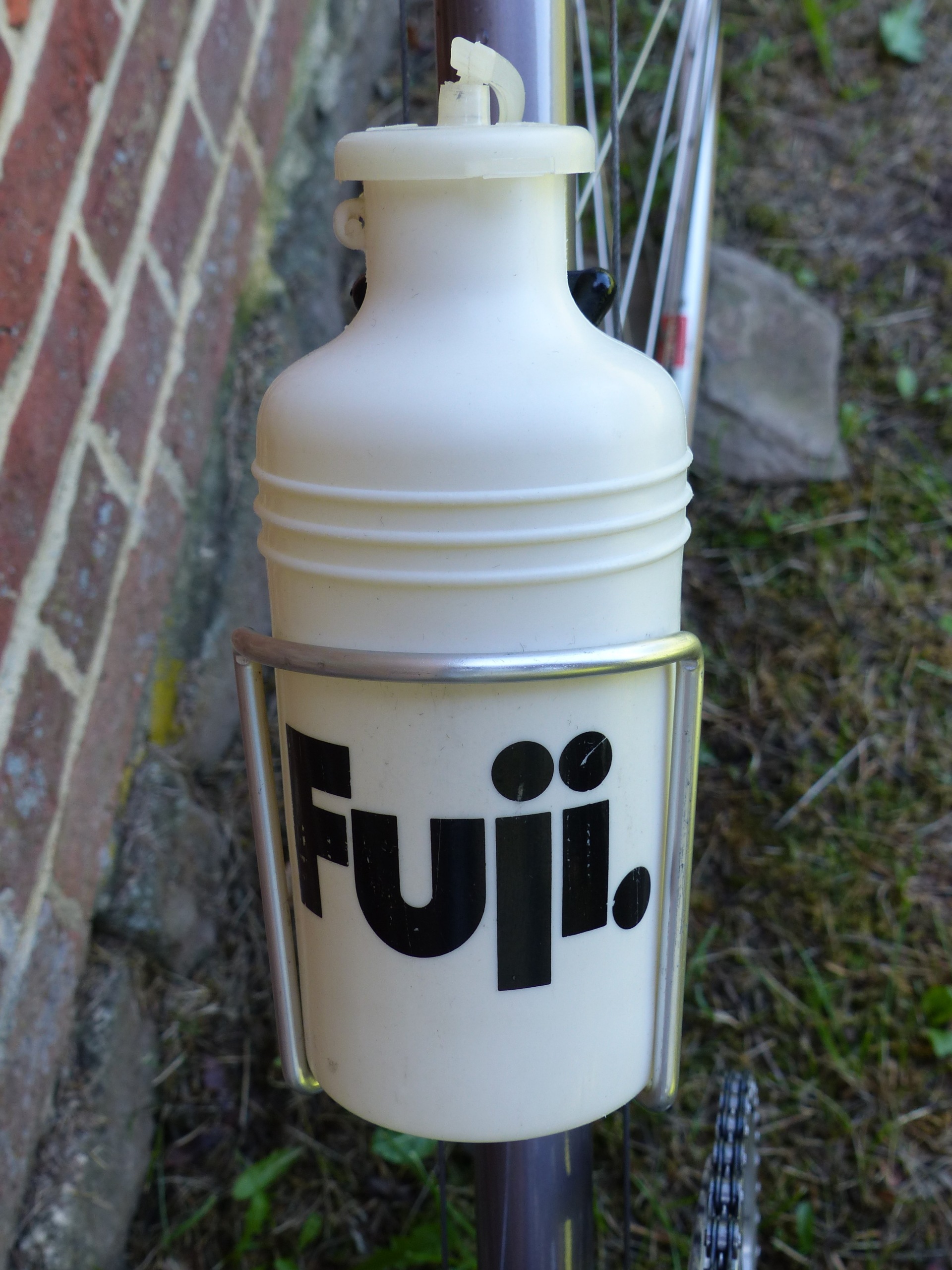
 Fuji
Fuji