About Ebykr
Ebykr celebrates classic and vintage lightweight bicycles through provocative imagery and opinion. Ride along with us.
About Ebykr
Ebykr celebrates classic and vintage lightweight bicycles through provocative imagery and opinion. Ride along with us.

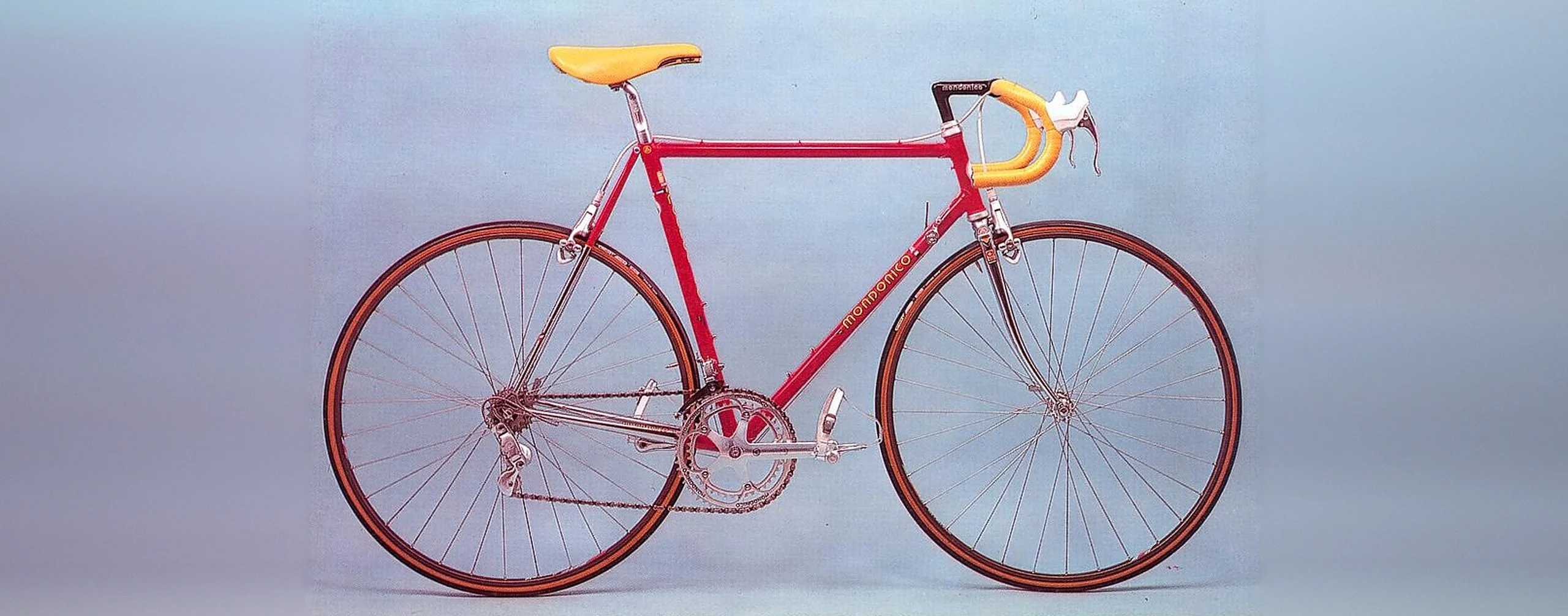
The Mondonico shop in Concorezzo, from Giuseppe's first frames of 1929 to Antonio's work for Motta, Colnago and Guerciotti, the Torelli years and the last frames of 2006.
For Larry T. of CycleItalia, who asked for this story, and in memory of his friend Antonio Mondonico (1941-2023).
For much of his working life, the beautiful frames Antonio Mondonico built went out wearing somebody else’s name. He built in the shops of Gianni Motta and Ernesto Colnago, ran the frame production of Paolo Guerciotti and built frames for professionals that went to the start line under their sponsors’ decals. When his own name was on the down tube, it was usually because a rider had come to him, or because he had gone to the rider with a tape measure in his pocket. When his hometown of Concorezzo honored him after his death in 2023, the local paper counted among his gifts a “silenziosa maestria,” a quiet mastery, which seems entirely appropriate given all that we have come to appreciate about the man and his work.
Ebykr had nothing on Mondonico until now. The nudge came from a reader. Larry T., who ran the CycleItalia bicycle tours in Italy with his wife Heather from 1998 to 2021, wrote to Ebykr in November 2026 that he would love to see Mondonico here, that his friend Antonio had died in 2023 and that he owns three frames Antonio built, one of them decaled as a Torelli 20th Anniversary, number 71 of 100. This is that story, told from the family’s own account, the Concorezzo press, a Mondonico catalog and the people who sold, rode and loved his bicycles.
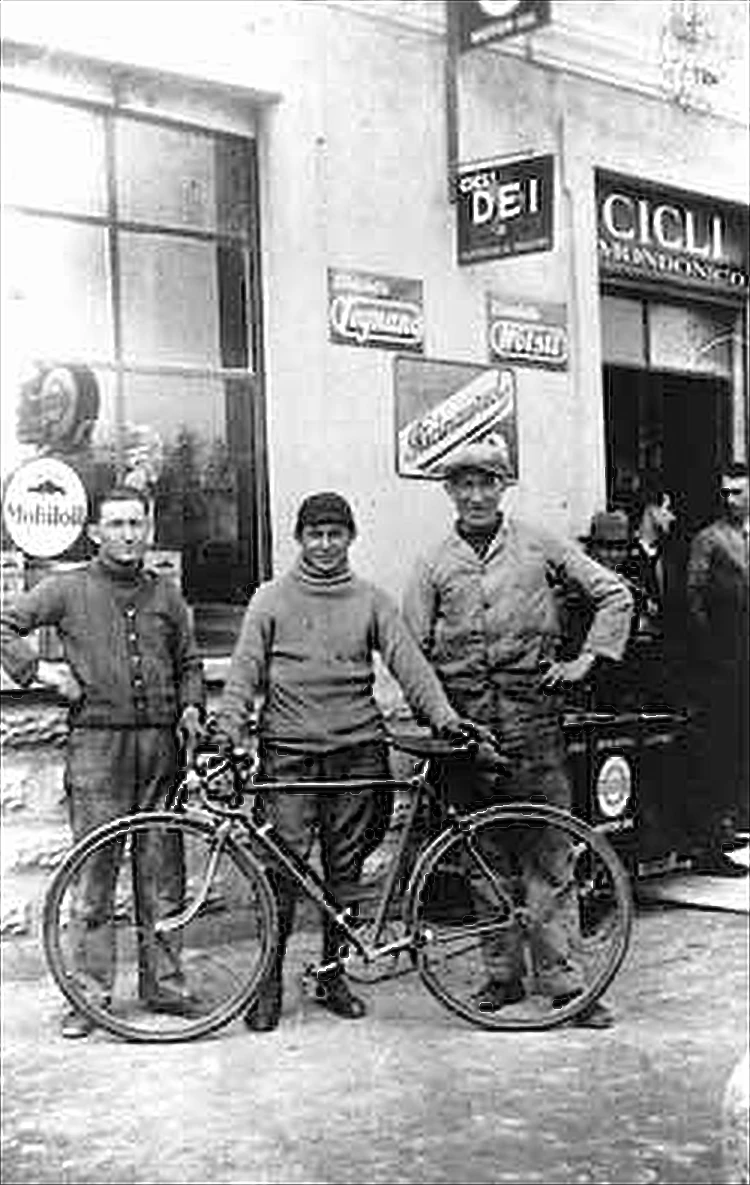
The Mondonicos believe their family has always lived in Concorezzo, a village just outside Milan and close to the Monza motor racing circuit. In 1929 Giuseppe Mondonico and his brother Angelo, both of them industrial mechanics, opened a bicycle shop there. Giuseppe built frames from the start and supplied the local racers, while Angelo took care of repairs. Nobody in the family knows where Giuseppe learned to build a frame: his grandson Mauro, talking with the American importer Bill McGann in 2003, supposed that other builders had taught him. In those earliest prewar years he used both Columbus and Falck tubing.
It was steady and necessary work. In a village like Concorezzo, the bicycle was how people got to work and when the Depression arrived in 1932, Mauro said, most of what came through the door was repairs for customers who could barely pay for them. The brothers worked long hours for very little money and kept the shop open through the war. The family later opened a bar beside it. After the war Angelo went back to industrial work (he died in 1971) and Giuseppe carried on alone, building frames and repairing bicycles.
It was a racing shop as much as a repair shop. Antonio later gave McGann photographs from the 1930s of his father’s shop and of the team that raced out of it, and Giuseppe’s own collection of pictures of the champions of his day, Alfredo Binda and Costante Girardengo among them, ended up in the opening credits of the Giro d’Italia broadcasts on American television. One boy who knew the shop was Ernesto Colnago, who grew up in Cambiago, a few kilometers to the east. The Mondonicos told McGann that the young Colnago raced for a team based at Giuseppe’s shop and often visited the family. At the opening of Concorezzo’s cycling museum in 2017, Colnago himself remembered racing for Aurora Concorezzo and his first win, in the town, at 15. “In Italy,” McGann wrote, “the cycling world is one big family.”
Antonio Mondonico, Giuseppe’s son, was born in 1941 and grew up in the shop, literally and figuratively. As a young man he was given the racing bicycles to look after and then the racing frames to build. By his own account to McGann, the frames he built then were Columbus SL and SP, joined with the long, heavy lugs of the day, pressed from sheet steel and welded, which Italian builders called lastra. Modern investment-cast lugs, he remembered, did not begin to appear until 1977 and 1978.
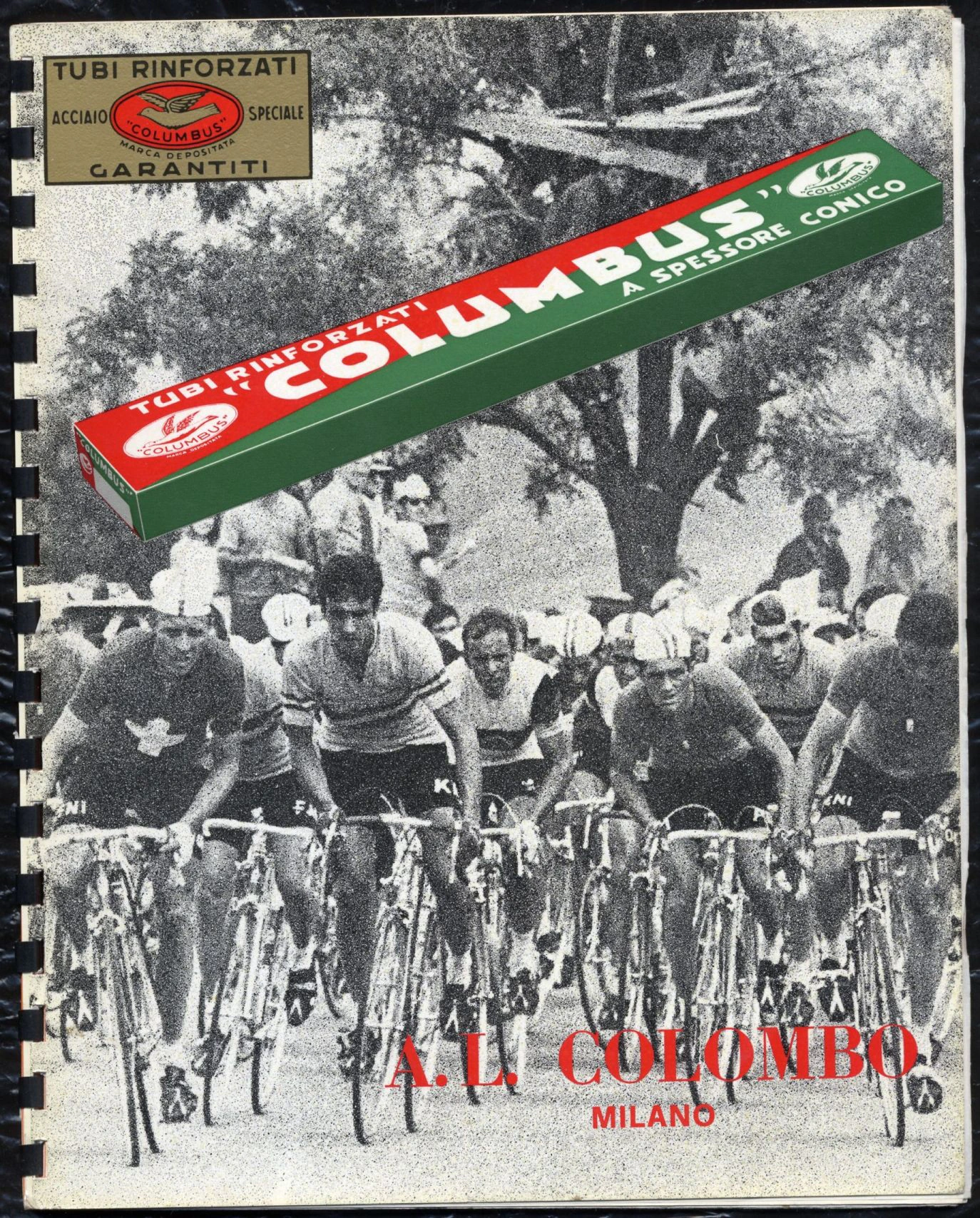
Giuseppe Mondonico died on 30 December 1973 and the shop closed with his passing. Antonio did not stop building, though. Shops were looking for skilled builders and for the next several years his frames went out under other people’s names.
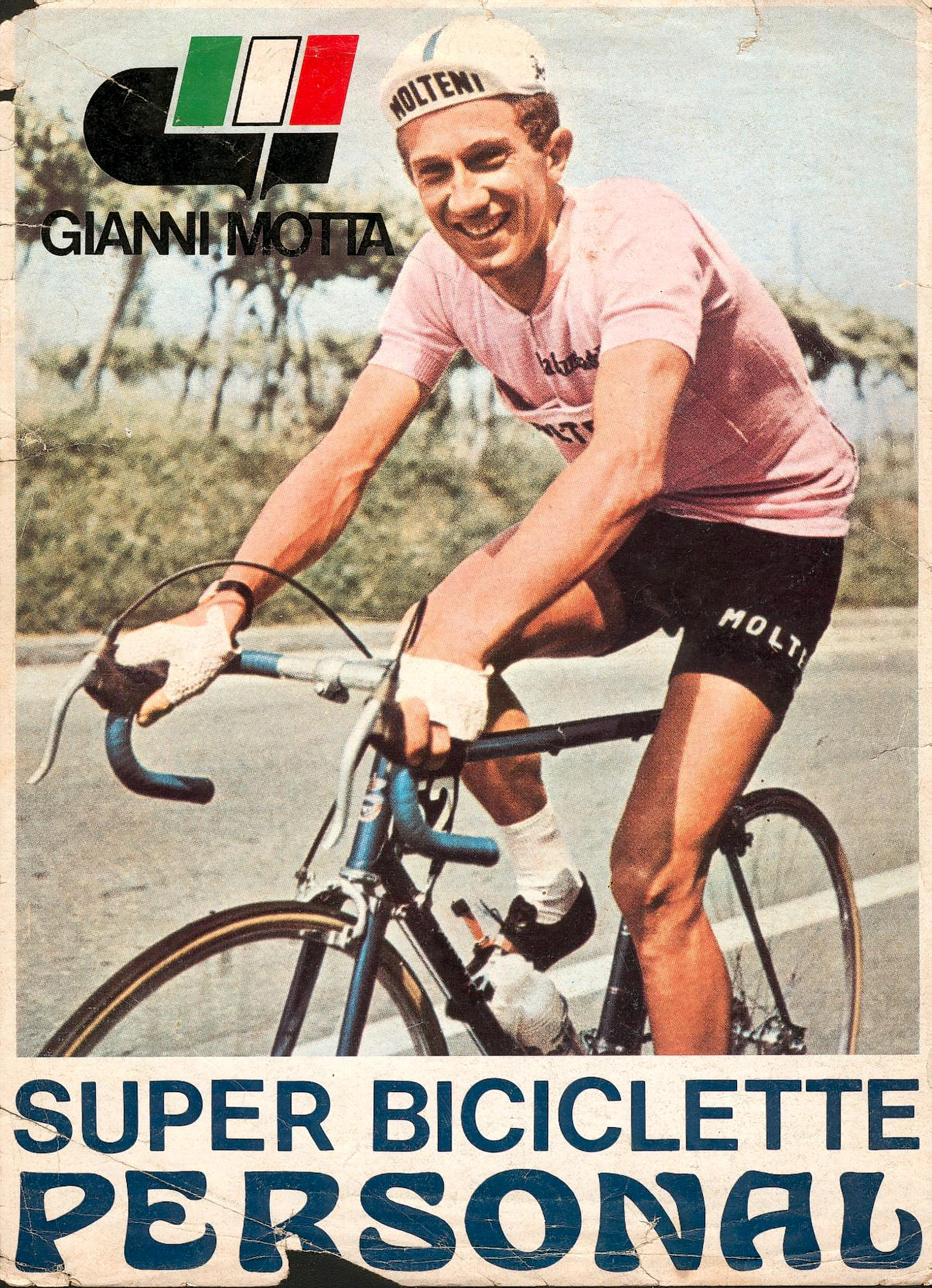
He spent 1976 and 1977 in the shop of Gianni Motta, the winner of the 1966 Giro d’Italia, who had won his first races as a boy at Biassono and Oreno, a few kilometers from Concorezzo. In his own time, and for nothing but love of the sport, Antonio also worked as a mechanic for a French friend who was bringing promising amateurs to race in Italy. One of them was a young Irishman, Sean Kelly, then racing for a club in Metz. Antonio still remembered Kelly sleeping in the Mondonico house in Concorezzo before he went out and won the Piccolo Giro di Lombardia, the amateur Tour of Lombardy, on 2 October 1976. Kelly turned professional the next season and won the senior race three times.
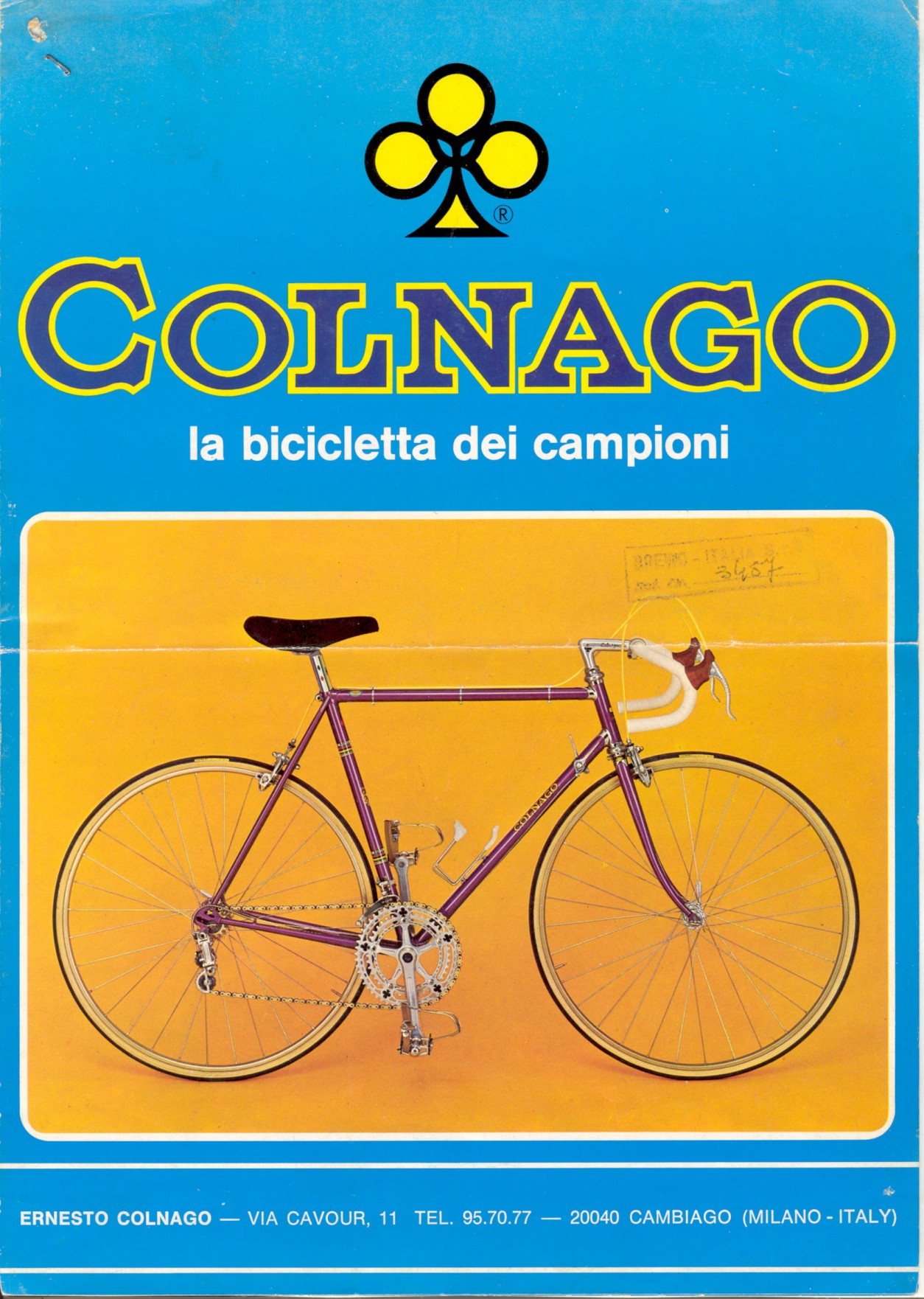
From Motta, Antonio moved to the Colnago shop in Cambiago and built frames there until 1979. There was never a time in his working life, McGann wrote, when Antonio was not building frames. For those years, the frames simply sold under other men’s names.
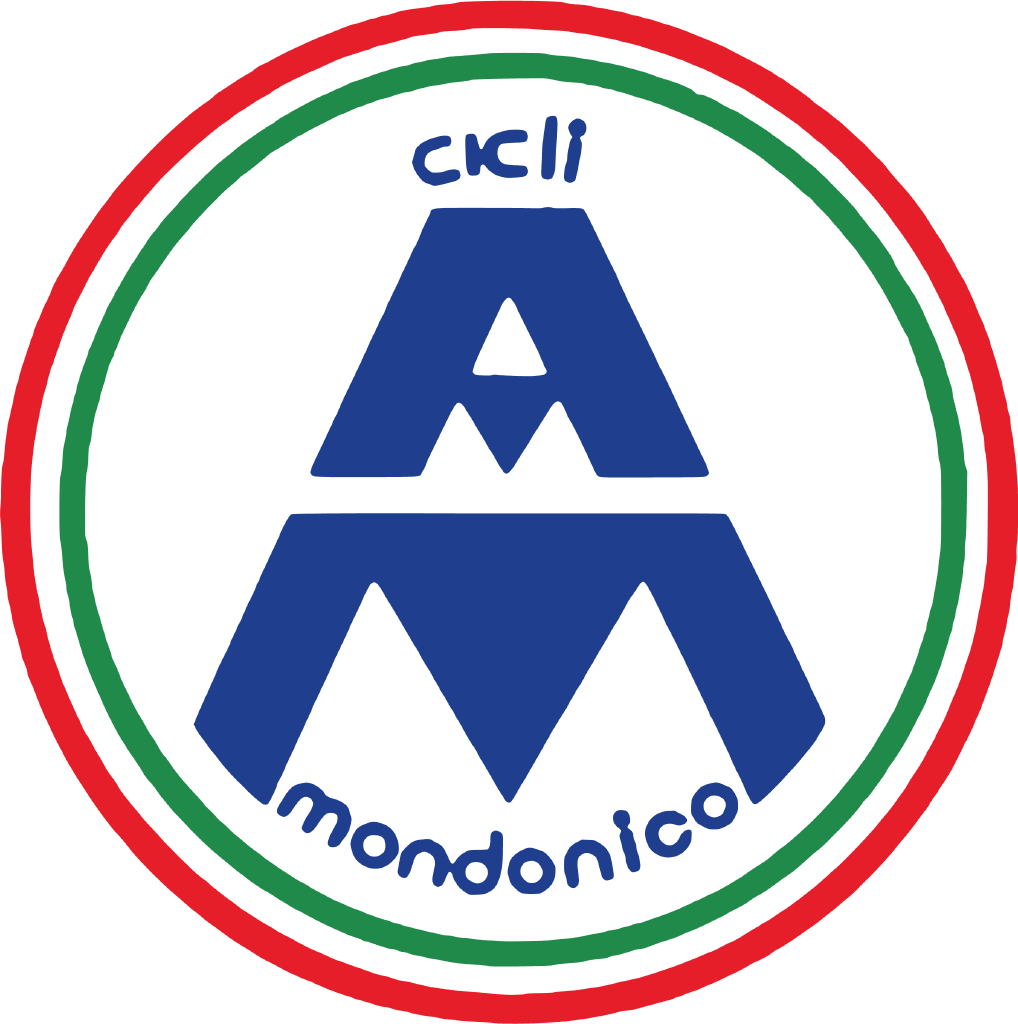
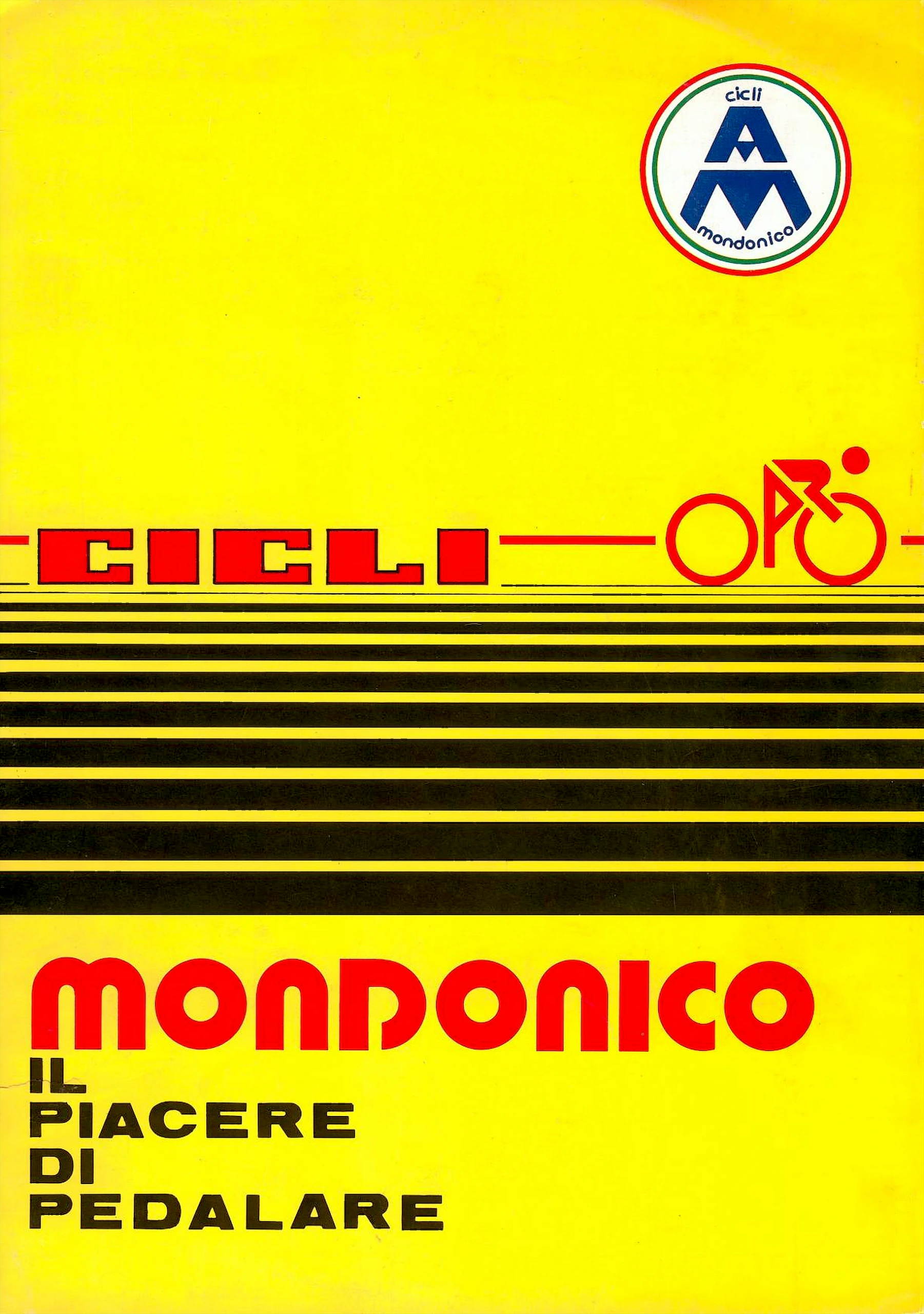
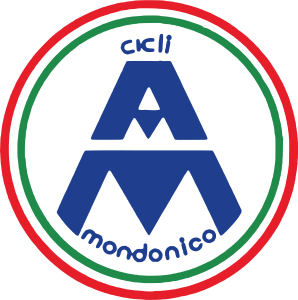
In 1979 Antonio opened a shop of his own and Mondonico frames were on sale again. The shop’s emblem was a round badge edged in red and green, with a blue A standing on a blue M, “cicli” above them and “mondonico” below.
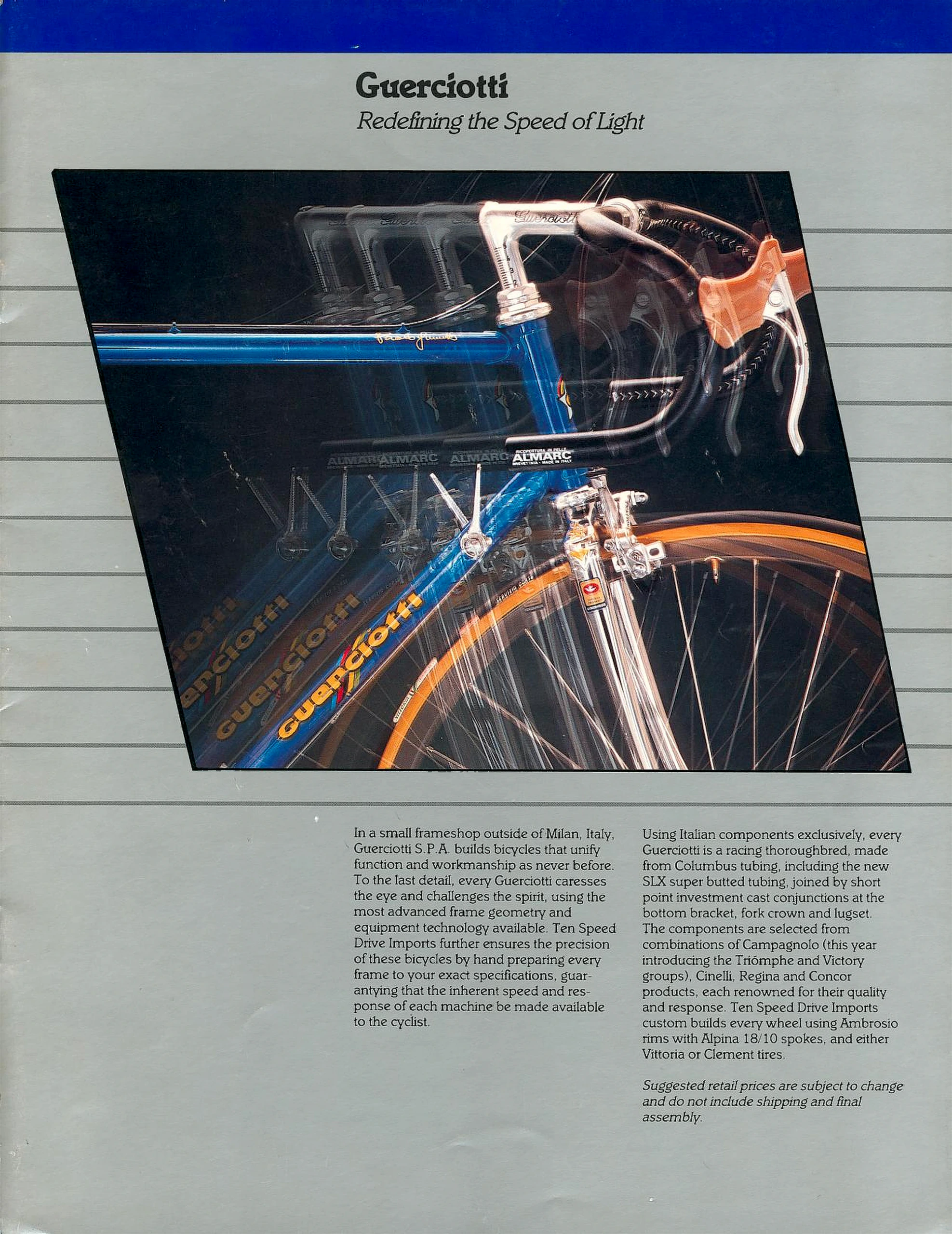
Within a few years a bigger name came calling. Paolo Guerciotti, the Milan maker, had seen demand for his bicycles boom through the late 1970s and early 1980s and had several different builders making his frames. He needed a guiding hand to hold the quality and knew where to look. In 1984 he and Antonio went into partnership to build both Guerciotti and Mondonico frames. With Antonio supervising, the partnership turned out about 2,000 frames a year from a large concrete factory building on the outskirts of Concorezzo. McGann, who came to know both men in those years, remembered it as the shop where Mondonico built mostly Guerciotti frames.
Ebykr’s archive holds three Guerciotti catalogs from those years, printed for the American importer Ten Speed Drive Imports: 1984, about 1985 and 1988. They place the work in “a small frameshop outside of Milan” and give the credit to “the maestro, Paolo Guerciotti.” They never name the builder who, by the Mondonico family’s account, was running the production.
The partners found that they wanted different things and in 1989 they parted. Antonio took his tools home with him. From then on the Mondonico shop was a room at the back of the family house, where he and his son Mauro built a few frames at a time, by hand, with a steady stream of riders and racing people stopping by to talk bicycles.
Father and son worked the old way, with many of the same tools Giuseppe had used. Mauro prepared the materials: he cut and mitered the tubes, filed and readied the lugs, brazed on the fork tips and the small fittings and set up the main triangle in the jig. Antonio brazed the main triangle, assembled the whole frame and made sure it was straight and true. Mauro did the final sandblasting and filing. When McGann photographed the shop in the early 1990s, the jigs and fixtures were painted green, the work of Marchetti & Lange, and there was barely room for the alignment table.
The mark of a Mondonico frame was the pin. Rather than tack-brazing a joint to hold it before the real brazing, Antonio drilled through the lug, at the bottom bracket shell and elsewhere, and hammered in a small pin so that nothing could move under the torch. Giuseppe had not worked that way in the early years. It came later and it became the family’s signature. The Mondonicos built silver fillet-brazed frames as well, for the new shaped and oversized tubes that would not take a lug, and they used carbon fiber for rear triangles. But their hearts were in steel (as with so many of us) and they stayed there while most of the trade ran to other materials.
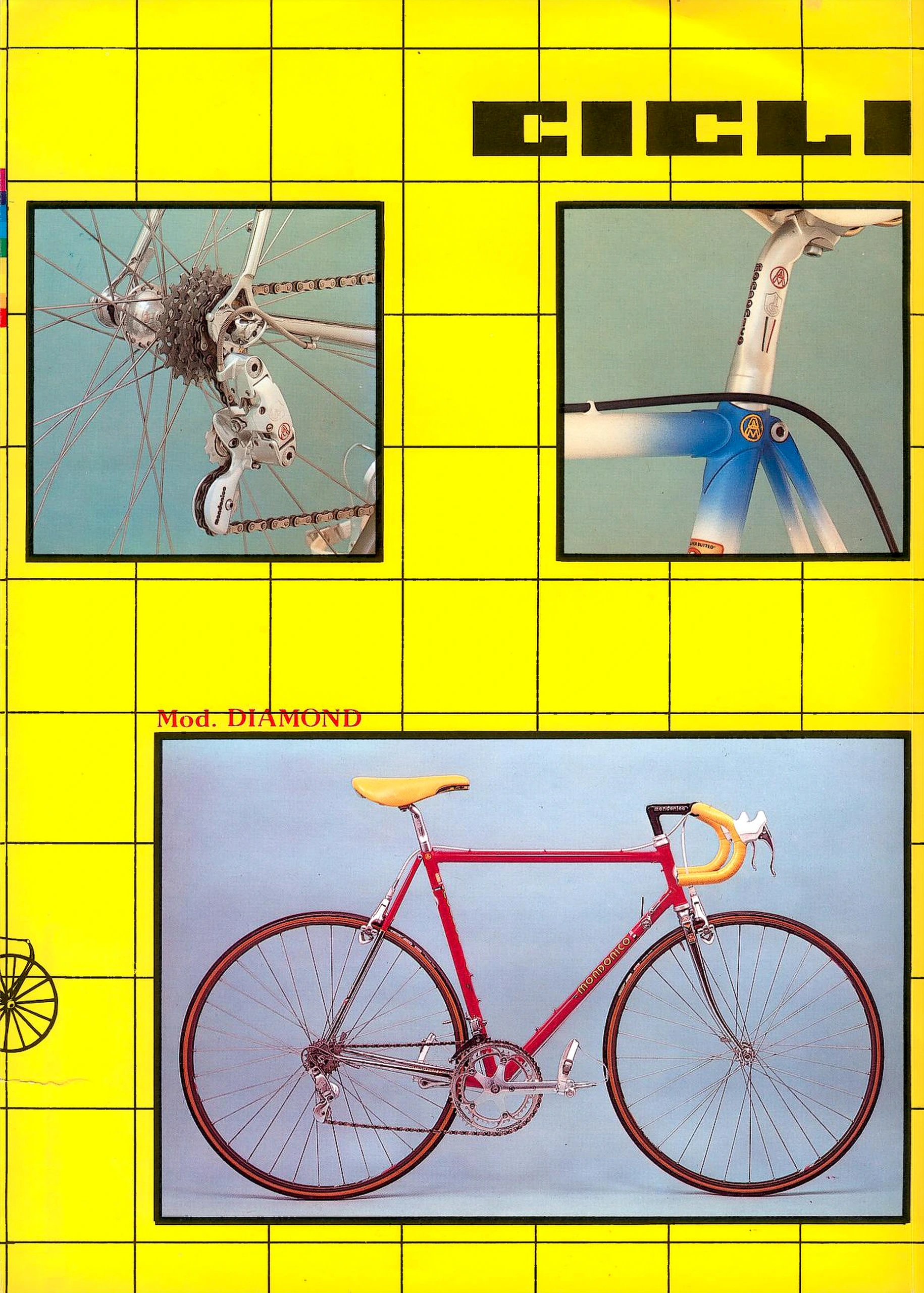
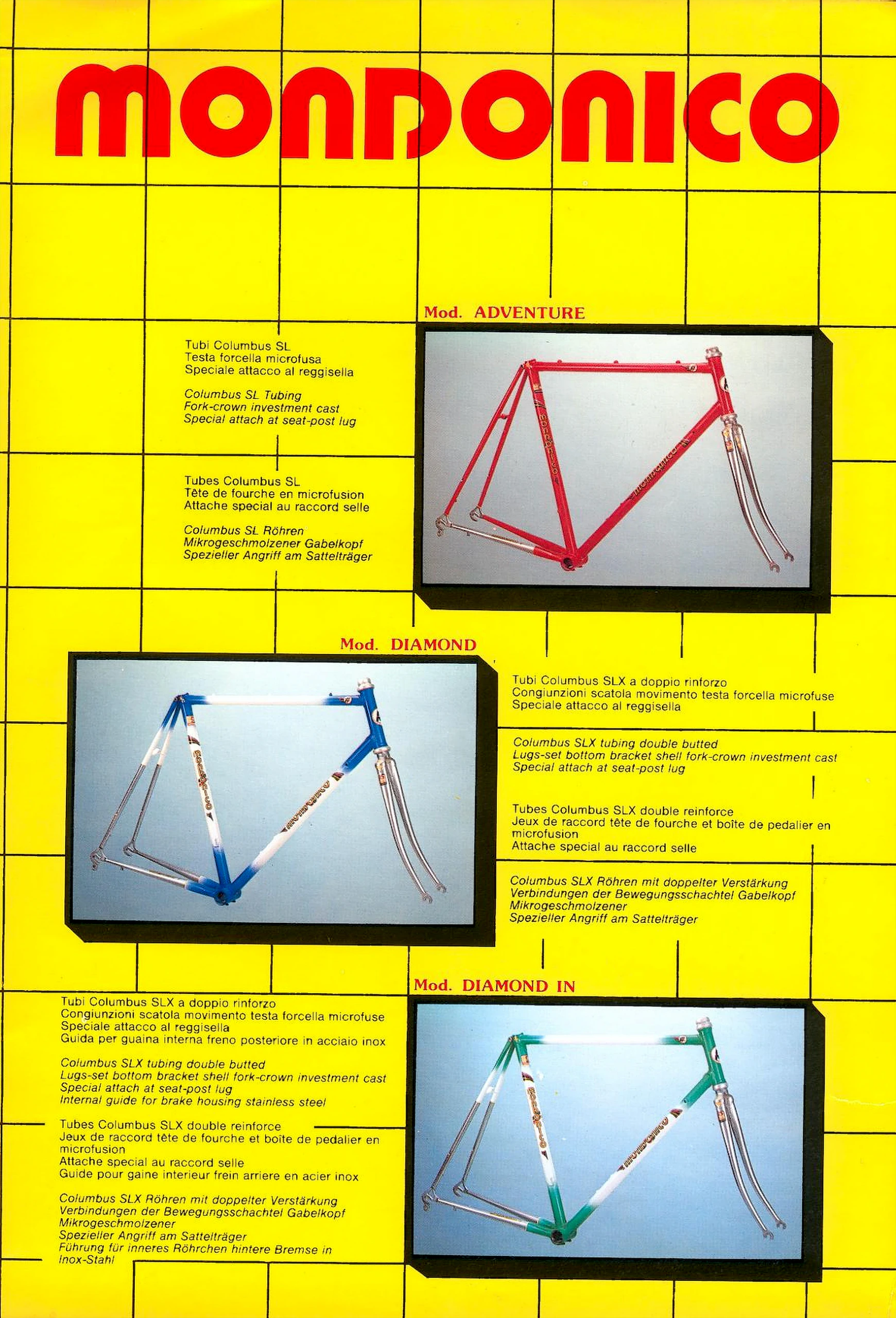
A four-page Cicli Mondonico catalog, now in Ebykr’s archive and printed in a yellow that could stop traffic, shows what the shop sold under its own name. It carries no date. Its cover promises “il piacere di pedalare,” the pleasure of pedaling, and its specifications run in Italian, English, French and German. The Adventure was built of Columbus SL with an investment-cast fork crown and what the catalog calls a “special attach at seat-post lug,” the shop’s own way of joining the seat stays to the seat cluster. The Diamond moved up to Columbus SLX, with investment-cast lugs, bottom bracket shell and fork crown. The Diamond In was the same frame with an internal stainless steel guide for the rear brake housing. Very slick for the day.
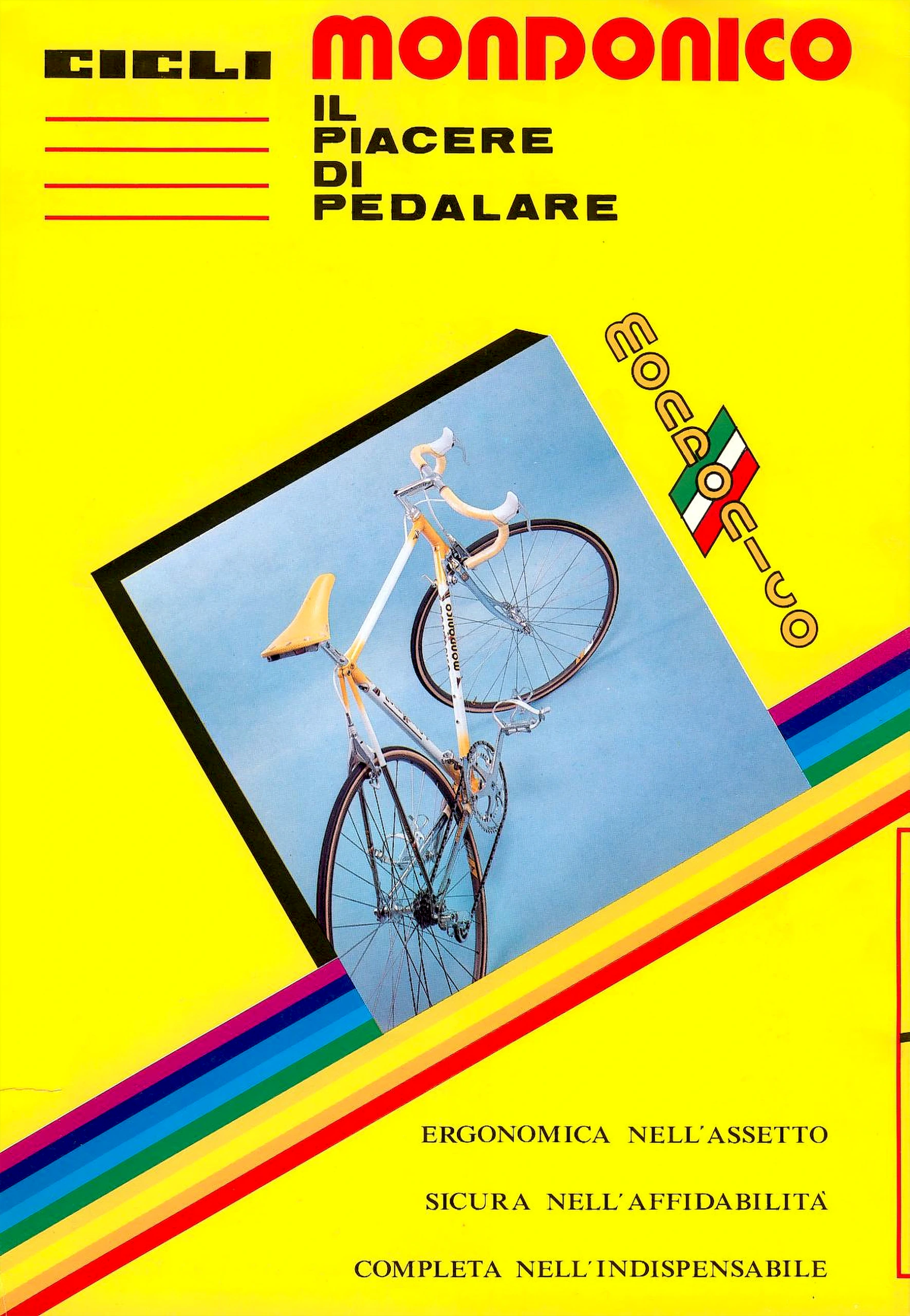
The catalog closes on three lines that could stand for the whole family’s approach: “ergonomica nell’assetto, sicura nell’affidabilità, completa nell’indispensabile,” ergonomic in its position, sure in its reliability, complete in the essentials.
Mondonico frames won classics and stood on the podiums of both the Tour de France and the Giro d’Italia, McGann wrote, and as in years past others took the credit. A professional rode the bicycle of his team’s sponsor and the sponsor’s decals said nothing about who had held the torch. McGann named one rider: Claudio Chiappucci of the Carrera team, who won Milan-San Remo in 1991 and stood on the podiums of the Tour and the Giro in the early 1990s. He photographed Chiappucci with Antonio in the old shop, the two of them holding a frame with no decals on it, and declined to say where it was going. He compared the arrangement to Alex Singer building for Raymond Poulidor and Faliero Masi building for Eddy Merckx.
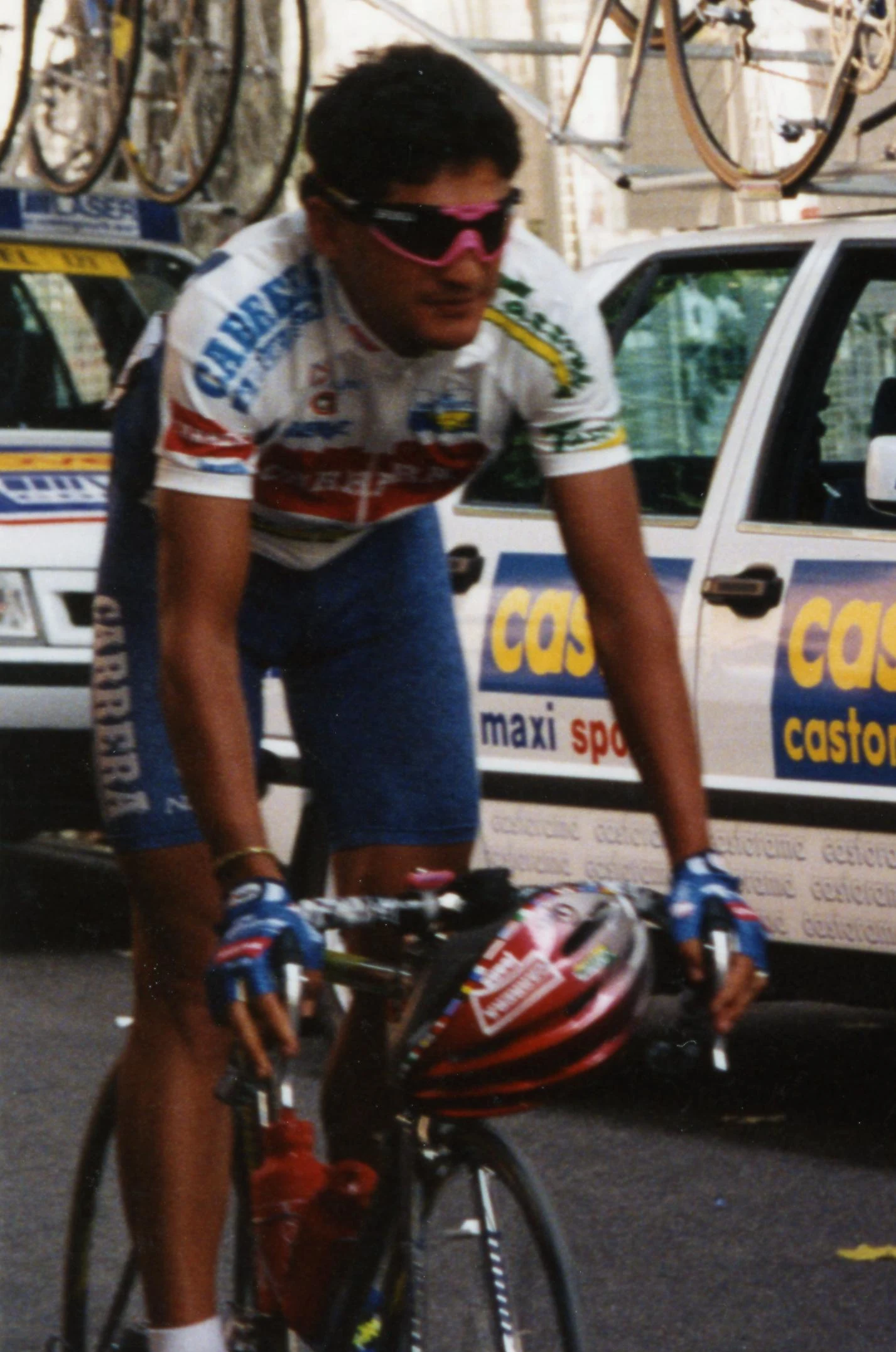
Even friends could not always be sure which frames were his. Heather owned a Colnago-branded track bicycle that she and Larry believe Antonio built. Colnago, Larry points out, had been one of the shop’s customers.

In America the Mondonico name was carried by Torelli Imports, the company Bill and Carol McGann ran in Camarillo, California, selling Italian frames and bicycles under the Torelli name and representing other Italian makers besides. Looking for a top Italian frame to sell, McGann went to the Milan show, met the Mondonicos and Paolo Guerciotti there and decided that the candy-apple red Mondonico frame in the middle of their stand was the most beautiful frame at the show. Torelli became Mondonico’s American distributor and stayed so until the shop closed. (McGann’s own accounts date the start to 1983 in one place and, in a longer one, to a first meeting at the 1985 show and distribution from 1986.)
Antonio built under both names. For Torelli he built the Express SLX of the early 1990s, with a sloping Cinelli fork crown and a Cinelli bottom bracket shell, and the Nitro Express in oversized Columbus EL-OS, a bicycle that in McGann’s view simply did not get any better. Under the Mondonico name came the shop’s own models through the 1990s and into the 2000s: the EL-OS Monostay of about 1996, the Foco with its fastback seat stays, the Futura Leggero and the Monza in Nemo 747, the tubing that Torelli developed with Columbus, and at the very end frames in Columbus Spirit, which only appeared in 2004.
The business became a friendship and then something less usual. After Antonio measured McGann and built him what McGann called the best-riding and best-fitting bicycle he had ever ridden, McGann decided that other riders should have the same chance. From the late 1990s he would meet Antonio on the East Coast and the two would cross the country visiting bicycle shops, Antonio measuring riders for frames he would take home to Concorezzo and spend most of the next year building. In some years, McGann wrote, Antonio nearly sold out his whole year’s production on those trips. By 2003 Mauro came along too.
For Torelli’s 20th anniversary, Antonio built a run of 100 frames, with customers for the edition measured on one of the American tours. They were lugged Columbus frames with polished lugs, a T for Torelli in the lugwork and a 20th Anniversary mark stamped into the seat lug, painted in the green, white and red of the Italian flag and numbered from 1 to 100. Accounts of the edition date it to 2001 or 2002.
Larry met Antonio at the Interbike trade show, where Torelli had a stand and Mauro was there with his father. One thing led to another, as Larry tells it, and soon Antonio had his tape measure out; Heather was not there, so her measurements went down on the same page from Larry’s memory. The couple were a few years into CycleItalia and riding bicycles supplied by another company, and they liked the idea of guiding on bicycles their clients could buy from Torelli and Mondonico. A few months later boxes arrived from Torelli holding two made-to-measure Mondonico frames and forks in Nemo 747, painted in aranciata, the orange that was, they were told, Mondonico’s signature color for the bicycles it supplied. The invoice in the box read zero. Larry put a seatpost in to its limit line, bolted on a saddle and measured: the saddle height was exactly the one he had ridden for years.
The bicycles rode as well as they measured, and CycleItalia invited Antonio and Mauro to its base in Piedmont to measure the tour clients and take orders. When the anniversary frames were built, Larry and Heather commissioned two of them for themselves. Heather’s first Mondonico, seven or eight years old by then, was repainted red by Jim Allen of CycleSmiths in 2009.
Larry still has the three bicycles Antonio built for him. The first, repainted in the tricolore, lives at his brother’s house in Southern California. The other two, one of them his Torelli 20th Anniversary, number 71 of 100, are with him in Sicily, where he and Heather moved in 2018. “Treasures forever,” he calls them. Indeed.
By the middle 2000s the trade had turned against them. Performance riders were moving to carbon fiber and as the dollar fell against the euro the price of a Mondonico in America had to rise steeply. Torelli was by then their last major distributor. In September 2005 Antonio and Mauro made one last trip to the United States to take orders for made-to-measure frames, and those frames, finished in the little shop behind the house, were the last. The shop closed in early 2006 and a craft the family had practiced since 1929 ended with it.
Mauro took what he had learned into the trade. He became the international sales manager for Columbus, the Milan tube maker whose steel his grandfather had used before the war, and later moved to Colnago. For about 15 years he also drove the jury and race direction cars in RCS Sport’s races, the Giro d’Italia among them. In 2010 Larry and Heather went to watch the Strade Bianche in Tuscany and ran into Antonio at the start. He hustled them past the race security to where Mauro was waiting at the wheel of the organizer’s car.
Retirement did not take Antonio far from bicycles. He was among the people behind Brianza d’Epoca, the association that in 2017 turned an empty house on via 4 Novembre in Concorezzo into a small museum of cycling. In 2021 the collection, Colnagos and Mondonicos among the bicycles, moved to a more suitable home on via Petrarca, with tools, a workbench and a library on the history of the bicycle beside them.
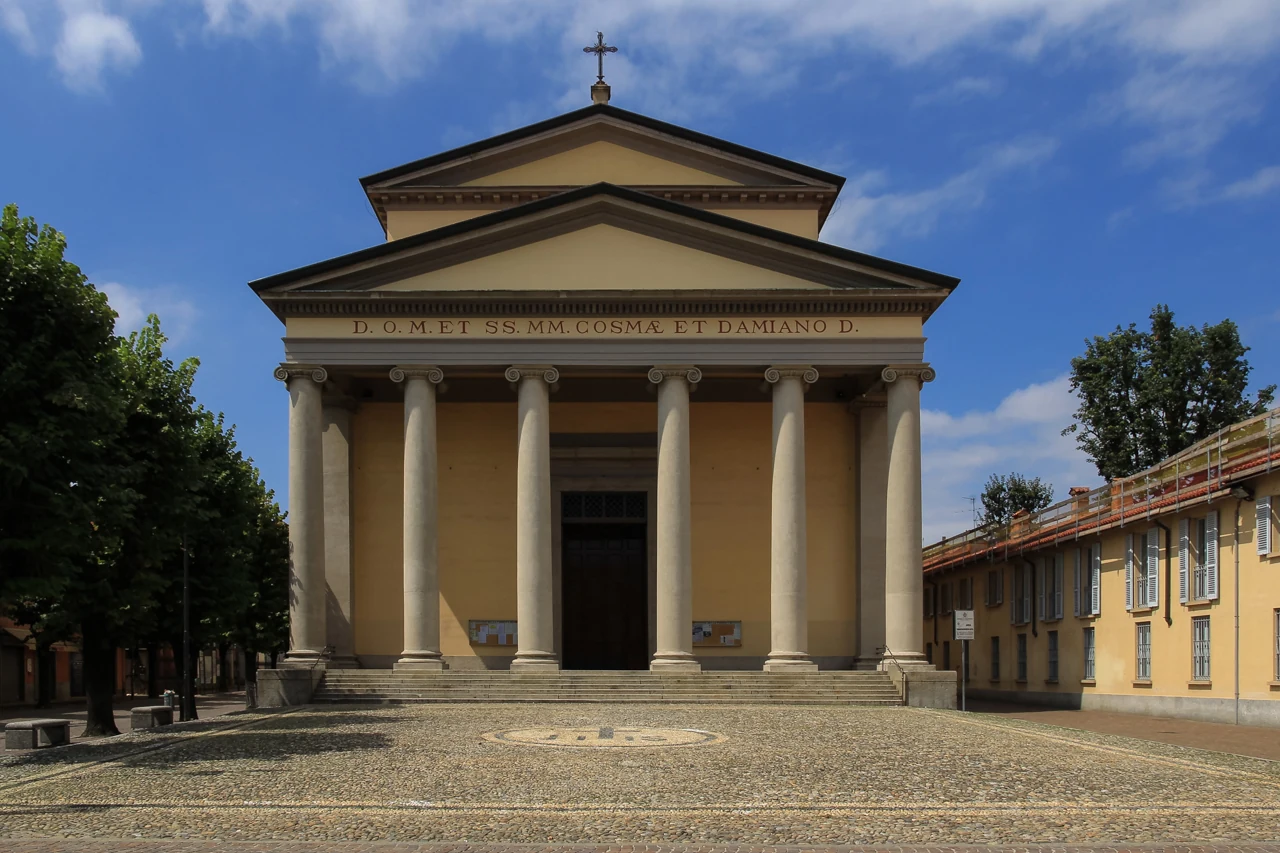
Antonio Mondonico died on Friday, 9 June 2023, in Como, where he had gone for rehabilitation. His funeral was held on 12 June in the parish church of Saints Cosmas and Damian in Concorezzo. That November the town gave him, posthumously, its highest civic honor, the Gügia dòra, the golden needle, a name that recalls the needle making in the town’s industrial history. The mayor, Mauro Capitanio, said that Antonio’s passion for the bicycle had given the town something of real value, in business and in culture alike.
Bill McGann, who sold his frames for some 20 years, called him “one of the greatest men to ever take a torch to a steel tube.” The frames are still out there, in the museum in Concorezzo, in collections on both sides of the Atlantic and in Larry’s house in Sicily. If you have a Mondonico catalog, a price list or a photograph of the shop, Ebykr would like to hear from you through the contact page.
BikeRaceInfo (Bill McGann): The Story of the Mondonico Framebuilding Shop, from talks with Antonio and Mauro Mondonico in late 2003
BikeRaceInfo: A Visit to the Mondonico Frame Shop, page 1 and page 2
BikeRaceInfo: Mondonico Bike and Frame Photo Gallery
BikeRaceInfo: photographs of the Mondonico shop in the 1930s
BikeRaceInfo: Memorabilia from our days of owning Torelli Imports
CycleItalia (Larry and Heather): RIP Antonio Mondonico, 13 June 2023
CycleItalia: Eye Candy, 9 October 2009 and Eye Candy Completed, 18 October 2009
CycleItalia: Interbike Expo 2010, Part 4
CycleItalia: A Tale of Three Bicycles, 17 November 2018
CycleItalia: Catching Up, 8 February 2022
tuttoBICI: Il ciclismo dice addio ad Antonio Mondonico, 11 June 2023
Concorezzo.org: Addio a Mondonico, mago e maestro delle biciclette
Concorezzo.org: Gugia dòra, omaggio alla memoria di Antonio Mondonico
Prima Monza: Gügia dòra a Concorezzo, ecco chi riceverà la benemerenza cittadina (2023)
Concorezzo.org: La storia del ciclismo rivive nella casa museo di Concorezzo (2017)
Concorezzo.org: Concorezzo, nuova sede per il museo delle bici (2021)
Classic Cycle, Bainbridge Island: Torelli 20th anniversary bike by Mondonico
Jumps for Joy: Torelli, Steel is Real (2011), quoting an eBay listing for frame 40 of 100
Classic Rendezvous: Mondonico
Wikipedia: Sean Kelly (cyclist)
Mondonico catalog, undated, four pages (Ebykr Catalog Archive; scan: bulgier.net)
Guerciotti catalog of 1984 (Ebykr Catalog Archive)
Guerciotti catalog of about 1985 (Ebykr Catalog Archive)
Guerciotti catalog of 1988 (Ebykr Catalog Archive)
Larry T., comment on Ebykr’s About page, 11 November 2026
 Mondonico
Ebykr documents this marque across the archive. Here is the rest of it.
The Ebykr Digest
New articles, timelines, catalog finds and registry activity — assembled from the archive once a month. Your address is never shared.
Double opt-in. One email per month. Unsubscribe at any time with one click.