About Ebykr
Ebykr celebrates classic and vintage lightweight bicycles through provoking imagery and opinion. Let's roll together!
About Ebykr
Ebykr celebrates classic and vintage lightweight bicycles through provoking imagery and opinion. Let's roll together!

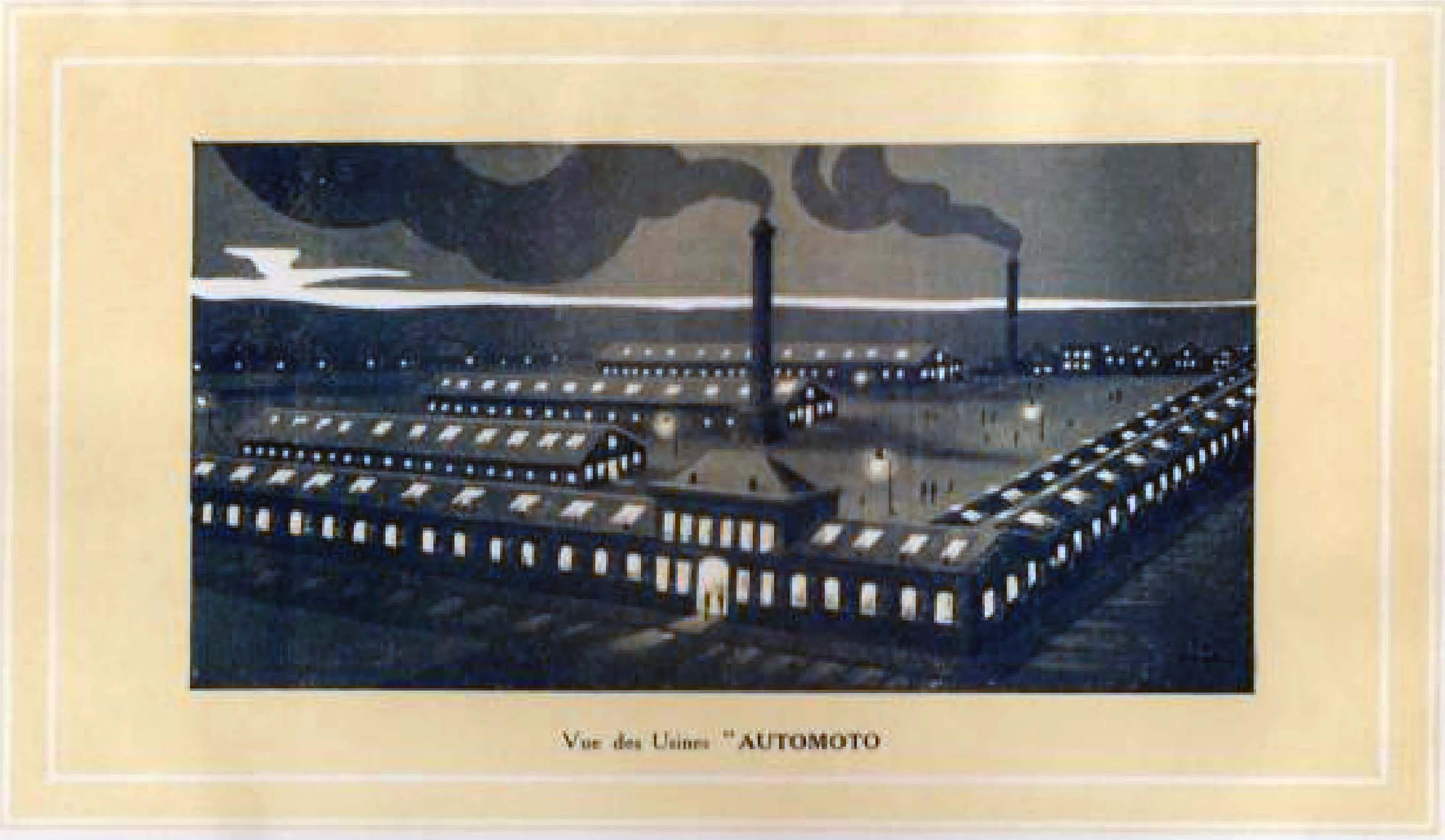

From its purposeful origins in Saint-Étienne, the legendary “cycling capital of France,” the history of Cycles Automoto is a testament to early industrial innovation and refined craftsmanship. Founded in 1889 by four businessmen who shared a passion for mechanical transport, the company evolved through several corporate reorganizations before officially assuming the name Cycles Automoto in 1910. This timeline traces the brand’s trajectory from its 19th-century roots as a shared forum for design ideas to its emergence as a premier manufacturer of lightweight racing bicycles adorned with the iconic three leaf clover emblem. Throughout its existence, the marque maintained a reputation for utmost quality and workmanship that elevated its machines to become the preferred choice of the cycling elite.
Central to the Automoto legacy is a golden era of professional racing dominance, most notably a consecutive winning streak in the Tour de France from 1923 to 1926 as captained by international legends like Henri Pélissier and Ottavio Bottecchia. Clad in their distinctive “violet” racing jerseys, the Automoto team helped promote the marque across borders, establishing a significant market presence in regions as far-reaching as South America. Though the independent adventure came to an end in 1959 when the brand was purchased by a subsidiary of Peugeot, the legacy of Automoto survives through its striking commercial artwork and the growing premiums commanded by its remaining vintage specimens.
Here is a chronological timeline of key bicycle-related events in the history of Cycles Automoto, which once boldly declared itself “Le Triomphe De La Qualite Française”:
| Event Date(s) | Event Type | Event Description |
|---|---|---|
| 1889 | Professional Society Formed | Businessmen Montet Chavanet, Claudius Gros, Pierre Lapertot and Messieur Pichard form the “Société de Constructions Mécaniques de Cycles et Automobiles” in Saint-Étienne as a forum to exchange ideas on unpowered and powered transportation. |
| 1898 | Trademark Registration | The trademark AUTOMOTO is registered by Gros, Goudefer and Pichard for cycle and car parts. |
| 1899 (May) | Company Merger | The associates merge to form the “Société de construction de cycle et automobile Chavanet, Gros, Pichard et Cie” with a cloverleaf emblem. |
| 1901 | Corporate Reorganization | The business is listed as a limited company and renamed “Société Anonyme des Constructions Mécaniques de la Loire” (CML). |
| 1908 | Strategic Pivot | Following a forced liquidation in 1907, the company restarts as “Société Anonyme Nouvelle de Construction de la Loire AUTOMOTO,” abandoning its car department to focus exclusively on cycles and motorcycles. |
| 1910 | Name Change | The firm officially assumes the name Cycles Automoto. |
| 1913 | Racing Legend | Cyclist Lucien Petit-Breton represents the marque in the Tour de France; his performance is memorialized in the iconic “Plus vite que les étoiles” (Faster than the stars) postcard. |
| 1919 | Racing Consortium | Automoto joins the La Sportive consortium alongside marques like Peugeot and Alcyon to pool resources and control rider salaries during the post-WWI rebuilding period. |
| 1919 | Sub-Brand Expansion | The company begins utilizing Christophe as a sub-brand for its machines. |
| 1923 | Major Race Victory | Henri Pélissier wins the Tour de France riding for Automoto, marking the beginning of a dominant era for the brand in the peloton. |
| 1924–1925 | Race Victory | Ottavio Bottecchia wins consecutive Tour de France titles (1924 and 1925) aboard Automoto bicycles. |
| 1926 (June) | Marketing Partnership | Automoto co-organizes “Les Étoiles de France Cyclistes’ with the newspaper Le Matin, a massive amateur championship involving over 1,000 riders. |
| 1926 | Race Victory | Lucien Buysse wins the Tour de France for Automoto, completing a four-year winning streak for the brand (1923–1926). |
| 1927 | Brand Expansion | The company adds the Jean Louvet marque to its commercial portfolio. |
| 1930 (July) | Industrial Accord | Automoto enters into technical and commercial agreements with Peugeot. |
| 1931 | Acquisition | The company is absorbed by Peugeot, though the Saint-Étienne factory maintains its independent identity and production. |
| 1938 | Production Milestone | Monthly cycle production reaches 3,250 units. |
| 1946 | Post-War Production | Following the war, Automoto manufactures 40,000 bicycles in a single year. |
| 1951 | Industrial Supply | Automoto acts as a primary manufacturer, providing complete bicycles to the marque Monet Goyon. |
| 1952 | Catalog Peak | The bicycle line reaches a height of twenty models, including “grande,” “ballon,” “tourisme” and “course” models. |
| 1953 | Manufacturing Accord | Automoto enters an agreement with Peugeot, Terrot and Monet Goyon to produce common models where Automoto builds the frames and partners supply engines for motorized versions. |
| 1954 | Consolidation | The brand merges with Hurtu and enters into an industrial alliance with Ravat. |
| 1955 | Sub-Brand Expansion | The marque Socol appears for specific bicycle models in the Automoto portfolio. |
| 1957 | U.S. Export | Records indicate the direct export of a Professional Light Racer (Model ACSP 30) to a customer in the United States. |
| 1959 | Corporate Dissolution | Peugeot subsidiary Indénor purchases Automoto; the brand is dissolved as an independent entity to eliminate overlapping business lines. |
| 1961 | Export Association | The brand joins the France Export Association (Frexa) in its final years of operation. |
| 1962 (July) | Final Cessation | All two-wheeled production under the Automoto name officially ceases as the brand is fully integrated into the Peugeot group. |
From the iconic cloverleaf lugs to the purple-and-gold racing heritage, help us document surviving examples and serial number patterns in our Automoto forum threads.