About Ebykr
Ebykr celebrates classic and vintage lightweight bicycles through provocative imagery and opinion. Ride along with us.
About Ebykr
Ebykr celebrates classic and vintage lightweight bicycles through provocative imagery and opinion. Ride along with us.

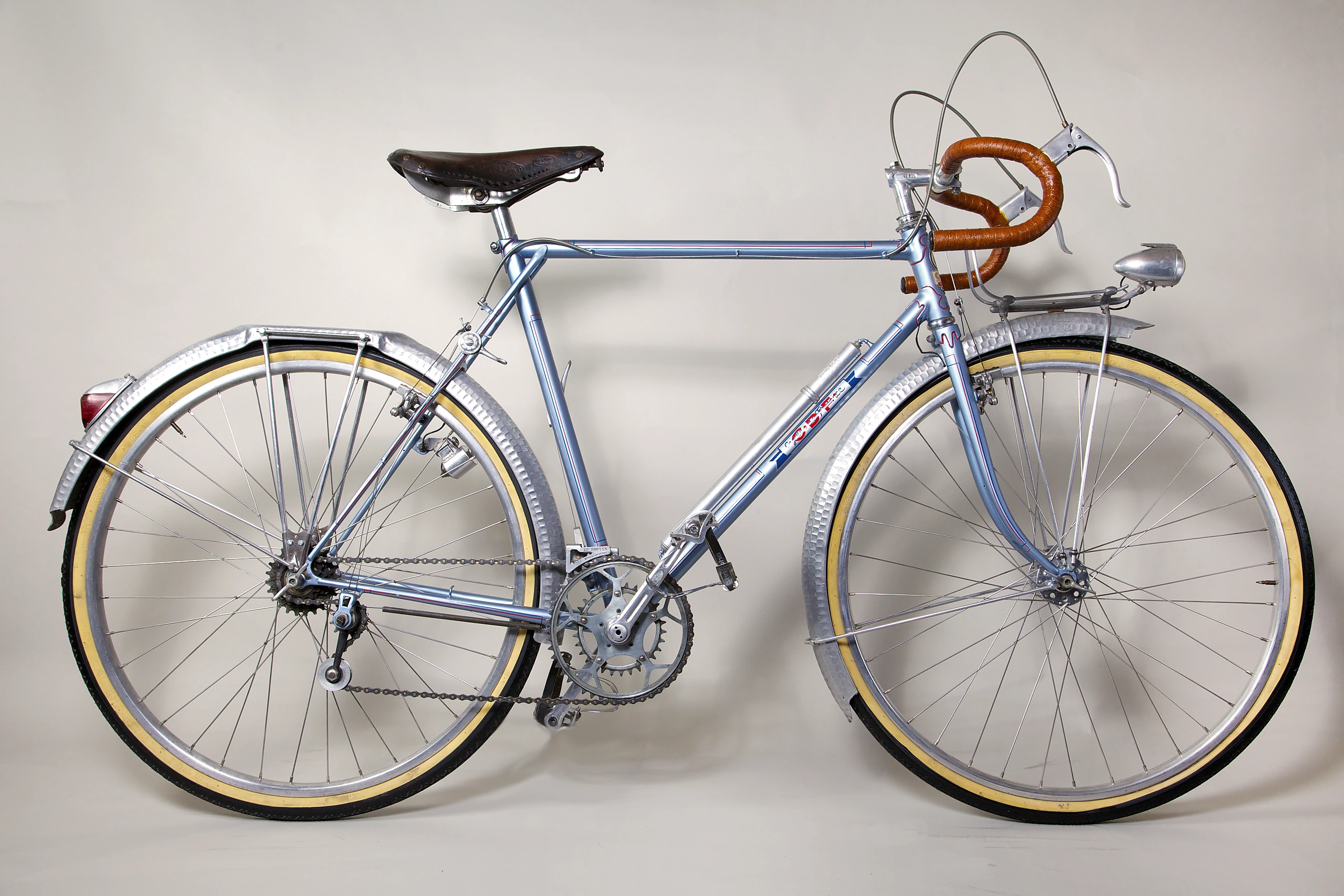
A 650B randonneuse built to exhibition standard in 1948 by Cycles de France of Saint-Etienne, and the two Daniel Rebour plates that put the marque on the page.
Almost every French randonneuse that survives from the late 1940s came from a constructeur: a shop of one or two men who cut, brazed, filed and finished each frame to a customer’s measurements. This one did not. It came out of a factory in Saint-Étienne that was turning out several thousand bicycles a year and it was built to be looked at.
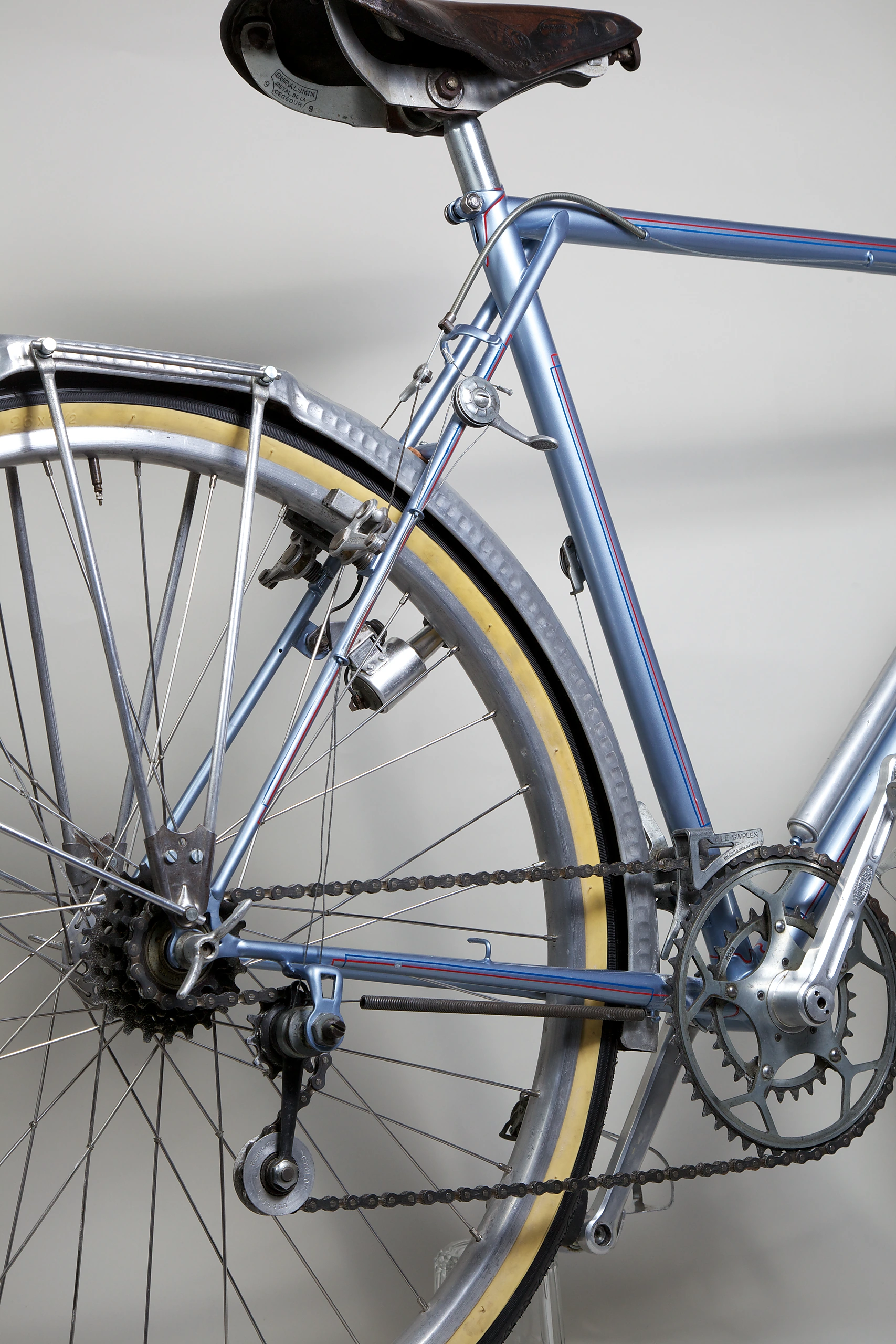
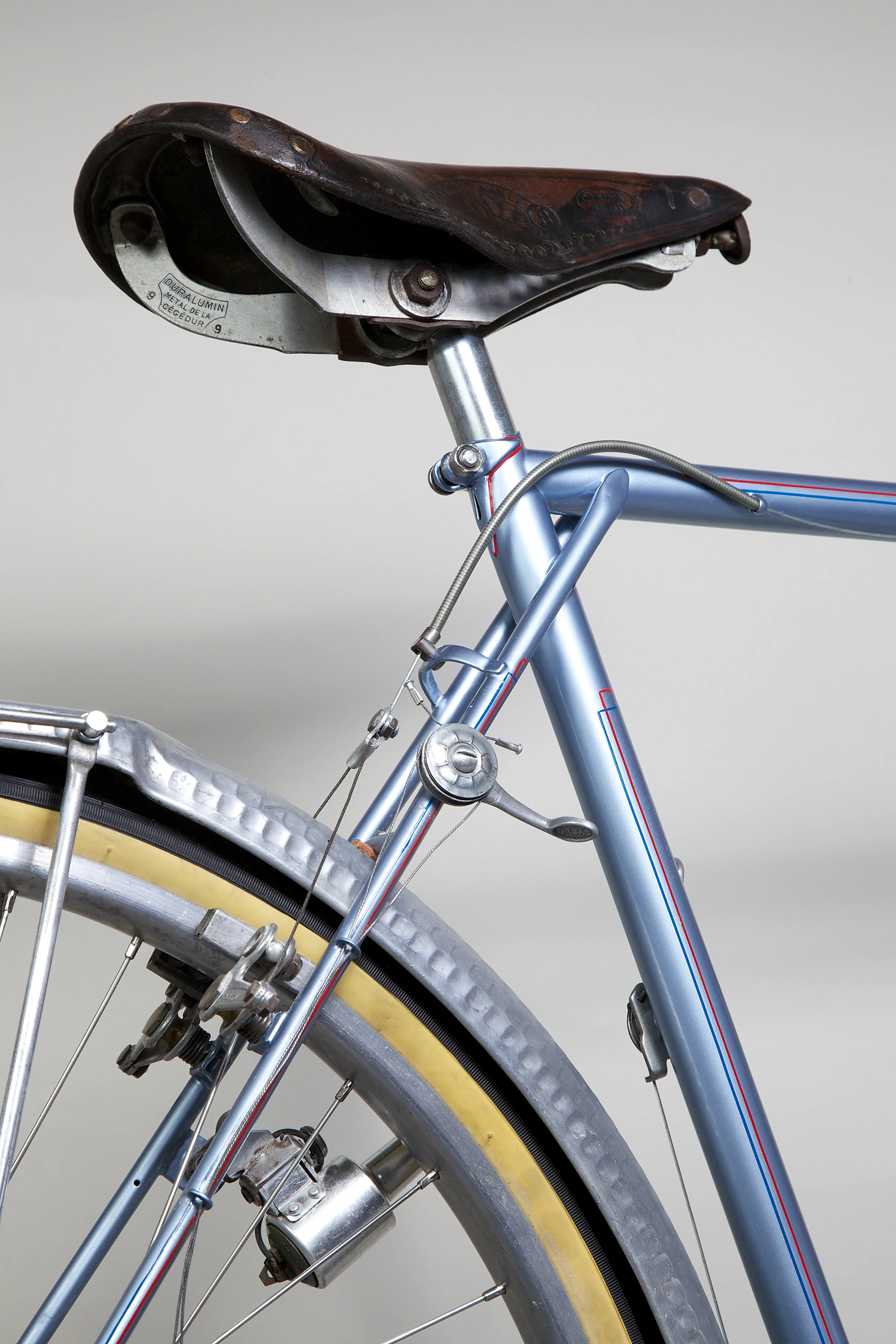
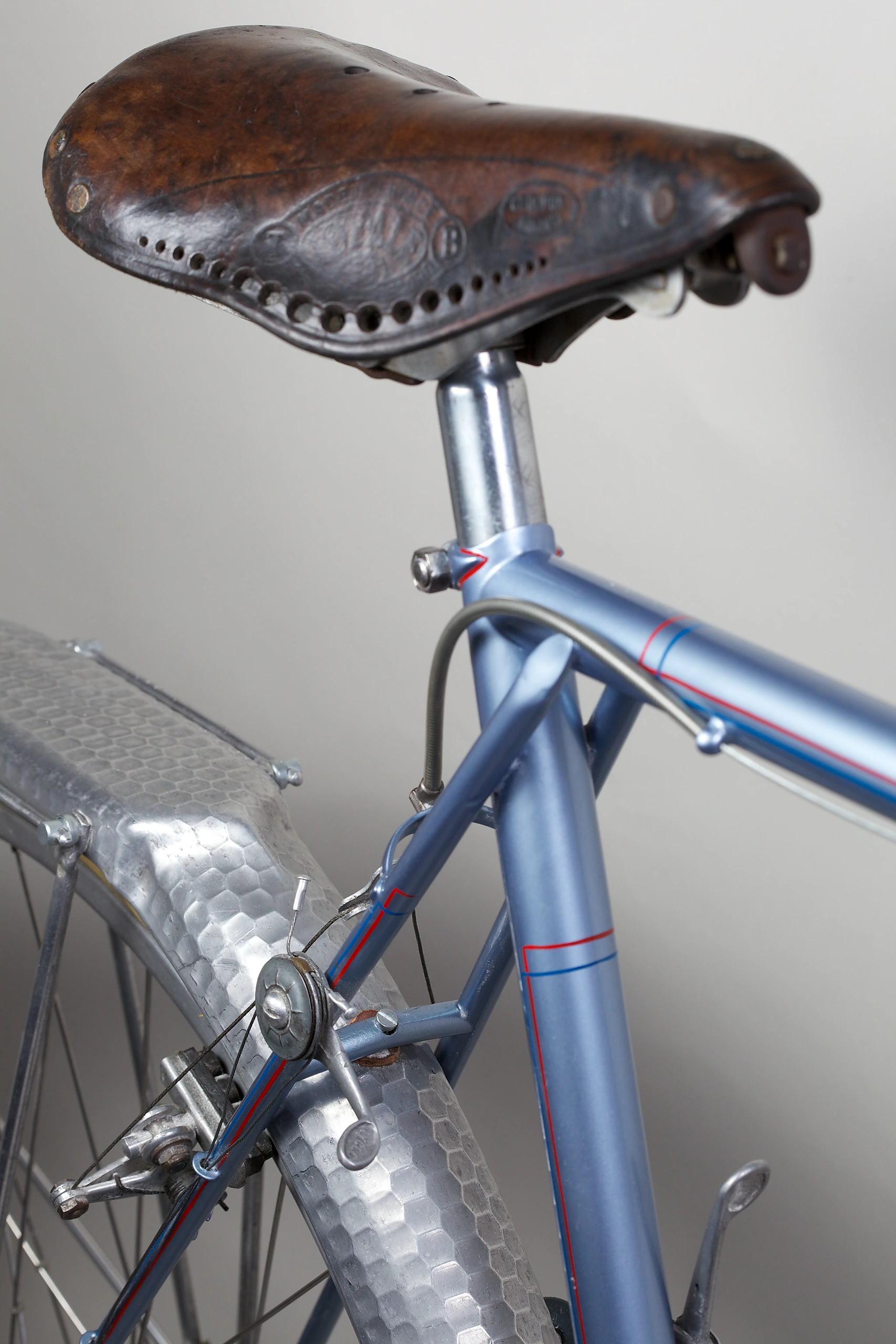
The seller called it a concours machine, assembled for a Paris show in 1948 with every innovation and special part then available. Nothing on the bicycle contradicts him. The wheels are 650B on drilled large-flange alloy hubs held by wing nuts. The fenders are hammered Lefol. The brakes are Mafac cantilevers, which is to say the first product Mafac ever sold. The Idéale saddle sits on a Duralumin frame. And the gears are worked by drum levers clamped to the seat stays, behind the rider, which is not how anybody built a touring bicycle then or since.
That last detail is the one worth following, because it is the one Daniel Rebour drew.
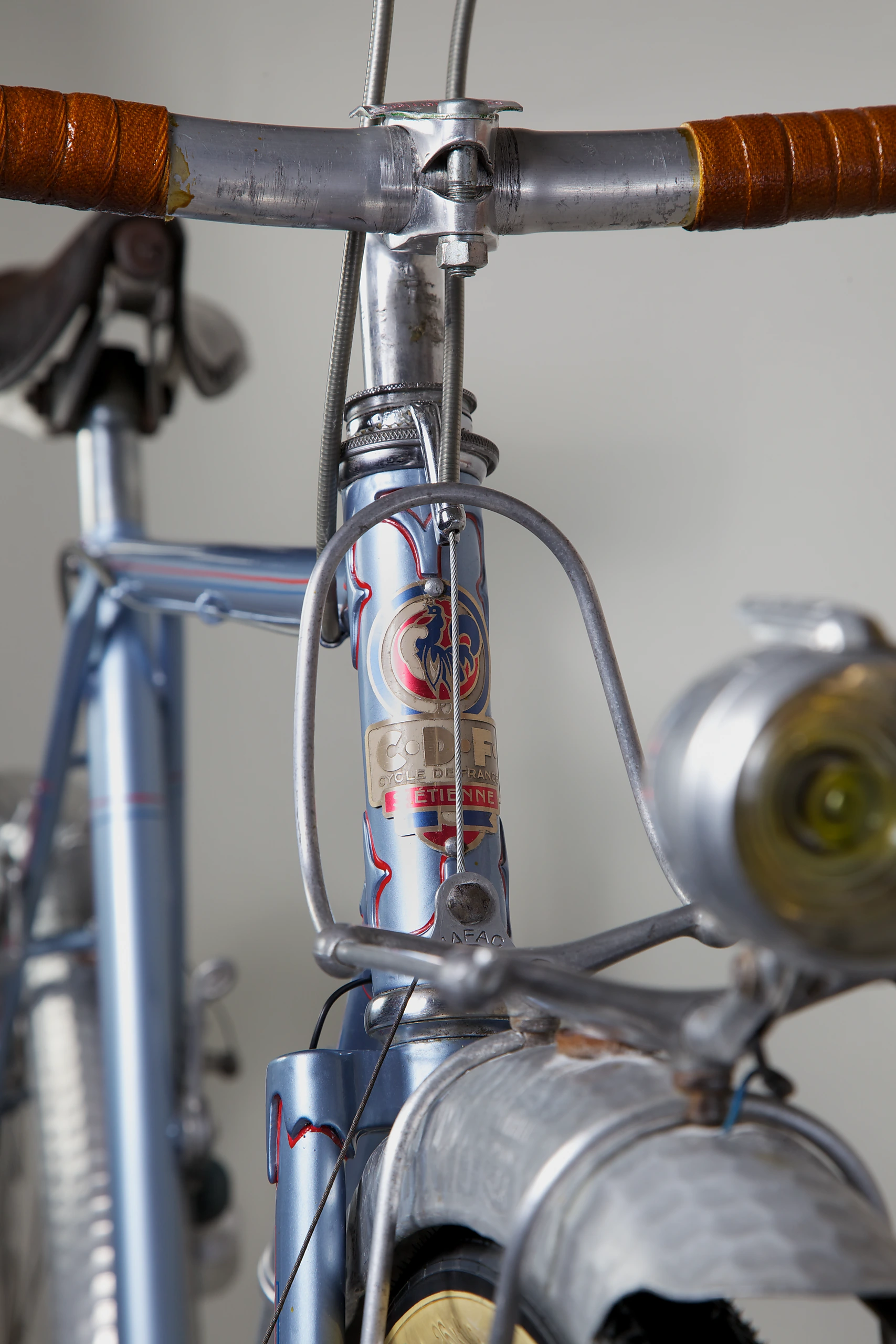
C.D.F. is not a constructeur’s monogram. It stands for Cycles de France, the marque of Établissements Drevon of Saint-Étienne, and the head badge spells it out: a Gallic rooster on a tricolore shield above CYCLE DE FRANCE and ST ÉTIENNE. The badge uses the singular. The down tube script uses the plural. Both are on the bicycle, which is the sort of thing a small works does and a careful constructeur does not.
Drevon is listed in the Bottin du cycle of 1951 and was a middling Loire factory of roughly 6,000 bicycles a year — about a tenth of what Ravat, Automoto or Manufrance were producing in the same city around the same time. Saint-Étienne was the capital of the French cycle trade and Drevon was one of the dozens of firms working in its shadows.
That scale is worth holding in mind when reading this machine. A works of that size did not need a show bicycle to fill its order book. It needed one to be taken seriously next to the Paris constructeurs. What it built was not a frame with its own name filed into the lugs, but a machine assembled from the best specialist parts in France, lined by hand and finished to a standard the catalog range never saw.
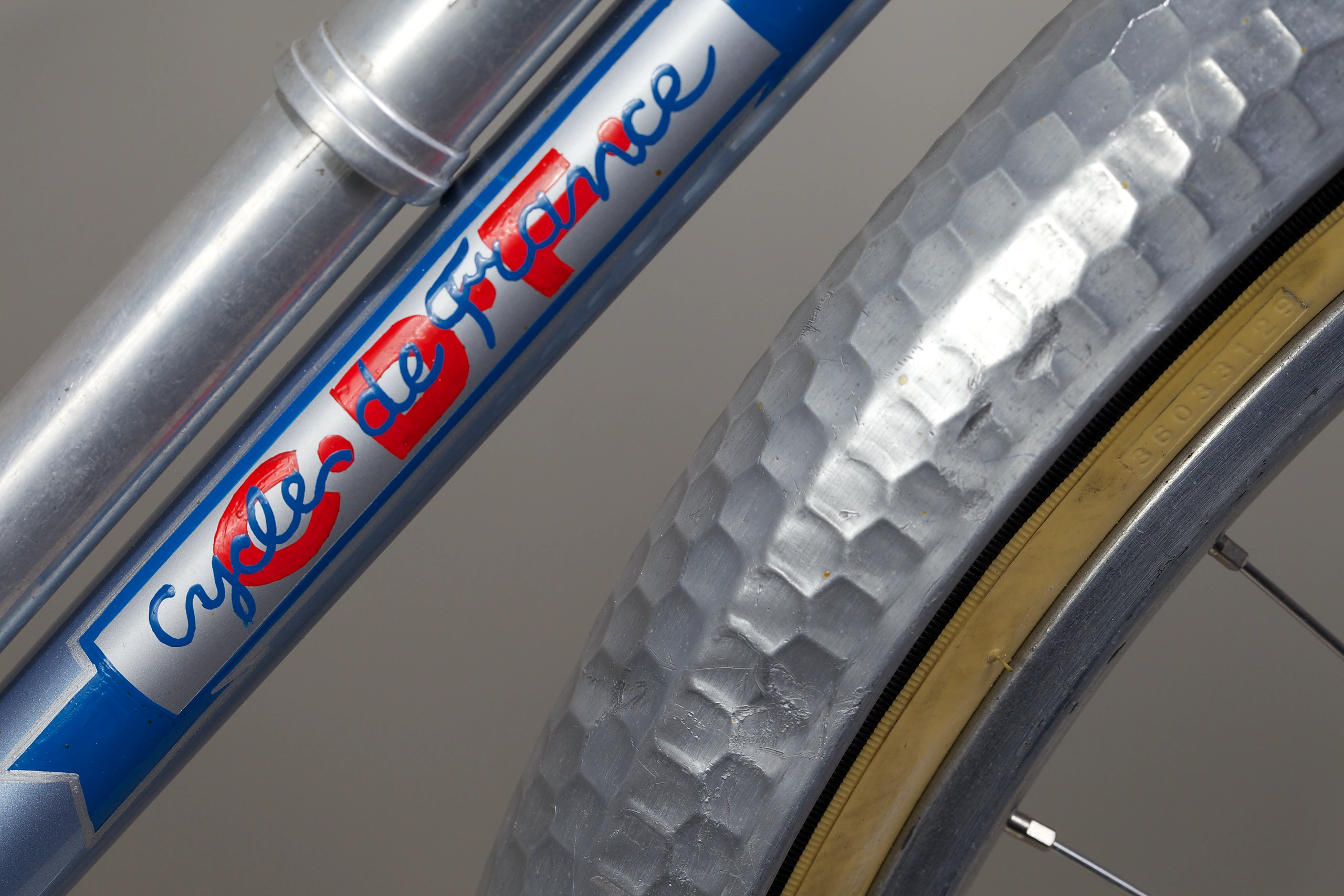
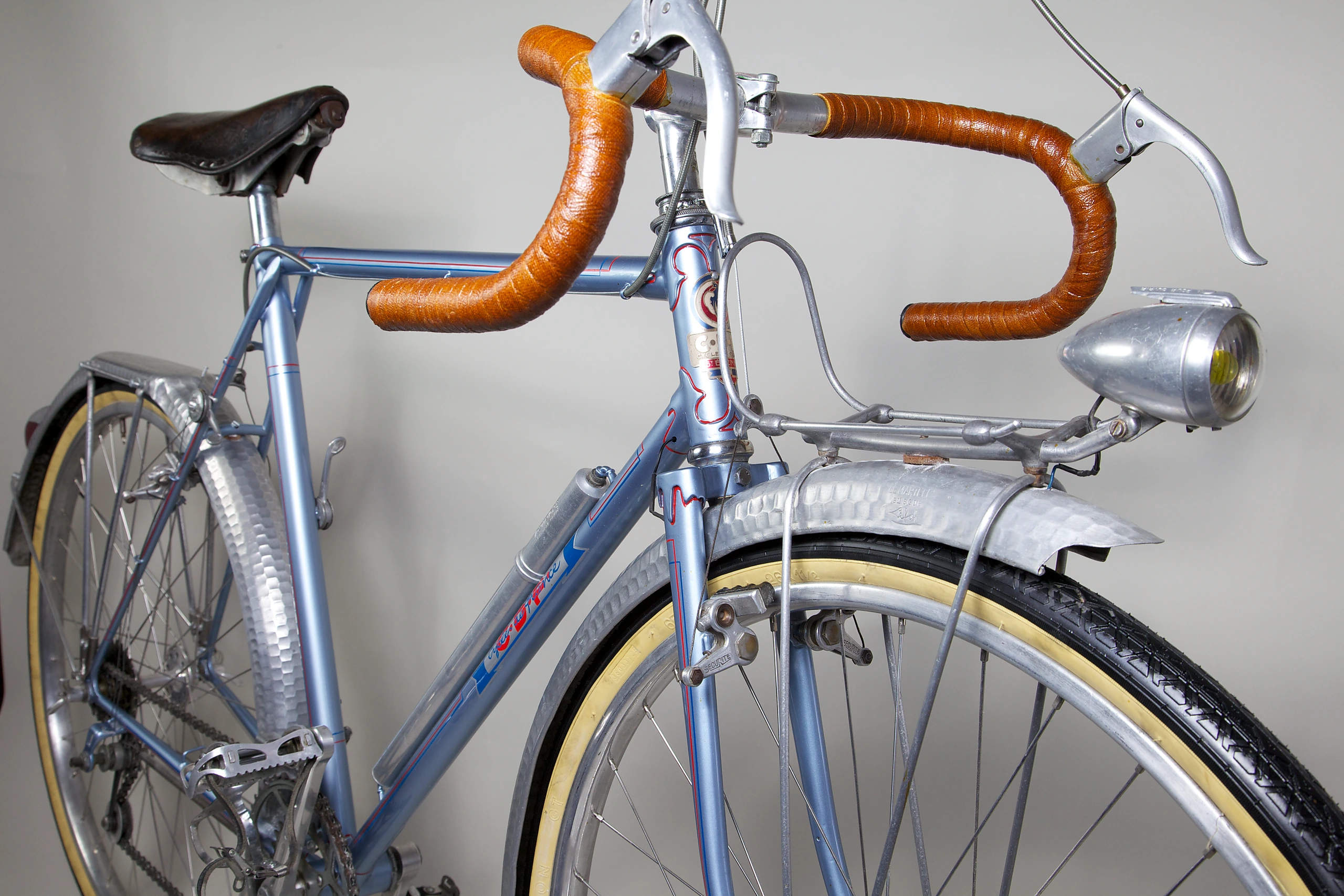
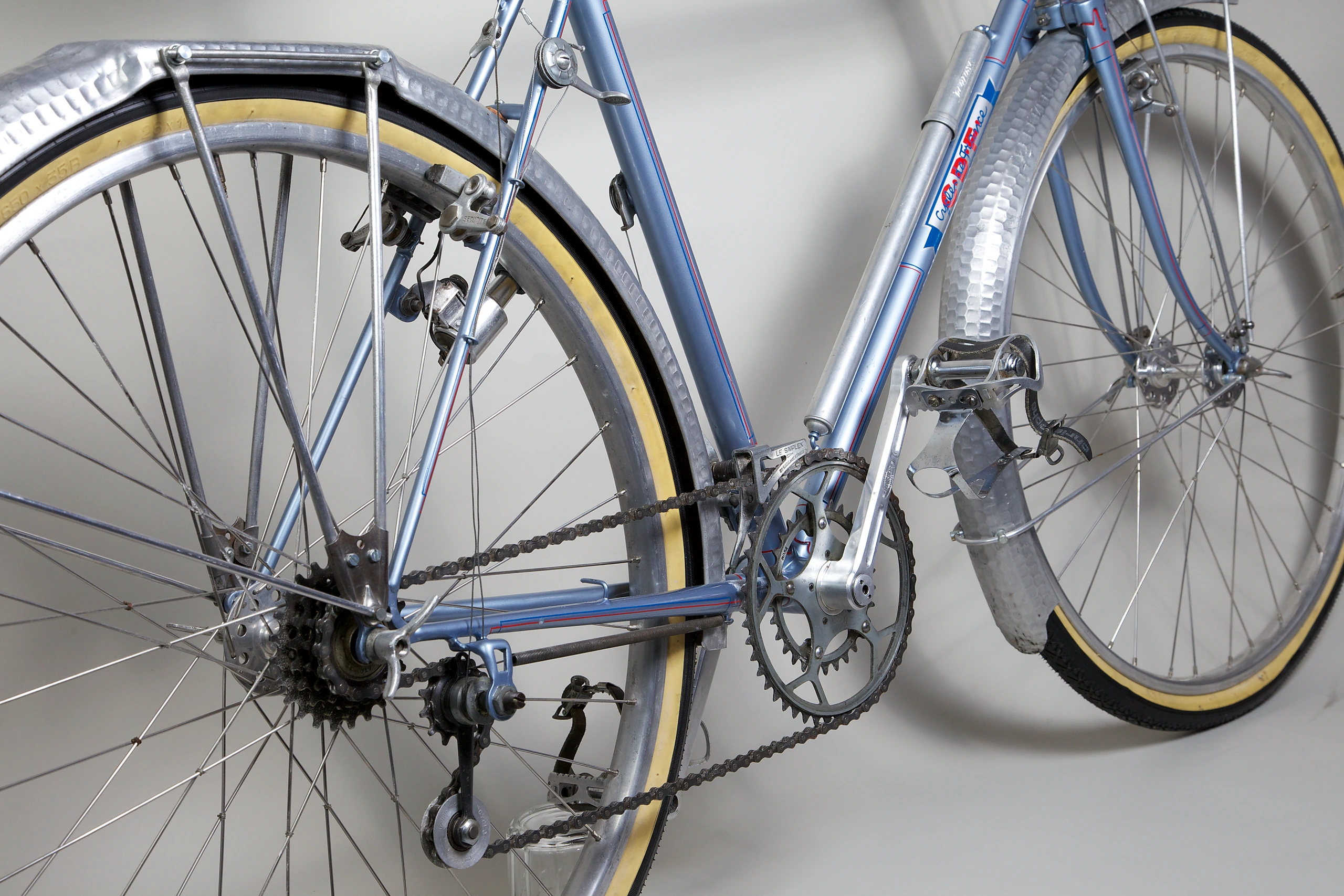
Very little here has to be taken on trust. Nearly every part on the bicycle carries its maker’s name, and the photographs on this page open large enough to read them back.
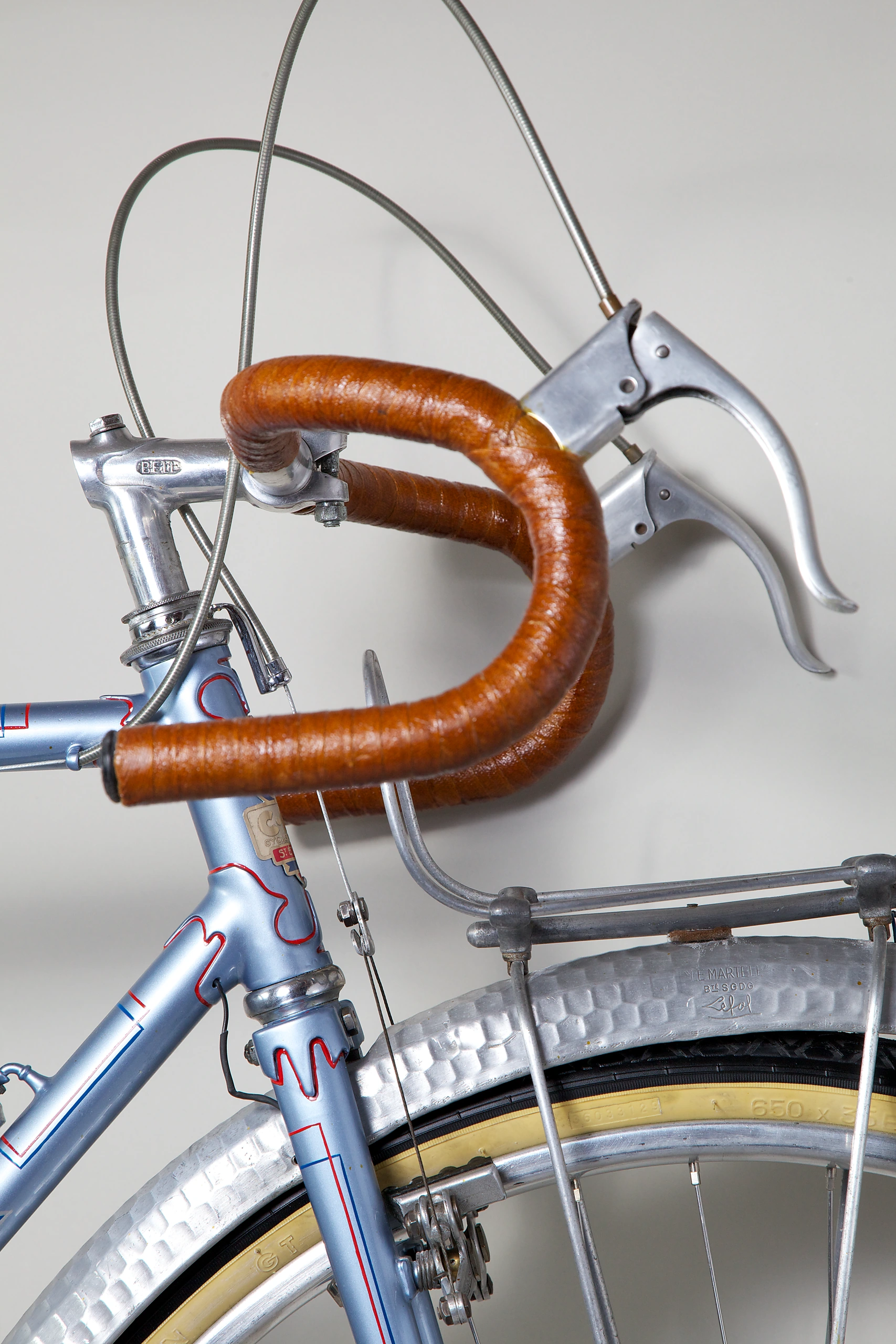
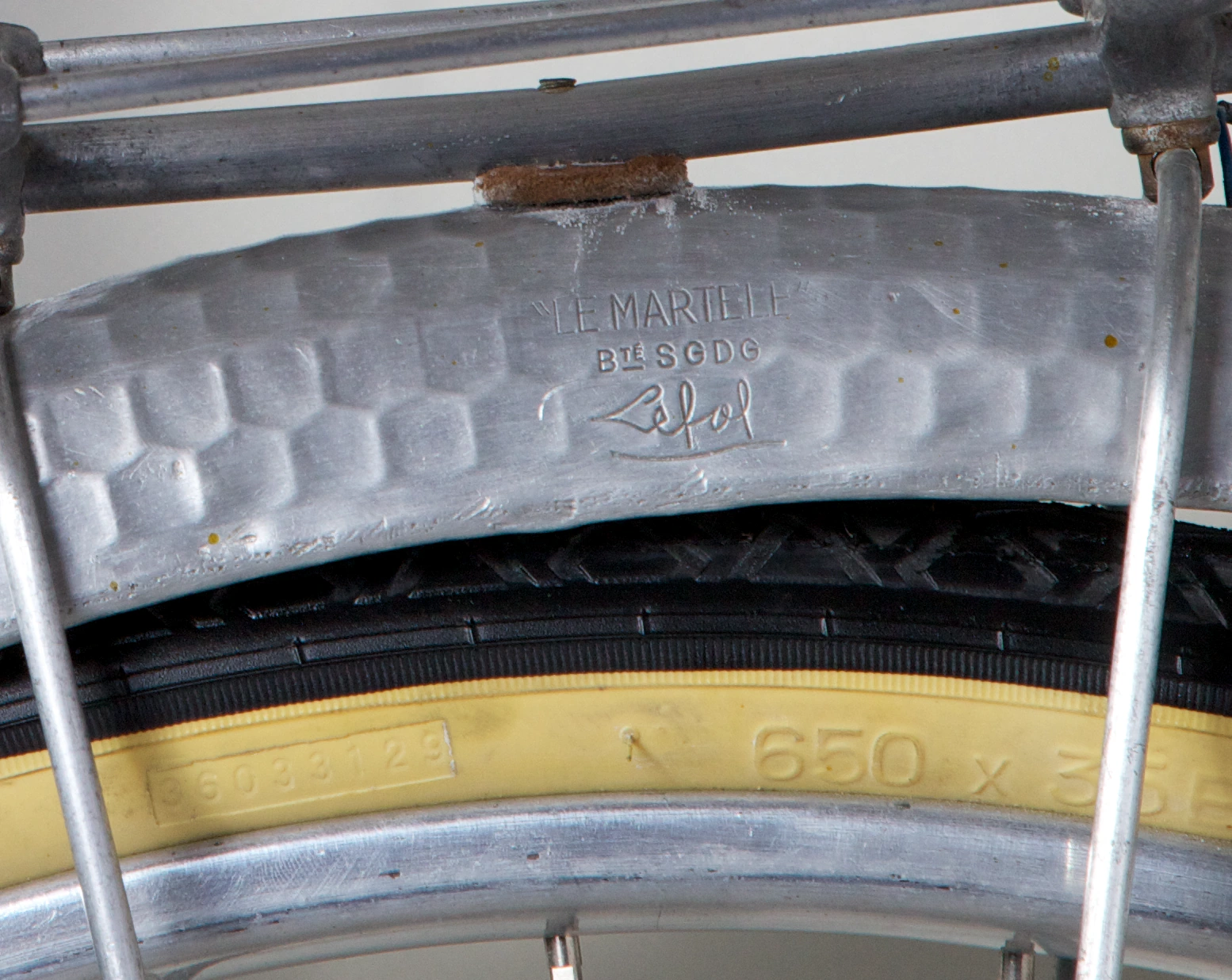
The fenders are stamped LE MARTELÉ, Bté S.G.D.G., over the Lefol signature — the hammered alloy guards that more than anything else define the look of a French randonneuse. Directly under that stamp, in the same frame, a tire sidewall reads 650 x 35 B. The rear casing is also molded 26 x 1½, the imperial name for the same rim.
The cable hanger under the head badge is stamped MAFAC. Auguste Bourdel founded the firm at Clermont-Ferrand in 1946 under the name Securité, after the cantilever brake that was its first product, and renamed it Mafac — Manufacture Arvernoise de Freins et Accessoires pour Cycles — in the autumn of 1947. A set stamped MAFAC on a 1948 machine therefore carries the marque in its first full year under that name, on a design barely two years old.
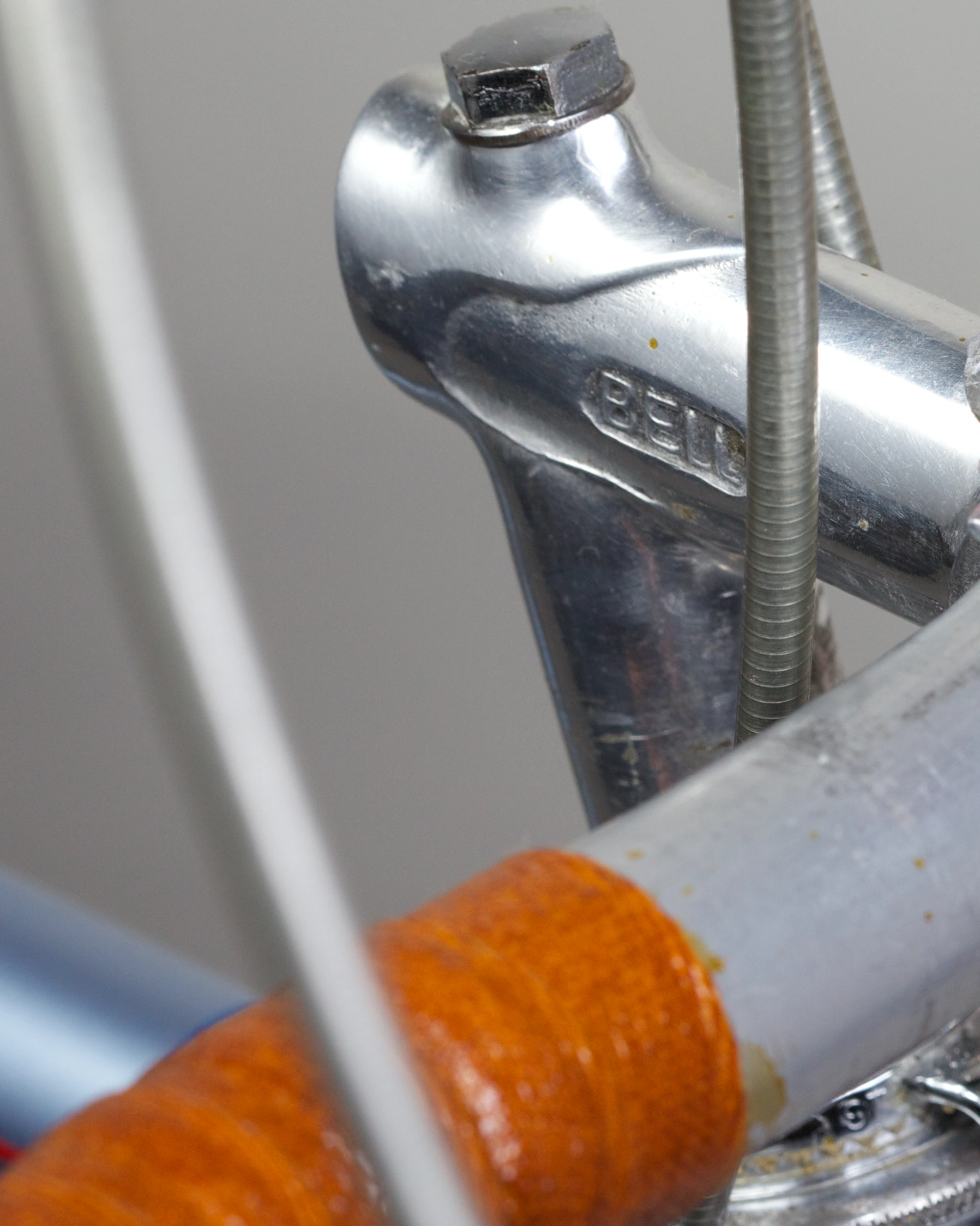
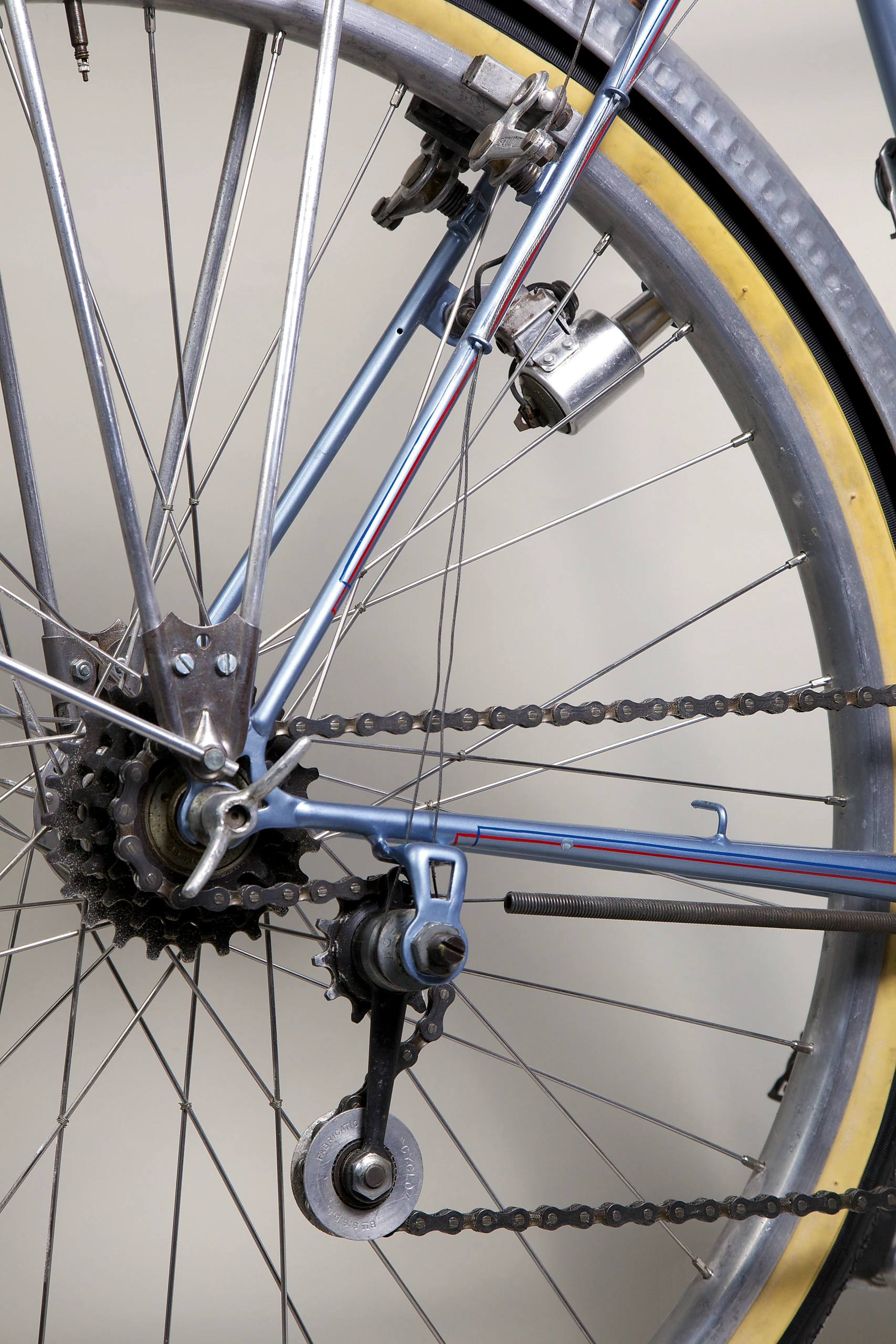
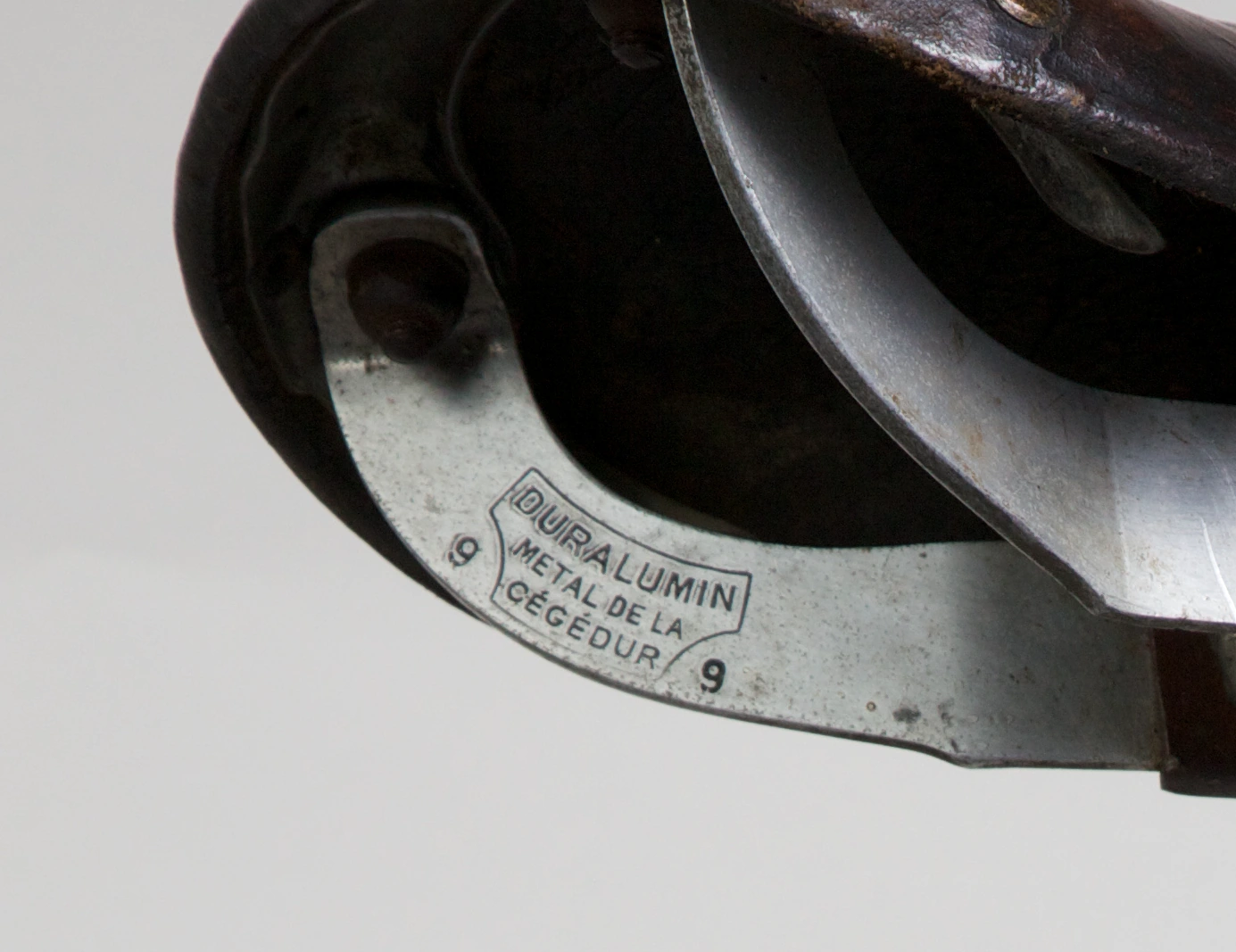
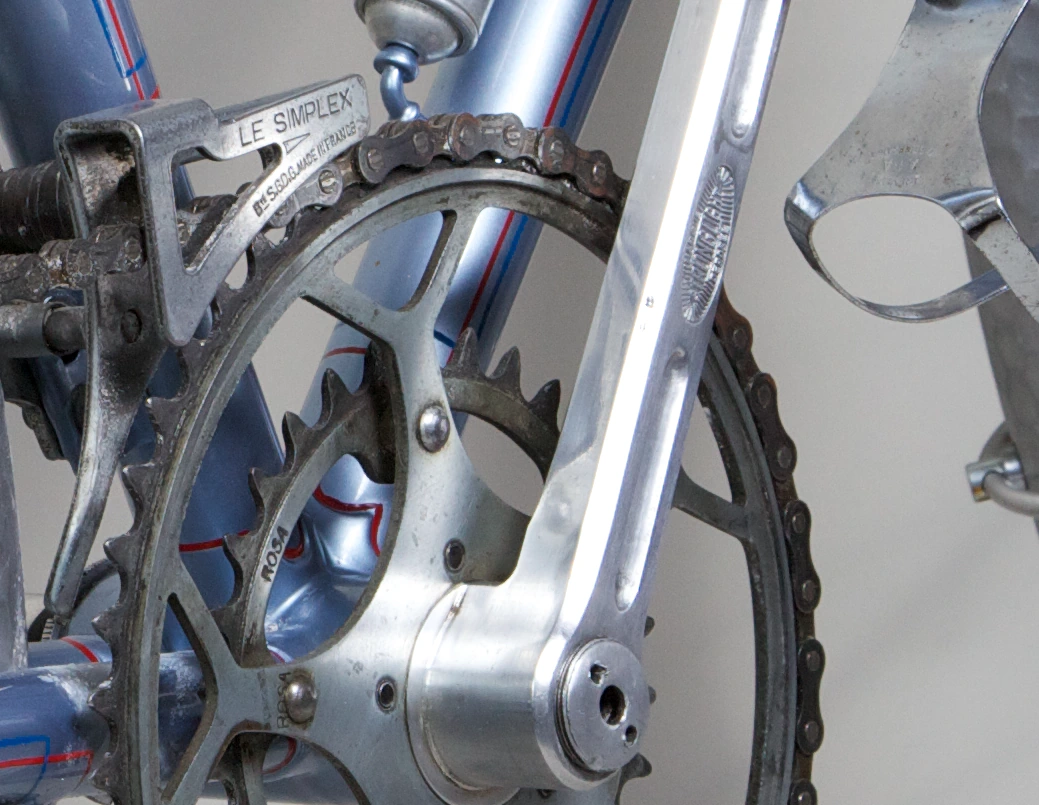
The front changer is a Le Simplex, Bté S.G.D.G., Made in France: a rod-worked cage riding the seat tube. The rear is a four-speed Cyclo, its jockey wheel stamped FABRICATION CYCLO Bté S.G.D.G., pulled by a threaded rod and a return spring that runs forward along the chainstay. The crank arms carry the Stronglight cartouche with its radiating rays, and the axle end takes a cotterless extractor cap rather than a cotter pin. The inner chainring is stamped ROSA. The stem is stamped BELL. The toe straps are Christophe. The saddle frame is stamped DURALUMIN, MÉTAL DE LA CÉGÉDUR, with a 9 on either side of the shield — Duralumin from Cégédur, the aluminum arm of Pechiney, which supplied most of the French cycle trade. Two further makers are not legible in these frames but are on the machine: the handlebar is a Pivo and the saddle an Idéale.
One detail deserves a note rather than a claim. The crankset is cotterless, which an earlier version of this page read as a dating clue, on the understanding that Stronglight’s cotterless 49D dates to 1949. The period catalogs do not support that reading. Hilary Stone dates the cotterless design to about 1936 and records the cranks in the 1937 Constrictor catalog and on sale in Britain by 1938; the 1949 date reflects a postwar renumbering rather than the launch, and Ebykr’s own Stronglight timeline has been corrected accordingly. A cotterless Stronglight on a machine built for an autumn 1948 show is therefore unremarkable, and carries no weight either way on the date of assembly.
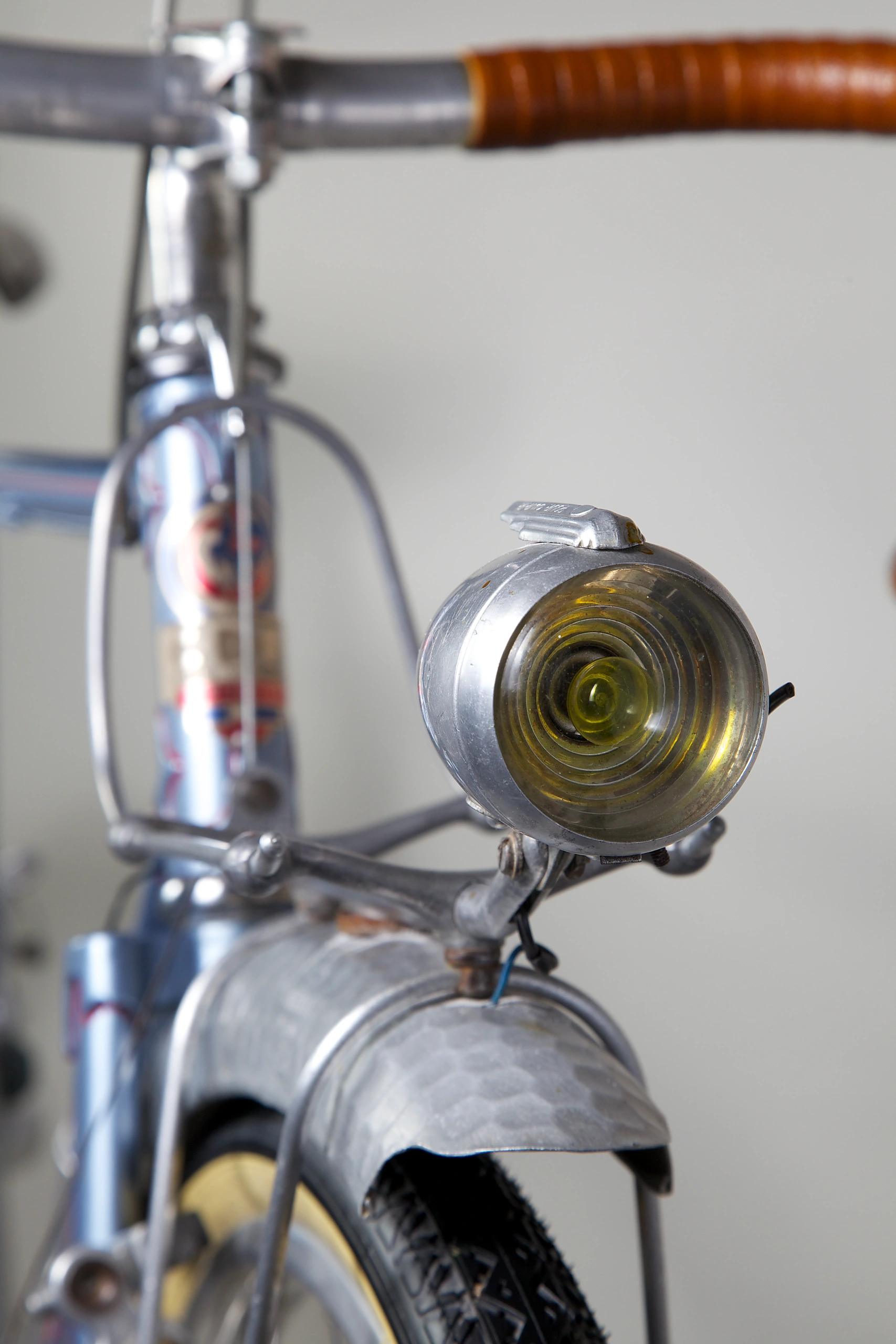
Two things carry no name we could read: the alloy headlamp on its rack bracket and the teardrop tail light on the rear fender. Both are light alloy and both are matched to the hammered fenders. Rebour’s own December 1948 Paris Salon plate for Le Cycle notes Soubitez showing exactly that, “phare et feu rouge en métal léger assorti aux garde-boue martelés” — a headlamp and red rear light in light metal matched to hammered fenders. That is suggestive and it is not proof, so the sheet below leaves the lighting maker blank.
The seller’s claim, made in an email from April 2006, was one line long: “Daniel REBOUR speak about it.” That is the kind of sentence a collector repeats for 20 years without ever being able to point at the page. The page exists.
Two Rebour plates carry C.D.F. by name. Both are signed Croquis de D. Rebour, both are marked vu par Le Cycle, and both date from 1949.

The first is headed AU CONCOURS D’AUVERGNE. Under a subheading that reads simply C. D. F. there are five numbered notes, and the fifth is this:
Une petite manette supplémentaire, fixée sur l’axe de la manette CYCLO, assure la détension du dérailleur.
A small supplementary lever, fitted on the axle of the Cyclo lever, releases the derailleur tension. Rebour’s drawing number five shows it: a round drum-bodied Cyclo manette clamped to a seat stay, carrying a large paddle and a second small lever sharing the same spindle.
That is the fitting on this bicycle. Not a lever like it — that lever, in that position, with the extra arm on the same axle. Rebour’s second note on the same plate, “comment était réalisé la détension du frein arrière”, describes the sprung rear-brake cable release, and there is one of those on the seat stay too. The rest of the plate is a roll-call of the same milieu: Mafac brakes, Stronglight cranks in dural, Cyclo derailleurs, a Bell papillon.
Rebour was working the same ground on the next plate in that run, at Clermont-Ferrand, where the machine he drew for Auguste Bourdel — the founder of Mafac, who built bicycles as well as brakes — carried “deux manettes symétriques, aux câbles sous tube, commandant les deux dérailleurs”. Two symmetrical levers, cables run under the tube, working both derailleurs. The idea this bicycle is built around was moving through the French concours world in those years and Rebour is the reason anyone can still see it.

The second plate is headed REMARQUÉ à la “POLY” LYONNAISE, and C. D. F. appears on it twice:
3. C. D. F. : porte-sacoche-support de phare articulé (Exposition).
10. C. D. F. : feu rouge fixé entre haubans, et fil dans le tube (Exposition).
A bag rack doubling as an articulated lamp bracket and a tail light mounted between the seat stays with its wire run inside the tube. Both are annotated Exposition, meaning Rebour noted them on machines in the exhibition class rather than on entries that were ridden. Cycles de France was showing concours machines, Rebour was drawing them and the fittings he singled out are the same family of fittings this bicycle carries. Its front rack does the same two jobs as the one at number three.
What has not been found is a Rebour drawing of this individual frame and neither plate is dated 1948. The claim that survives the evidence is narrower than the seller’s and rather more useful: Rebour drew and captioned Cycles de France show machines for Le Cycle and one of the details he chose to draw is bolted to this seat stay.
In February 2006 Ebykr won an unrelated 1950 French track bicycle on eBay from a noted collector located in the 11th arrondissement of Paris. Asked whether he had anything else, the collector replied that he had “un très très beau et rare vélo randonneur 1948 Cycles de France en 650”, that it was “en état de concours”, and the rest is cycling collector history.
The parts list he sent in February 2006 is worth quoting whole, because it is the earliest description of the machine that exists:
CDF’s parts are: alloy wheels with high flanges “plume” hubs (very rare),4 speed Cyclo alloy rear derailleur, very rare Simplex front derailleur(the very unusual thing is that they are both actioned with rear manettes!). alloy bell stem(never seen before!) and pivo bars, mafac (sécurité) brake set (only availlable in 1948!!), ideale saddle, double rosa crankset. All parts that you may dream of on a vintage French randonneuse!
Then, on 3 April, once the wire transfer had cleared:
It seem to be a bike built specialy for a bike’s show in PARIS in 1948, with all innovations and special parts available at this time. all “concours” bike’s components! Daniel REBOUR speak about it…It’s really a unique bike, much much rare than a R.Herse for example!
That is the whole provenance: a dealer’s account, given in a second language, 58 years after the fact. It should be read as such. What can be checked has checked out. The derailleurs are the ones he named and they really are worked from the back. The brake set is Mafac Sécurité. The wheels are 650B. The saddle frame is Duralumin. And Rebour really did write about C.D.F. The two names his list gives that the photographs do not show, the Pivo handlebar and the Idéale saddle, are confirmed on the machine itself.
The photographs on this page were made by Joe Azure in March 2011.
1948 Cycle de France Concours Randonneuse
Frame: Cycles de France, Brazed Lugged Steel
Fork: Cycles de France, Brazed Lugged Steel
Crank: Stronglight, Aluminum Alloy, Cotterless
Chainrings: Rosa, Double, Five Arm Alloy Spider
Front Derailleur: Le Simplex, Rod Actuated, Seat Tube Mounted
Rear Derailleur: Cyclo, Four Speed, Worked by a Threaded Rod and Return Spring
Shift Levers: Drum Manettes on the Seat Stays, Each With a Supplementary De-Tensioning Lever on the Same Axle
Freewheel: Four Speed
Pedals: Aluminum Alloy Quill, Toe Clips, Christophe Straps
Brakes: Mafac Sécurité, Cantilever, Front and Rear
Brake Levers: Aluminum Alloy
Handlebar: Pivo, Aluminum Alloy, Randonneur Bend, Leather Wrapped
Stem: Bell, Aluminum Alloy
Seatpost: Aluminum Alloy
Hubs: Aluminum Alloy, Large Flange, Drilled, Wing Nut Axles
Rims: Aluminum Alloy, 650B
Tires: 650 x 35 B, Gum Wall, Also Molded 26 x 1½
Saddle: Idéale, Leather Top on a Duralumin Frame Stamped MÉTAL DE LA CÉGÉDUR
Equipment: Lefol Le Martelé Hammered Alloy Fenders, Lugged Alloy Front Rack, Rear Rack, Alloy Headlamp With Amber Lens, Alloy Teardrop Tail Light, Seat Stay Dynamo, Alloy Frame Pump
Condition: Unrestored
Notes: Built as an Exhibition Machine, Paris 1948, per the Seller. Tubing, Headset, Bottom Bracket, Chain, Frame Size and Serial Number Not Recorded. The Handlebar is a Pivo and the Saddle an Idéale, Both Confirmed on the Machine. The Idéale model Is Not Recorded.
Daniel Rebour, Au Concours d’Auvergne, pen plate signed “Croquis de D. Rebour”, marked “vu par Le Cycle”, 1949 — Ebykr Rebour collection
Daniel Rebour, Remarqué à la “Poly” Lyonnaise, pen plate signed “Croquis de D. Rebour”, marked “vu par Le Cycle”, 1949 — Ebykr Rebour collection
Daniel Rebour, Remarqué à Clermont-Ferrand, à la 3e Grimpée du Puy de Dôme, pen plate signed “Croquis de D. Rebour”, marked “vu par Le Cycle”, October 1949 (the Bourdel twin manettes) — Ebykr collection
Daniel Rebour, Au Salon: du nouveau chez nos fabricants, Le Cycle, December 1948 (the Soubitez note on light-alloy lamps matched to hammered fenders)
Ebykr — MAFAC Brake Company History: A Chronological Timeline of Events (the 1946 founding as Securité and the autumn 1947 rename)
Ebykr — Stronglight History: A Timeline of Key Corporate and Product Events (the dating of the cotterless 49D)
Hilary Stone — Stronglight cotterless cranks, Classic Lightweights (the c. 1936 design date, the 1937 Constrictor catalog and the postwar renumbering)
Stanislas Julien-Laferrière, correspondence with Eric Anschutz, 28 February and 3 April 2006, Ebykr collection
Encyclo du Vélo — Drevon / Cycles C.D.F. (Cycles de France), citing the Bottin du cycle of 1951
Forum Tonton Vélo — C.D.F., ce vélo trouvé dans un garage (identifying C.D.F. as Ets. Drevon of Saint-Étienne)
Blackbird SF — Daniel Rebour, Le Cycliste drawings, the chronological index used to date the 1949 plates
Photographs by Joe Azure, March 2011, Ebykr collection
 Cycle de France
Ebykr documents this marque across the archive. Here is the rest of it.
The Ebykr Digest
New articles, timelines, catalog finds and registry activity — assembled from the archive once a month. Your address is never shared.
Double opt-in. One email per month. Unsubscribe at any time with one click.