Maxi-Car did one thing and did it better than anyone else: make great bike hubs. The marque is a braid of three separate French houses that include a Lyon artisan who patented the application of demountable annular bearings to the bicycle, the Saint-Étienne firm of E. Depalle whose MAXI drum brakes and light hubs supplied the first half of the name, and Rousson & Chamoux of Feurs, an 1880 house trading under the R.F.G. mark, which took the trademark in 1962 and ran it to the end. The two halves of the name were still separate products on the same advertisement in 1952. The hubs outlasted nearly everything they were laced onto, especially when those things (er, rims) were made of steel instead of aluminum or even wood.
Here is a chronological timeline of key bearing and hub events at Maxi-Car, spanning 1880 to 1999, drawn from the sources used for the accompanying Ebykr gallery on the marque, “Maxi-Car Hubs History & Image Gallery,” and read directly off the period advertising and technical press held in the Ebykr archive.
23 of 23 events
1880
Company Founding
Rousson & Chamoux was established at Feurs, in the Loire, trading as the Ateliers de la Plaine du Forez. The firm still carried the line Maison fondée en 1880 across its advertising in 1937, by which date it was a limited company capitalized at 2,000,000 francs.
13 July 1933
Patent
Célestin Auguste Ripet, an artisan working in Lyon, applied for his patent on the application of demountable annular bearings to the bicycle. The document names him M. Célestin Ripet, résidant en France (Rhône) and covers the pédalier de cycle; Le Cycliste confirmed four years later that the patent reached the hubs as well. His initials gave the products their name: C.A.R.
13 July 1933
Note on the Record
Secondary accounts of the marque widely expand C.A.R. as Charles-Albert Ripet, and that reading appears to be back-formed from the initials rather than sourced. The patent application itself names Célestin Ripet, of the Rhône, which is the department containing Lyon and matches the Le Cycliste description of him as an artisan of that city.
1934
Competition
Antonin Magne rode C.A.R. demountable annular-bearing hubs on his machine in the Tour de France, the year he took his second Tour victory, and within 12 months of Ripet filing. Le Cycliste cited the fact three years later as evidence the bearings had been proved in competition.
1934–1936
Competition
The same bearings carried a machine through the Concours d’Auvergne of 1934 and winning machines at the Grands Prix Duralumin, the Concours de l’Auto, in 1935 and 1936.
1937
Industry Context
Le Cycliste page 299, in a Cyclotechnie piece on bearings, recorded that demountable annular bearings were being applied to the bicycle by two houses only: the maison Porthor of Saint-Étienne, adjusting by washers, and the artisan C.-A. Ripet of Lyon, adjusting by nut and locknut, who had patented his application to hubs and bottom brackets. SKF, RBF, RIV and SRO all catalogued such bearings by then, but could not supply them in bicycle dimensions.
1937
Advertising
Établissements E. Depalle of Saint-Étienne advertised the MAXI drum brake and MAXI Super-légers hubs in steel and Duralumin after MAXI took every leading place at the 2e Critérium Cyclotouristique de l’Auto, the Grand Prix Duralumin. 10 of the 19 machines that finished carried the MAXI drum brake and all 10 finished without penalty.
1937
Product Range
Rousson & Chamoux advertised the full R.F.G. range under their registered mark, generally read as Roulement Français Garanti: hubs, pedals, chainrings and cranks, together with headsets, bottom-bracket sets, bearing cups, hub axles and cones, fixed sprockets and polished steel strip.
March 1939
Advertising
The Pédalier C.A.R., à roulements annulaires réglables de haute précision, was advertised in Le Cycle, sold and explained through A.-I. Reiss, 61 avenue Berthelot, Lyon. The pitch was that a small extra outlay rid the cyclotourist permanently of the troubles inherent in cup-and-cone chainsets.
c. 1946
Partnership
Ripet joined E. Depalle of Saint-Étienne. The combined name paired Depalle’s MAXI with Ripet’s C.A.R., and the first Maxi-C.A.R. hubs followed.
1946–1950
Product Launch
The Type 1 hub was sold under the Maxi-C.A.R. name, manufactured by the Société de Dépalle, also known as Établissements Depalle.
1949
Brand Storytelling
Daniel Rebour drew the Maxi-C.A.R. rear hub for le roulement annulaire, showing the hub body sitting behind the oversize axle and the annular bearing cartridges that were the design’s whole argument.
1950–1962
Product Launch
The Type 2a was sold under the MAXI-CAR name. It was the last model built with solid, undrilled flanges, before drilling for style and weight became standard, and the last hub model manufactured by E. Depalle.
1952
Advertising
An advertisement claimed firsts across the great cyclosporting competitions, naming the Poly de Chanteloup and the Poly Lyonnaise, with R. Herse first among constructeurs at both and L. Herse first in the ladies’ class at Lyon. It sold MAXI hubs with or without drum brakes alongsideMAXI-C.A.R. annular-bearing hubs: a decade before the trademark, the two were still distinct products on one sheet.
October 1954
Advertising
Maxi-Car hubs were advertised from Saint-Étienne.
29 October 1955
Advertising
Maxi and Maxicar were advertised together in Le Cycle.
1 May 1958
Brand Storytelling
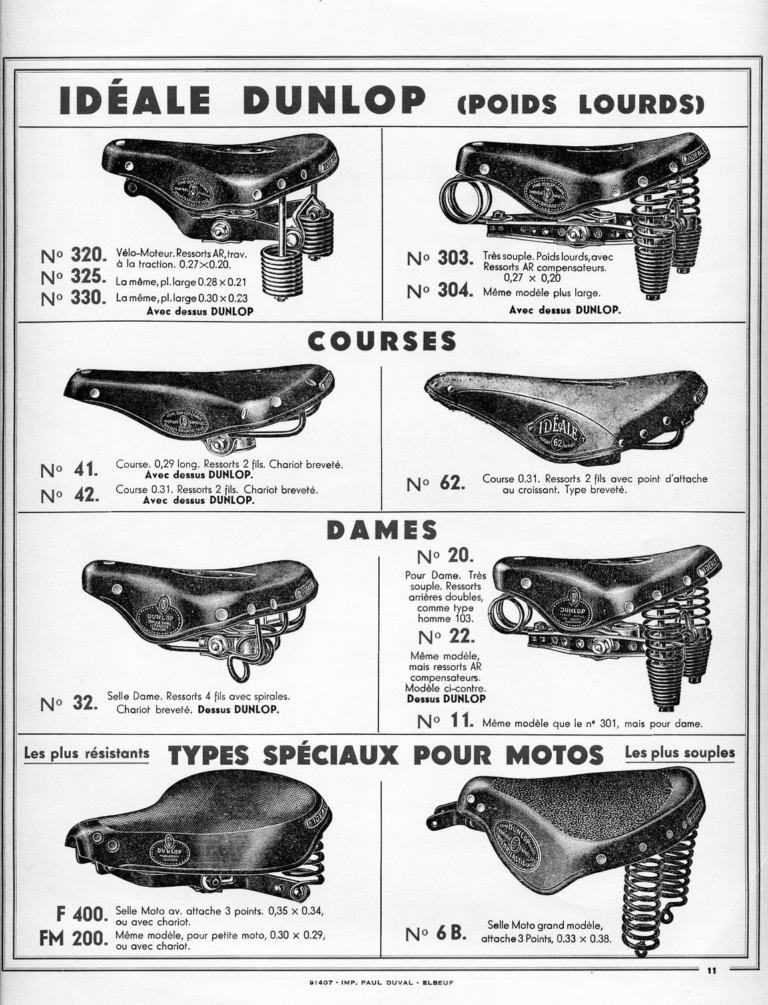
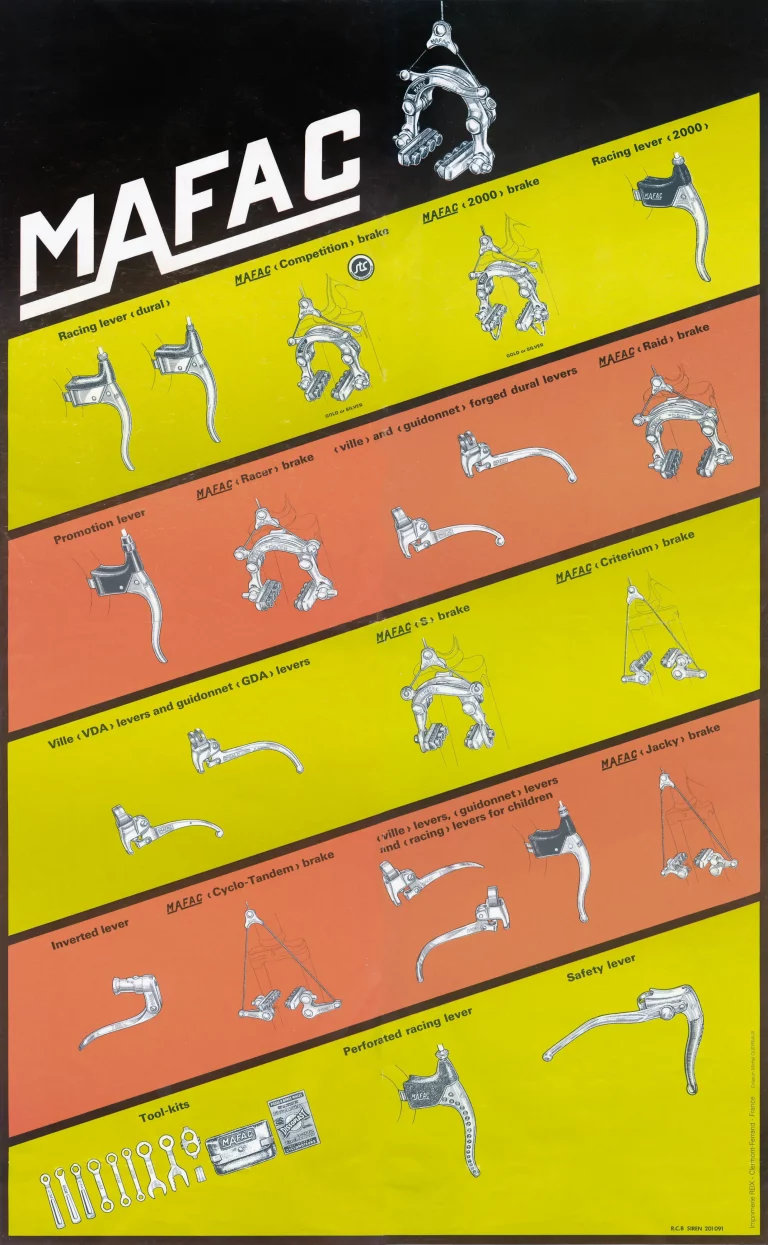
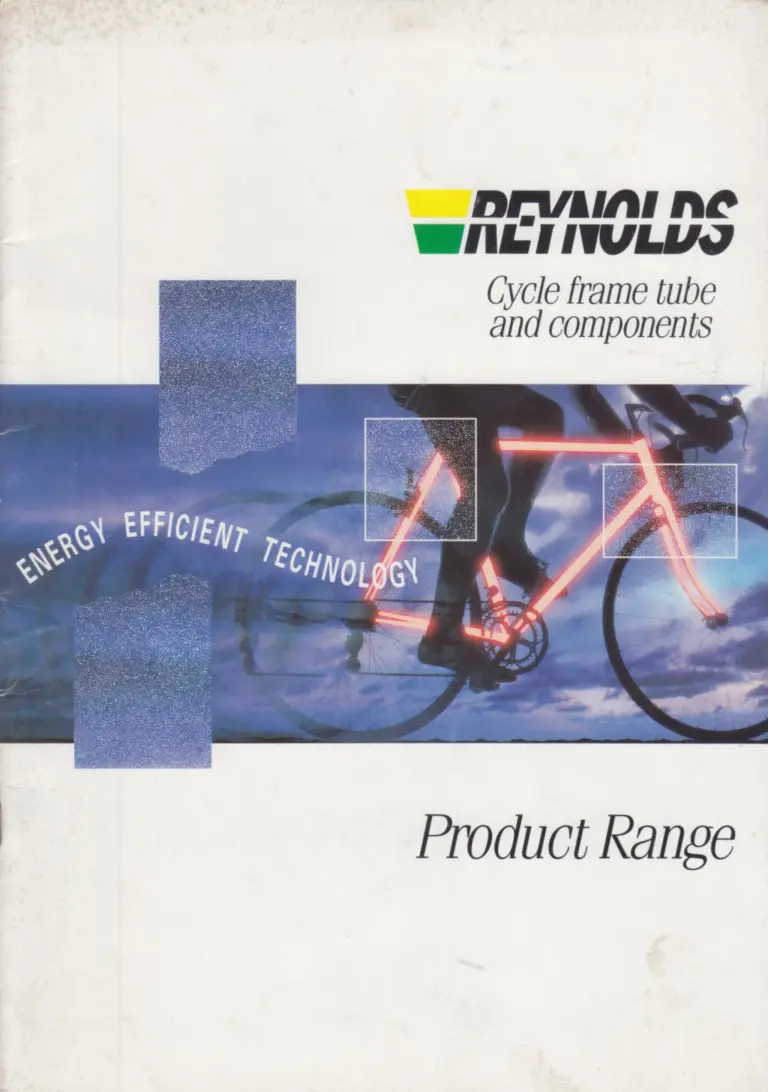
Le Cycle carried a Daniel Rebour drawing of the J. Routens randonneuse placed first under Gaillard, built by the Grenoble constructeur on brazed Reynolds tubing with a duralumin-framed Idéale saddle, MAFAC brakes, a Cyclo derailleur, a light-alloy Stronglight chainset carrying a T.A. triple, JOS lighting and MAXI-CAR hubs.
1961
Product Launch
The Type 2b was introduced concurrently and sold for one year only. Rousson & Chamoux are believed to have allowed E. Depalle to clear its remaining stock of Type 2a hubs before assuming exclusive control of the name.
May 1962
Trademark
Rousson & Chamoux registered the Maxi-Car trademark, having acquired the rights to a name that had been in use for some sixteen years.
1962
Product Launch
The Type 3 followed within months, carrying the red label that became the marque’s signature. It ran for 18 years.
1980
Product Discontinuation
The Type 3 run ended after 18 years.
1990
Product Launch
The Type 4 was introduced, 10 years after the Type 3 ended.
1999
Company Closure
Production ceased and the last Maxi-Car hub rolled off the Saint-Étienne assembly line, some six decades after Ripet’s patent.
Join the Maxi-Car Discussion!
Do you run a Type 2a on solid flanges, a red-label Type 3 or a late Type 4? Share your hubs, your drum brakes and your rebuild questions with the community.



 Maxi-Car