About Ebykr
Ebykr celebrates classic and vintage lightweight bicycles through provocative imagery and opinion. Ride along with us.
About Ebykr
Ebykr celebrates classic and vintage lightweight bicycles through provocative imagery and opinion. Ride along with us.


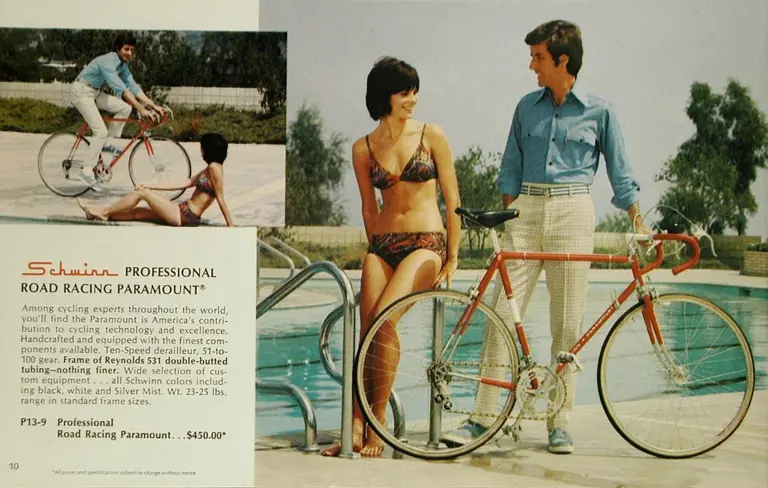
Schwinn printed more paper than almost any American bicycle company and a great deal of it survives. This gallery gathers the catalog pages, dealer books and magazine advertisements that document the marque from a 1939 trade advertisement for racing components…
For most of the twentieth century Schwinn was simply the American bicycle, which is exactly why enthusiasts of classic lightweights tend to look past it. Behind the balloon-tire cruisers and the electro-forged Varsity sat a Chicago hand-build shop turning out Paramount racing frames, and a second line of fillet-brazed lightweights so badly marketed that almost nobody recognized what they were. This is the story of a company that built superb bicycles and could never quite bring itself to sell them.
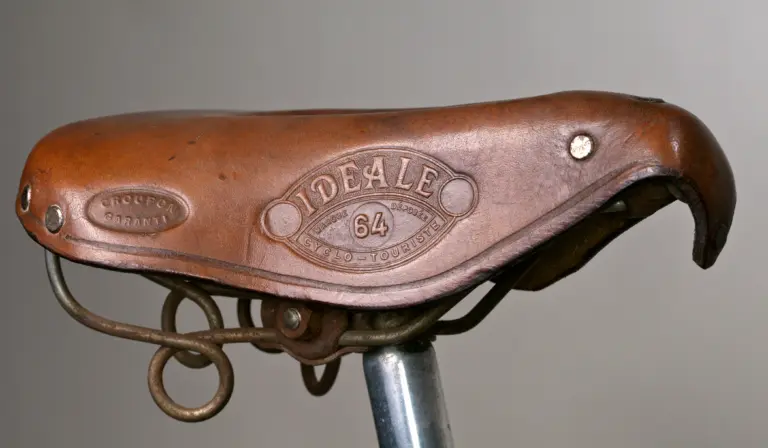
Idéale saddles were made at Pont-Saint-Pierre in the Eure for most of the 20th century, first by the Tron family, as F. Tron and later Tron et Enfants, then from 1928 by Tron et Berthet, and for much of that…
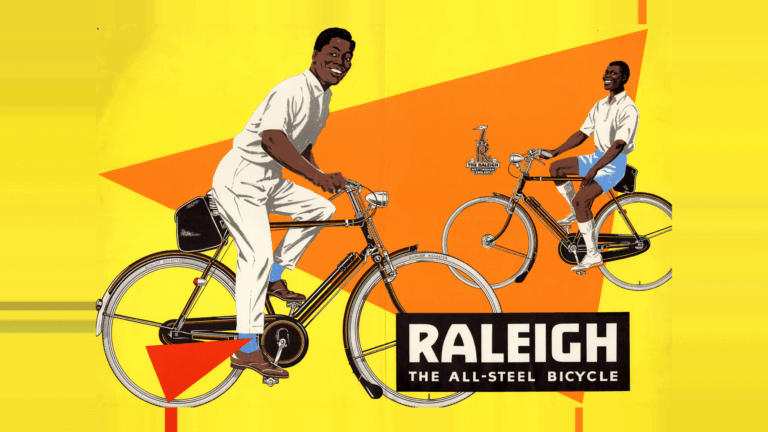
Raleigh went from a twelve-person workshop on a Nottingham back street to the largest bicycle manufacturer in the world, and from there to a brand owned by a Dutch group under lender control. This is the full arc: Sturmey-Archer and the three-speed empire, the export trade, the Moulton fight, the Chopper, the four-man Ilkeston workshop whose frames won the 1980 Tour de France, and the long unwinding that ended manufacturing in Nottingham.

A practical, honest guide to dating a vintage Raleigh — the model ladder, the frame numbers that genuinely decode (and the ones that do not), the Sturmey-Archer and component date codes, and matching it to a catalogue.

George N. Pierce built birdcages, then tricycles, then some of the finest bicycles of the 1890s — chainless, shaft-driven machines that chased a dream the industry is still chasing today.

From gilded birdcages in a Buffalo workshop to chainless, shaft-driven bicycles that sat at the head of its catalog for 15 years, the history of Pierce is the story of a manufacturer that kept betting on the harder way of…
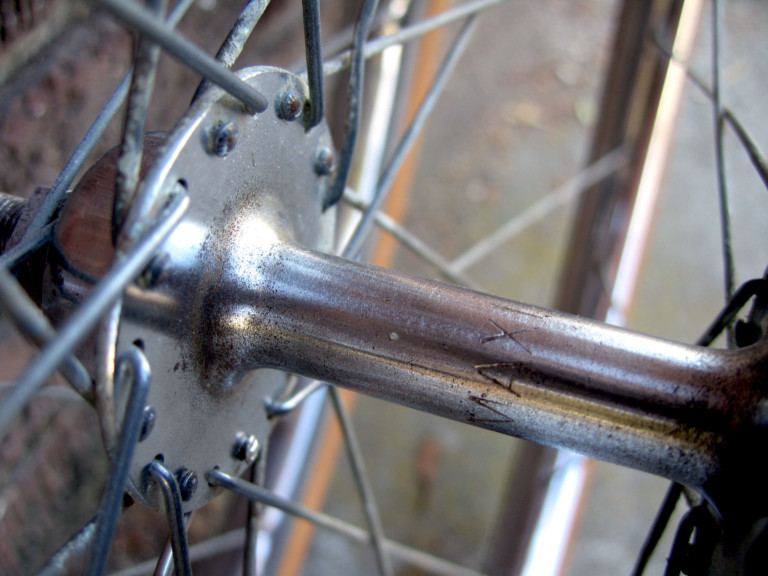
The most reliable way to date a classic bicycle is to read the date codes its makers stamped into the parts. A maker-by-maker reference — Campagnolo, Shimano, Maillard, Simplex, Stronglight and Sturmey-Archer — and how to combine them.

A remarkably preserved 1909 brochure, cord-tied and richly embossed, opens a window onto the early years of Bianchi as a maker of automobiles, motorcycles and bicycles.
The Ebykr Digest
New articles, timelines, catalog finds and registry activity — assembled from the archive once a month. Your address is never shared.
Double opt-in. One email per month. Unsubscribe at any time with one click.