About Ebykr
Ebykr celebrates classic and vintage lightweight bicycles through provocative imagery and opinion. Ride along with us.
About Ebykr
Ebykr celebrates classic and vintage lightweight bicycles through provocative imagery and opinion. Ride along with us.



From gilded birdcages in a Buffalo workshop to chainless, shaft-driven bicycles that sat at the head of its catalog for 15 years, the history of Pierce is the story of a manufacturer that kept betting on the harder way of…

The most reliable way to date a classic bicycle is to read the date codes its makers stamped into the parts. A maker-by-maker reference — Campagnolo, Shimano, Maillard, Simplex, Stronglight and Sturmey-Archer — and how to combine them.

A remarkably preserved 1909 brochure, cord-tied and richly embossed, opens a window onto the early years of Bianchi as a maker of automobiles, motorcycles and bicycles.
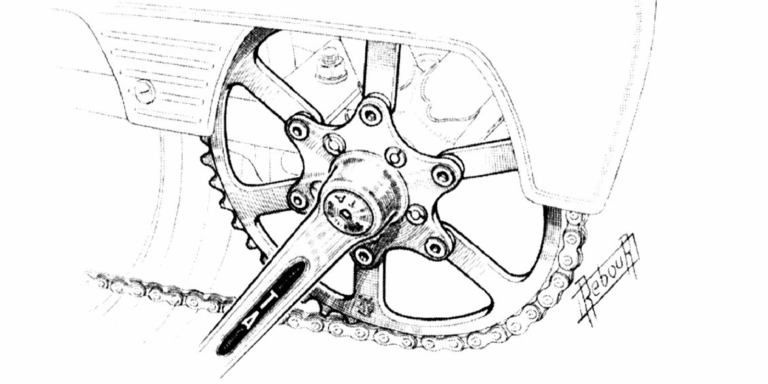
Origins: From Cabinetry to Duralumin Spécialités TA is one of the most remarkable paradoxes in cycling history: an absurdly small company that has held global fame and respect since 1947. It has never employed more than a handful of managers…
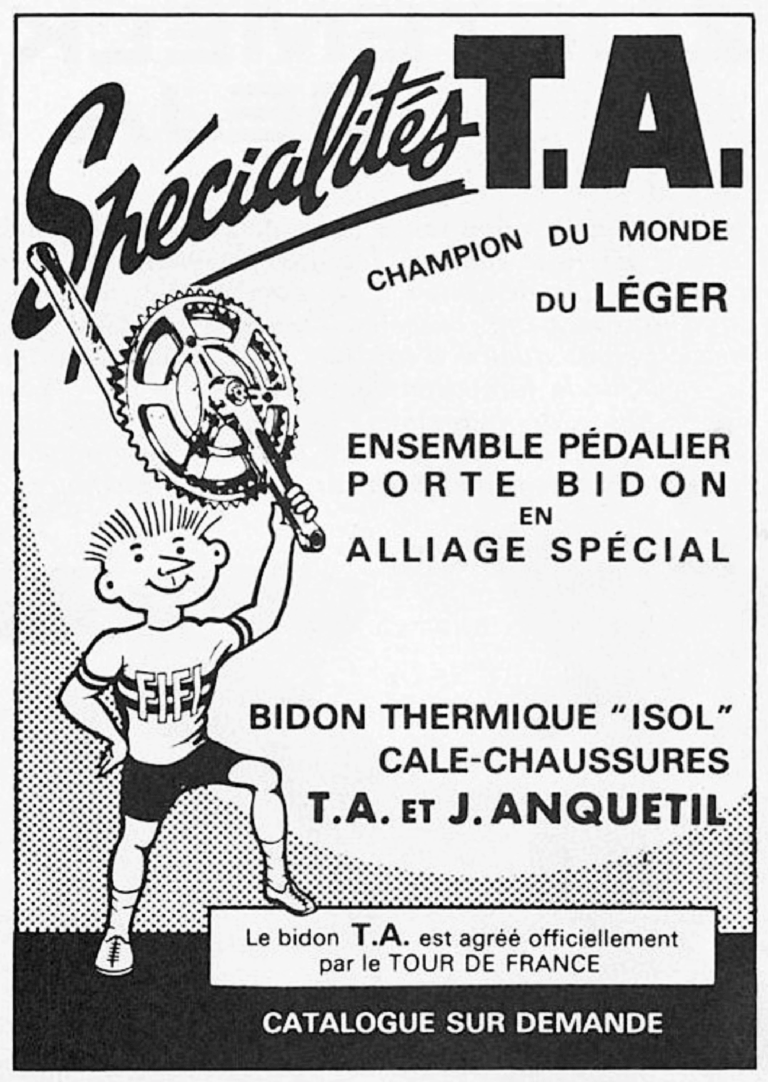
Step back into the workshop of Spécialités TA, the small Clamart firm whose duralumin chainrings and cranksets carried some of the biggest names in cycling for over 70 years. This gallery gathers the company’s period advertisements, catalog pages and technical…
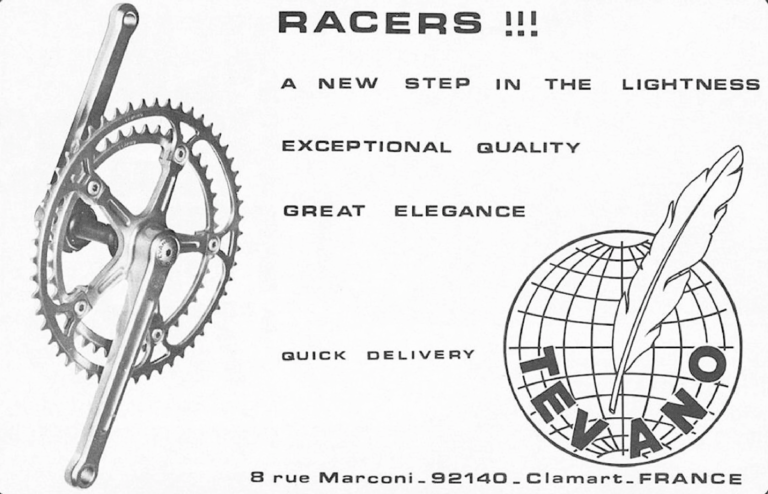
From a front-wheel-drive experiment that never reached production to a crankset still made six decades after its debut, the history of Spécialités TA is the story of a tiny French workshop that chose to do a few things better than…
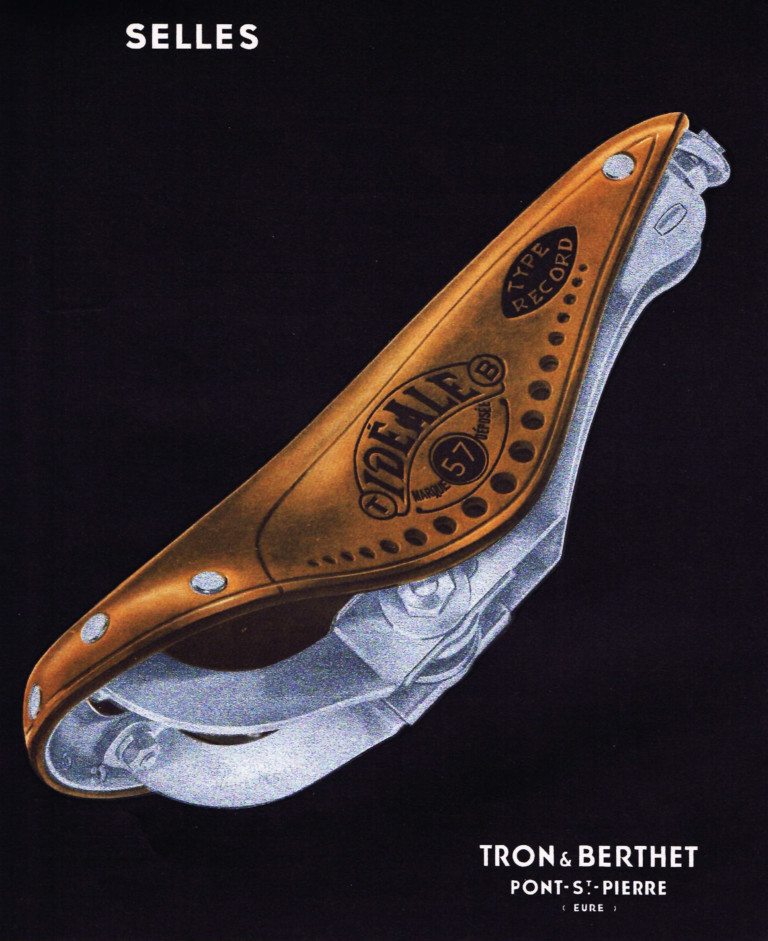
A reference guide to the Idéale saddle and clip lineup, covering model number, category, top material, rail material, size, weight and technical notes for dozens of historic models. Use this table to identify, compare and date saddles from the Idéale catalog.
Related Ebykr Articles on Brooks Saddles Brooks England: The Eternal One How to Identify and Date a Vintage Brooks Saddle How to Care for a Brooks Saddle Brooks Saddle Model Guide Notes Brooks Saddle Model Guide Anecdotes Brooks Saddle Model…

Hobbs of Barbican built its reputation on Albert Hobbs’ conviction that “a cycle is as good as its frame,” and the timeline below traces the company from its 1930 founding through wartime relocation to a brief 1970s revival. Along the…
The Ebykr Digest
New articles, timelines, catalog finds and registry activity — assembled from the archive once a month. Your address is never shared.
Double opt-in. One email per month. Unsubscribe at any time with one click.