About Ebykr
Ebykr celebrates classic and vintage lightweight bicycles through provocative imagery and opinion. Ride along with us.
About Ebykr
Ebykr celebrates classic and vintage lightweight bicycles through provocative imagery and opinion. Ride along with us.

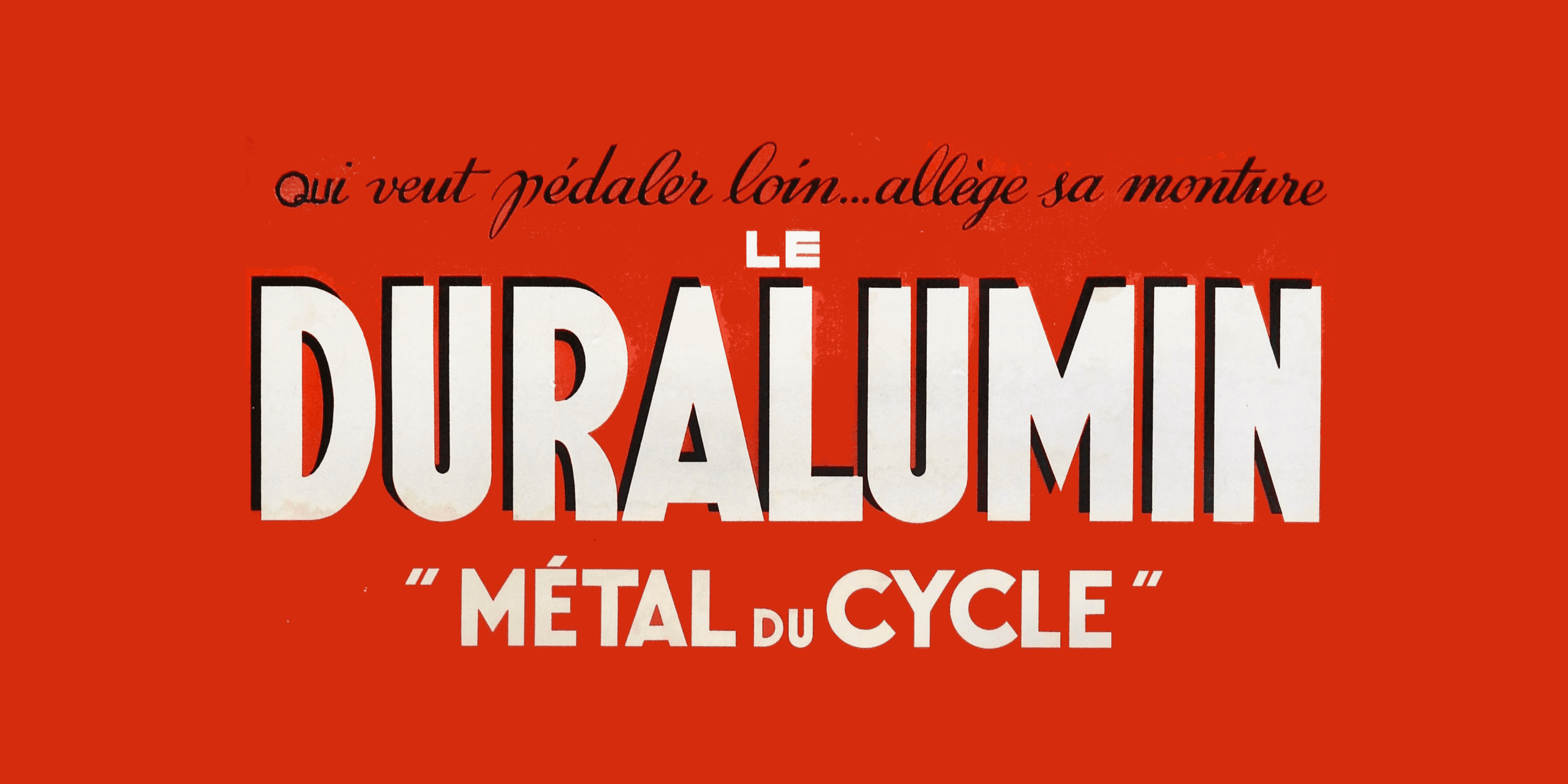
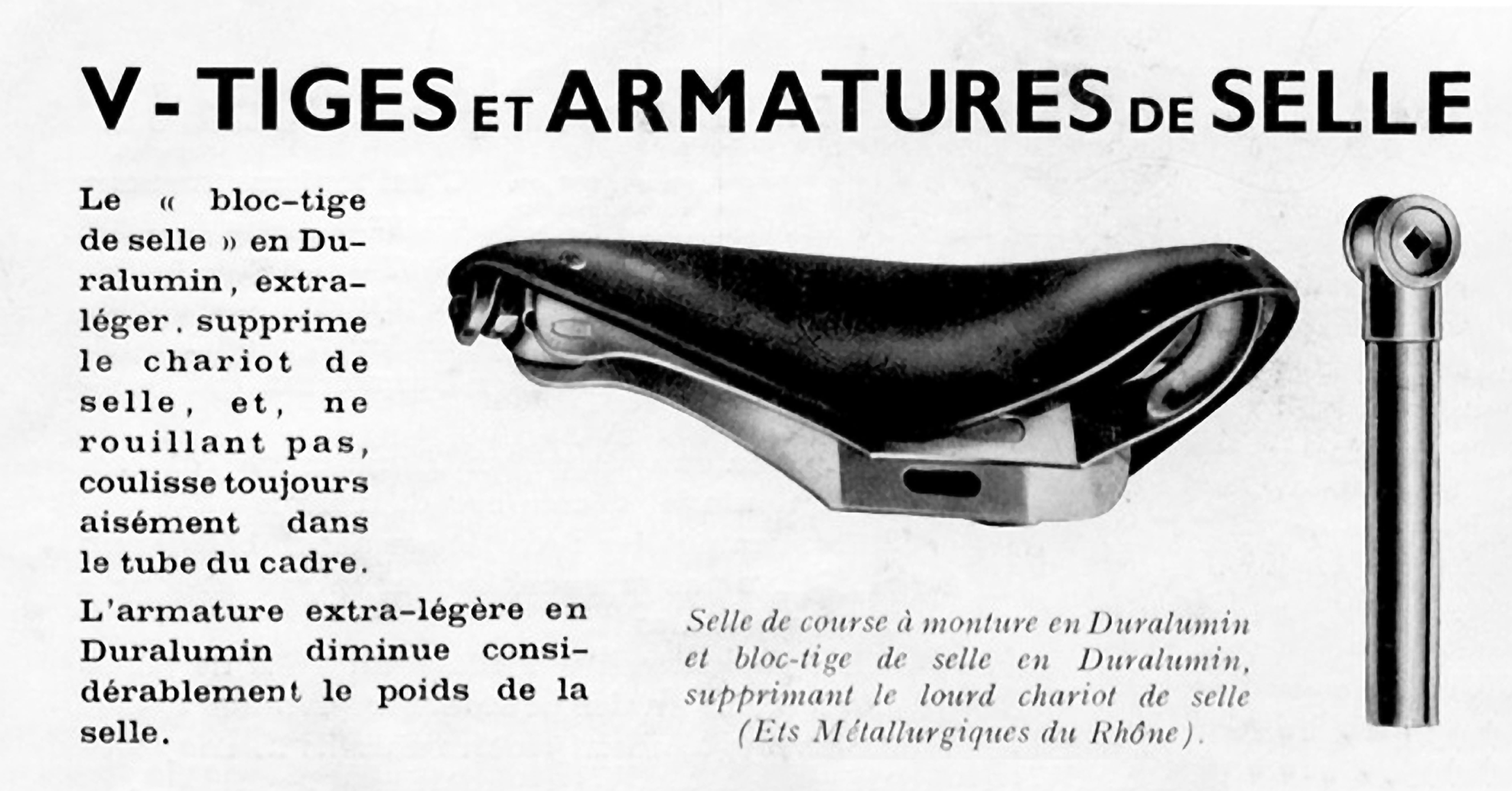
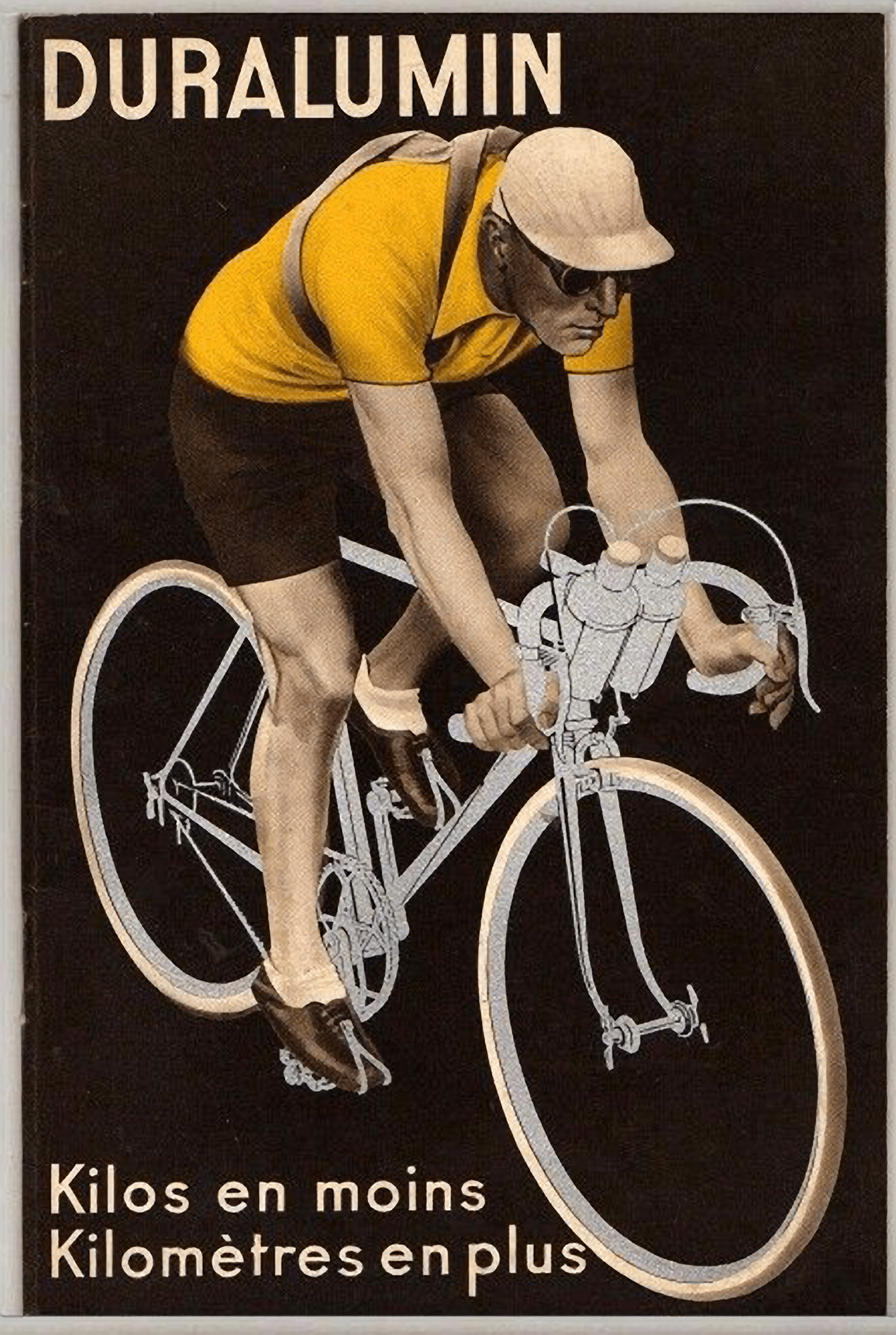
Duralumin is not a bicycle marque in the usual sense. It is the trade name of an age-hardened aluminum alloy, developed in Germany and adopted across a cluster of French manufacturers who saw in it the same promise materials engineers have chased since the beginning of bicycle time: a build material that is both durable and lightweight, which in most every language translates to fast and expensive.
This timeline traces Duralumin from its 1909 naming through its breakout adoption by Saint-Étienne era manufacturers such as Verrot et Perrin, Haubtmann, Mercier and Aviac, the Pelissier brothers, Nicolas Barra, Pierre Caminade and Gnome et Rhône, to its late-century revival in Ateliers de la Rive’s glued-aluminum Vitus 979. Every date below comes directly from Ebykr’s own Duralumin article.
German metallurgist Alfred Wilm established the “Duralumin” trade name at a company named Dürener Metallwerke AG, some six years after the underlying age-hardened aluminum alloy was initially developed.
Saint-Étienne manufacturer Ateliers de la Rive became known for its steel bicycle tubing, years before its later, more famous move into aluminum.
In pioneering Saint-Étienne, Verrot et Perrin developed the first light alloy crank arms made of Duralumin.
Per this article, parent company Haubtmann merged with Verrot et Perrin, the original trademark holder of the Duralumin name, at least by this point — the moment the piece frames as when the future Stronglight “knew” that durable and lightweight meant fast and expensive.
Haubtmann released a complete Duralumin crankset.
Manufacture of Duralumin freewheels, derailleurs, pedals, brakes and handlebars became widespread from this point forward.
Gnome et Rhône, the aircraft engine manufacturer that diversified into motorcycles, velomotors and bicycles after World War Two, released an initial line up of five Duralumin bicycle models.
Gnome et Rhône had expanded its Duralumin bicycle range to a full eight models.
Saint-Étienne manufacturer Ateliers de la Rive released the venerable “Vitus 979” frameset, a “Duralinox” model that became an instant classic and was the first production aluminum frameset whose thin-wall 5083/5086 tubing was slip-fit and then glued together using a dry heat-activated epoxy.
Production of the Vitus 979 continued until this year.
Have more details on Duralumin era bicycles, or an original Meca Dural, La Perle, Barralumin or Vitus 979 in the collection? Join the discussion on the Ebykr forum and help fill in the story.
https://en.wikipedia.org/wiki/Duralumin
https://onlinebicyclemuseum.co.uk/1947-velo-la-perle-meca-dural-duralumin/
https://www.ebykr.com/caminade-circle-of-cycle/
https://www.ebykr.com/tech-specs-1937-caminade-caminargent-bordeaux-paris/
http://www.amicalegnomerhone.net/gazettes/gaz39/
http://www.classicrendezvous.com/France/parts/Vitus_history.htm
http://www.bicyclingaustralia.com.au/bikes/retro-review-the-legendary-vitus-979
https://on-the-drops.blogspot.com/2019/01/
https://www.ebykr.com/ideale-saddles-behind-leather-curtain/
https://www.sellesideale.fr/
https://patrimoine.seinesaintdenis.fr/CEGEDUR-puis-parc-d-activites-Eiffel
https://gravelcycling.wordpress.com/2016/07/07/steel-the-different-types-of-steel-in-bike-frames/
 Duralumin
Ebykr documents this marque across the archive. Here is the rest of it.
The Ebykr Digest
New articles, timelines, catalog finds and registry activity — assembled from the archive once a month. Your address is never shared.
Double opt-in. One email per month. Unsubscribe at any time with one click.