A De Rosa frame begins and ends with a single conviction: that steel, and later titanium, aluminum and carbon, can always be coaxed a little further toward perfection. From a teenage apprentice bent over a Milan workbench to a family firm building bicycles for cycling’s most fearsome champions, Ugo De Rosa and now his children spent half a century proving that heritage and forward motion are not opposites, but the same pursuit viewed from different perspectives.
Here is a chronological timeline of key corporate and technical events at De Rosa, spanning from 1934 to 2019, based on the sources used for an accompanying Ebykr article on its history, “De Rosa: Father of the Future.”
17 of 17 events
1934
Founder Born
Ugo De Rosa is born in Milan during the winter of 1934.
1947
Apprenticeship Begins
At the age of thirteen, Ugo De Rosa starts working in the workshop of his uncle Filippo Fasci, repairing and assembling bicycles.
4 September 1949
Cultural Milestone
La Domenica del Corriere publishes a Walter Molino illustrated cover of Fausto Coppi crowned world pursuit champion, the kind of image that first stirred a young Ugo De Rosa toward cycling.
by 1952
Workshop Experience
By 1952, at eighteen years old, Ugo De Rosa has already spent five years tinkering fruitfully in a relative’s workshop.
1953
Company Founding
Ugo De Rosa opens the doors of his Milan shop to the public and begins selling bicycles, founding De Rosa.
1958
Growing Reputation
By 1958 Ugo De Rosa‘s skills and notoriety have grown beyond the local Milan market, and professional racers are hearing of the Italian builder.
1958
First Champion Client
France’s Raphaël Géminiani becomes the first champion racer pulled into the De Rosa orbit, requesting a bicycle for the upcoming Giro d’Italia after placing second at the Tour de France and winning its King of the Mountains jersey; the resulting bicycle carries Géminiani to third place in the following Tour de France.
1969
Partnership Origin
The partnership between Eddy Merckx and Ugo De Rosa has its origins in 1969.
1973
Team Frame Builder
Eddy Merckx invites Ugo De Rosa to join Team Molteni as official frame builder and mechanic, and the partnership takes full effect.
1978
Racing Retirement
Eddy Merckx retires from professional racing in 1978, by which time the De Rosa-Merckx history had already become the stuff of legends.
1981
Brand Founding
Eddy Merckx establishes his own namesake bicycle brand, and Ugo De Rosa provides technical consultation as Merckx builds manufacturing facilities.
1953–1991
Material Era
Steel is the only material used to manufacture De Rosa frames and forks from 1953 until 1991.
1991
Titanium Introduced
De Rosa is among the first companies to introduce titanium frames, which immediately distinguish themselves for their elegance and neatness of form, lightness and reliability.
1996
Aluminum Introduced
De Rosa introduces aluminum bicycles, over a decade after pioneering aluminum manufacturers Cannondale and Klein first introduced its aluminum models.
2000
Carbon Introduced
De Rosa introduces carbon frames, first combined with aluminum tubes and then as pure carbon creations weighing a parsimonious 1,000 grams.
2005
Special Sponsorship Exception
Axel Merckx, son of Eddy Merckx, receives special permission from Davitamon-Lotto to ride his father’s bicycles through the 2005 racing season despite Ridley being the official team bicycle sponsor.
2019
Electric Bike
By 2019, De Rosa has extended its frame-building lineage into its own electric road bike.
Join the De Rosa Heritage Discussion!
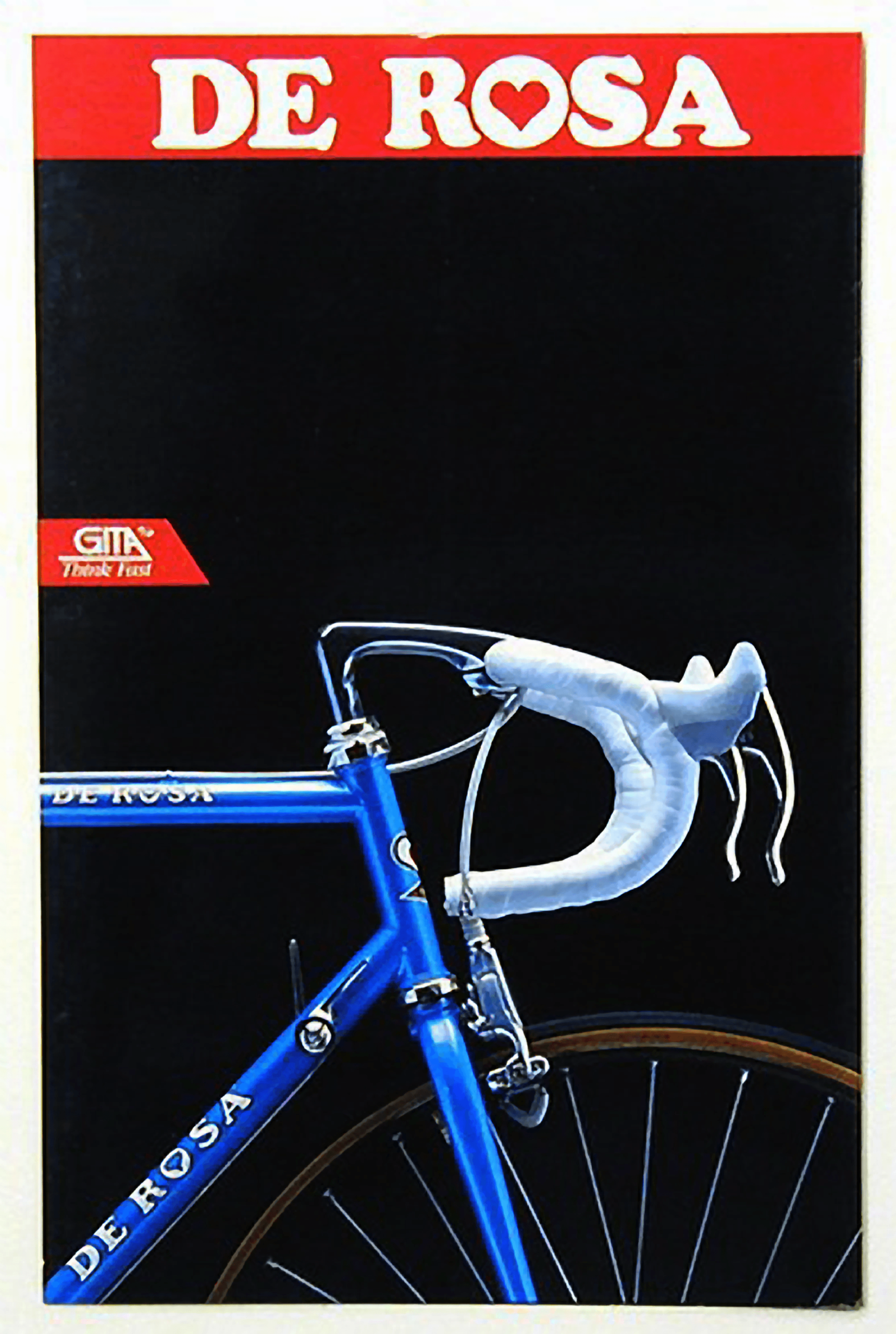
Have you ridden a De Rosa with the marque’s signature heart-shaped lug cutouts, or one built during the Ugo De Rosa and Eddy Merckx Molteni years — share your story on the Ebykr forums.


 De Rosa