About Ebykr
Ebykr celebrates classic and vintage lightweight bicycles through provocative imagery and opinion. Ride along with us.
About Ebykr
Ebykr celebrates classic and vintage lightweight bicycles through provocative imagery and opinion. Ride along with us.

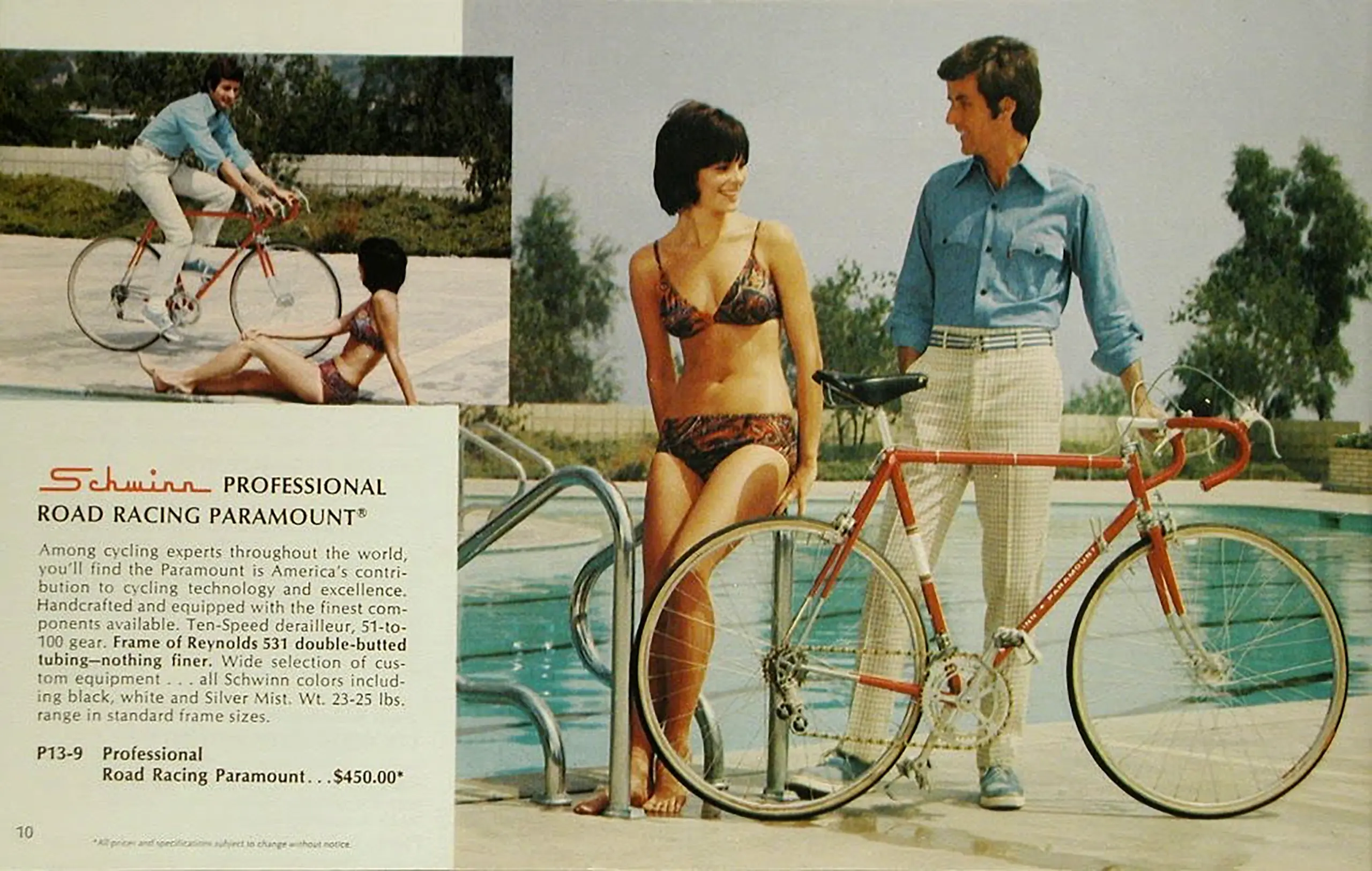

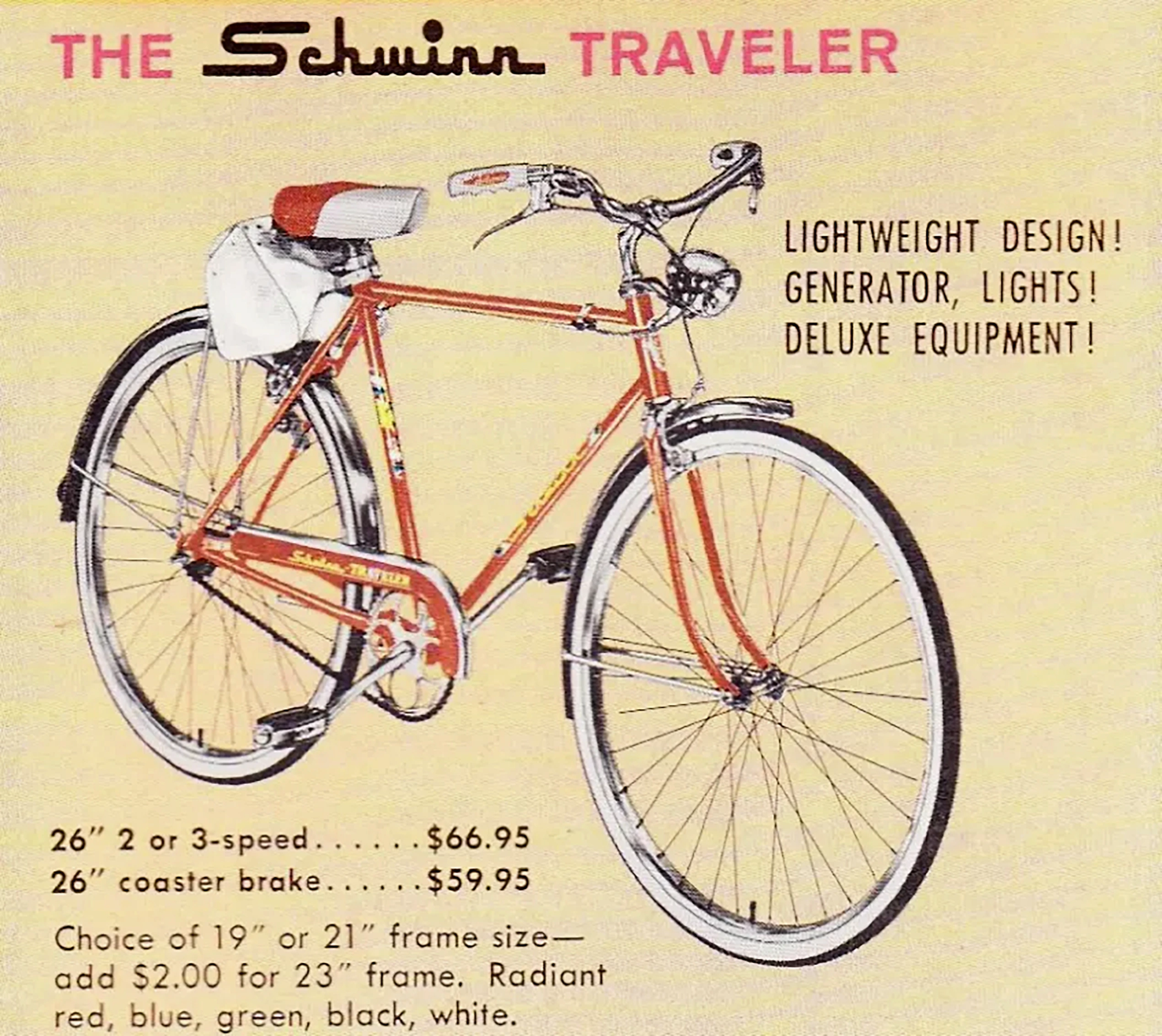
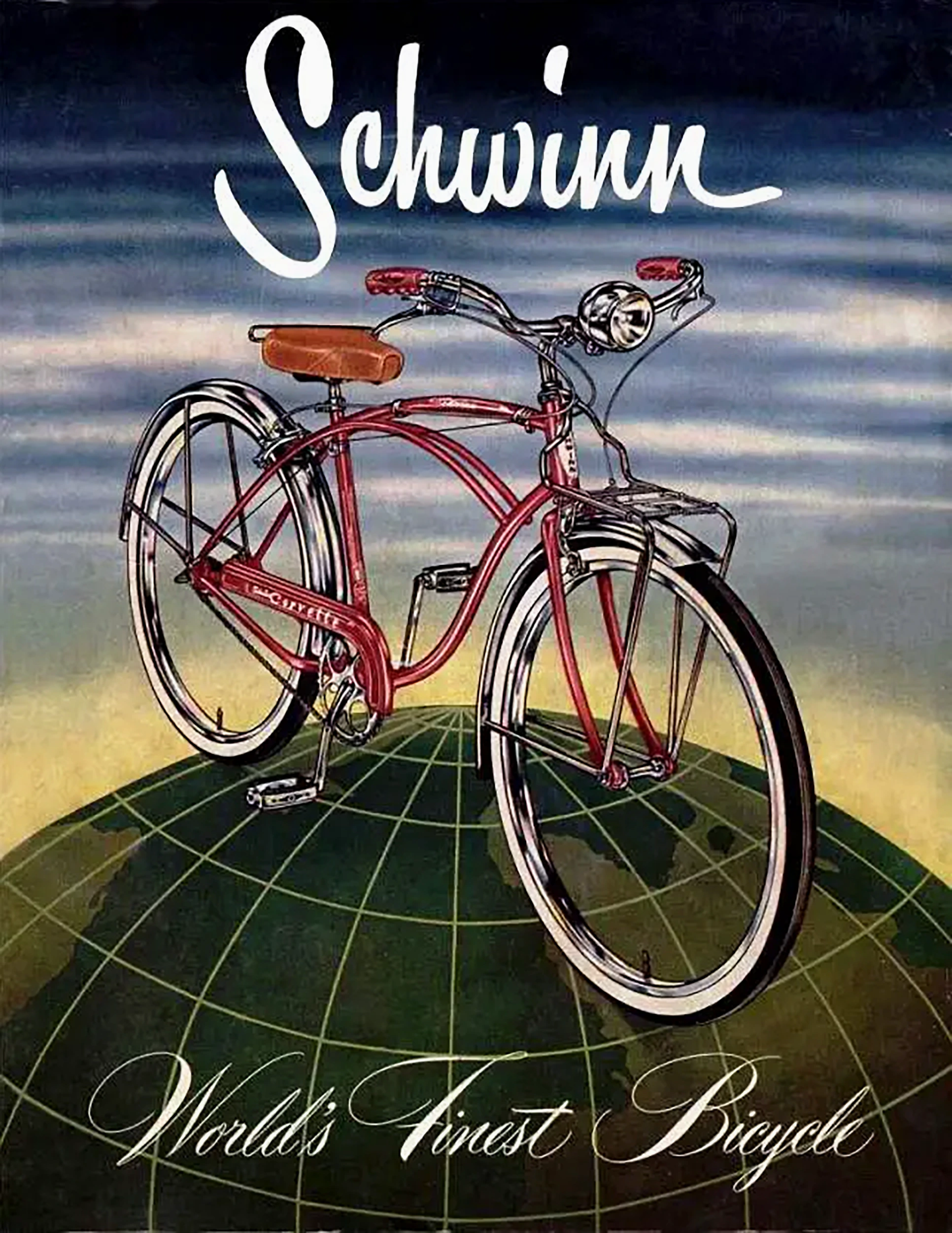
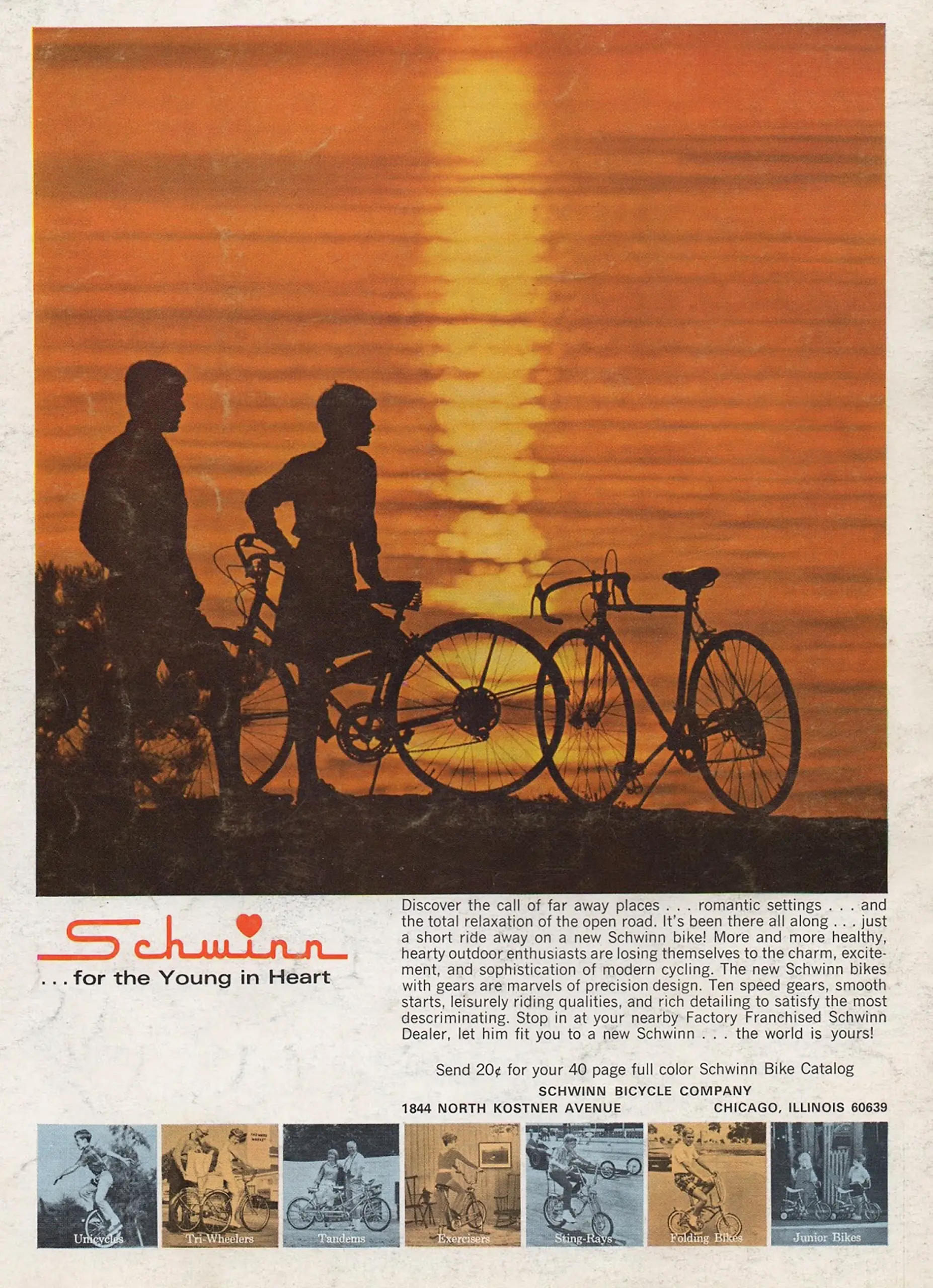
Schwinn printed more paper than almost any American bicycle company and a great deal of it survives. This gallery gathers the catalog pages, dealer books and magazine advertisements that document the marque from a 1939 trade advertisement for racing components through to the BMX bicycles of 1981, together with the covers that fronted each season.
Read in sequence the paper shows a company that could photograph a hand-built Paramount beside a swimming pool and sell a five-speed Sting-Ray with a stick shift in the same season. The lightweights and the mass market shared a catalog, a factory and a badge, and the advertising almost never explained the difference. Every image here is a period document, scanned and retouched at full resolution.
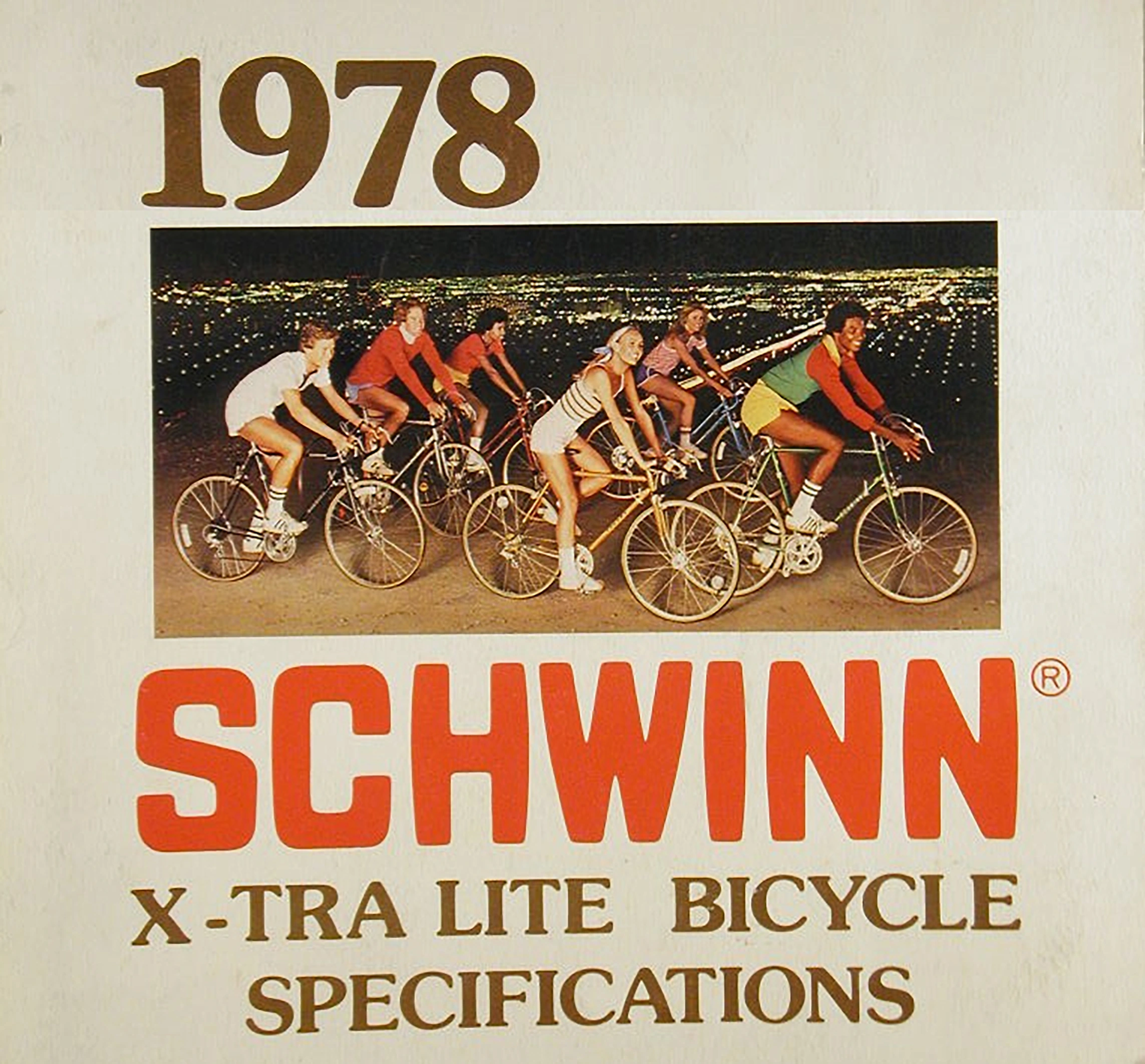
The Paramount and the racing line. The Paramount was hand-built in numbers measured in hundreds a year and Schwinn advertised it as the choice of champions for four decades. These pages carry it from Paramount and Superior racing components in 1939 through to the X-tra Lite specifications of 1978.
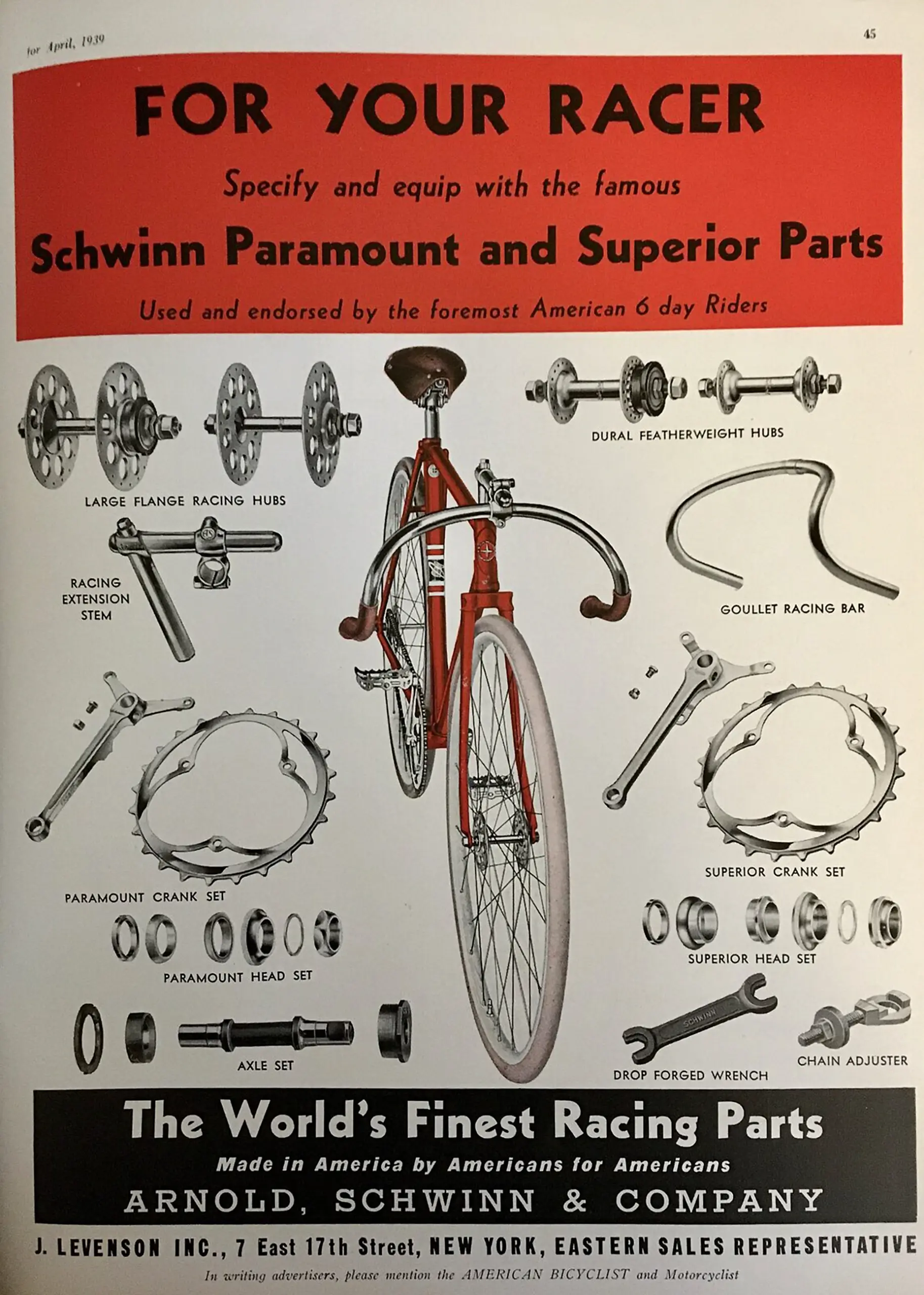
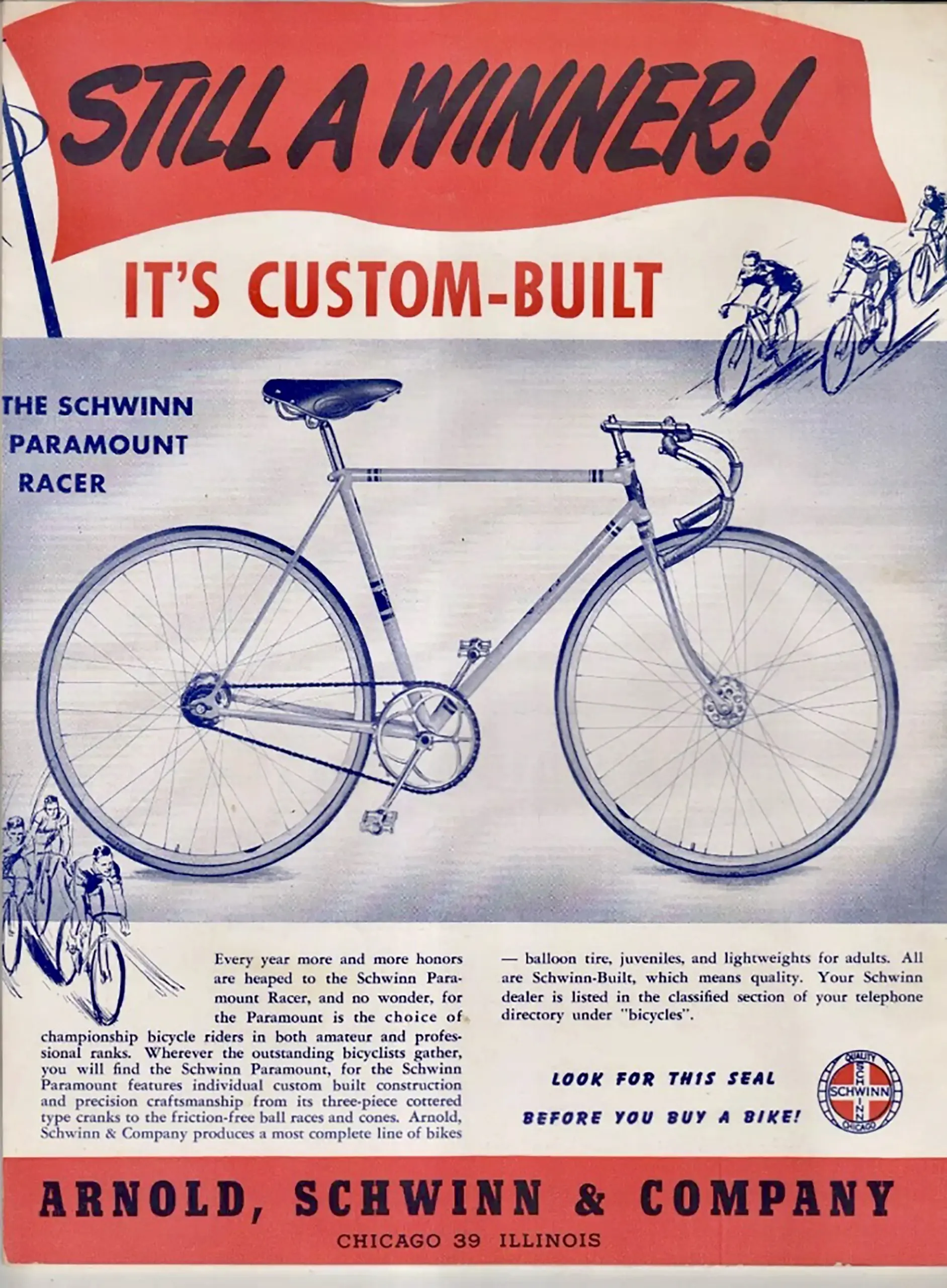
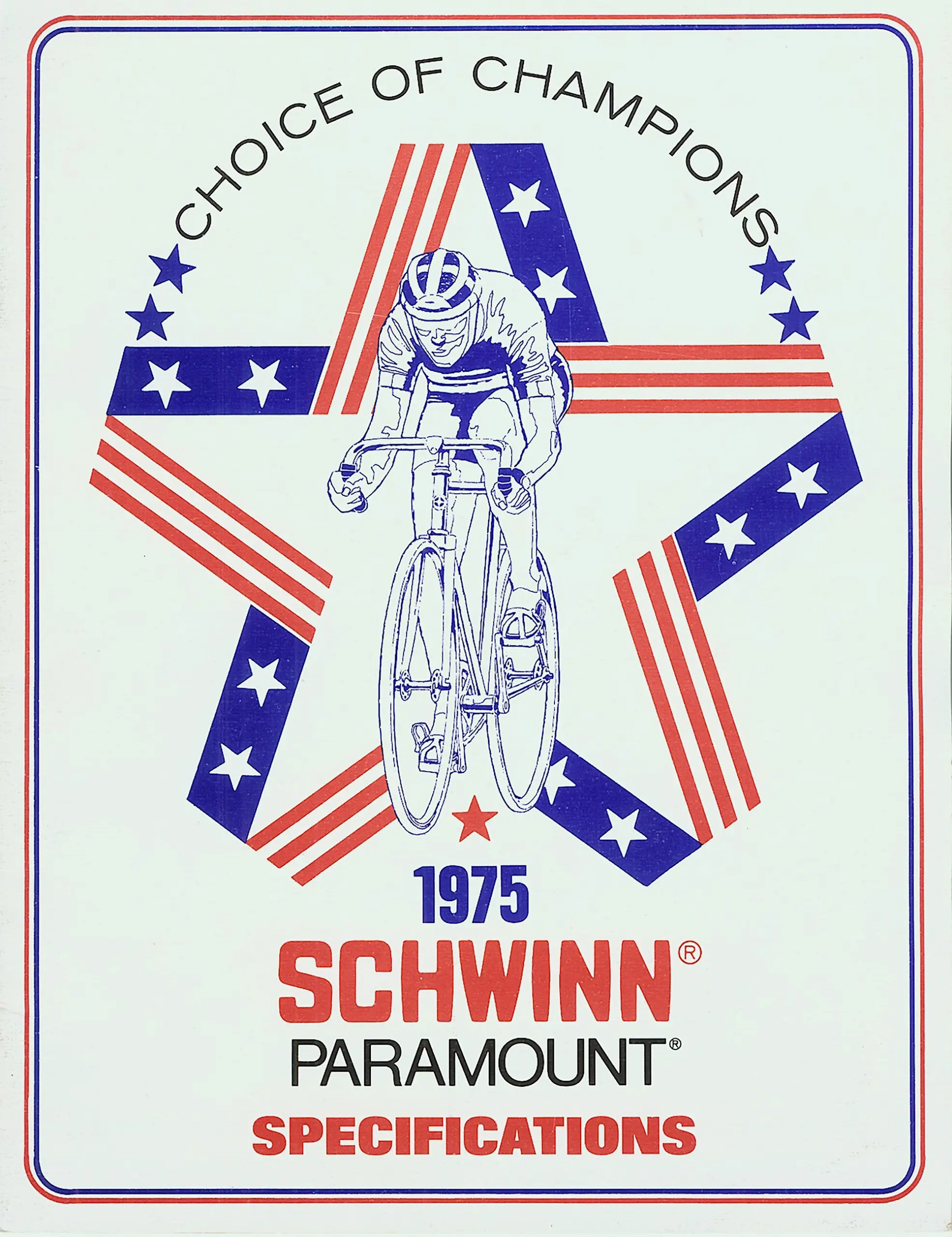
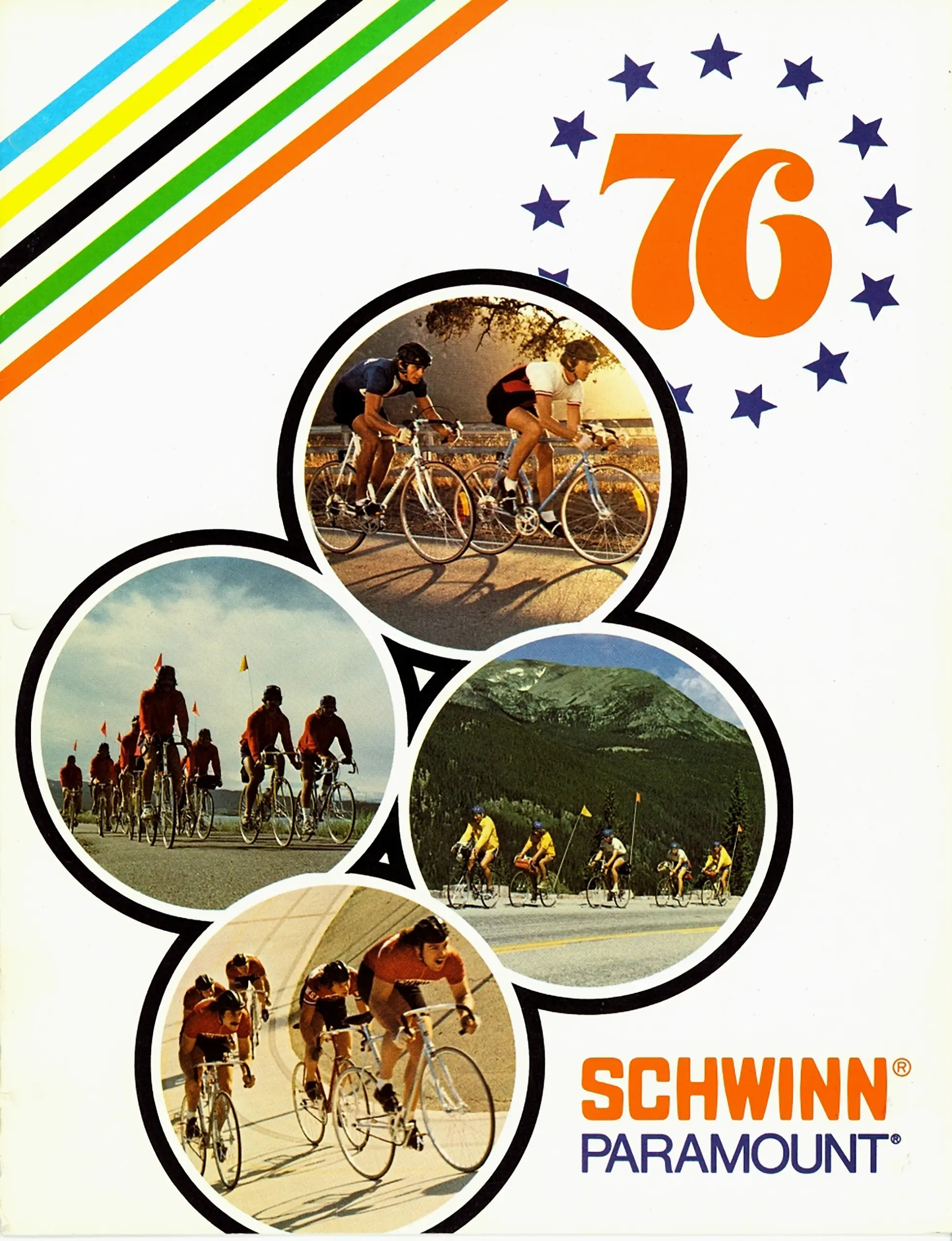
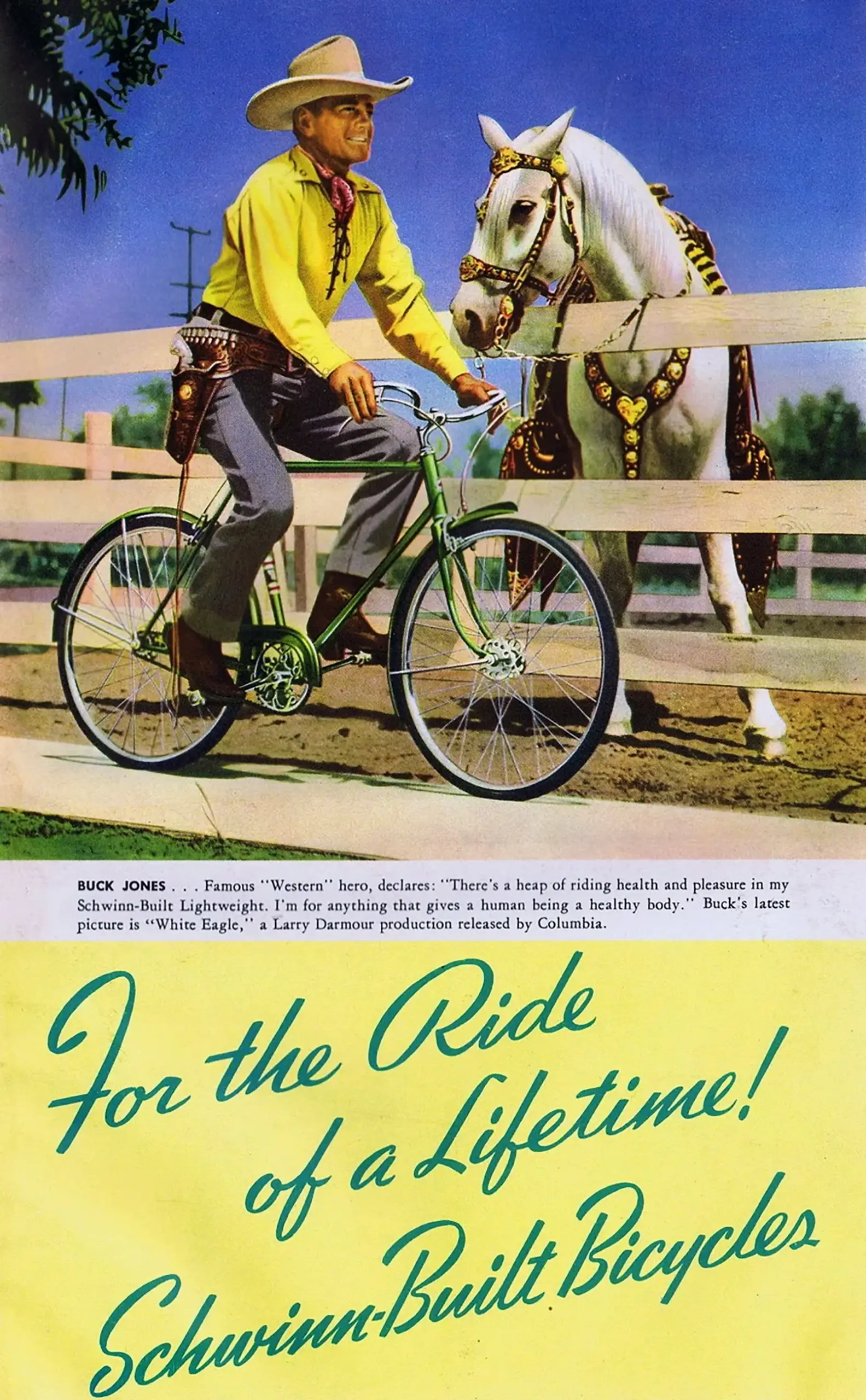
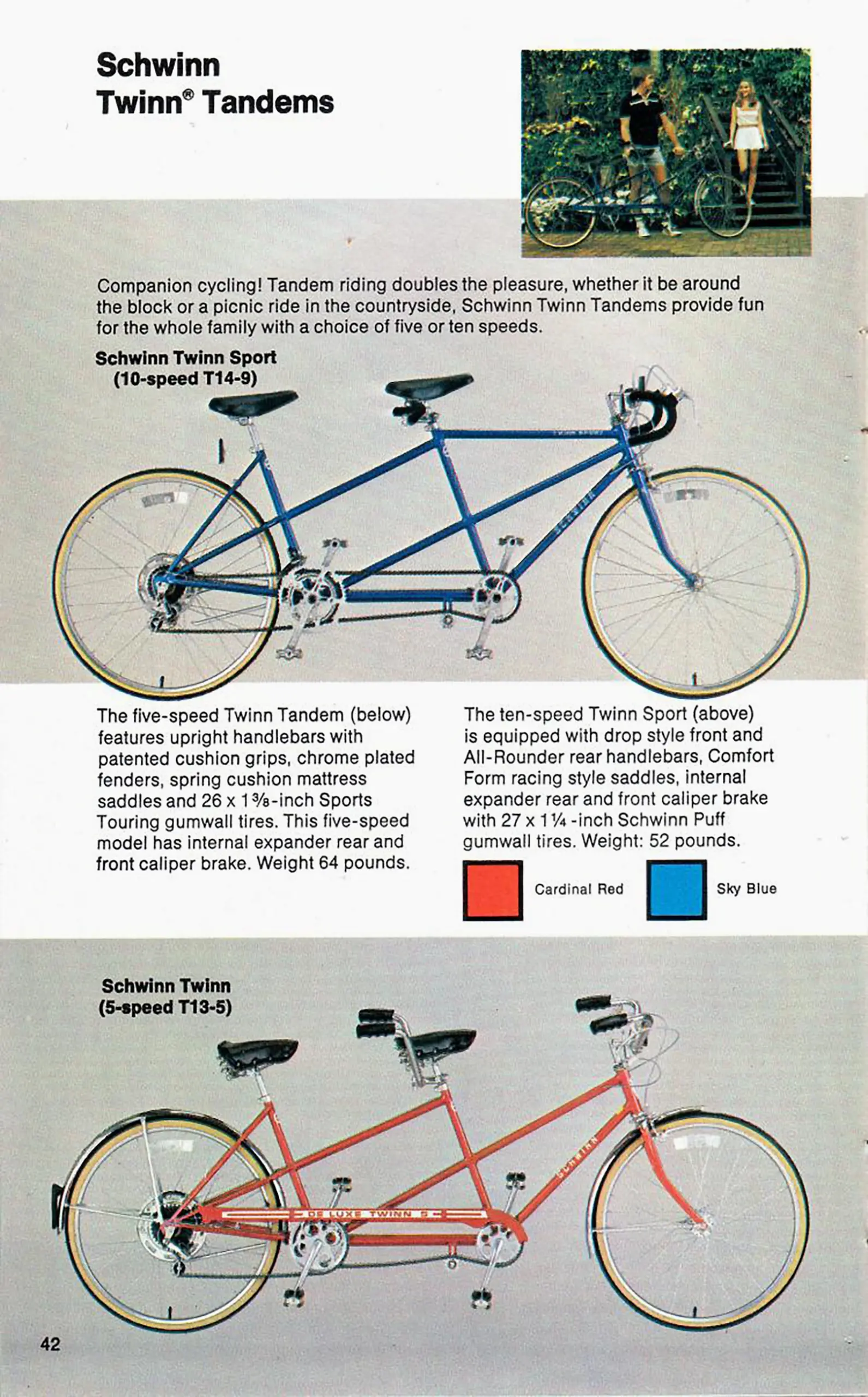
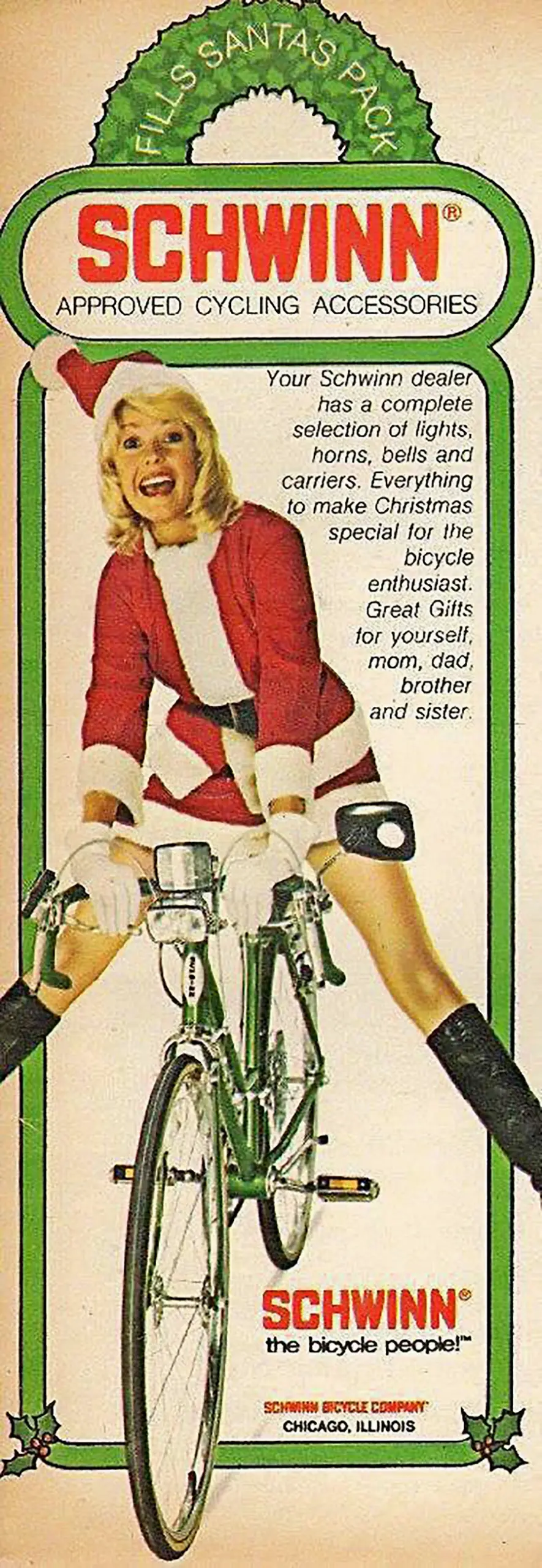
Balloon tires and the family range. The cruiser paid for everything else. From Buck Jones on a Schwinn-Built lightweight to the Twinn tandems of 1980, this is the range that made the name a synonym for bicycle in the United States.
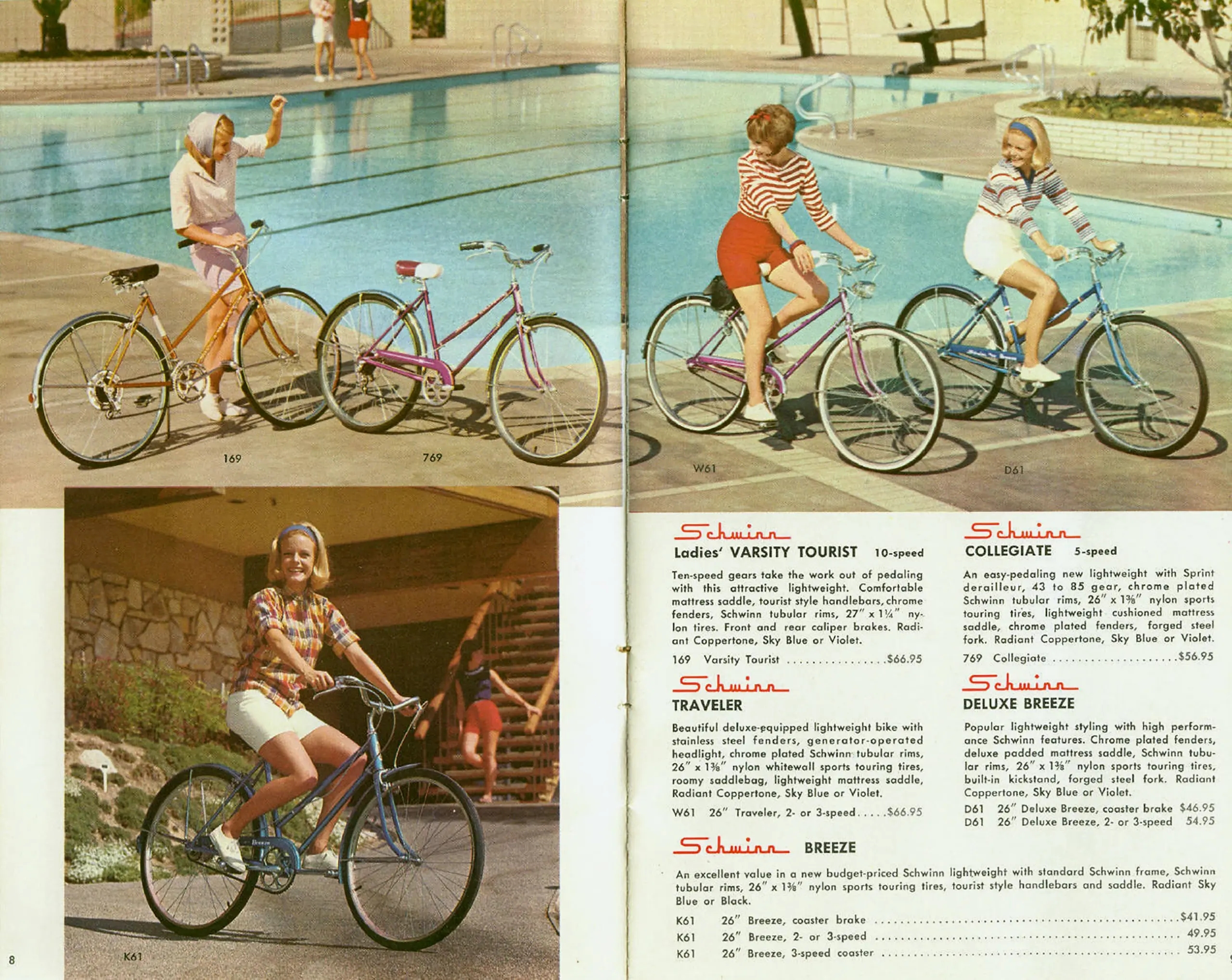
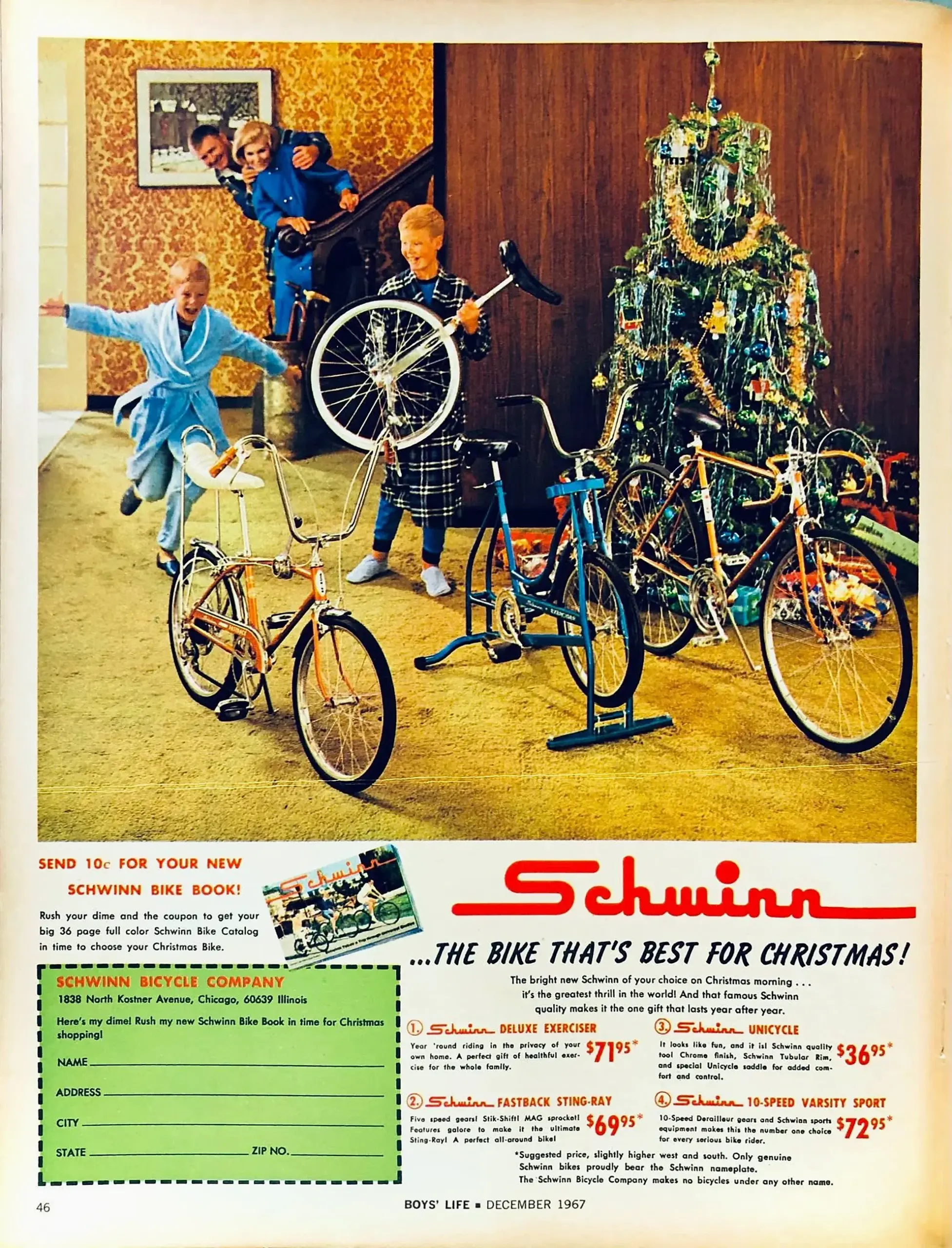
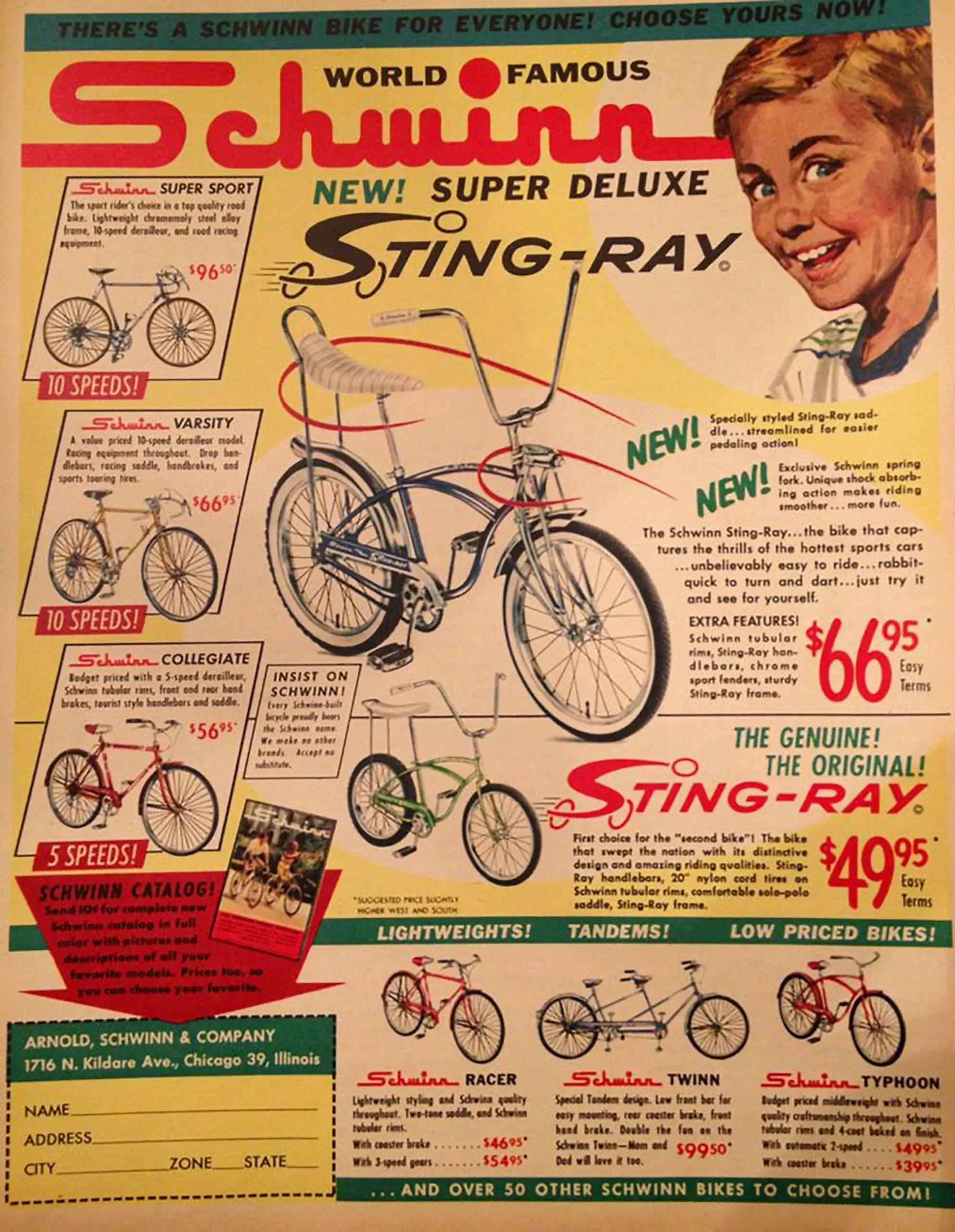
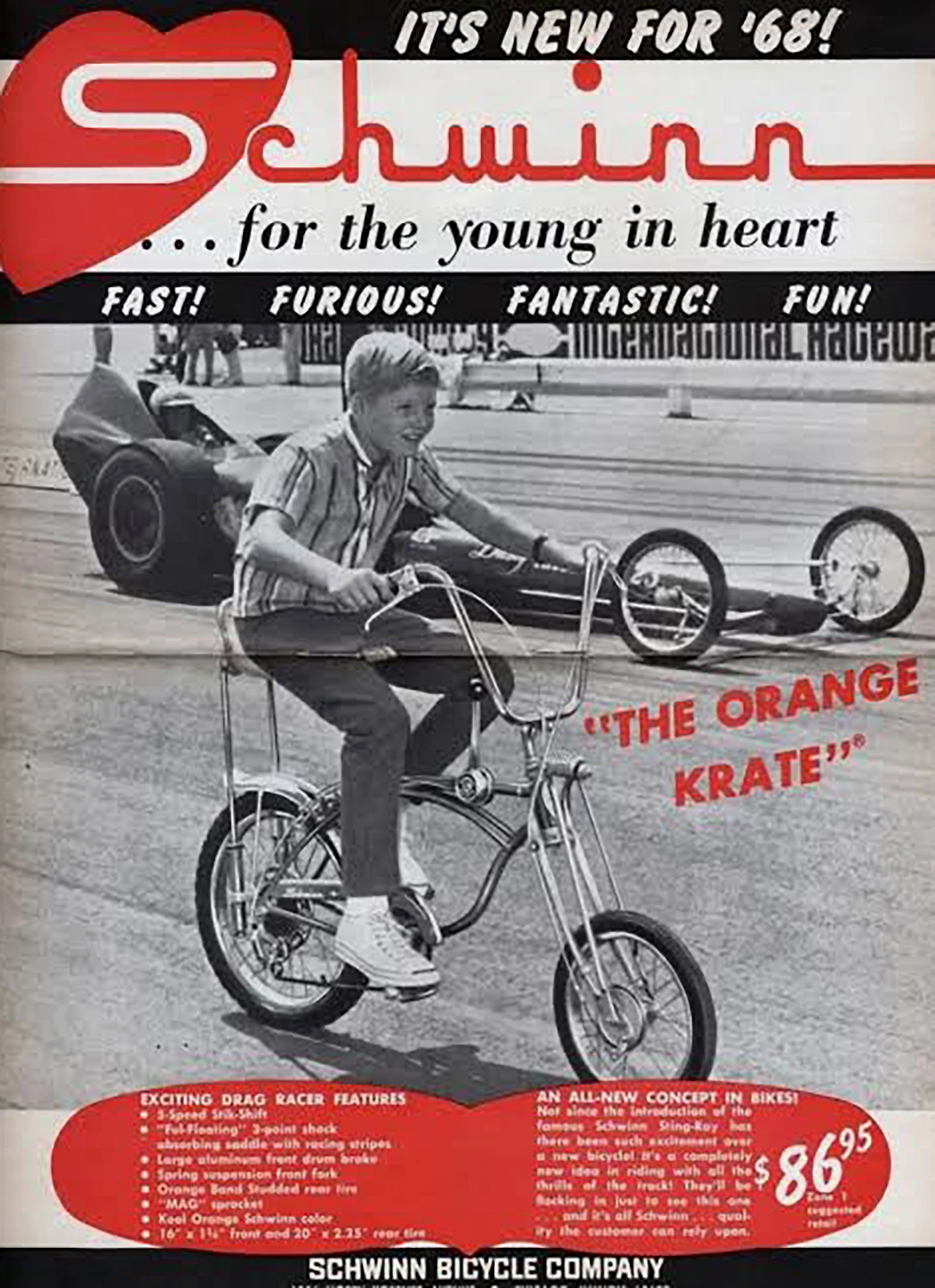
Sting-Ray and the Krates. The Sting-Ray arrived as a mid-year model in 1963 and reshaped the American bicycle market. The Krates followed. Schwinn understood this customer far better than it ever understood the lightweight buyer.
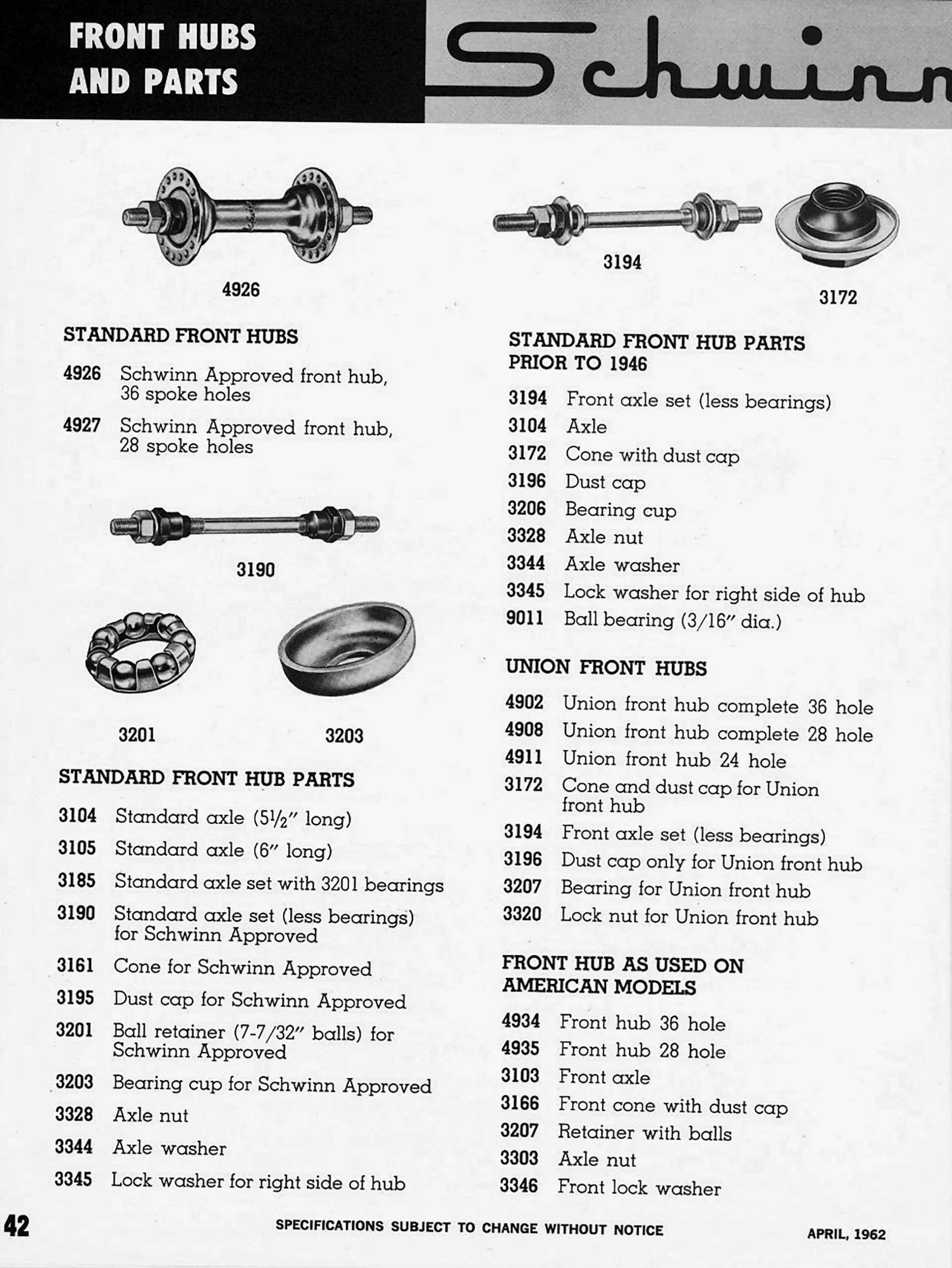
Parts, accessories and the dealer book. Behind the consumer catalogs sat the parts book, where the difference between a component stamped Schwinn and one marked Schwinn Approved is settled in part numbers.
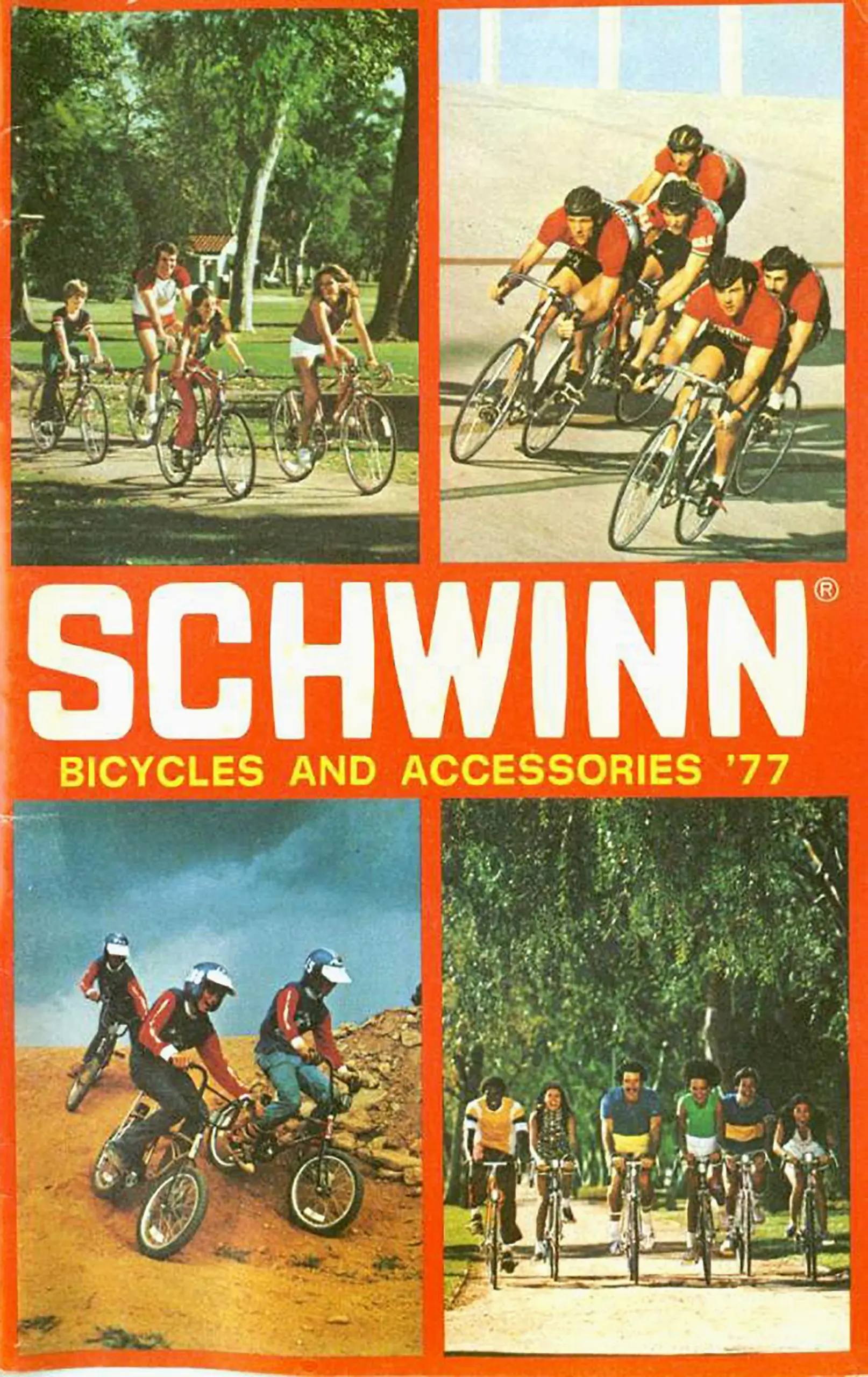
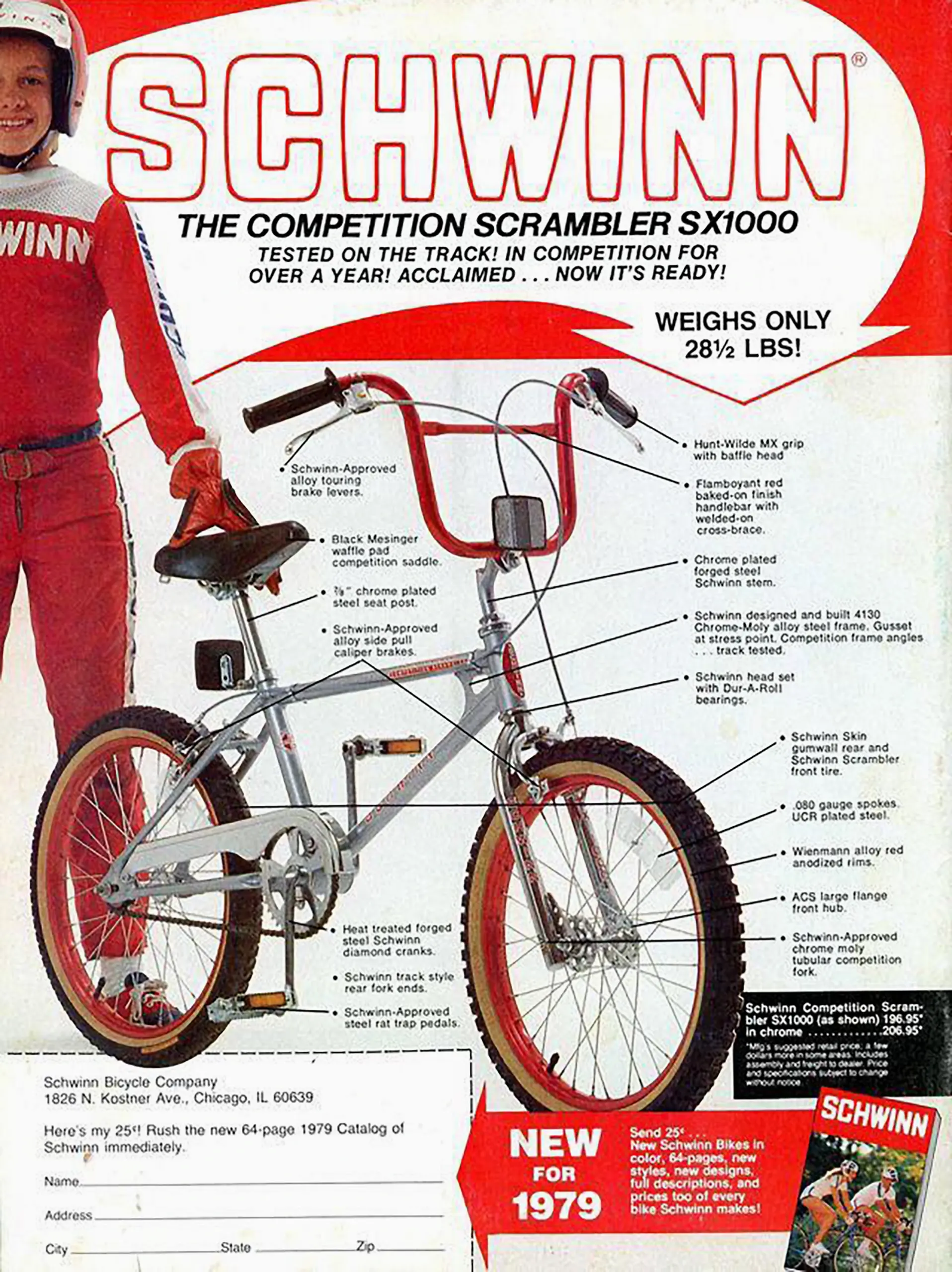
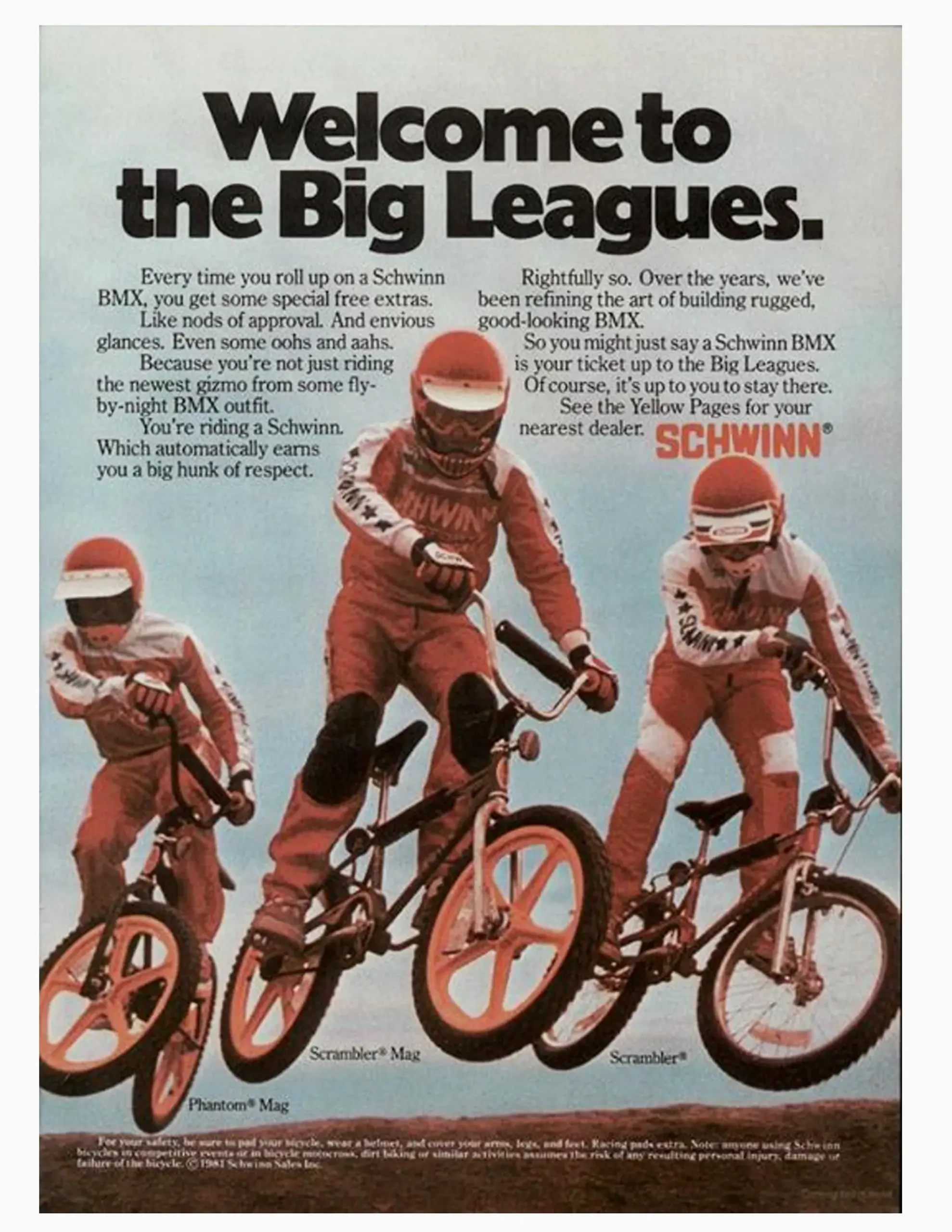
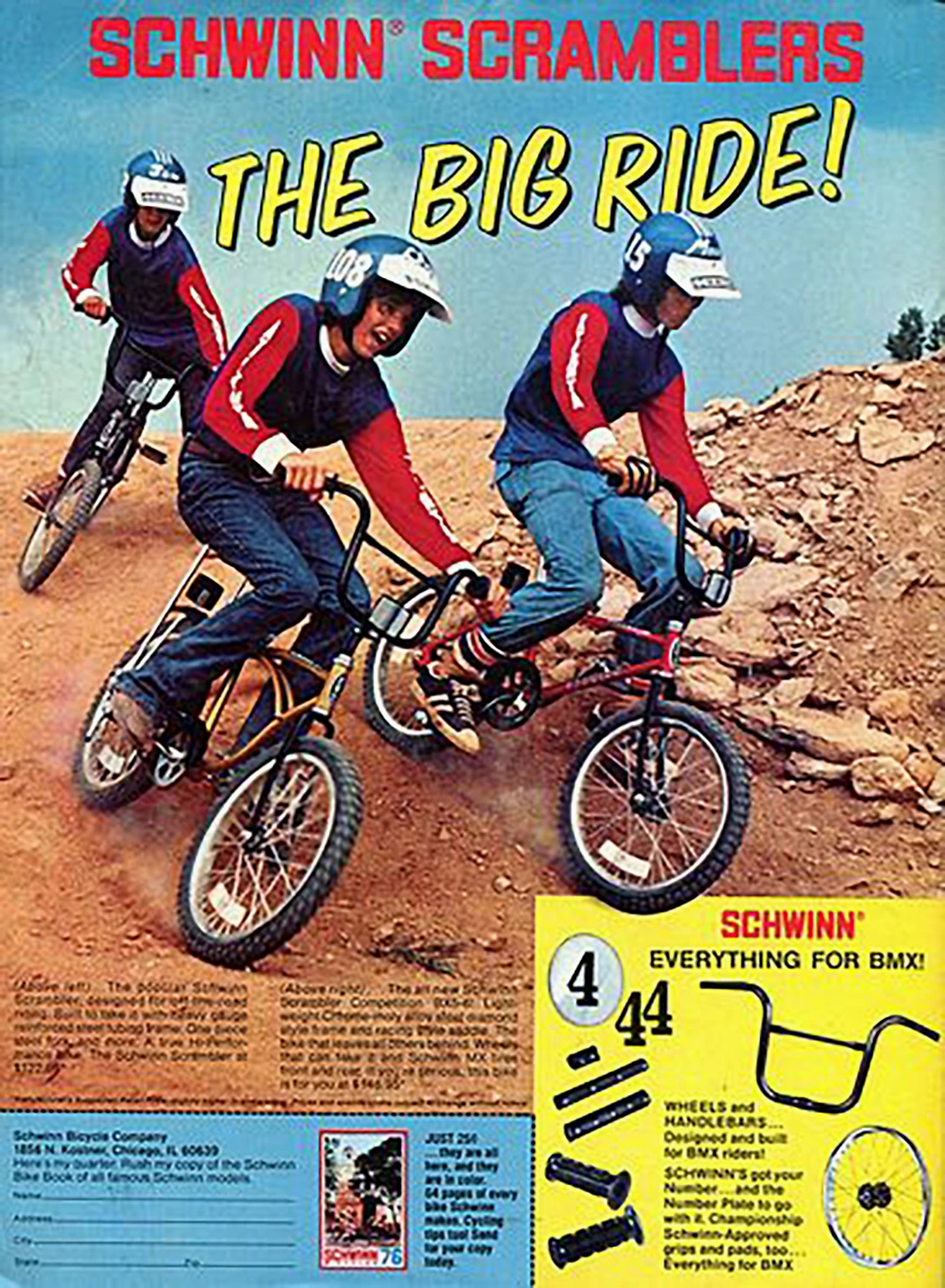
BMX and the Scrambler. Schwinn dismissed BMX as dangerous, entered it in 1975 and spent the next six years trying to catch up. The machines were competent and late, and the factory race team was better than the sales.
Read the full history in Schwinn: An American Giant and Its Hand-Built Lightweights, which covers Arnold, Schwinn and Company from 1895, Emil Wastyn and the birth of the Paramount, the fillet-brazed Superior and Super Sport, and the long decline into a brand without a factory.
 Schwinn
Ebykr documents this marque across the archive. Here is the rest of it.
The Ebykr Digest
New articles, timelines, catalog finds and registry activity — assembled from the archive once a month. Your address is never shared.
Double opt-in. One email per month. Unsubscribe at any time with one click.