About Ebykr
Ebykr celebrates classic and vintage lightweight bicycles through provocative imagery and opinion. Ride along with us.
About Ebykr
Ebykr celebrates classic and vintage lightweight bicycles through provocative imagery and opinion. Ride along with us.

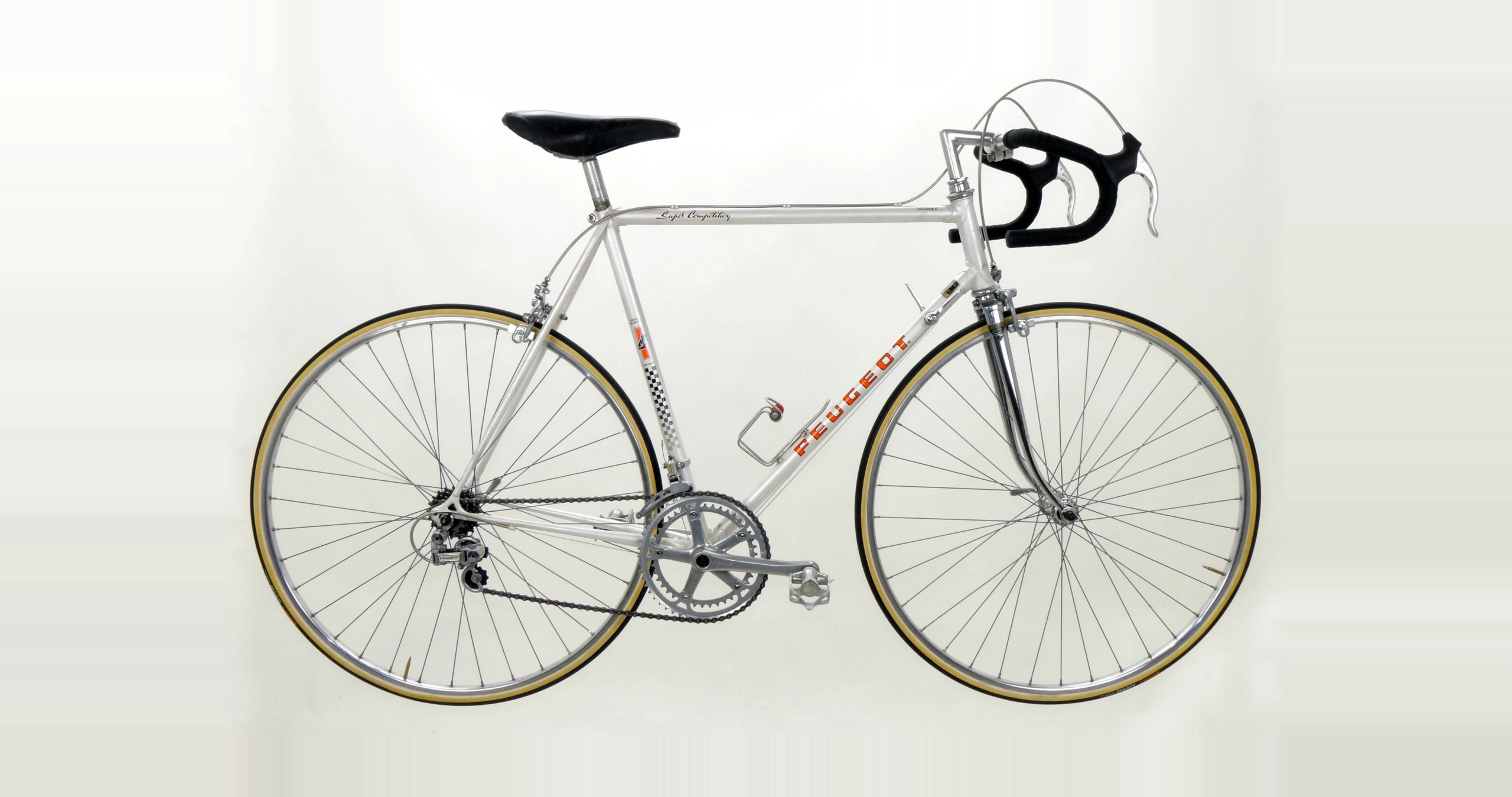
The full history of Cycles Peugeot: from a family steel foundry in Montbéliard to a record ten Tour de France titles and the lightweight PX-10 and PY-10 racers prized by collectors today. Along the way, a family divided between the bicycle and the automobile, a folding bicycle built for soldiers, and the checkerboard jersey that defined an era of French racing.

The history of Cycles Peugeot is a two-century saga of industrial foresight, family tension and the relentless pursuit of speed, all bundled into a story most of us know little about because of where or when we grew up. It is a narrative that begins in a quiet 16th-century village and evolves into the most successful factory team in the history of the Tour de France, before fading into relative obscurity alongside so many other French brands in the 1980s. Luckily for us here on Ebykr, plenty of juicy things happened along the way to make the Peugeot story well worth the read…
The Peugeot family’s roots in the Montbéliard region of France run as deep as the local earth. From as early as the 16th century, family members served as mayors of the village of Vandoncourt, which lies just 4.3 miles (or 7 kilometers) from the Swiss border in central-eastern France and is perched on a high plateau that dominates the region. Originally a family of farmers, artisans and weavers, their industrial era was inaugurated in 1810 when brothers Jean-Pierre II and Jean-Frédéric Peugeot converted their family grain mill at Sous-Cratet into a steel foundry.
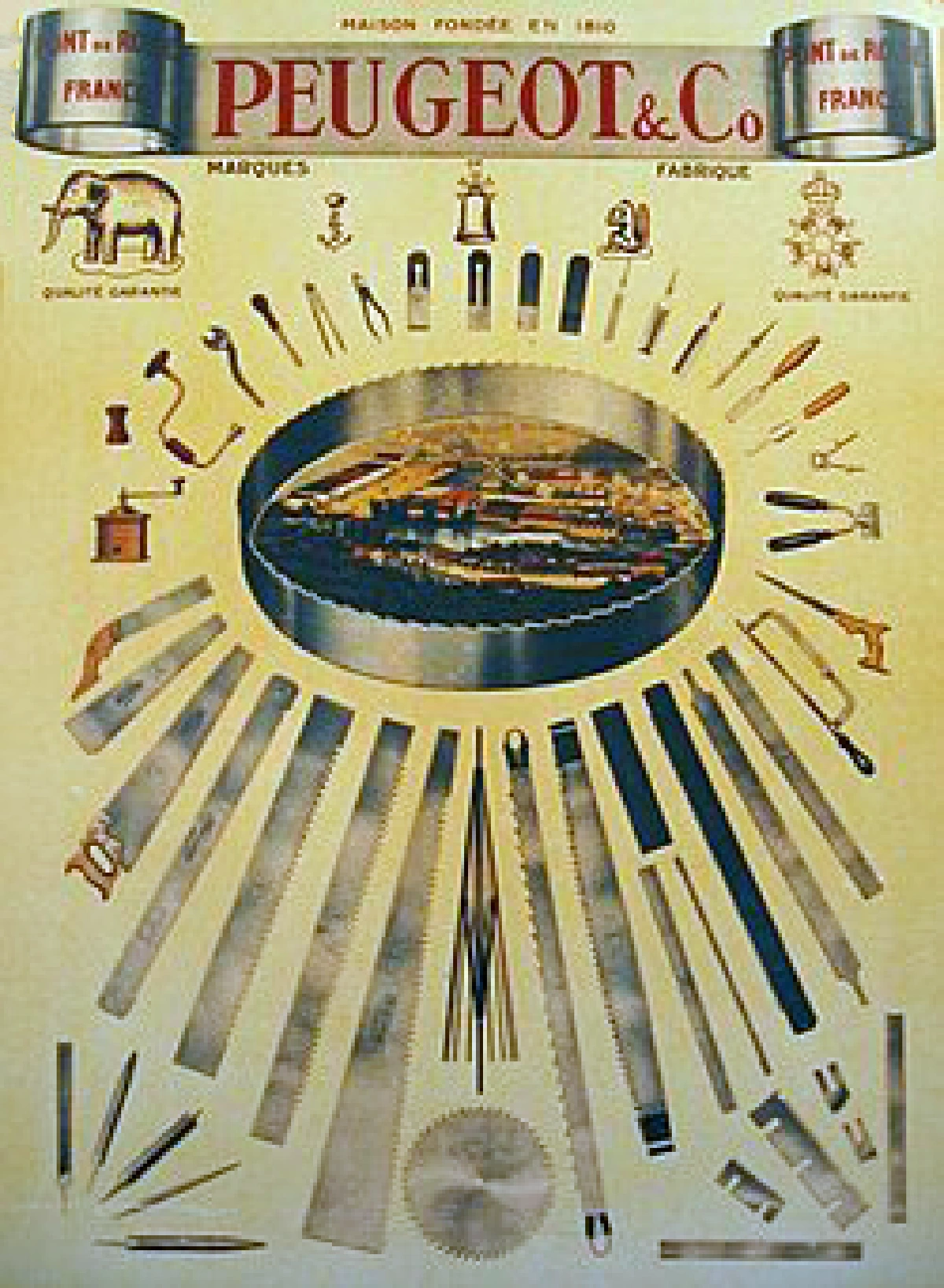
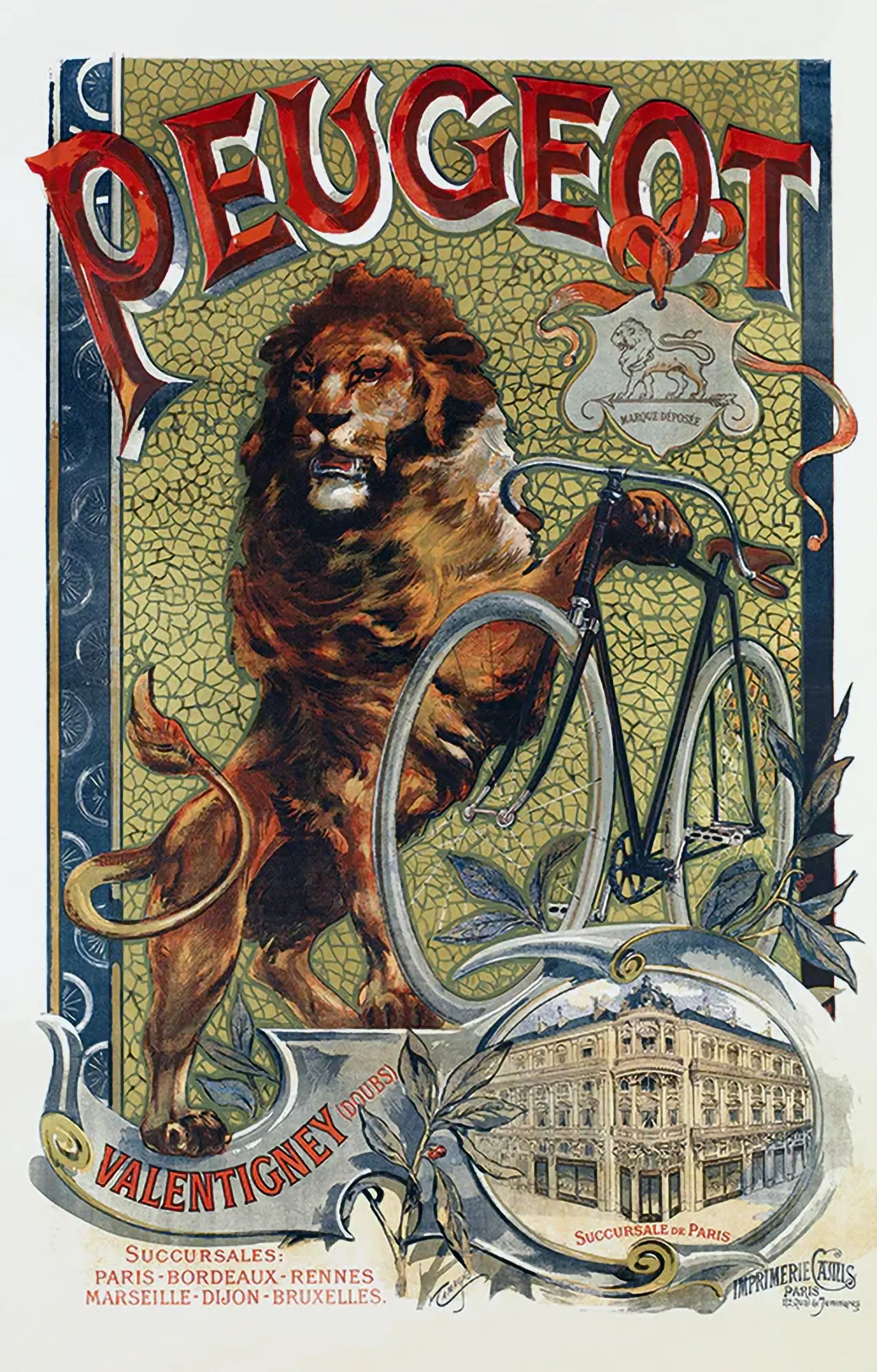
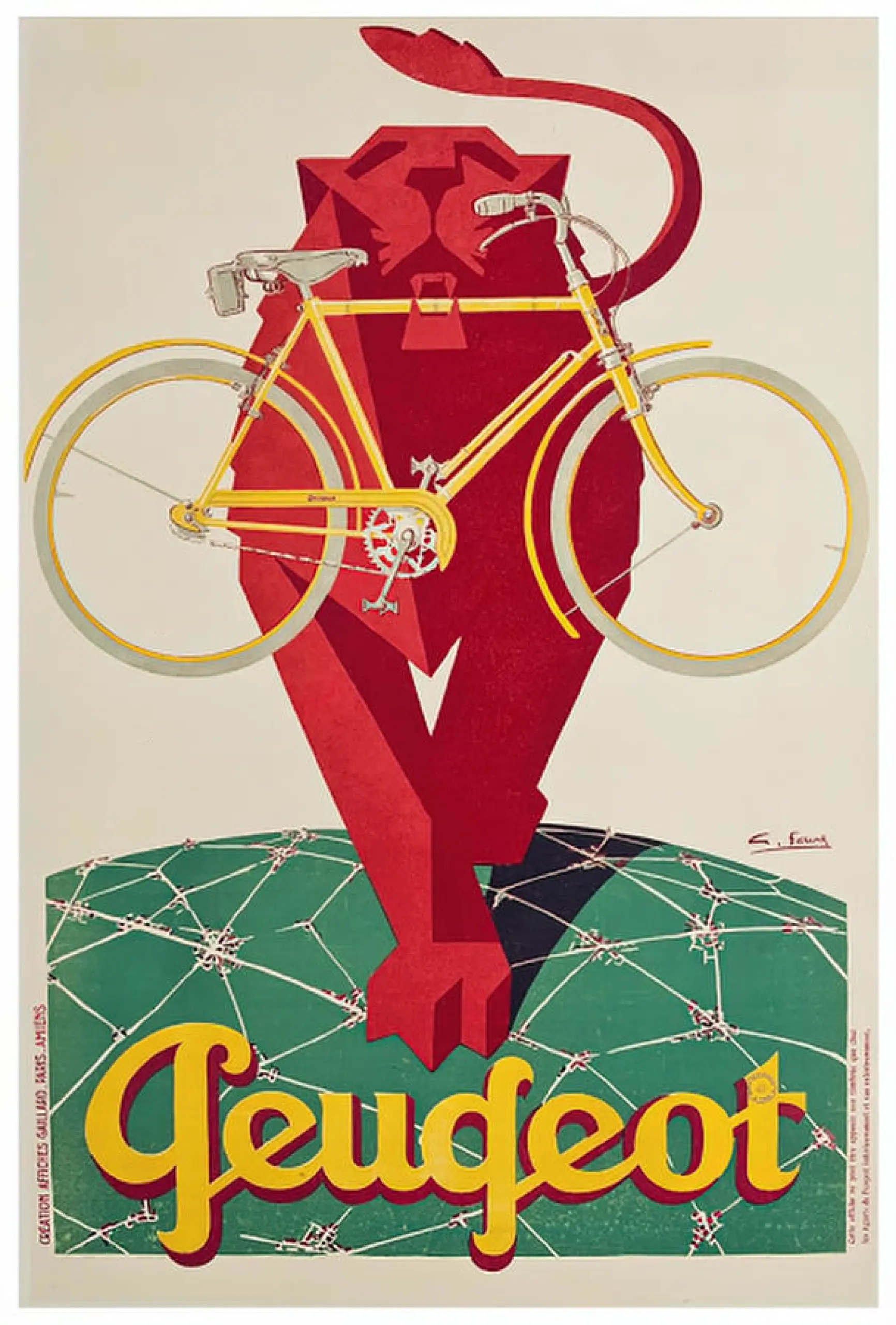
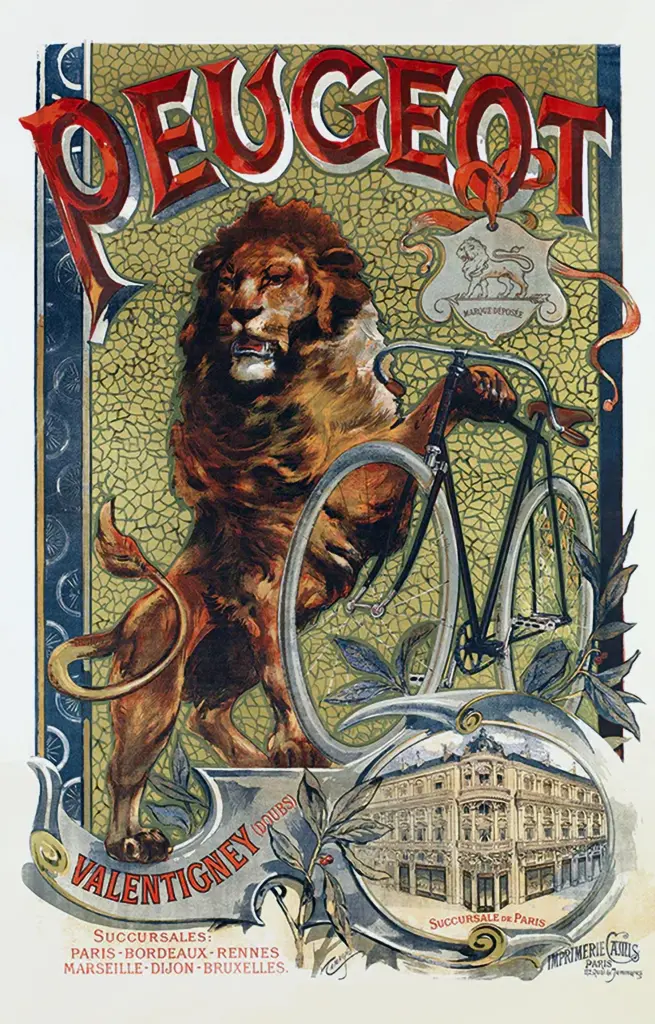
By 1824, the family’s Hérimoncourt factory was processing up to 150 kg of steel daily, producing a vast array of practical goods including saws, clock springs and coffee grinders. In 1858, looking to distinguish their high-quality blades from competitors, the family registered the brand’s famous, utterly timeless Lion logo. Created by local engraver Justin Blazer as early as 1810, the lion was designed to represent the characteristics of Peugeot steel: its toughness (like a lion’s teeth), its suppleness (like its spine) and its quickness (symbolized by the lion’s speed).
Behind these industrial and marketing expansions was something of a progressive social vision. In 1869, decades ahead of related national laws, Peugeot established social policies for its workers, including a savings bank, free health care, a 10-hour working day and even a company hospital. These policies and services were unusual at the time and spoke to management’s belief in and support of its employee workforce. One can imagine how that impacted the quality of their products and primed the company for growth.
The man responsible for turning all this metallurgical expertise toward the bicycle was Armand Peugeot, a graduate of the prestigious École Centrale Paris, one of France’s top engineering and science schools. During an 1881 trip to the industrial center of Leeds, England, Armand witnessed the burgeoning potential of bicycles as a horse-less method of transport. This likely included penny-farthing (or Ordinary) models and also perhaps safety bicycles as we are more accustomed to today, which started appearing in the early to mid-1880s.
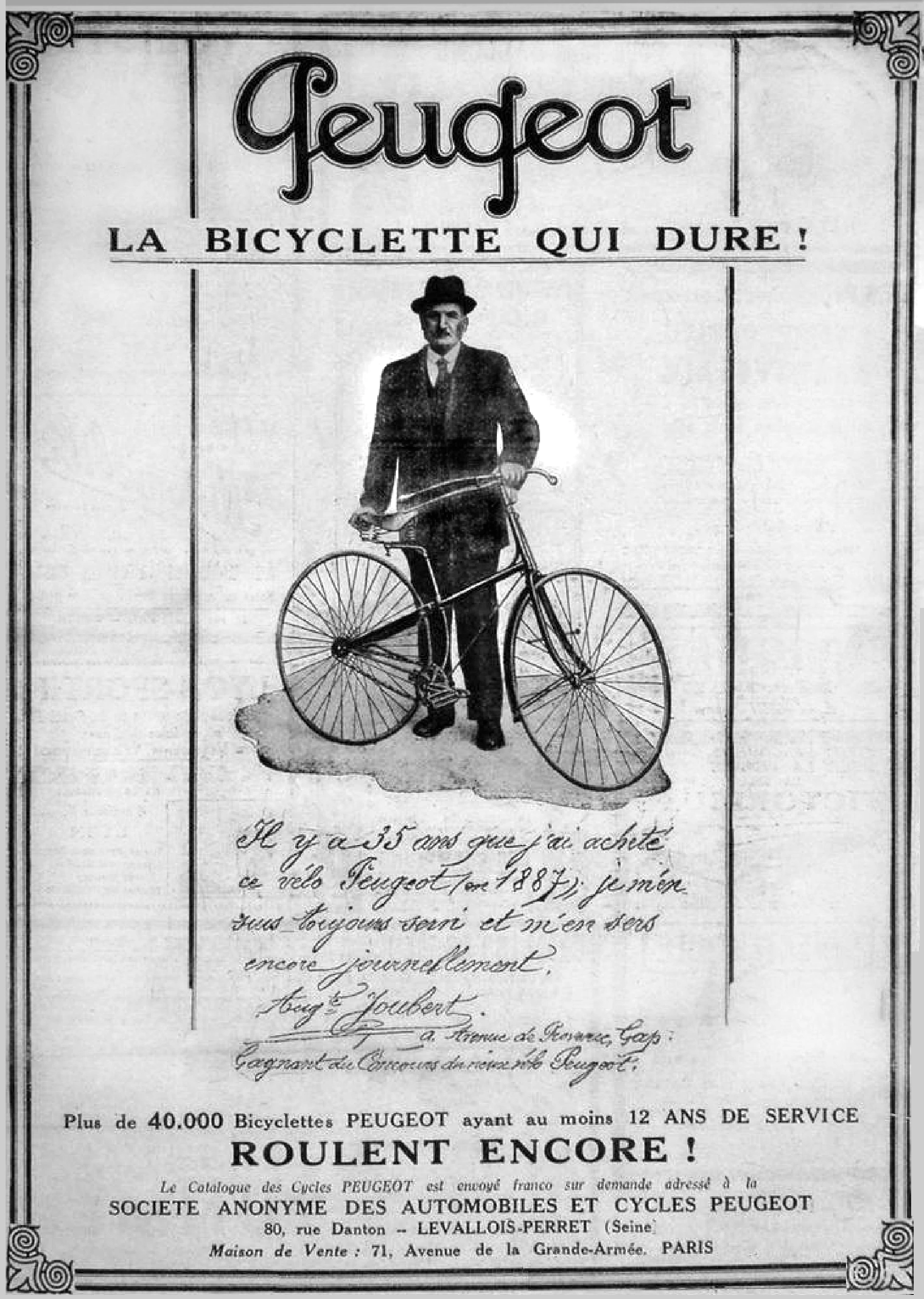
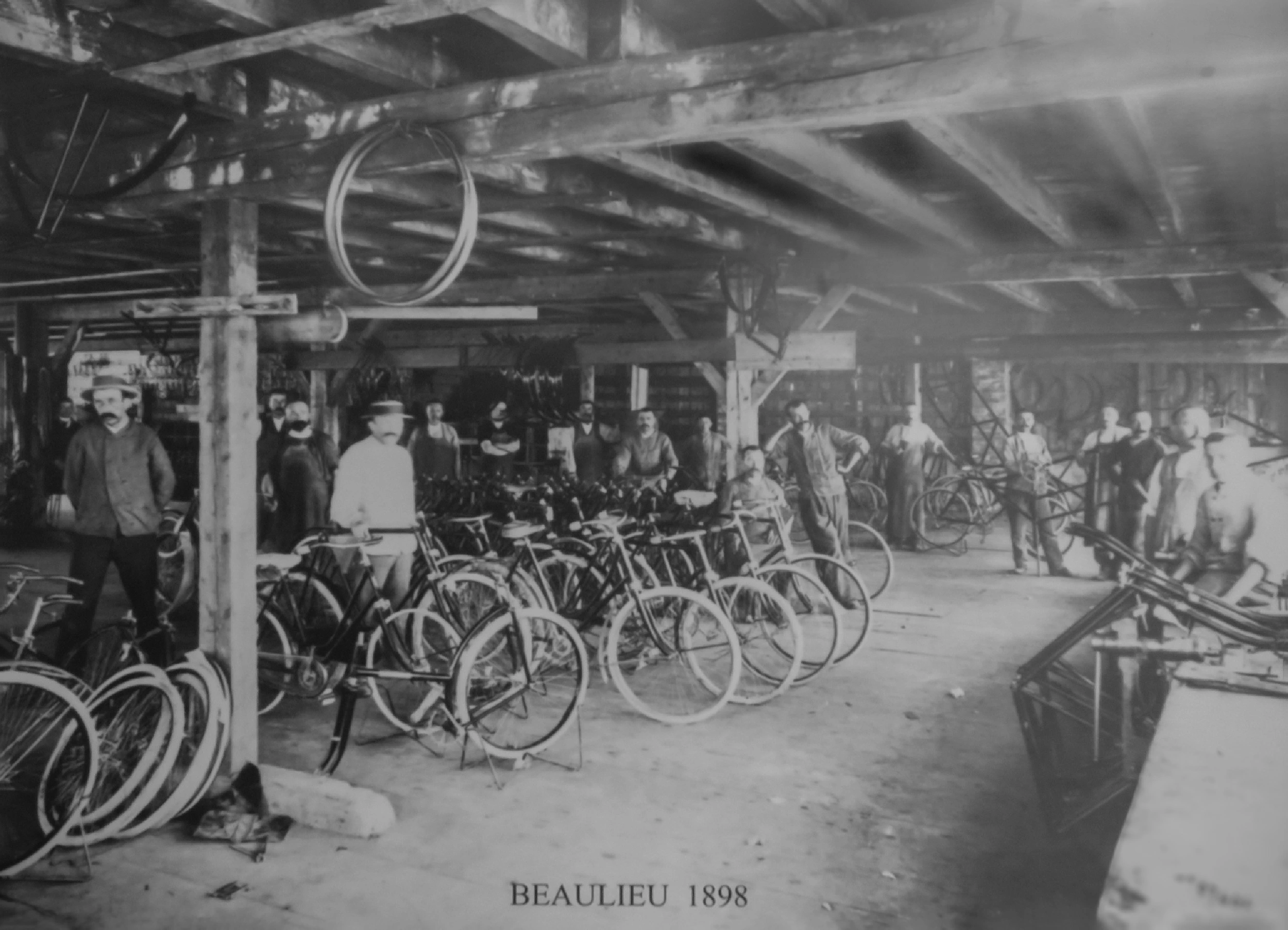
Upon his return to France, Armand began scheming. In 1882, he hand-built the company’s first bicycle, a penny-farthing known as “Le Grand Bi,” at the company’s Beaulieu-sur-Doubs plant. The machine featured a massive 1.36-meter front wheel and a small 40cm rear wheel. Peugeot marketed 18 pre-production models — six bicycles and six tricycles — at the 1886 Paris Fair, where they were an “immeasurable success” according to historians. Just one year before, the company’s range included a “Kangaroo” chain bicycle, which was a front-wheel-drive high-wheeler fitted with a sophisticated pinion and chain system. Annual production surged from a mere 150 units to 8,000 at the Beaulieu facility by 1890.
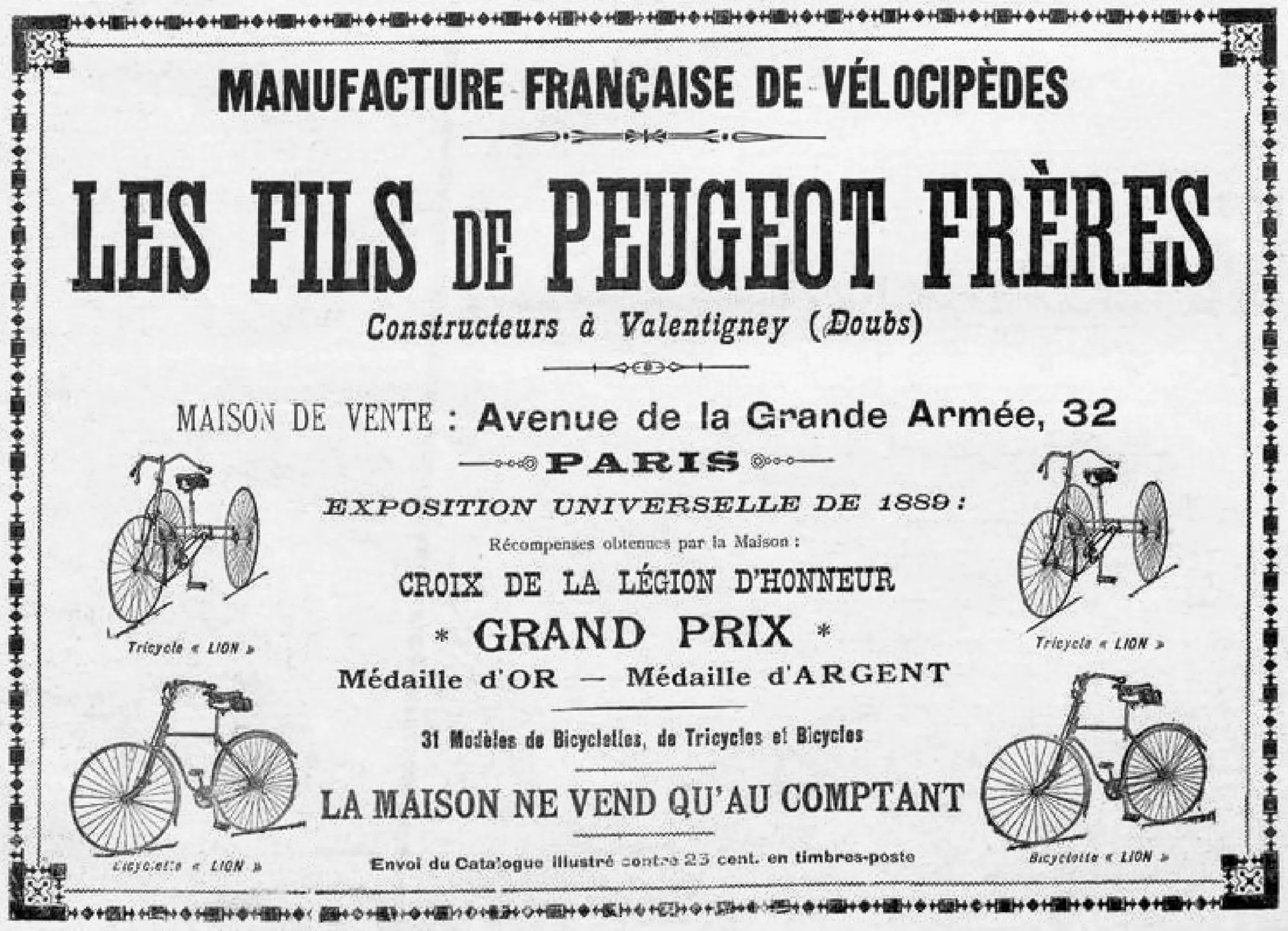
The decade of the 1890s served as a crucible for the Peugeot family, as the industrial momentum of the late 19th century forced a definitive choice between traditional metallurgy and the burgeoning age of the internal combustion engine. By 1892, the family firm, then operating as Les Fils de Peugeot Frères, had already begun manufacturing cars utilizing Daimler engines, but this progress masked a deep-seated philosophical divide. Armand Peugeot, a visionary graduate of the École Centrale Paris, was convinced of the automobile’s immense potential and pushed for a radical increase in production — traitorous as these positions may have been to his roots as a cycling pioneer. His second cousin, Eugène, remained deeply skeptical, viewing the motor car as a risky venture and refusing to commit the family’s capital to the massive investments Armand required.
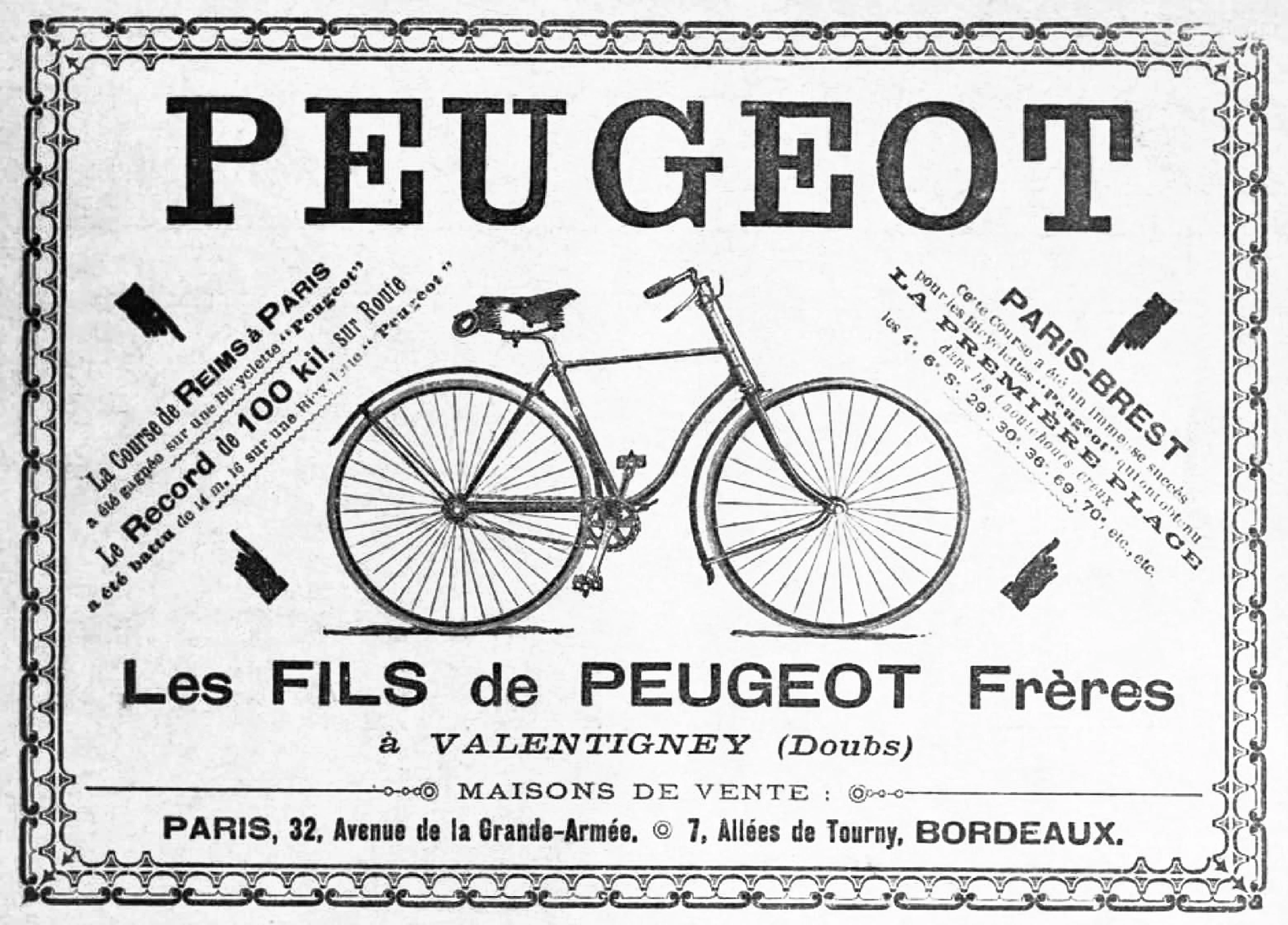
This fundamental disagreement culminated on April 2, 1896, in a formal industrial divorce known as the Split of 1896. Armand struck out on his own, founding the Société Anonyme des Automobiles Peugeot and establishing a dedicated automobile factory at Audincourt. Meanwhile, Eugène’s sons — Pierre, Robert and Jules — continued under the original family banner, focusing their efforts on the established success of tools, coffee grinders and, most importantly to us, the rapidly evolving bicycle. This era of separation, far from hindering the brand, triggered a period of intense technical refinement where the bicycle finally achieved its modern identity. How strategically refreshing: set the car side free, watch the bike side flourish.
During this period of independence for the cycle division, Peugeot engineers aggressively innovated frame construction and geometry. In 1894, the company revolutionized frame strength by adopting cold-drawn tubes, and by 1896, they introduced the horizontal upper tube, a design choice that allowed the bicycle to finally find its “classic shape” — the double diamond we still use today. The transition from solid rubber to inflatable tires (pioneered by Dunlop in 1888 and Michelin in 1895) and the invention of the freewheel and flexible cable braking transformed the Peugeot machine from a rigid “boneshaker” into a sophisticated vehicle of mobility. What a cool spread, especially for being so early in the bicycle’s lifecycle.
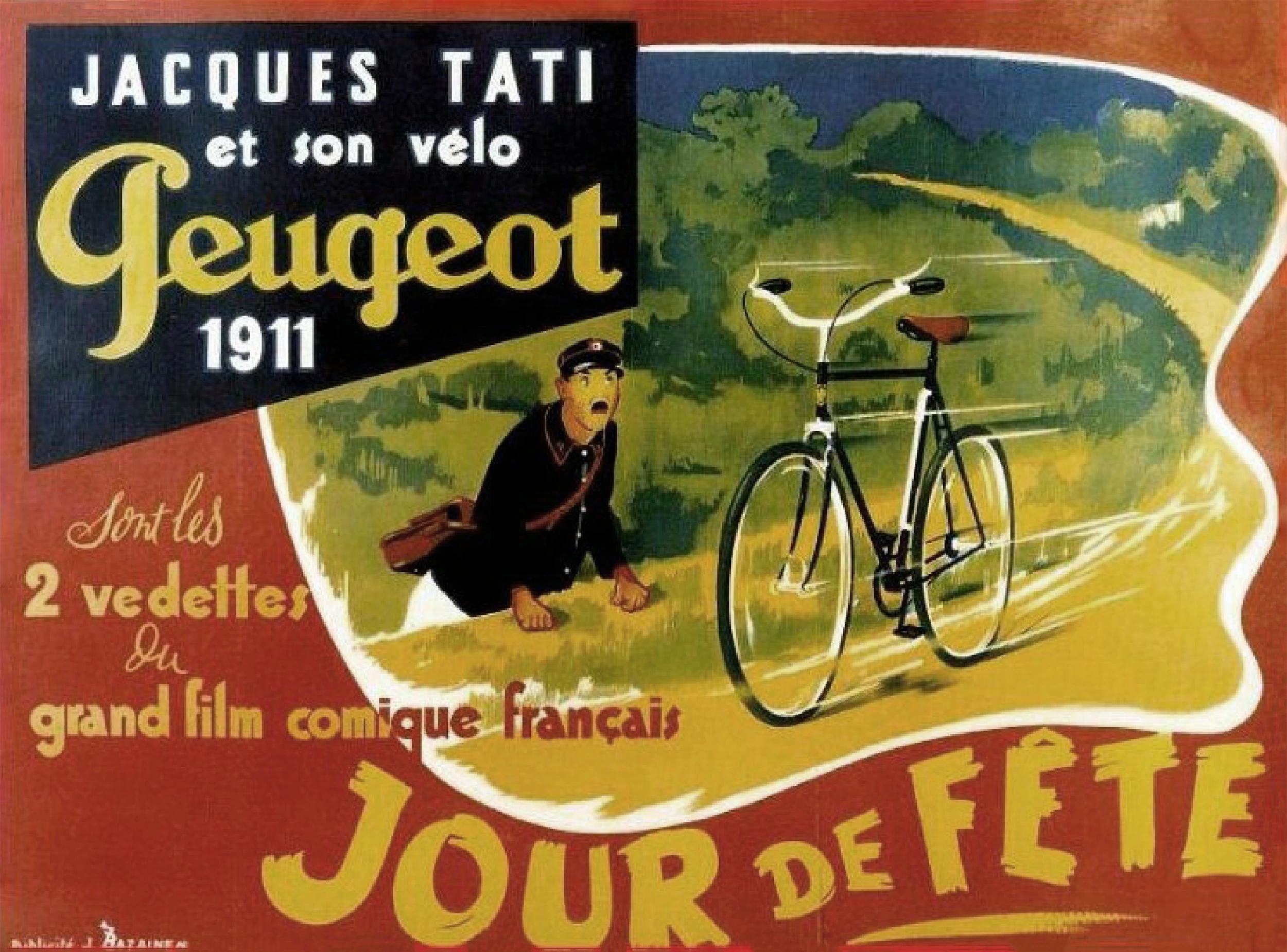
The human element of the Peugeot saga eventually necessitated a business reunion. In 1896, the same year as the industrial split, Armand’s only son, Raymond, passed away, leaving the automotive pioneer without a male heir to carry on his specific branch of the legacy. Recognizing the need for long-term stability and the shared strength of the brand name, Armand agreed in February 1910 to merge his automotive company back with Eugène’s cycle and tool division. The newly formed Société Anonyme des Automobiles et Cycles Peugeot, led by Robert Peugeot, saw production soar. By 1910, the Beaulieu plant was manufacturing 80,000 bicycles annually. That is a 10× increase in units over 20 years.
However, the rapid divergence of the two industries — one increasingly focused on heavy industrial motorization and the other on personal, human-powered transport — eventually made a single management structure untenable. (Starting to sound familiar?) By the mid-1920s, the company recognized that bicycles and automobiles represented distinct, competing markets that each required specialized focus. This led to a final, formal separation in 1926, creating Cycles Peugeot as a standalone, independent entity. At its birth as a separate company, Cycles Peugeot was already an industrial titan, boasting a workforce of thousands and a staggering annual production of 130,500 bicycles, firmly establishing the brand as the “Lion” of the French roads. Unique to history, the bike side of the company dodged the car bullet not once, but twice, even benefiting from the separation both times. Many other bike companies suffered a very different, very terminal fate when co-mingling the bike and car markets.
The transition of the Peugeot bicycle from a popular transportation modality to a fixture of national service is a narrative often framed by the demands and grit of the Great War, yet a deeper look reveals a brand whose soul was increasingly defined by social conscience and the relief of human burden. Long before the first “Little Queen” (a popular name for bicycles at the time) rolled onto a battlefield, the Peugeot family had cultivated a progressive industrial culture as already described. This spirit of care was perhaps most clearly embodied by Émile Peugeot, who, in a striking departure from typical industrial militarism, founded the Prix littéraire pour la paix — the Literature Peace Prize — anchoring the family’s legacy in the pursuit of universal harmony and the support of the arts.
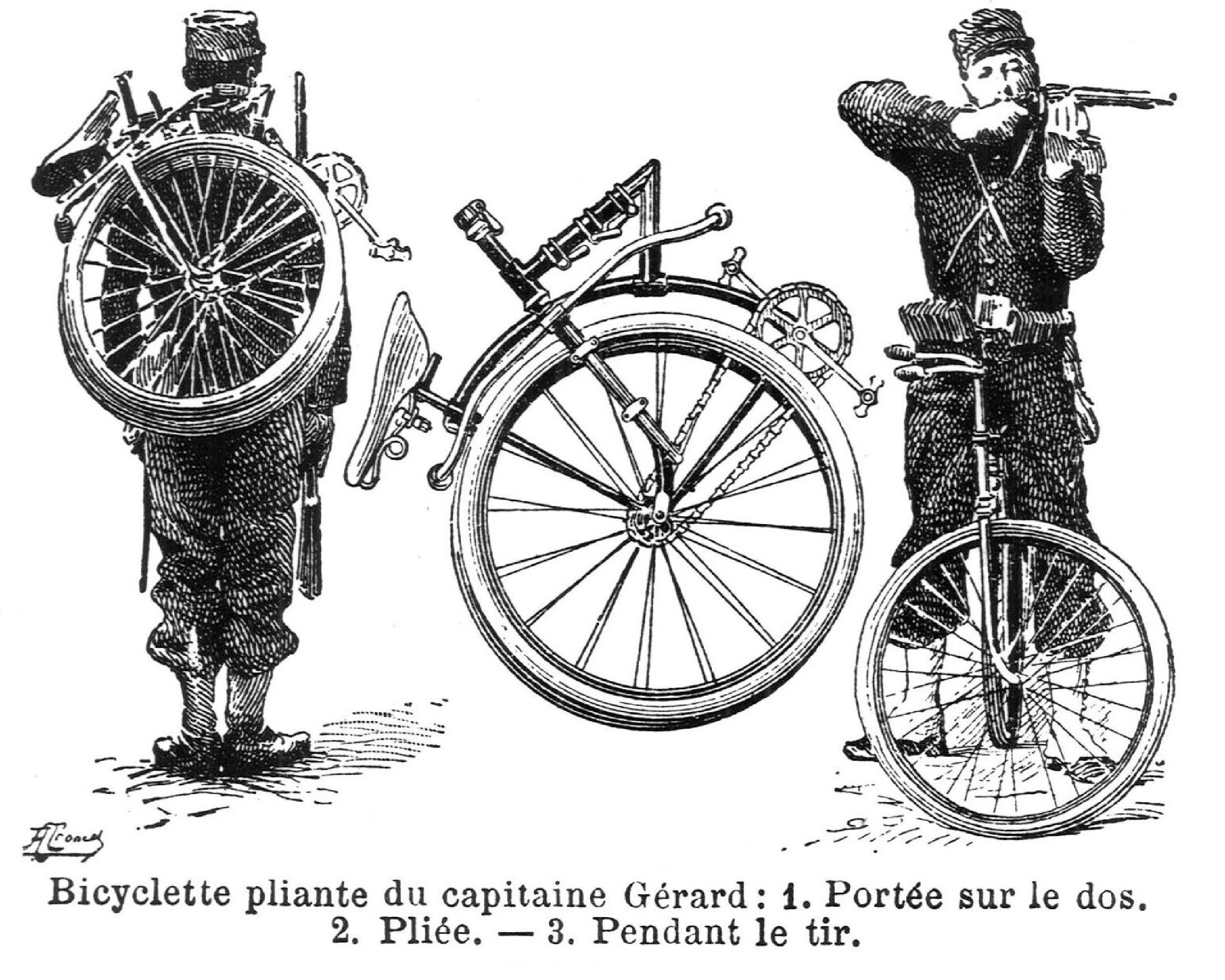
When Peugeot recognized the utility of the bicycle for infantry use in the late 19th century, the initial focus was less on weaponry and more on the scientific alleviation of physical exhaustion. As early as 1837, thinkers like Thomas Stephens Davies had observed that the primary virtue of the bicycle was its ability to “take the weight from the shoulders of the man and place it upon two wheels,” an obvious advantage for any soul traveling 20 to 30 miles a day. (Especially when on dirt trails under the cover of night.) In 1899, Peugeot acquired the rights to a design that would perfect this concept of mobile relief: the “Capitaine Gérard” folding bicycle, developed by Lieutenant Henry Gérard and industrialist Charles Morel.
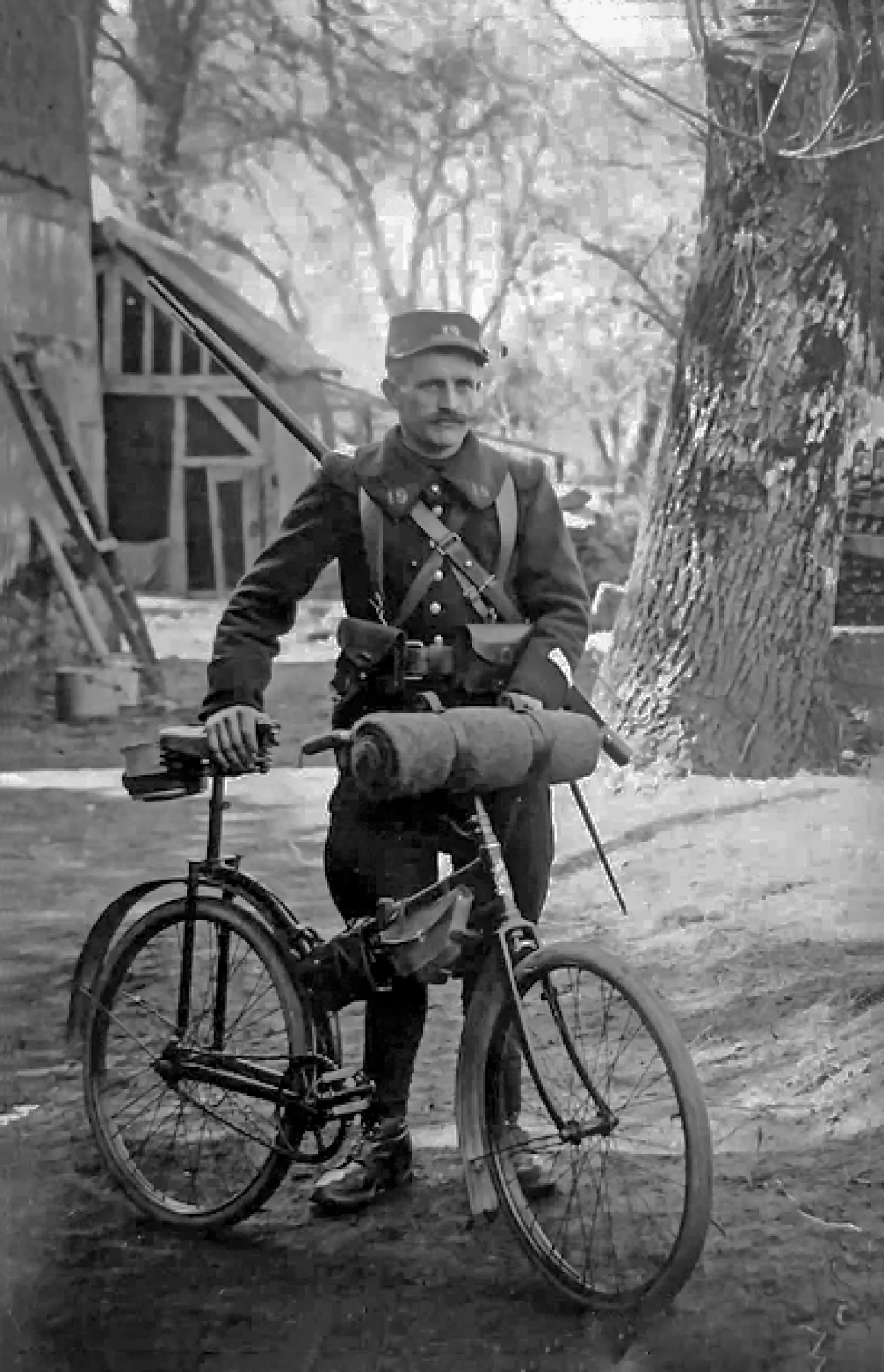
Known as “La Pliante” (The Folder), this 30-pound machine was a marvel of mechanical empathy. By utilizing parallel telescopic folding tubes and shoulder straps, Peugeot provided a means for a traveler to scale walls or traverse marshes without the bicycle becoming a major hindrance. Instead, it was a companion that could be carried on one’s back, preserving the rider’s energy for the demanding journey ahead. Though it was adopted by the first regiment of chasseurs-cyclistes, Peugeot notably marketed the “Capitaine Gérard” for civilian use as well, recognizing that the desire for compact, versatile mobility was a universal human need, not one restricted to conflict. (Around 40 million folding bikes were sold worldwide in 2025, with 35–40% manufactured by either Giant, Dahon or Brompton.)
As World War I began, Peugeot’s massive industrial engine was redirected toward the national effort, producing nearly 63,000 bicycles annually. Even amidst the production of artillery shells and plane engines, Peugeot factories remained dedicated to the mending of broken bodies. Among the trucks and cycles, Peugeot also manufactured specialized invalid strollers for wounded veterans, ensuring those who had lost their mobility to the war could find a measure of freedom through the company’s metallurgical expertise.
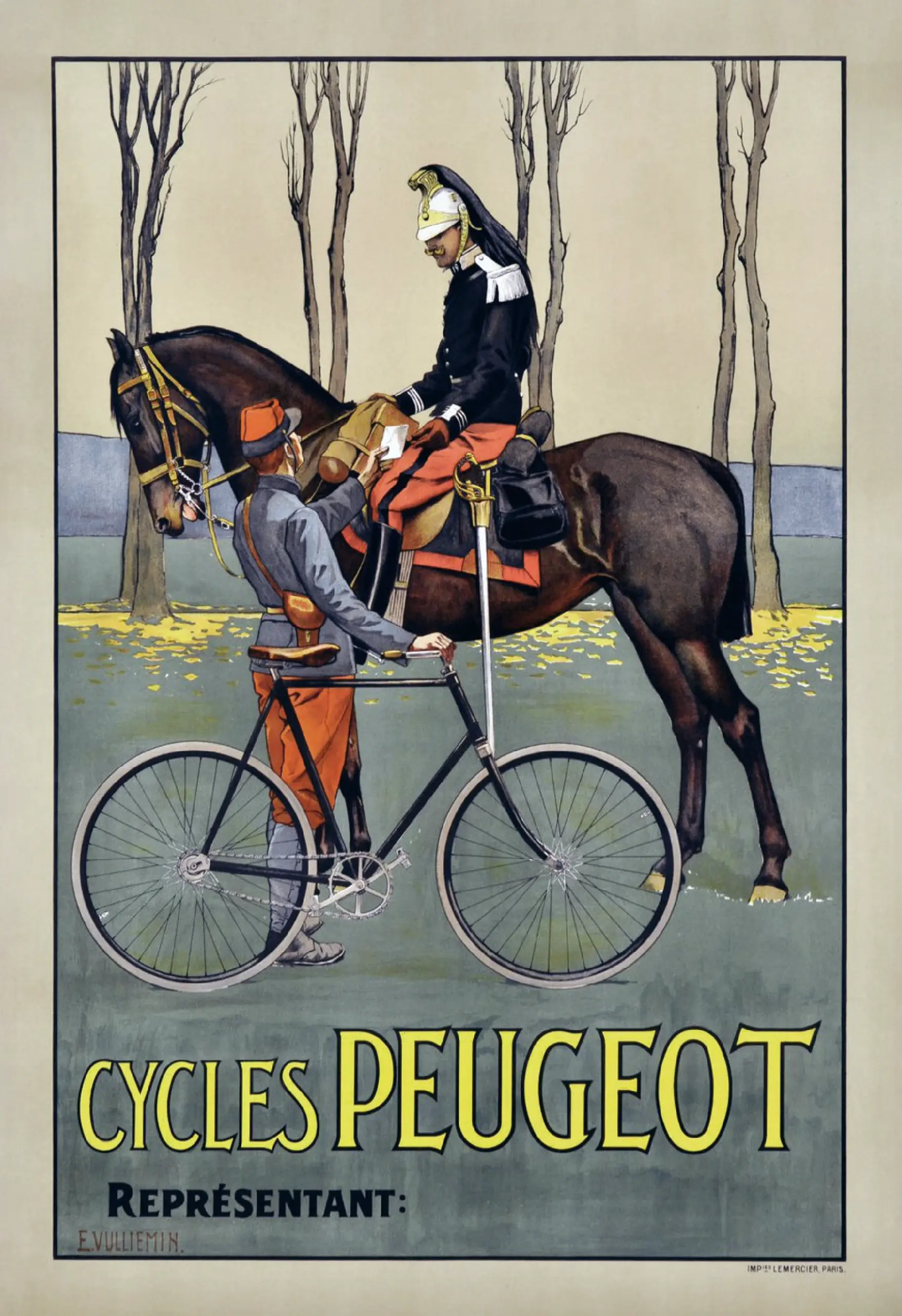
War sucks no matter how you cast it. Then as now.
In the wake of the armistice, Peugeot’s commitment to restoring a sense of peace was instrumental in the healing of the sport. To combat the post-war economic depression that threatened to vanish the “Little Queen” from French roads and paths, Peugeot was one of the primary architects and founding members of the La Sportive consortium in 1919. Other core members included: Alcyon, Automoto, Clément, Hurtu-Gladys, Liberator, and La Française. This collective of rival manufacturers pooled their resources not for competition, but for the survival of cycling culture, keeping the spirit of the sport alive until a dedicated factory team could be re-established — which it did in 1922 and also won the Tour de France that year. For Peugeot, the bicycle was never solely a tool of war. And it quickly became a true “freedom machine” after the war, when it lightened the load of many a heavy human spirit while providing mobility, fitness and harmony with the universe, all at a time of great need.
Peugeot recognized early on that racing victory translated directly into showroom sales, a philosophy that transformed the brand into an industrial juggernaut (much like others including: Automoto, Bianchi and Colnago, to start the alphabet). They sponsored their first world champion, sprinter Paul Bourillon, in 1896, and soon became a fixture of the competitive circuit. Thankfully for us history rubber-neckers, the early years of the Tour de France were defined as much by human drama and controversy as they were by speed and palmarès:
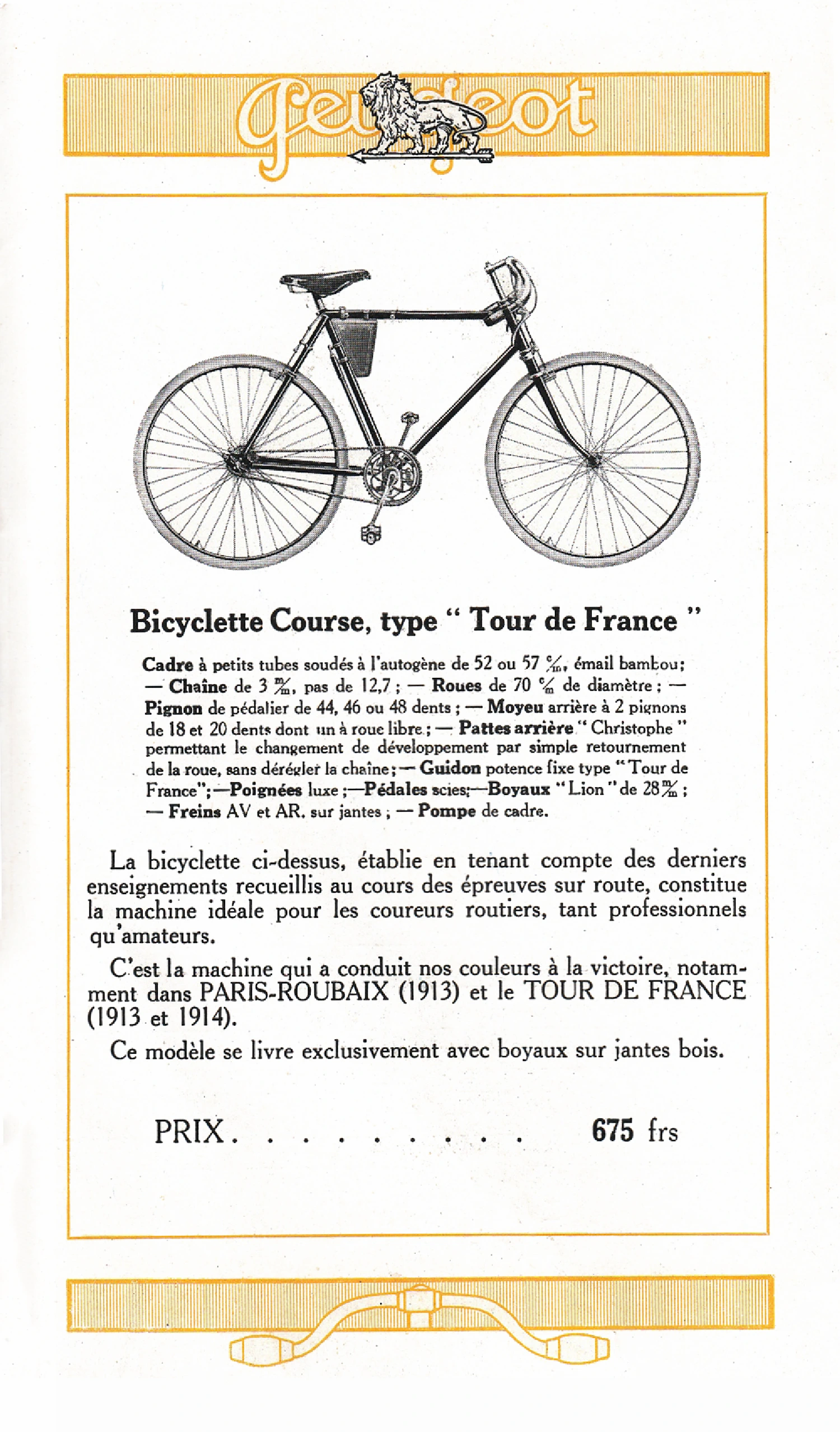
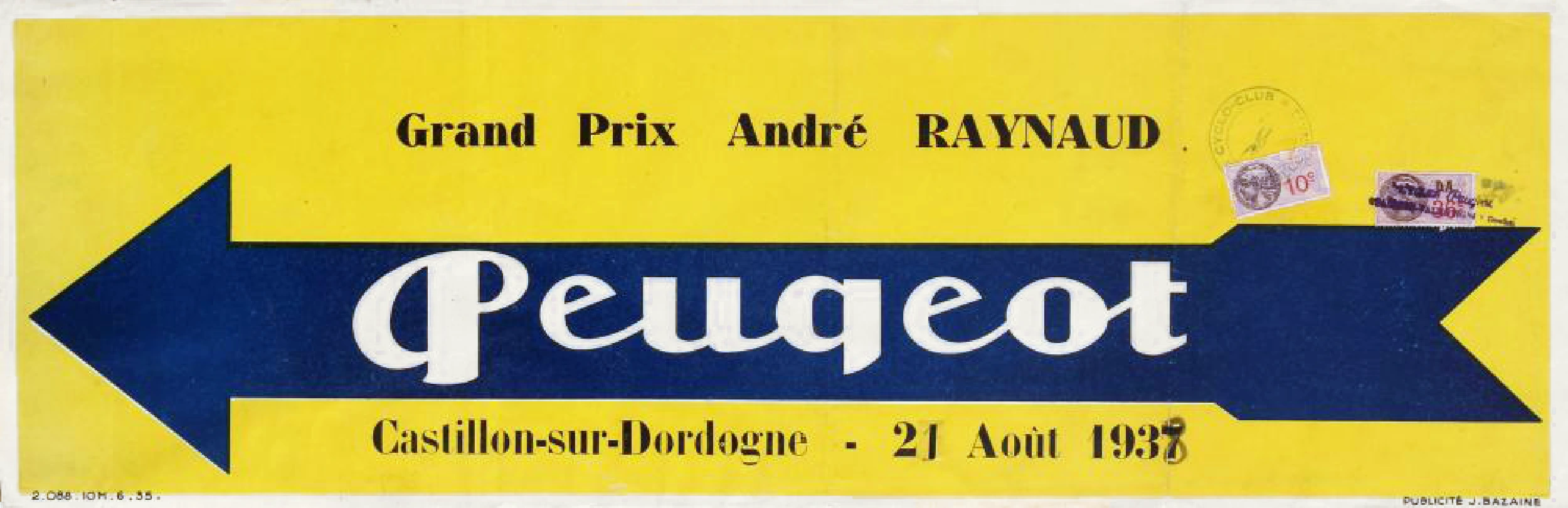
Despite these turbulent early years, Peugeot emerged as the most successful factory team of all time, ultimately securing a record 10 Tour de France victories. Following the early dominance of riders like Louis Trousselier (1905), the first two-time winner Lucien Petit-Breton (1907–1908) and Philippe Thys (1913–1914), the team then entered a new “Golden Era” in the mid-20th century.
In 1963, Team Peugeot adopted its iconic black-and-white checkerboard jersey, a design that became a mythical symbol of French cycling. This era was defined by legends who made the Peugeot name famous worldwide:
As the 1970s and 80s progressed, Peugeot became a launchpad for a generation of Anglophone riders who sought to break into the European peloton. Greats like Phil Anderson (Australia), Robert Millar (Scotland), Stephen Roche (Ireland) and Sean Yates (England) all started their professional careers in the Peugeot checkerboard. The team’s final brush with Tour glory occurred in 1983, when Pascal Simon held the yellow jersey until a broken collarbone forced him to abandon the race.
Though the factory team disbanded in 1986 due to rising costs, its DNA lived on. Manager Roger Legeay transformed the remnants into the Z-Peugeot team, which is best remembered as the team Greg LeMond rode for during his legendary 1990 Tour de France victory. From the wooden rims of the early 1900s to the carbon fiber tubes of the 1980s, the “Little Queen” served as the vessel for some of the greatest human achievements in sporting history.
During the middle of the 20th century, Peugeot changed how people thought about bicycles by moving away from heavy, clunky machines and focusing on making them light and easy to ride. After the family business split in 1926 to let the bicycle division focus entirely on two-wheelers, the brand — now known as Cycles Peugeot — entered a period of intense innovation. By 1930, their main factory in Beaulieu was already humming, producing 162,000 bicycles every single year. That is a 20× increase over 40 years.
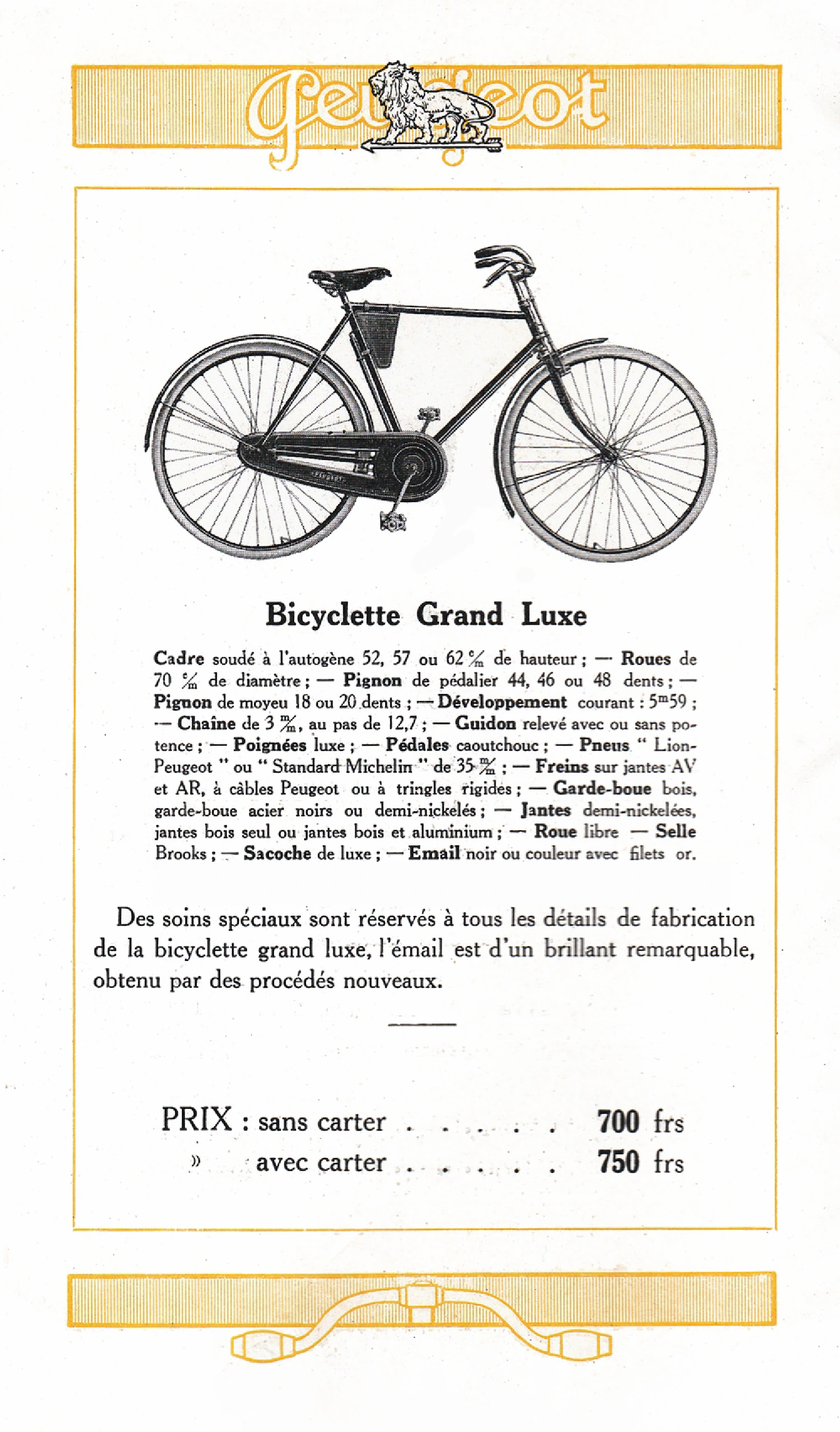
A new breed of bicycle helped catalyze this growth. In 1927, Peugeot released a bike called the P-10, which was a massive technical step forward for racers. At that time, rules for the Tour de France were very strict — riders actually had to fix their own bikes if they broke down, so the P-10 was built to be a reliable “tool” that came with its own repair kit. To help riders on the bumpy cobblestone roads, it featured a drop-bar design with a longer-raked front fork to soak up vibrations. It was equipped with high-tech features for the era, including rustproof spokes, oil bath hubs and cable brakes on both wheels. It even featured two different gearing sprockets on the rear hub to help riders tackle steep mountain climbs.
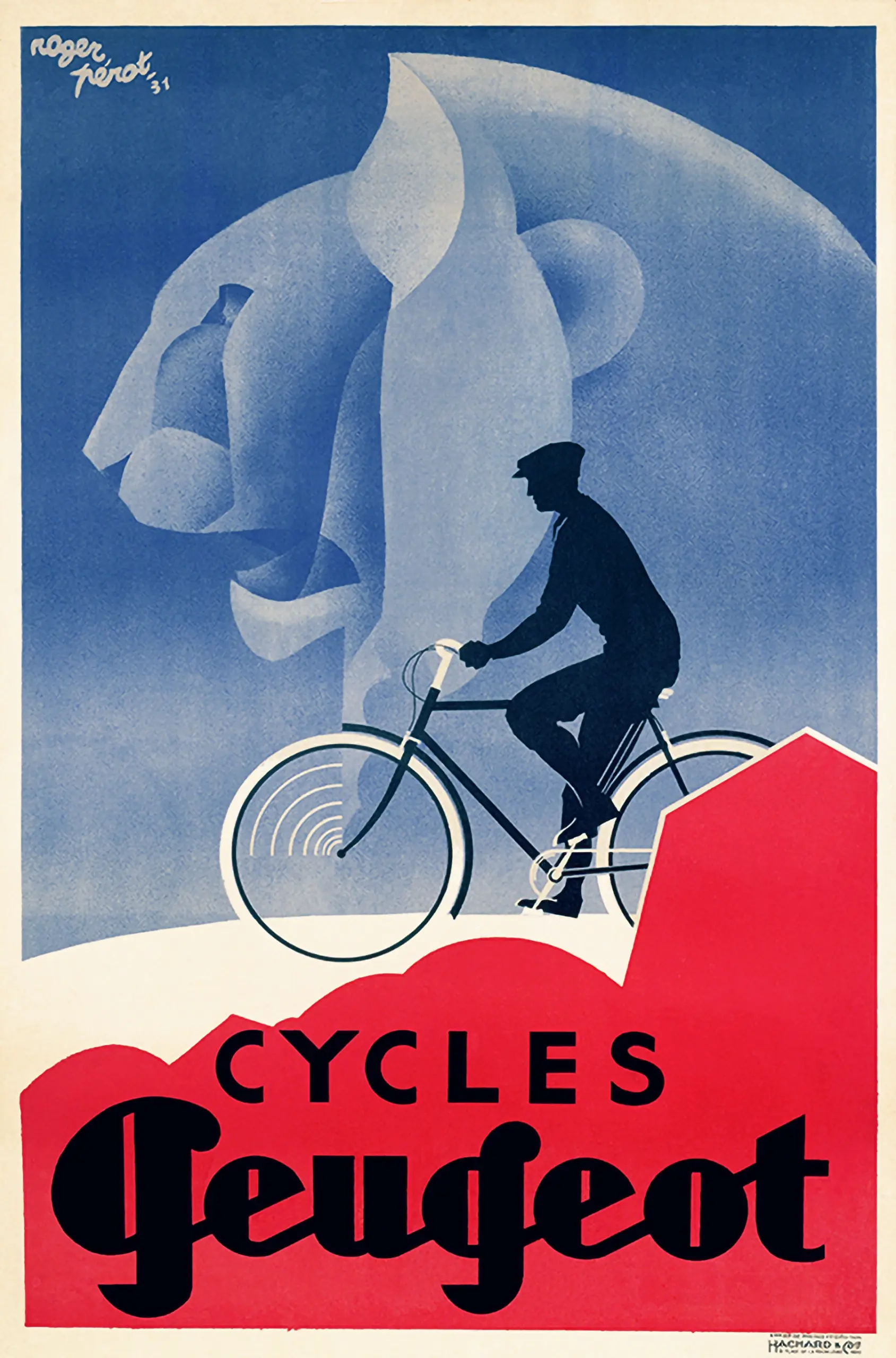
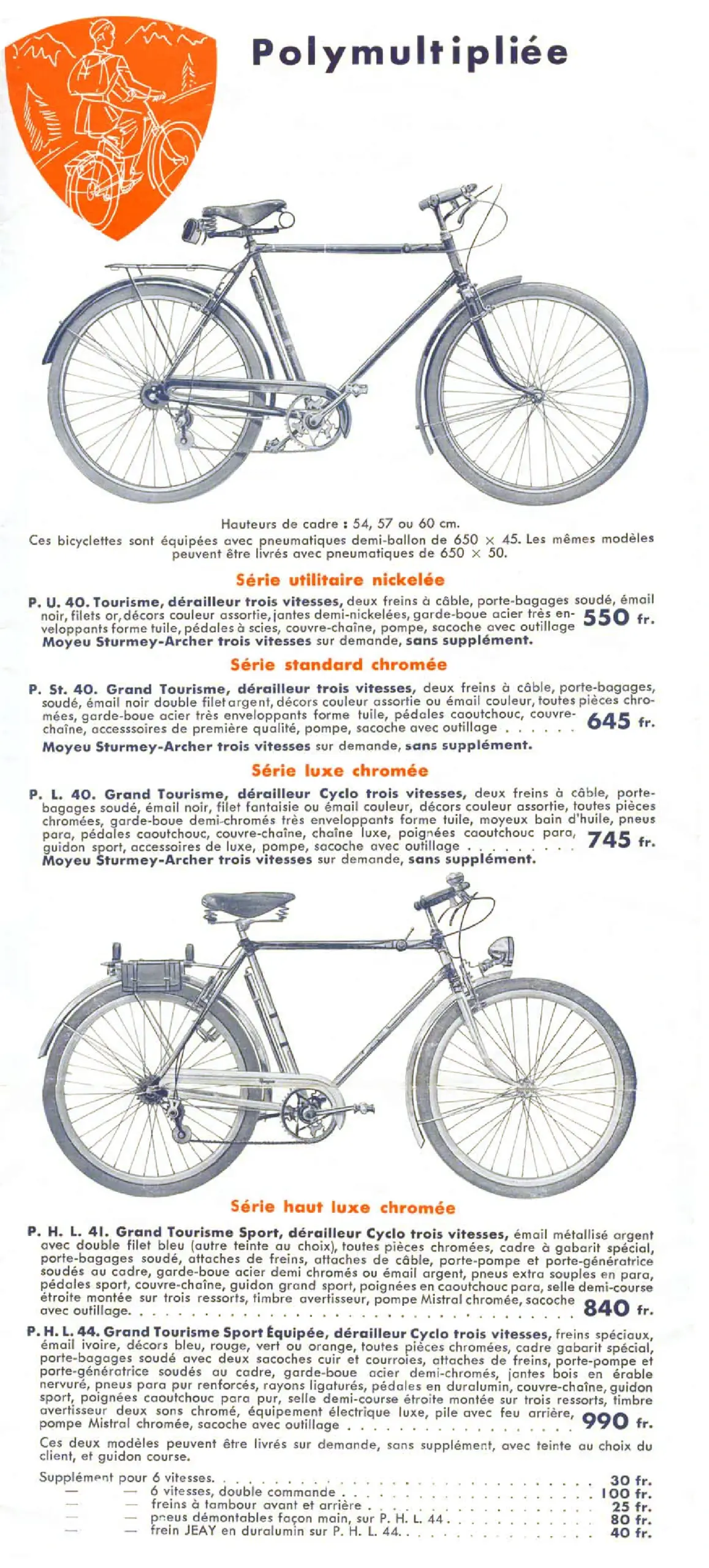
Peugeot engineers lived by the philosophy that “weight is the enemy.” (So did the younger version of me.) Because a bicycle is moved only by human effort, they believed a lighter bike would make every journey more peaceful and pleasant. (This is starting to explain a lot.)
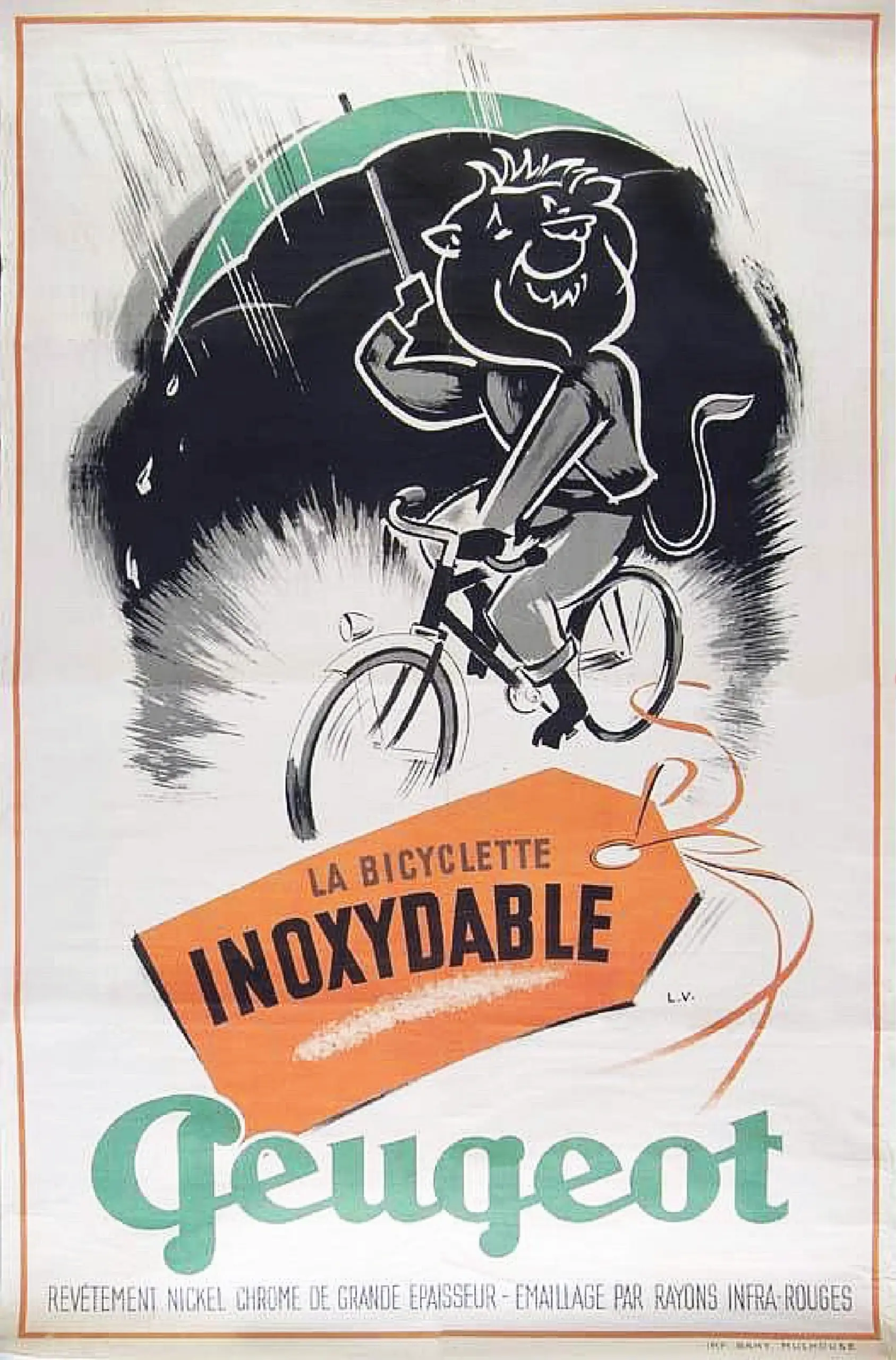
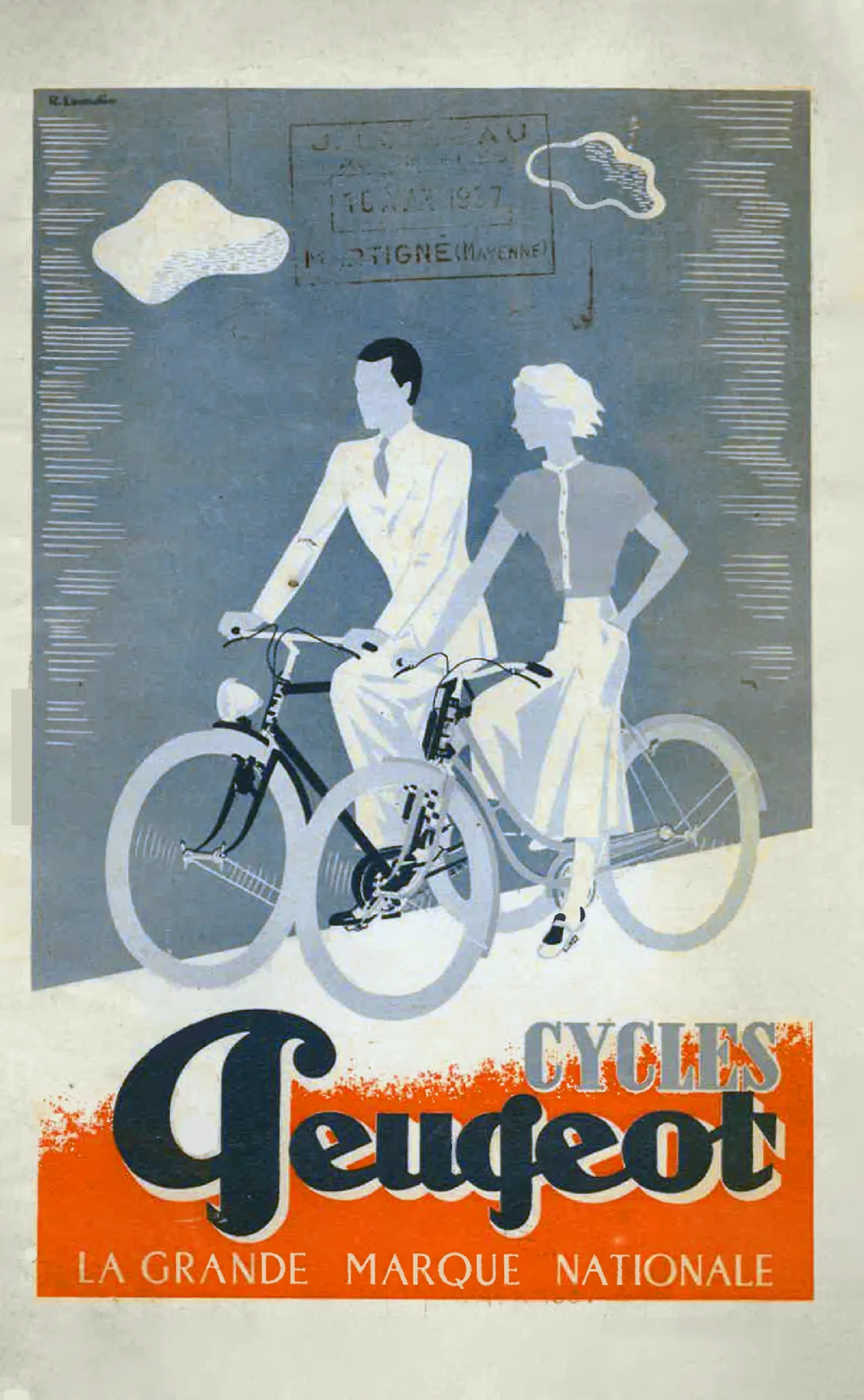
As the world settled back into peace in the 1950s, Peugeot created some of its most famous racing models ever, which are now highly sought after by collectors.
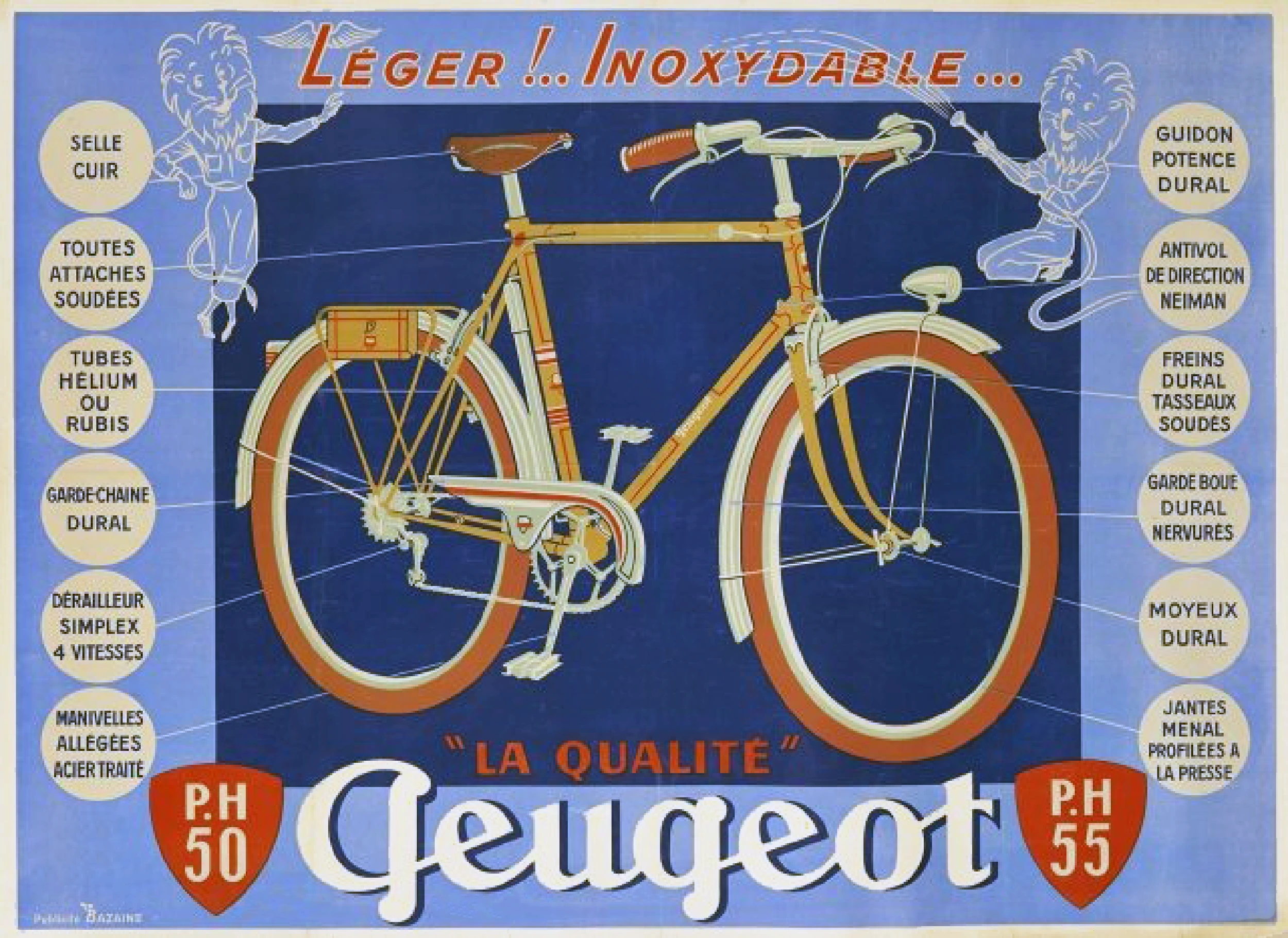
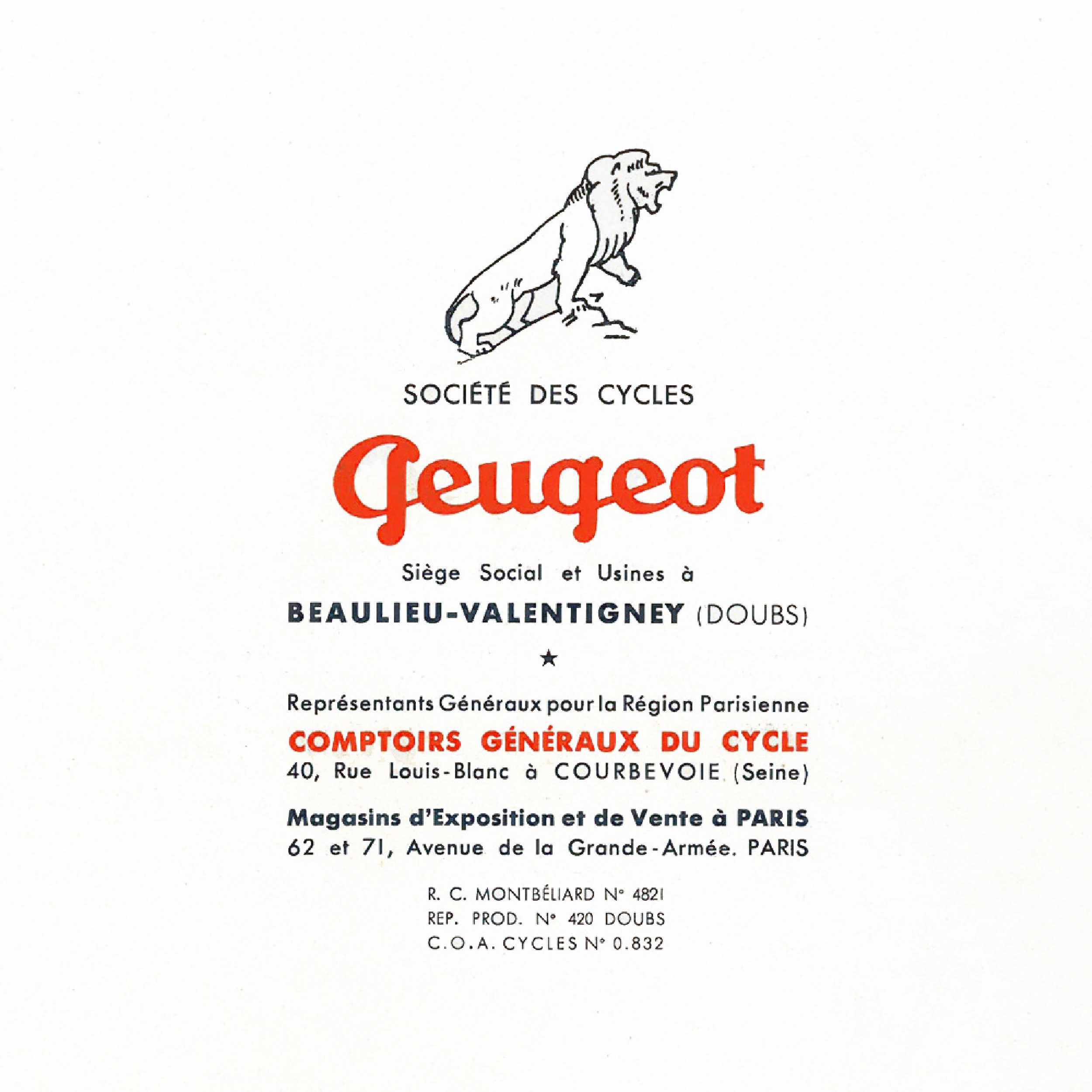
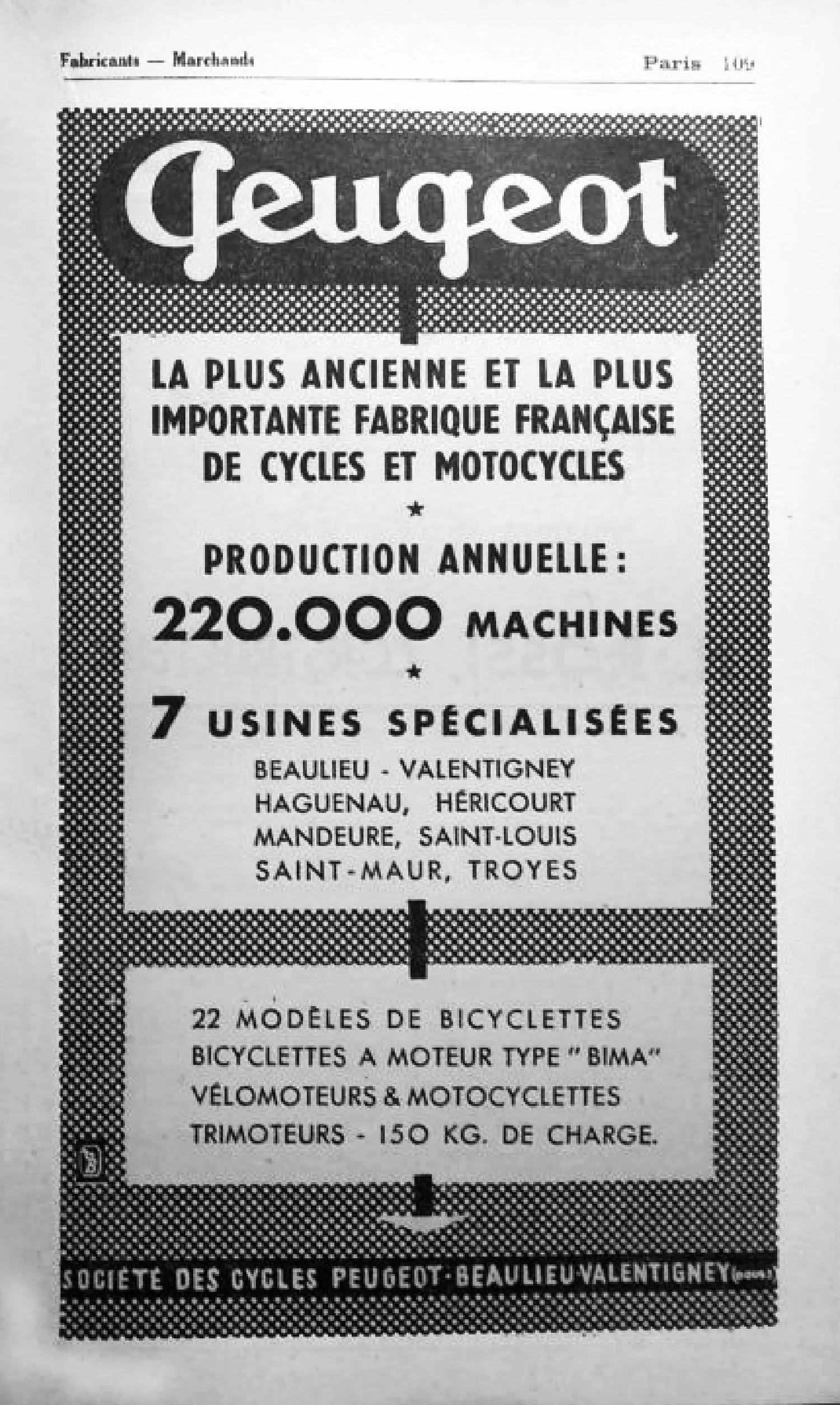
A Peugeot advertisement from 1953 celebrates a total annual production of 220,000 bicycles that year, with this volume spread across a network of seven specialized manufacturing plants: Beaulieu-Valentigney, Haguenau, Héricourt, Mandeure, Saint-Louis, Saint-Maur and Troyes. By 1955, the Beaulieu factory alone reached its peak historical output, turning out 220,000 bicycles itself that year and employing nearly 3,500 workers. That is 27.5× growth over 65 glorious years.
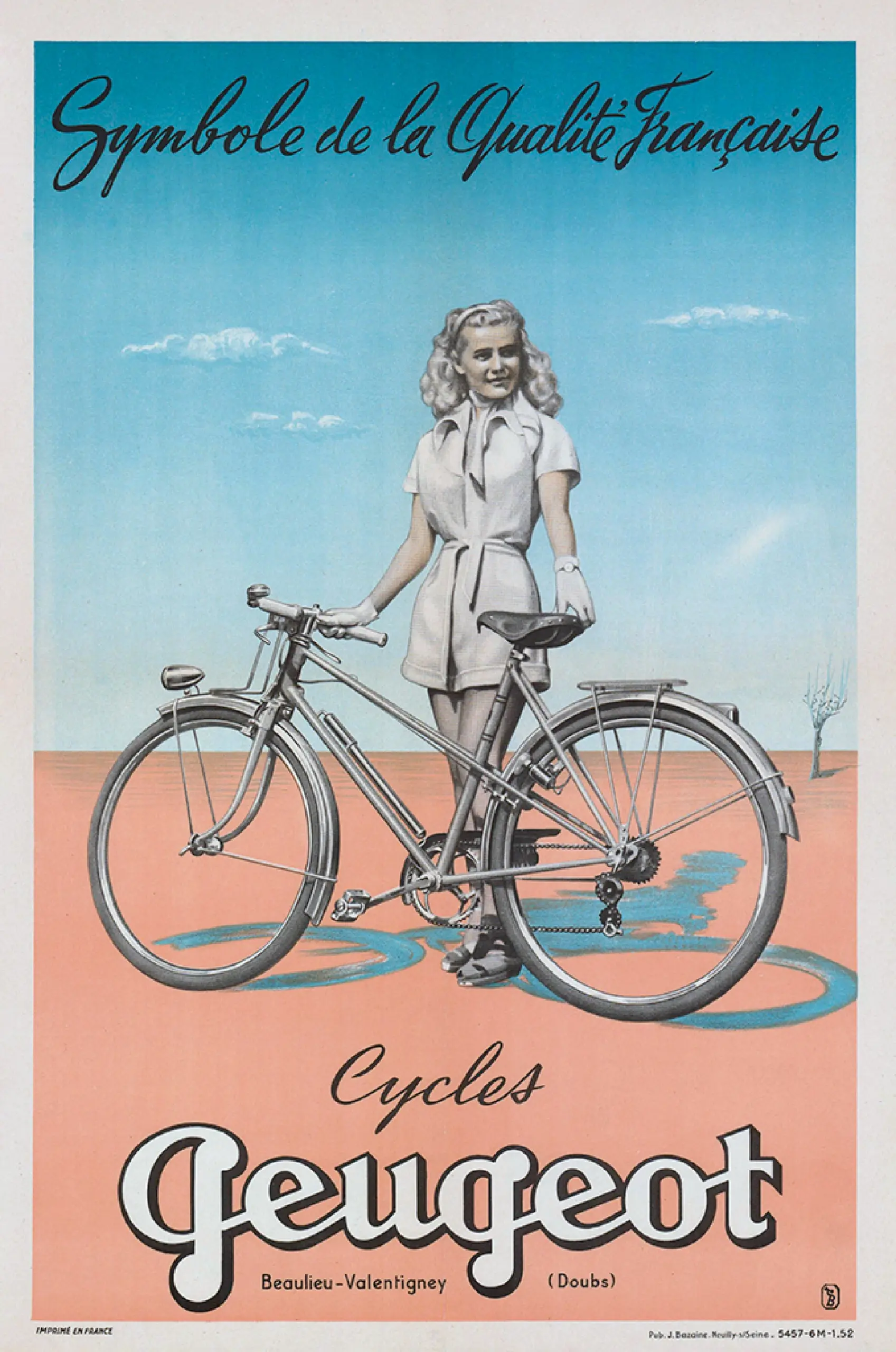
Toward the end of the 1950s, however, more people in Europe began buying cars and interest in using bicycles for everyday transport started to drop. To make sure their thousands of workers did not lose their jobs, Cycles Peugeot remained innovative as always. In 1958, they began diversifying their business by manufacturing components for the auto industry, using their factory’s great metallurgical skills to keep their community employed even when bicycle sales were down. (Sound familiar?)
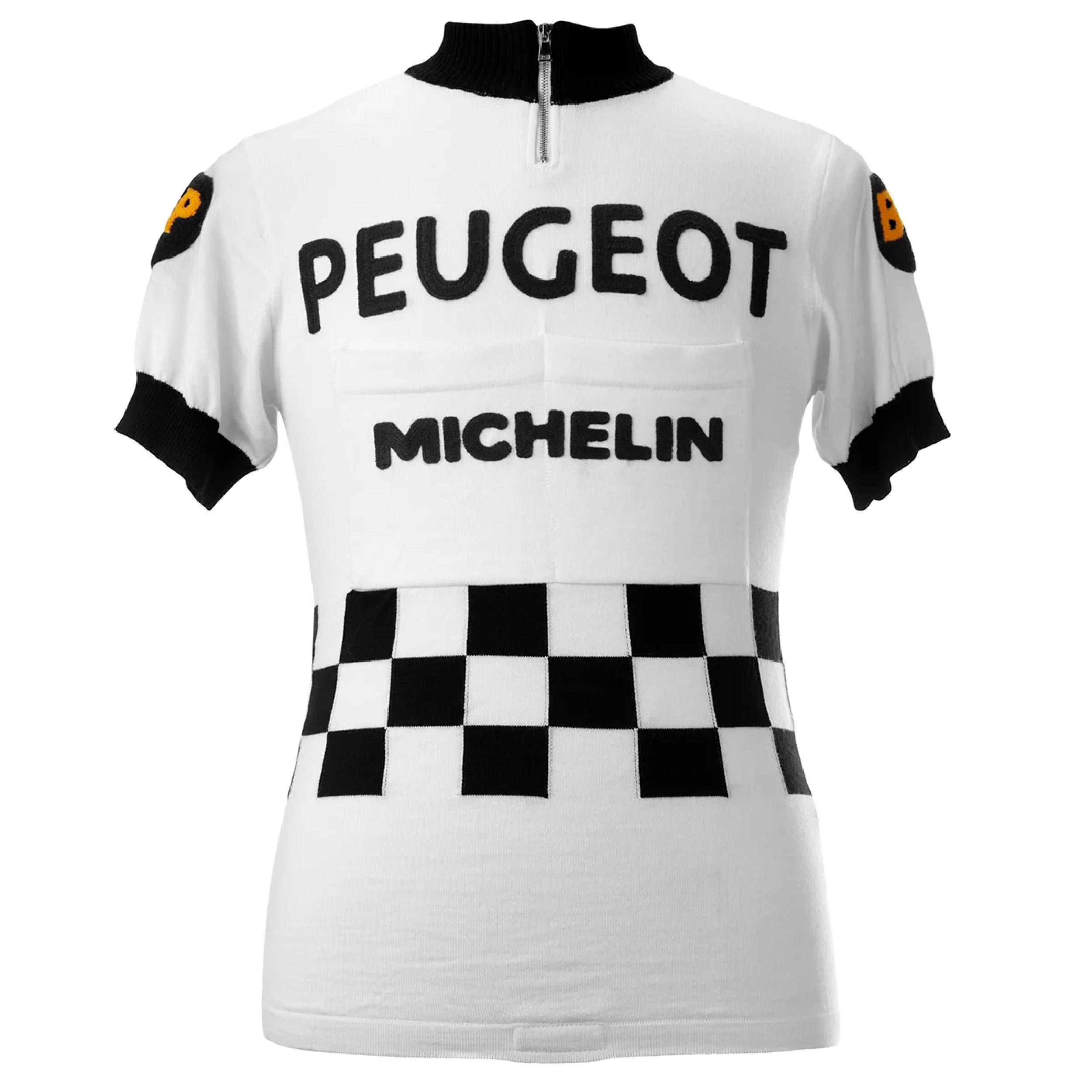
In 1963, Team Peugeot adopted its iconic black-and-white checkerboard jersey, a design that became a “mythical” symbol of French cycling. This era saw the brand nurtured by legends: Eddy Merckx rode for Peugeot in 1966 and 1967, winning the World Championships. In 1975 and 1977, Bernard Thévenet famously ended Merckx’s reign, winning the Tour de France on a custom-built PY-10 from Peugeot’s specialized Atelier Prestige shop. (Cool name alert!)
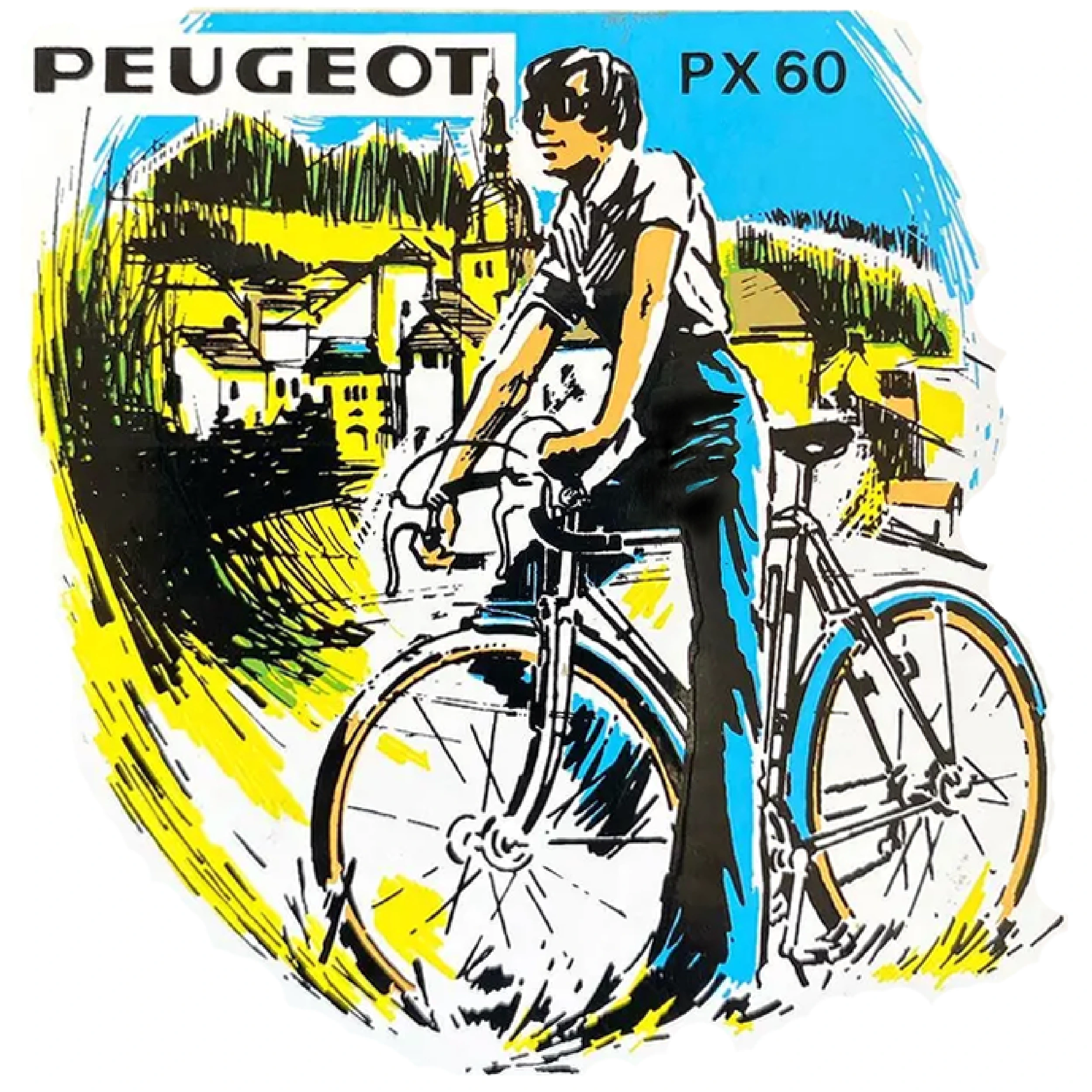
The 1970s brought a “second youth” to the brand through the OPEC oil embargo and the Californian ecological movement, which fueled a massive “bike boom.” Mid-range models like the UO-8 10-speed became cult classics in North America for their “soft ride” and stability. Though the factory team finally disbanded in 1986 due to rising costs, the Peugeot legacy remains preserved in the Musée de l’Aventure Peugeot in Sochaux — a worthy testament to the family that turned a grain mill into the “freedom machine” of a nation.
In 1974, at the height of the international bike boom, Peugeot elevated its manufacturing capability to an artisanal level by opening the Atelier Prestige. Often referred to as the “Luxury Division,” this specialized “shop within a factory” was established at the Beaulieu plant to move beyond the constraints of high-volume manufacturing. While Peugeot’s standard assembly lines were churning out millions of consumer-grade models like the UO-8, the Atelier Prestige focused exclusively on the hand-production of elite framesets for Peugeot’s professional racing teams and a select group of private customers.
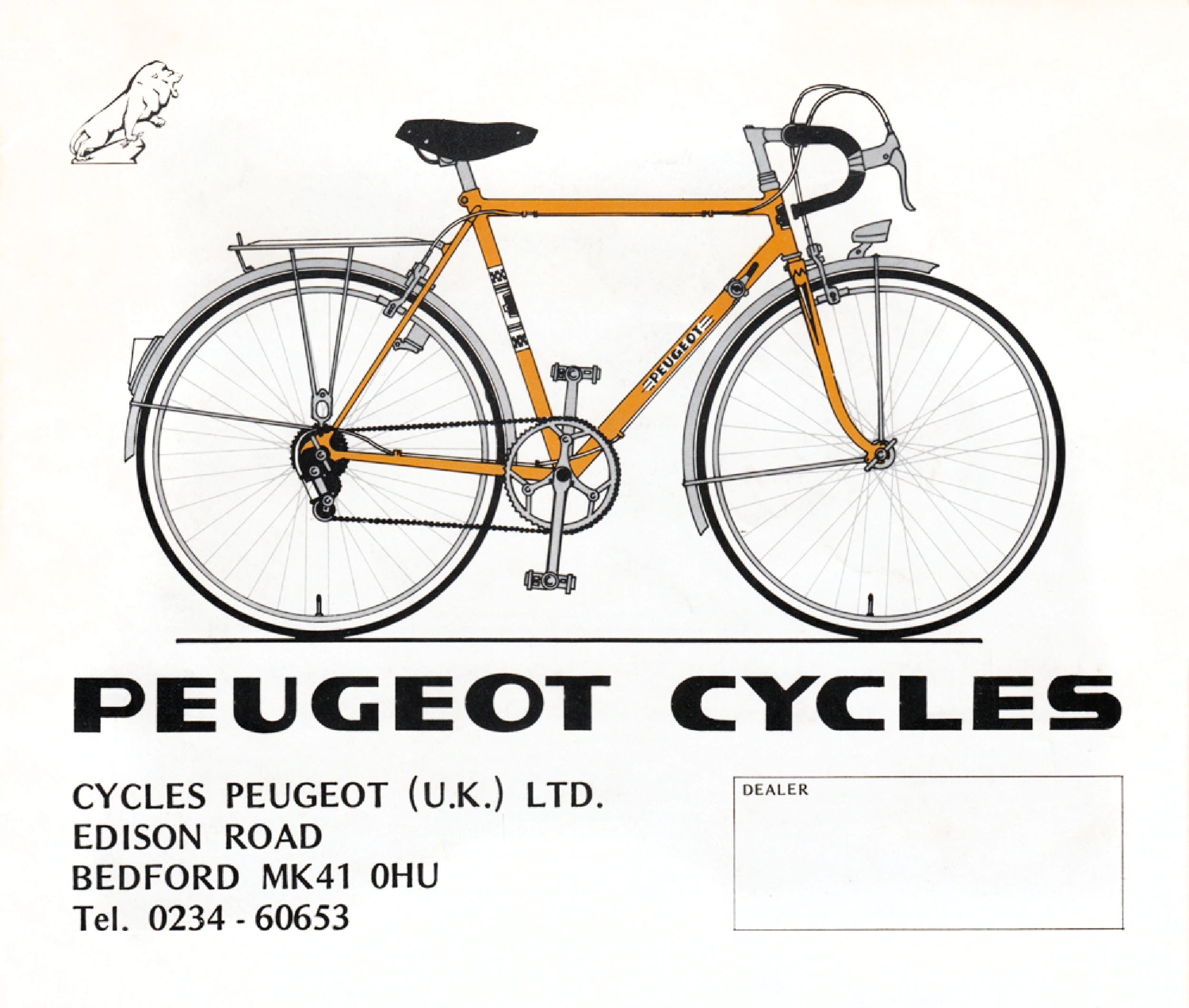
The primary mission of the Atelier Prestige was to separate professional-grade construction from mass production. Unlike the standard models, these bikes were hand-brazed by Peugeot’s master frame builders, who focused on the manipulation of ultra-thin gauge tubing. The workshop primarily utilized Reynolds 531 “Extra Leger” (5/10) steel and then the pioneering Reynolds 753.
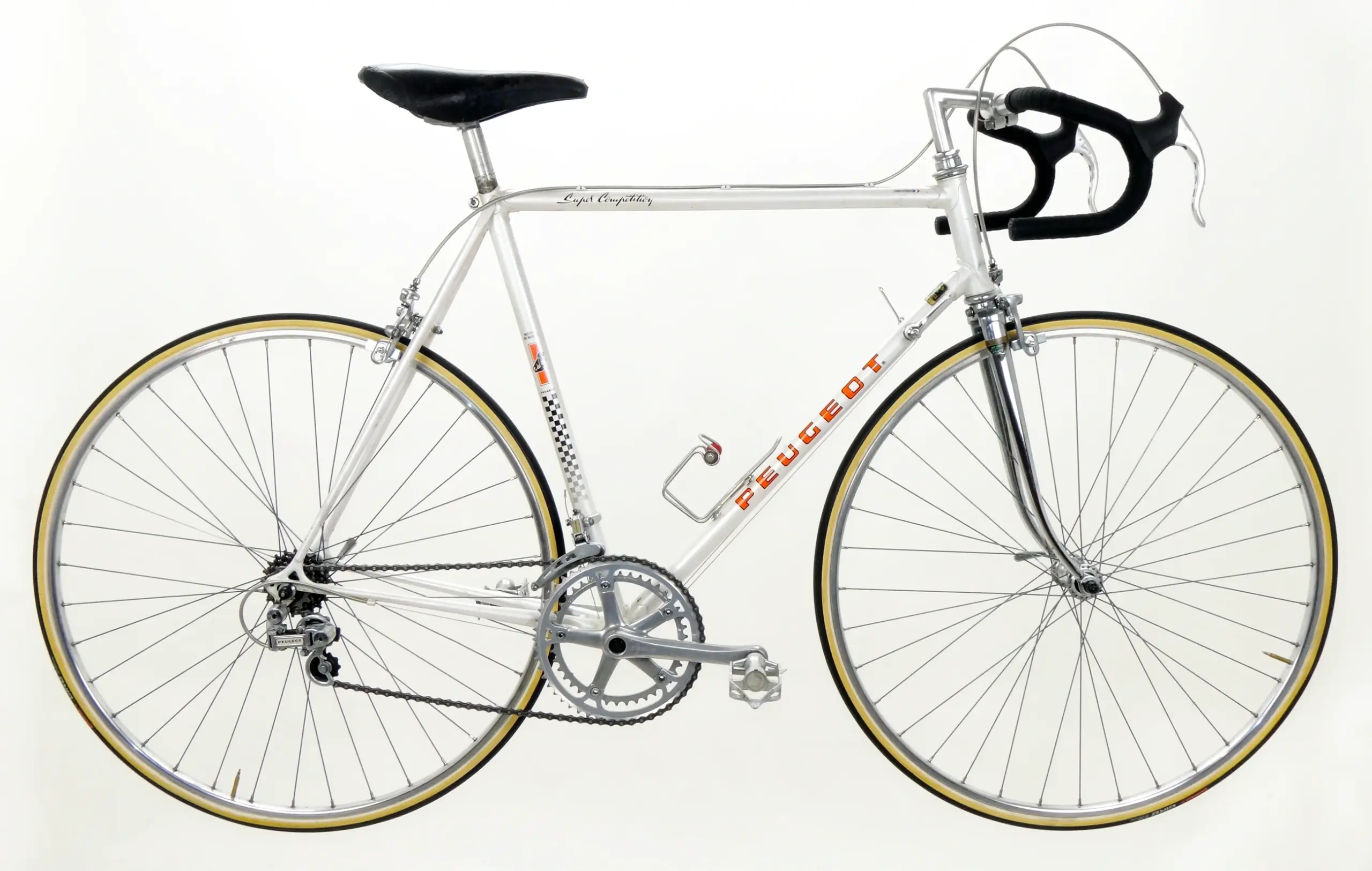
These custom creations were designated as the PY-10. While the model shared the aesthetic DNA of the iconic PX-10, the “PY” designation signaled a level of “À la Carte” bespoke customization previously unavailable from a major manufacturer. Private clients and team riders alike could specify:
The Atelier Prestige machines became the definitive pinnacle of Peugeot’s racing heritage. It was a shop-built PY-10 that Bernard Thévenet famously rode to victory for the Peugeot-Esso-Michelin team in the 1975 and 1977 Tours de France, effectively ending the five-year reign of Eddy Merckx. This philosophy of combining technical excellence with individualized craftsmanship was a direct continuation of the spirit the Peugeot family had pioneered in their eastern French foundries more than a century earlier.
For the modern collector, identifying a true Atelier Prestige frame requires a keen eye for refined details that distinguish it from the mid-range PX series:
As the industry evolved, this legacy of custom excellence was eventually carried forward into the “Prestige Team Line” at the Romilly-sur-Seine plant, where Peugeot integrated advanced CAD tools and qualified TIG welding for its professional fleet. Today, a PY-10 with confirmed Atelier Prestige provenance remains one of the most sought-after prizes for enthusiasts of classic French lightweight bicycles, representing the perfect intersection of industrial might and hand-crafted precision.
Today, Peugeot Cycles continues its long tradition of innovation by focusing on the “electric revolution.” No longer just about simple pedal power, the brand is now a key part of Peugeot’s modern mobility strategy, offering a wide variety of bikes for every kind of rider — from mountain and road bikes to junior and city models. Since 2011, the brand has been revamped and relaunched through a global “partnership” with Cycleurope, allowing Peugeot-branded cycles to be sold in countries all over the world, including France, Japan and Canada. Just not here in the United States.
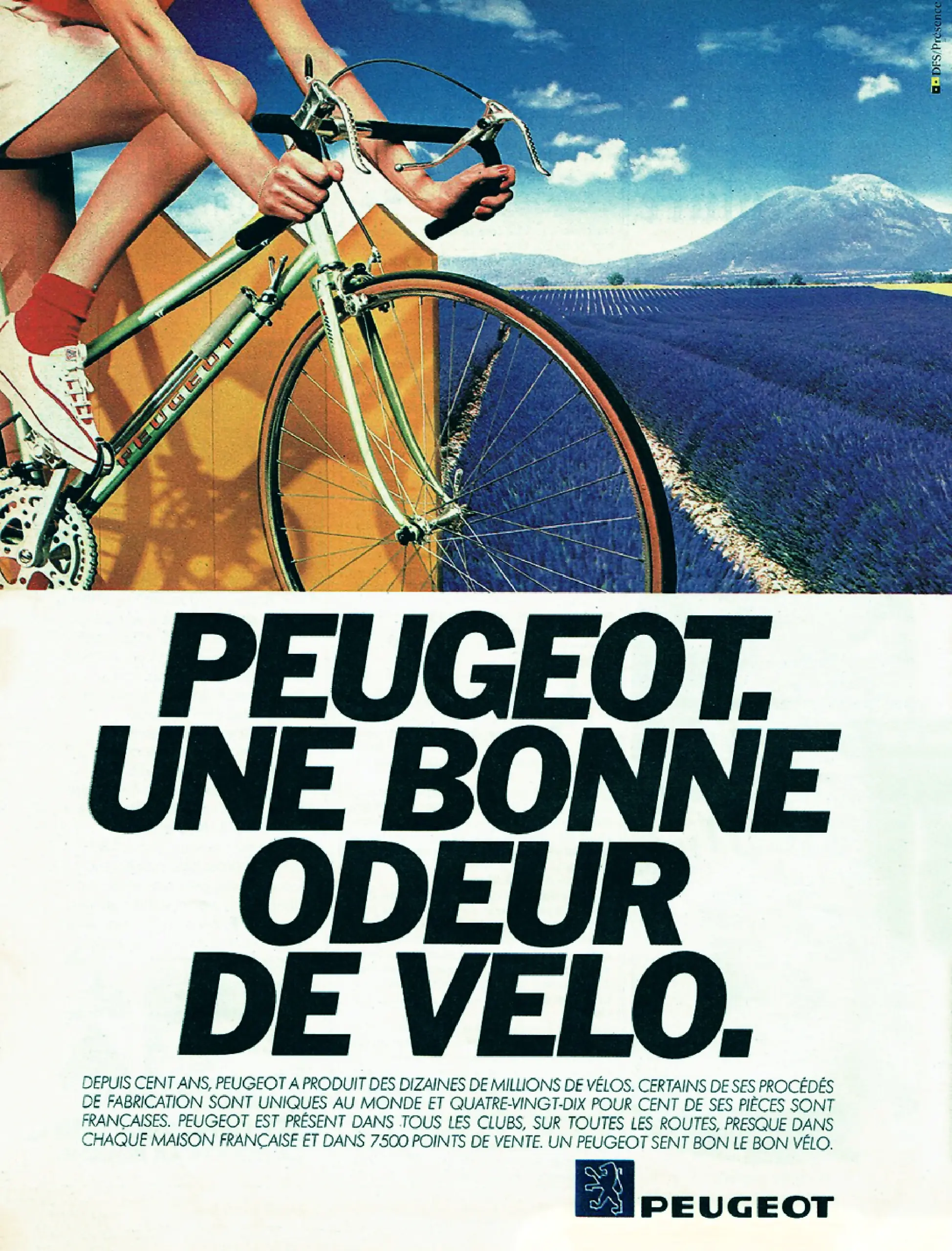
The company has fully embraced high-tech solutions, launching smart electric models like the AE21 Hybrid and even futuristic concept bikes designed in collaboration with Peugeot’s automotive stylists. While they look toward a green future with all-electric designs, they still remain true to their roots: the “Legend” series offers limited-edition bikes that celebrate the famous designs of the past. From its humble beginnings in a 19th-century family mill to its current role in global electric transport, the Peugeot Lion remains a proud symbol of movement for people all around the world.
Tom of “Bike Boom Peugeot,” who inherited a 1972 AO8 from his father when he sadly passed away from ALS (Lou Gehrig’s Disease) in 2005, and fell in love with vintage bike restoration along the way. You can donate and support research to cure ALS with Tom and others on his wonderful site here.
Help us document the evolution of the Lion. Share your serial numbers, decals and high-resolution frame details — from the PX-10 and PY-10 to the Atelier Prestige era — in our dedicated Peugeot forum.
https://www.bikeboompeugeot.com/index.html
https://cycles.peugeot.com/history
https://laventure-association.com/en/article/peugeot-bikes/
https://en.wikipedia.org/wiki/Cycles_Peugeot
https://en.wikipedia.org/wiki/Peugeot_(cycling_team)
https://en.wikipedia.org/wiki/Armand_Peugeot
https://en.wikipedia.org/wiki/Vandoncourt
https://onlinebicyclemuseum.co.uk/tour/cycles-peugeot/
https://biketips.com/vintage-peugeot-bikes/
https://en-academic.com/dic.nsf/enwiki/1001009
 Peugeot
Ebykr documents this marque across the archive. Here is the rest of it.
The Ebykr Digest
New articles, timelines, catalog finds and registry activity — assembled from the archive once a month. Your address is never shared.
Double opt-in. One email per month. Unsubscribe at any time with one click.