About Ebykr
Ebykr celebrates classic and vintage lightweight bicycles through provocative imagery and opinion. Ride along with us.
About Ebykr
Ebykr celebrates classic and vintage lightweight bicycles through provocative imagery and opinion. Ride along with us.

Source: Ebykr archive (Eric Anschutz's Brooks collection).
 Page 1
 Page 2
 Page 3
 Page 4
 Page 5
 Page 6
 Page 7
 Page 8
 Page 9
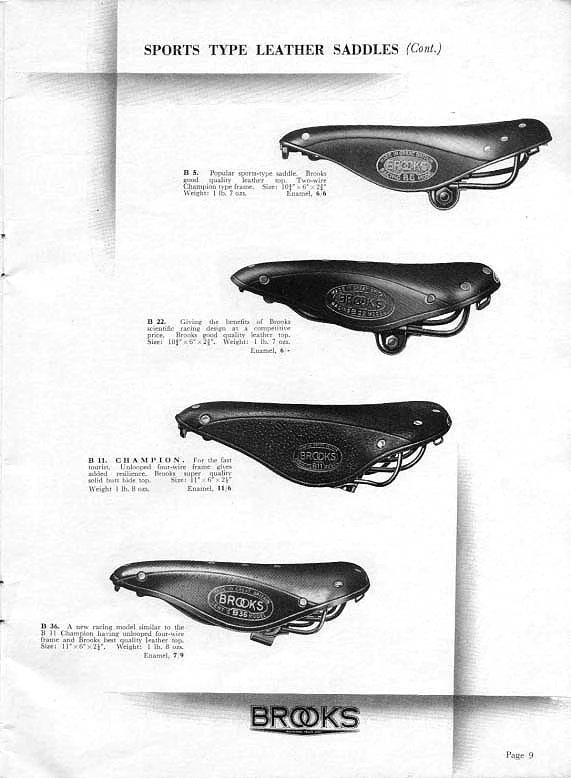 Page 10
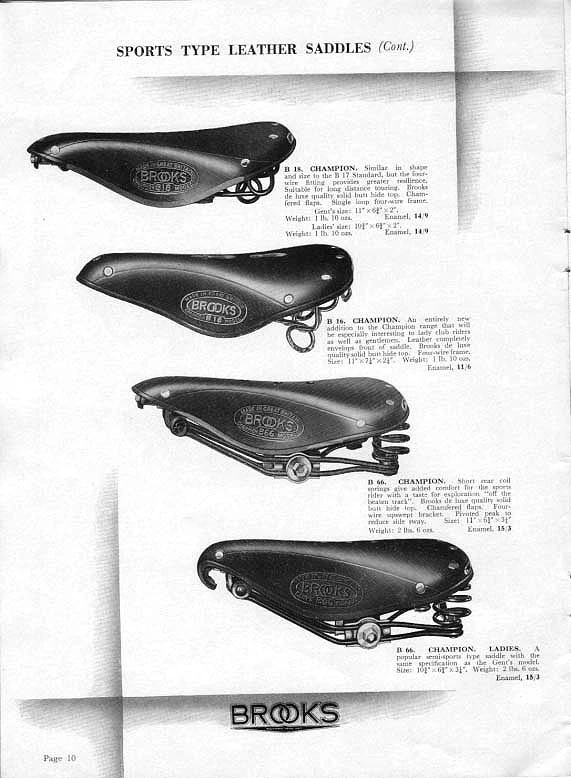 Page 11
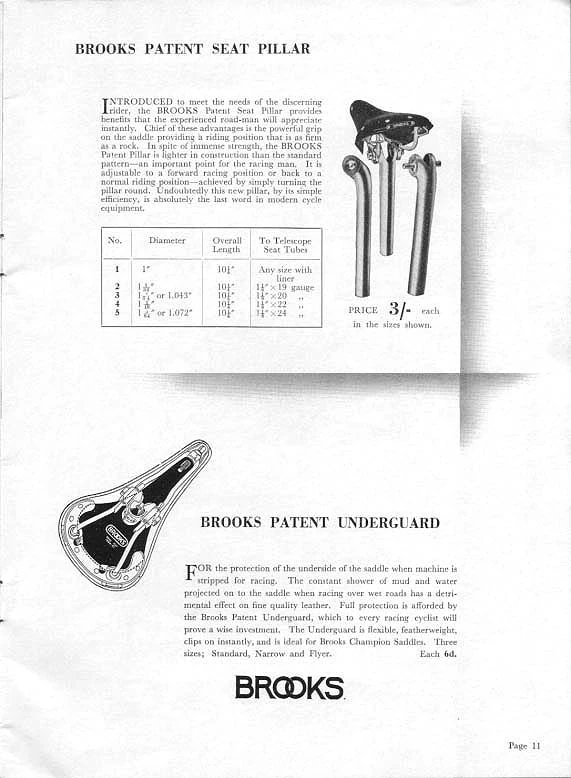 Page 12
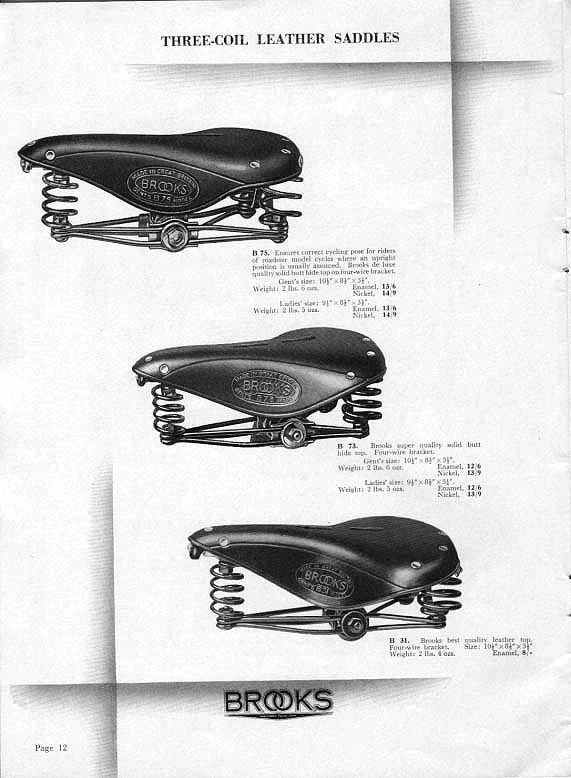 Page 13
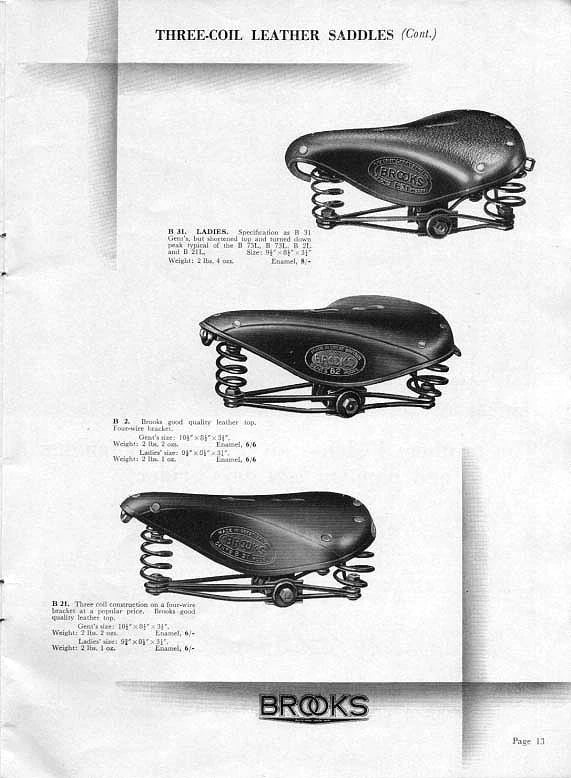 Page 14
 Page 15
 Page 16
 Page 17
 Page 18
 Page 19
 Page 20
 Page 21
 Page 22
 Page 23
 Page 24
 Page 25
 Page 26
 Page 27
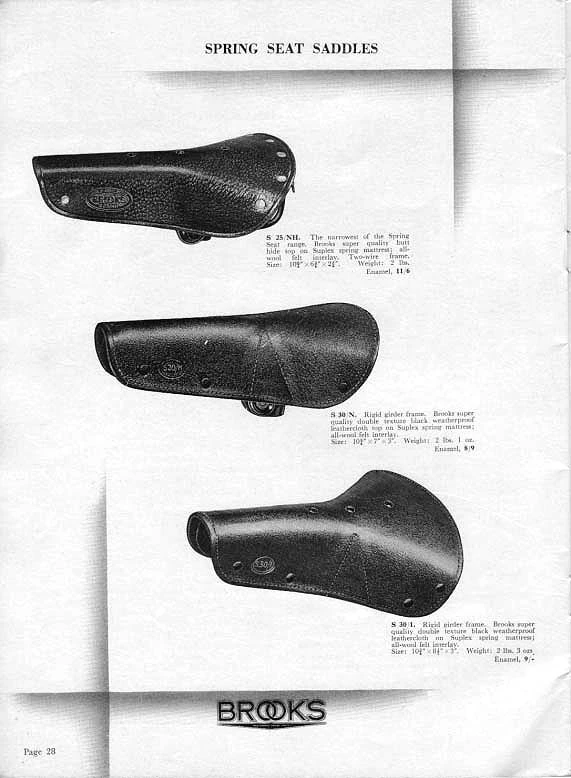 Page 28
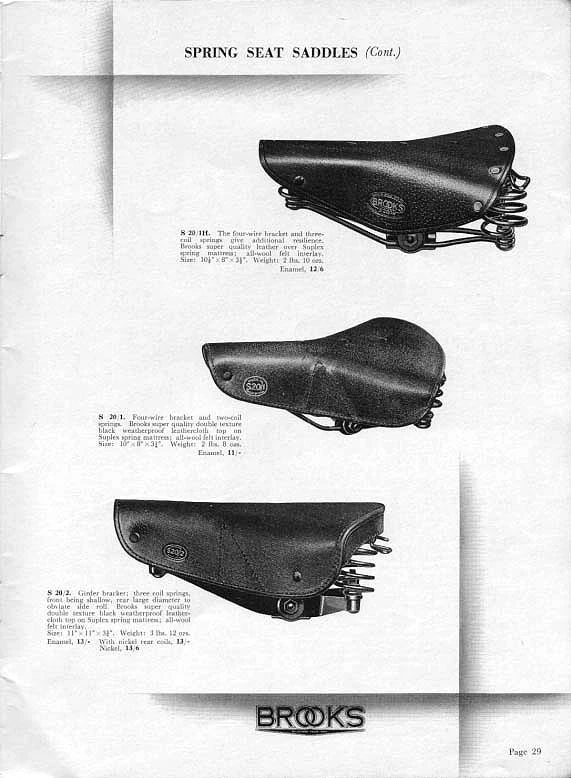 Page 29
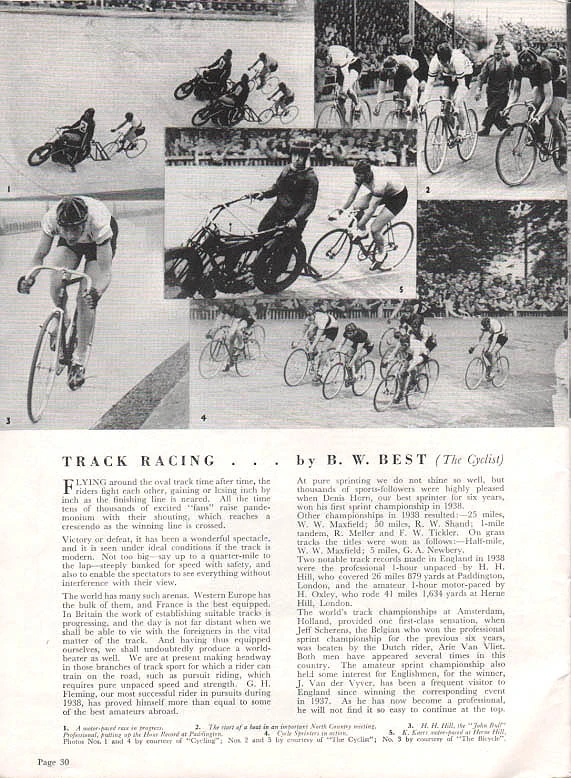 Page 30
 Page 31
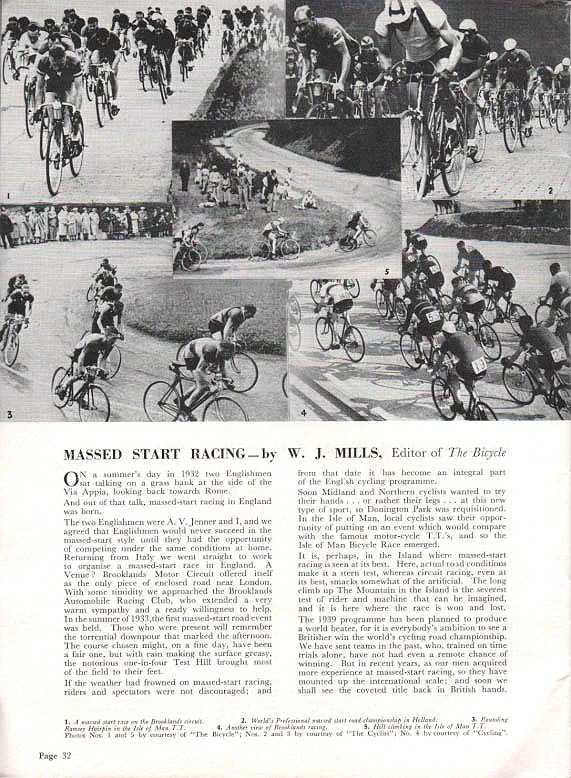 Page 32
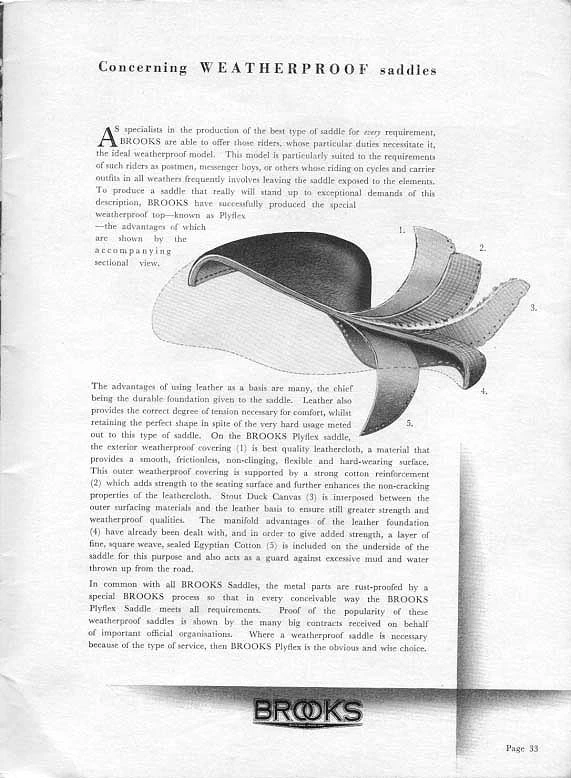 Page 33
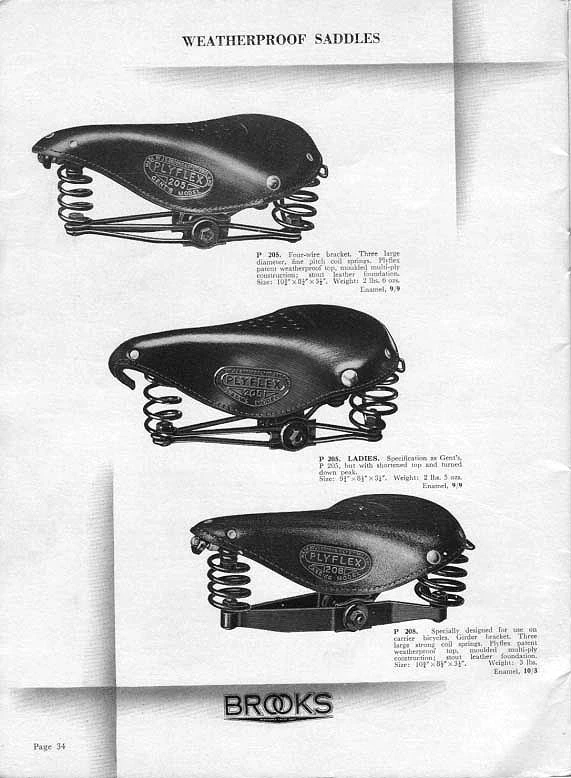 Page 34
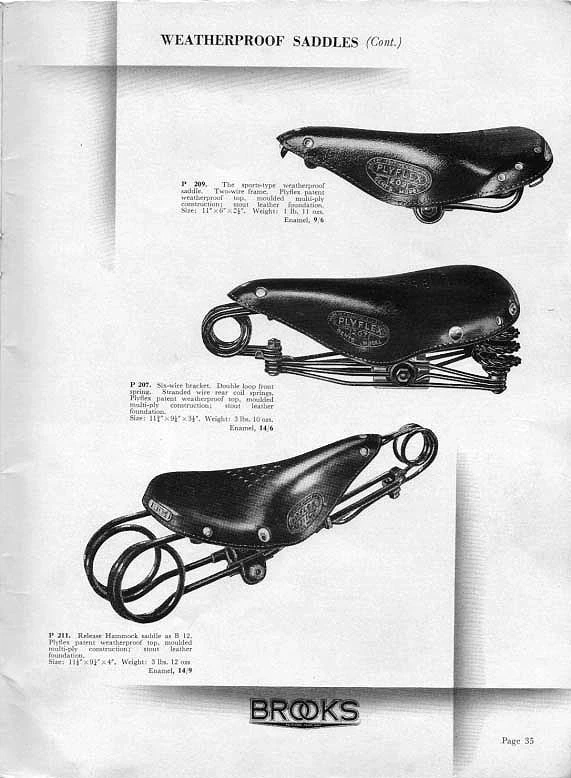 Page 35
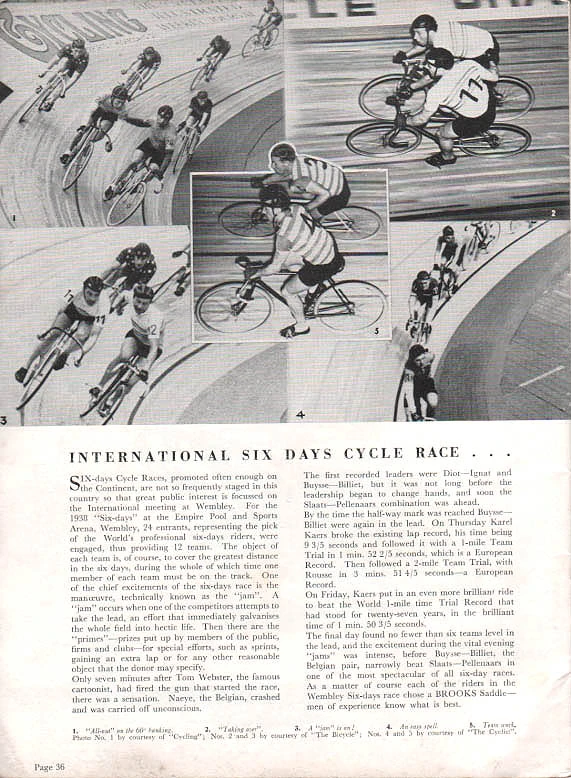 Page 36
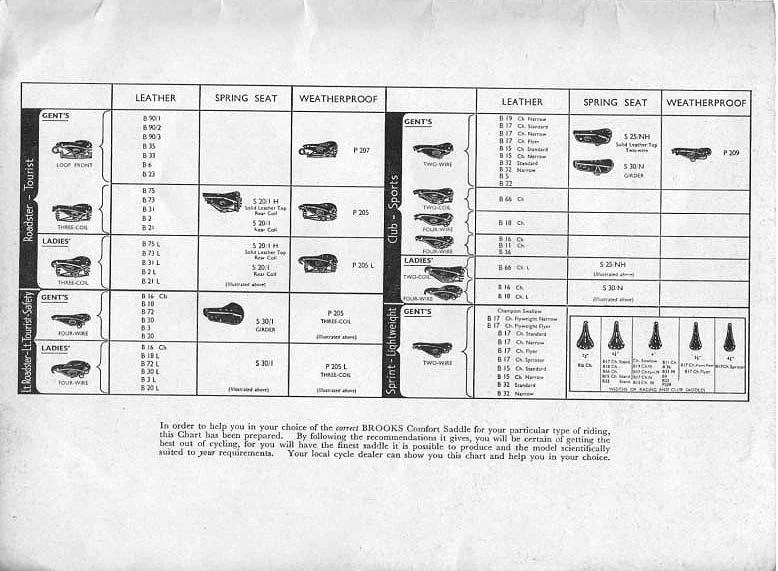 Page 37
| Marque | Brooks |
|---|---|
| Type | Catalog |
| Year | 1939 |
| Publisher | J. B. Brooks & Co., Ltd. |
| Country | England |
| Language | English |
| Pages | 37 |
| Source | Ebykr archive (Eric Anschutz's Brooks collection). |
| Credit | Ebykr archive |
| Transcription | Transcribed by eye |
Reference
J. B. Brooks & Co., Ltd. Brooks "Saddle Comfort" for 1939, List No. 280. 1939. Ebykr, https://ebykr.com/library/brooks-1939-catalog-saddle-comfort-list-no-280/.
Wikipedia
{{cite book |title=Brooks "Saddle Comfort" for 1939, List No. 280 |publisher=J. B. Brooks & Co., Ltd. |date=1939 |url=https://ebykr.com/library/brooks-1939-catalog-saddle-comfort-list-no-280/ |via=Ebykr |access-date=}}List No. 280 BROOKS SADDLE-Comfort INTRODUCING "SADDLE COMFORT" FOR 1939 BROOKS, as leaders of the saddle industry, again place before discriminating cyclists a range of saddles that meets the exact requirements of every type of rider. For over fifty years BROOKS have been making the finest saddles produced, and the present models have the advantage …
J. B. Brooks & Co.’s saddle book for 1939, List No. 280: an introduction with a drawing of the Criterion Works, views of the factory, an essay on choosing the saddle and a summarized data table of every model, then the leather saddles by type (the B 17 Champion family, Flyweights, Swallow, B 19, B 15, B 32, B 5, B 22, B 11, B 36, B 18, B 16 and B 66 sports saddles, three-coil, four-wire, loop front, hammock, tension coil and juvenile models), the patent seat pillar and underguard, the S spring seats and the P Plyflex weatherproof saddles, each with its enamel, nickel and chrome prices, and a closing chart matching saddle to riding. Between the ranges run testimonials (the Peden brothers, the six-day “stars”, “Ragged Staff”) and illustrated articles on the Cyclists’ Touring Club, the National Cyclists’ Union, road records, track racing, massed-start racing, cycling for women by Billie Dovey and the 1938 Wembley six-day race. Transcribed from the page images (37 pages); each page ends with a bracketed description of its pictures.
— Page 1 —
List No. 280
BROOKS
SADDLE-Comfort
[Front cover: the outlined BROOKS wordmark above a saddle-shaped cutout framing a photograph of a large group of club cyclists riding toward the camera on a tree-lined road, set in a green airbrushed ground; “SADDLE-Comfort” in display lettering below. A faint penciled “1939” at top center; worn edges and creases at left.]
— Page 2 —
INTRODUCING “SADDLE COMFORT” FOR
1939
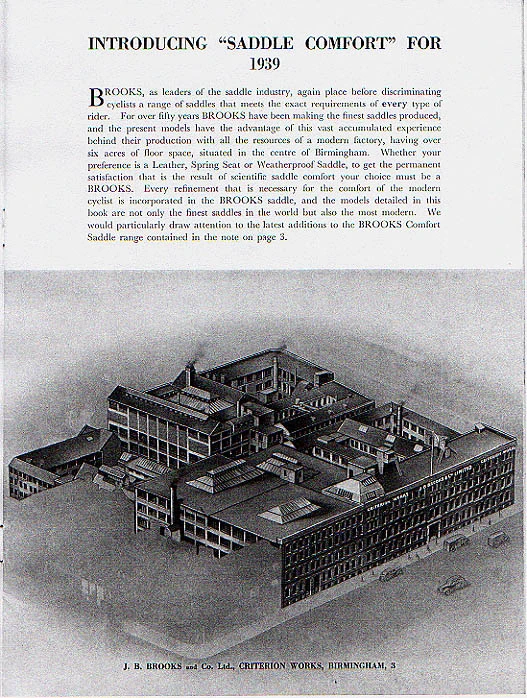
BROOKS, as leaders of the saddle industry, again place before discriminating cyclists a range of saddles that meets the exact requirements of every type of rider. For over fifty years BROOKS have been making the finest saddles produced, and the present models have the advantage of this vast accumulated experience behind their production with all the resources of a modern factory, having over six acres of floor space, situated in the centre of Birmingham. Whether your preference is a Leather, Spring Seat or Weatherproof Saddle, to get the permanent satisfaction that is the result of scientific saddle comfort your choice must be a BROOKS. Every refinement that is necessary for the comfort of the modern cyclist is incorporated in the BROOKS saddle, and the models detailed in this book are not only the finest saddles in the world but also the most modern. We would particularly draw attention to the latest additions to the BROOKS Comfort Saddle range contained in the note on page 3.
CRITERION WORKS J. B. BROOKS & Co. LIMITED CRITERION WORKS [?]
J. B. BROOKS and Co. Ltd., CRITERION WORKS, BIRMINGHAM, 3
[Introduction page: a heading and one paragraph of text above a large aerial drawing of the Brooks Criterion Works, a block of multi-story factory buildings around courtyards with lettering along the main facade and motor cars in the street; the firm’s address centered at the foot.]
— Page 3 —
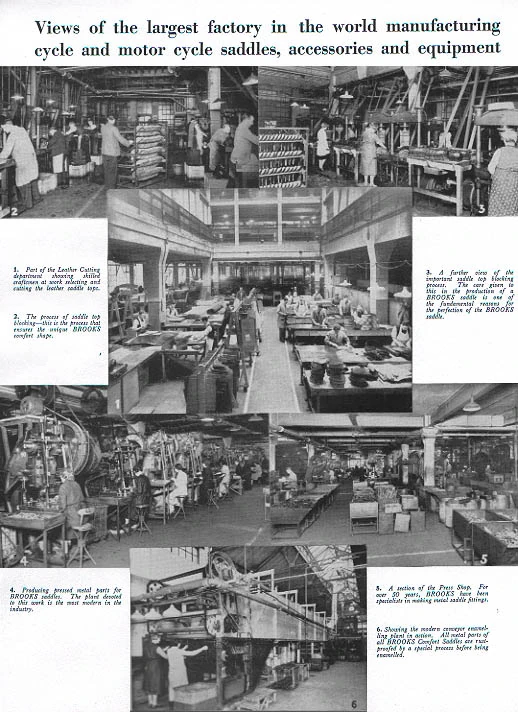
Views of the largest factory in the world manufacturing
cycle and motor cycle saddles, accessories and equipment
1. Part of the Leather Cutting department showing skilled craftsmen at work selecting and cutting the leather saddle tops.
2. The process of saddle top blocking—this is the process that ensures the unique BROOKS comfort shape.
3. A further view of the important saddle top blocking process. The care given to this in the production of a BROOKS saddle is one of the fundamental reasons for the perfection of the BROOKS saddle.
4. Producing pressed metal parts for BROOKS saddles. The plant devoted to this work is the most modern in the industry.
5. A section of the Press Shop. For over 50 years, BROOKS have been specialists in making metal saddle fittings.
6. Showing the modern conveyor enamelling plant in action. All metal parts of all BROOKS Comfort Saddles are rust-proofed by a special process before being enamelled.
[Factory views page: six numbered black-and-white photographs in an interlocking collage showing the leather cutting room, the long saddle top blocking shop, press machinery, the press shop and an overhead conveyor enameling plant, with workers at benches; numbered italic captions in the white panels between them.]
— Page 4 —
CHOOSING THE COMFORT SADDLE
IT is a fact that the more experienced the rider, the greater the attention he or she pays to the saddle. Whilst this may surprise anyone new to cycling, a little consideration of the factors involved will soon prove the profound wisdom of this.
The saddle is the essential point of contact between rider and machine, and since, in the case of the cyclist, the rider is also the source of power, the saddle takes on a greater function than that of being just a seat; it becomes a “bearing” surface. It follows, therefore, that unless this “bearing” surface is perfect in every respect, the motive force cannot be transmitted in its entirety. In other words, a poor saddle or one unsuited to the particular requirements of the rider will prove a serious handicap—certainly a big extra tax on the rider’s resources, and one that no sane person would wish to incur. It is impossible to give too much consideration to the question of the choice of saddle—it is the foundation of cycling satisfaction.
One has only to consider the serious thought given to the subject by the experts—the men and women who set out to achieve records, who cannot afford to take the slightest chance with their equipment—to realise what a vitally important item the saddle really is. These men and women invariably choose BROOKS because their great experience enables them to appreciate the inestimable advantages of the true Comfort Saddle.
The scientific BROOKS design offers the rider complete freedom of leg action without any places where chafing might occur. Thus is ensured the utilisation of maximum power with the minimum of effort on the part of the rider. These essential features must not be neglected when choosing a saddle, and if the concensus of expert opinion is heeded, then it will be recognised that the BROOKS Comfort Saddle offers the essential features of the perfect saddle and is indeed the only logical choice.
In considering the particular model best suited to your individual requirements the primary factor is the general class of riding to be undertaken—racing, fast touring, pottering, or everyday cycling of a utilitarian nature. Within each of these general classes are several ladies’ and gents’ models each offering certain specific features suited to individual requirements.
It is as well to secure the advice of your local BROOKS stockist in making the final choice, for his opinion is worth having. If you will only realise that an inferior saddle or one of the wrong type can make your riding hard work, whilst the best quality saddle of the right type will make cycling a pleasure at all times, then you will appreciate what a splendid investment a BROOKS Comfort Saddle represents.
Be sure that your new cycle is fitted with a BROOKS Comfort Saddle—the Hall-mark of Quality on a Cycle—and you can be sure that your cycling will always be a pleasurable pastime.
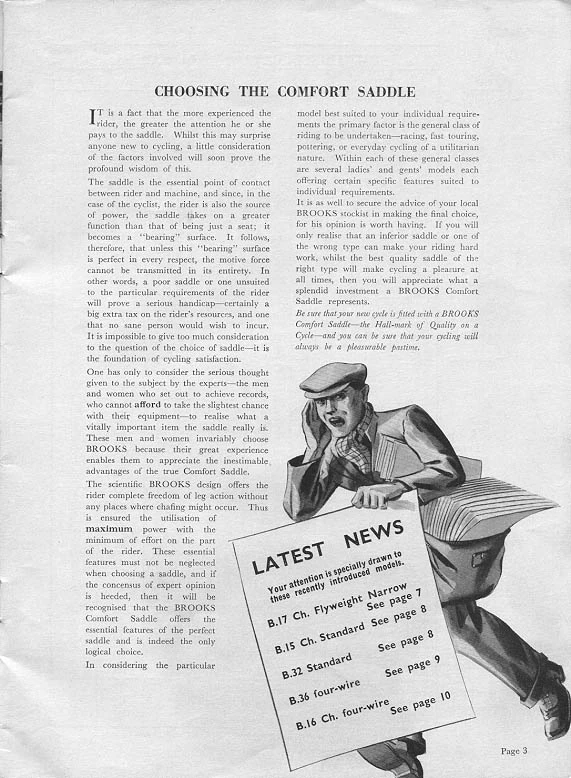
LATEST NEWS
Your attention is specially drawn to these recently introduced models.
B.17 Ch. Flyweight Narrow See page 7
B.15 Ch. Standard See page 8
B.32 Standard See page 8
B.36 four-wire See page 9
B.16 Ch. four-wire See page 10
Page 3
[Text page in two columns with, at lower right, a drawing of a running newsboy in a flat cap and checked scarf, an armful of papers, holding up a tilted “Latest News” placard that lists five new saddle models with page references; printed folio Page 3.]
— Page 5 —
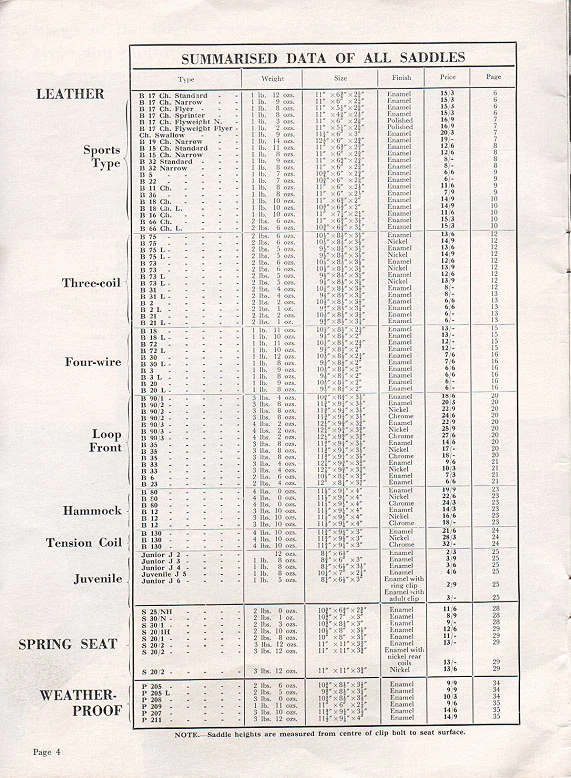
SUMMARISED DATA OF ALL SADDLES
Type | Weight | Size | Finish | Price | Page
LEATHER
Sports Type
B 17 Ch. Standard | 1 lb. 12 ozs. | 11″ × 6½” × 2¼” [?] | Enamel | 15/3 | 6
B 17 Ch. Narrow | 1 lb. 9 ozs. | 11″ × 6″ × 2¼” [?] | Enamel | 15/3 | 6
B 17 Ch. Flyer | 1 lb. 8 ozs. | 11″ × 5½” × 2¼” [?] | Enamel | 15/3 | 6
B 17 Ch. Sprinter | 1 lb. 8 ozs. | 11″ × 4½” × 2¼” [?] | Enamel | 15/3 | 6
B 17 Ch. Flyweight N. | 1 lb. 3 ozs. | 11″ × 6″ × 2¼” [?] | Polished | 16/9 | 7
B 17 Ch. Flyweight Flyer | 1 lb. 2 ozs. | 11″ × 5½” × 2¼” [?] | Polished | 16/9 | 7
Ch. Swallow | 1 lb. 9 ozs. | 11½” × 6″ × 3″ [?] | Enamel | 20/3 | 7
B 19 Ch. Narrow | 1 lb. 14 ozs. | 12½” × 6″ × 2¼” [?] | Enamel | 19/- | 7
B 15 Ch. Standard | 1 lb. 11 ozs. | 11″ × 6½” × 2¼” [?] | Enamel | 12/6 | 8
B 15 Ch. Narrow | 1 lb. 8 ozs. | 11″ × 6″ × 2¼” [?] | Enamel | 12/6 | 8
B 32 Standard | 1 lb. 9 ozs. | 11″ × 6½” × 2¼” [?] | Enamel | 8/- | 8
B 32 Narrow | 1 lb. 8 ozs. | 11″ × 6″ × 2¼” [?] | Enamel | 8/- | 8
B 5 | 1 lb. 7 ozs. | 10½” × 6″ × 2¼” [?] | Enamel | 6/6 | 9
B 22 | 1 lb. 7 ozs. | 10½” × 6″ × 2¼” [?] | Enamel | 6/- | 9
B 11 Ch. | 1 lb. 8 ozs. | 11″ × 6″ × 2¼” [?] | Enamel | 11/6 | 9
B 36 | 1 lb. 8 ozs. | 11″ × 6″ × 2¼” [?] | Enamel | 7/9 | 9
B 18 Ch. | 1 lb. 10 ozs. | 11″ × 6½” × 2″ [?] | Enamel | 14/9 | 10
B 18 Ch. L. | 1 lb. 10 ozs. | 10½” × 6½” × 2″ [?] | Enamel | 14/9 | 10
B 16 Ch. | 1 lb. 10 ozs. | 11″ × 7½” × 2¼” [?] | Enamel | 11/6 | 10
B 66 Ch. | 2 lbs. 6 ozs. | 11″ × 6½” × 3½” [?] | Enamel | 15/3 | 10
B 66 Ch. L. | 2 lbs. 6 ozs. | 10½” × 6½” × 3½” [?] | Enamel | 15/3 | 10
Three-coil
B 75 | 2 lbs. 6 ozs. | 10½” × 8½” × 3½” [?] | Enamel | 13/6 | 12
B 75 | 2 lbs. 6 ozs. | 10½” × 8½” × 3½” [?] | Nickel | 14/9 | 12
B 75 L. | 2 lbs. 5 ozs. | 9½” × 8½” × 3½” [?] | Enamel | 13/6 | 12
B 75 L. | 2 lbs. 5 ozs. | 9½” × 8½” × 3½” [?] | Nickel | 14/9 | 12
B 73 | 2 lbs. 6 ozs. | 10½” × 8½” × 3½” [?] | Enamel | 12/6 | 12
B 73 | 2 lbs. 6 ozs. | 10½” × 8½” × 3½” [?] | Nickel | 13/9 | 12
B 73 L | 2 lbs. 5 ozs. | 9½” × 8½” × 3½” [?] | Enamel | 12/6 | 12
B 73 L. | 2 lbs. 5 ozs. | 9½” × 8½” × 3½” [?] | Nickel | 13/9 | 12
B 31 | 2 lbs. 4 ozs. | 10½” × 8½” × 3½” [?] | Enamel | 8/- | 12
B 31 L. | 2 lbs. 4 ozs. | 9½” × 8½” × 3½” [?] | Enamel | 8/- | 13
B 2 | 2 lbs. 2 ozs. | 10½” × 8½” × 3½” [?] | Enamel | 6/6 | 13
B 2 L. | 2 lbs. 1 oz. | 9½” × 8½” × 3½” [?] | Enamel | 6/6 | 13
B 21 | 2 lbs. 2 ozs. | 10½” × 8½” × 3½” [?] | Enamel | 6/- | 13
B 21 L. | 2 lbs. 1 oz. | 9½” × 8½” × 3½” [?] | Enamel | 6/- | 13
Four-wire
B 18 | 1 lb. 11 ozs. | 10½” × 8½” × 2¼” [?] | Enamel | 13/- | 15
B 18 L. | 1 lb. 10 ozs. | 9½” × 8½” × 2″ [?] | Enamel | 13/- | 15
B 72 | 1 lb. 11 ozs. | 10½” × 8½” × 2¼” [?] | Enamel | 12/- | 15
B 72 L. | 1 lb. 10 ozs. | 9½” × 8½” × 2″ [?] | Enamel | 12/- | 15
B 30 | 1 lb. 12 ozs. | 10½” × 8½” × 2¼” [?] | Enamel | 7/6 | 16
B 30 L. | 1 lb. 8 ozs. | 9½” × 8½” × 2″ [?] | Enamel | 7/6 | 16
B 3 | 1 lb. 9 ozs. | 10½” × 8½” × 2″ [?] | Enamel | 6/6 | 16
B 3 L. | 1 lb. 8 ozs. | 9½” × 8½” × 2″ [?] | Enamel | 6/6 | 16
B 20 | 1 lb. 9 ozs. | 10½” × 8½” × 2″ [?] | Enamel | 6/- | 16
B 20 L. | 1 lb. 8 ozs. | 9½” × 8½” × 2″ [?] | Enamel | 6/- | 16
Loop Front
B 90/1 | 3 lbs. 4 ozs. | 10½” × 8½” × 3½” [?] | Enamel | 18/6 | 20
B 90/2 | 3 lbs. 8 ozs. | 11½” × 9½” × 3½” [?] | Enamel | 20/3 | 20
B 90/2 | 3 lbs. 8 ozs. | 11½” × 9½” × 3½” [?] | Nickel | 23/9 | 20
B 90/2 | 3 lbs. 8 ozs. | 11½” × 9½” × 3½” [?] | Chrome | 24/6 | 20
B 90/3 | 4 lbs. 2 ozs. | 12½” × 9½” × 3½” [?] | Enamel | 22/9 | 20
B 90/3 | 4 lbs. 2 ozs. | 12½” × 9½” × 3½” [?] | Nickel | 25/9 | 20
B 90/3 | 4 lbs. 2 ozs. | 12½” × 9½” × 3½” [?] | Chrome | 27/6 | 20
B 35 | 3 lbs. 8 ozs. | 11½” × 9½” × 3½” [?] | Enamel | 14/6 | 20
B 35 | 3 lbs. 8 ozs. | 11½” × 9½” × 3½” [?] | Nickel | 17/- | 20
B 35 | 3 lbs. 8 ozs. | 11½” × 9½” × 3½” [?] | Chrome | 18/- | 20
B 33 | 3 lbs. 4 ozs. | 12½” × 9½” × 3½” [?] | Enamel | 9/6 | 21
B 33 | 3 lbs. 4 ozs. | 12½” × 9½” × 3½” [?] | Nickel | 10/3 | 21
B 6 | 2 lbs. 6 ozs. | 10½” × 8½” × 3½” [?] | Enamel | 7/3 | 21
B 23 | 2 lbs. 4 ozs. | 12″ × 8½” × 3½” [?] | Enamel | 6/6 | 21
Hammock
B 50 | 4 lbs. 0 ozs. | 11½” × 9½” × 4″ [?] | Enamel | 19/9 | 23
B 50 | 4 lbs. 0 ozs. | 11½” × 9½” × 4″ [?] | Nickel | 22/6 | 23
B 50 | 4 lbs. 0 ozs. | 11½” × 9½” × 4″ [?] | Chrome | 24/3 | 23
B 12 | 3 lbs. 10 ozs. | 11½” × 9½” × 4″ [?] | Enamel | 14/3 | 23
B 12 | 3 lbs. 10 ozs. | 11½” × 9½” × 4″ [?] | Nickel | 16/6 | 23
B 12 | 3 lbs. 10 ozs. | 11½” × 9½” × 4″ [?] | Chrome | 18/- | 23
Tension Coil
B 130 | 4 lbs. 10 ozs. | 11½” × 9½” × 3″ [?] | Enamel | 21/6 | 24
B 130 | 4 lbs. 10 ozs. | 11½” × 9½” × 3″ [?] | Nickel | 28/3 | 24
B 130 | 4 lbs. 10 ozs. | 11½” × 9½” × 3″ [?] | Chrome | 32/- | 24
Juvenile
Junior J 2 | 12 ozs. | 8½” × 6½” [?] | Enamel | 2/3 | 25
Junior J 3 | 1 lb. 8 ozs. | 8½” × 6″ × 3″ [?] | Enamel | 3/9 | 25
Junior J 4 | 1 lb. 8 ozs. | 8½” × 6½” × 3½” [?] | Enamel | 3/6 | 25
Juvenile J 5 | 1 lb. 8 ozs. | 10½” × 7″ × 2½” [?] | Enamel | 4/6 | 25
Junior J 6 | 1 lb. 5 ozs. | 8½” × 6½” × 3″ [?] | Enamel with ring clip | 2/9 | 25
| | | Enamel with adult clip | 3/- | 25
SPRING SEAT
S 25/NH | 2 lbs. 0 ozs. | 10½” × 6½” × 2½” [?] | Enamel | 11/6 | 28
S 30/N | 2 lbs. 1 oz. | 10½” × 7″ × 3″ [?] | Enamel | 8/9 | 28
S 30/1 | 2 lbs. 3 ozs. | 10½” × 8½” × 3″ [?] | Enamel | 9/- | 28
S 20/1H | 2 lbs. 10 ozs. | 10½” × 8″ × 3½” [?] | Enamel | 12/6 | 29
S 20/1 | 2 lbs. 8 ozs. | 10″ × 8″ × 3½” [?] | Enamel | 11/- | 29
S 20/2 | 3 lbs. 12 ozs. | 11″ × 11″ × 3½” [?] | Enamel | 13/- | 29
S 20/2 | 3 lbs. 12 ozs. | 11″ × 11″ × 3½” [?] | Enamel with nickel rear coils | 13/- | 29
S 20/2 | 3 lbs. 12 ozs. | 11″ × 11″ × 3½” [?] | Nickel | 13/6 | 29
WEATHER-PROOF
P 205 | 2 lbs. 6 ozs. | 10½” × 8½” × 3½” [?] | Enamel | 9/9 | 34
P 205 L | 2 lbs. 5 ozs. | 9½” × 8½” × 3½” [?] | Enamel | 9/9 | 34
P 208 | 3 lbs. 0 ozs. | 10½” × 8½” × 3½” [?] | Enamel | 10/3 | 34
P 209 | 1 lb. 11 ozs. | 11″ × 6″ × 2½” [?] | Enamel | 9/6 | 35
P 207 | 3 lbs. 10 ozs. | 11½” × 9½” × 3½” [?] | Enamel | 14/6 | 35
P 211 | 3 lbs. 12 ozs. | 11½” × 9½” × 4″ [?] | Enamel | 14/9 | 35
NOTE.—Saddle heights are measured from centre of clip bolt to seat surface.
Page 4
[A full-page ruled table summarizing every saddle in the book by type, weight, size, finish, price and page, grouped under side headings Leather (Sports Type, Three-coil, Four-wire, Loop Front, Hammock, Tension Coil, Juvenile), Spring Seat and Weather-proof; a note on saddle height at the foot. The small fractional inches in the Size column are at the limit of the scan resolution.]
— Page 6 —
LEATHER SADDLES
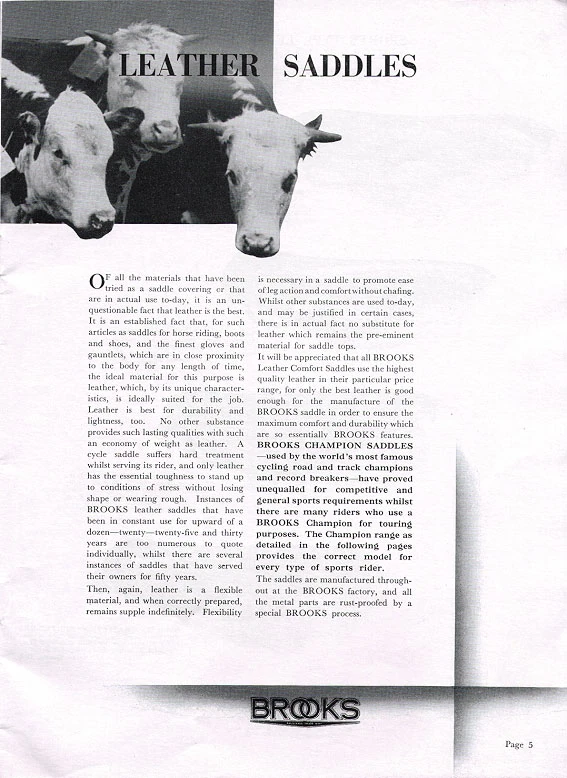
OF all the materials that have been tried as a saddle covering or that are in actual use to-day, it is an unquestionable fact that leather is the best. It is an established fact that, for such articles as saddles for horse riding, boots and shoes, and the finest gloves and gauntlets, which are in close proximity to the body for any length of time, the ideal material for this purpose is leather, which, by its unique characteristics, is ideally suited for the job. Leather is best for durability and lightness, too. No other substance provides such lasting qualities with such an economy of weight as leather. A cycle saddle suffers hard treatment whilst serving its rider, and only leather has the essential toughness to stand up to conditions of stress without losing shape or wearing rough. Instances of BROOKS leather saddles that have been in constant use for upward of a dozen—twenty—twenty-five and thirty years are too numerous to quote individually, whilst there are several instances of saddles that have served their owners for fifty years.
Then, again, leather is a flexible material, and when correctly prepared, remains supple indefinitely. Flexibility is necessary in a saddle to promote ease of leg action and comfort without chafing. Whilst other substances are used to-day, and may be justified in certain cases, there is in actual fact no substitute for leather which remains the pre-eminent material for saddle tops.
It will be appreciated that all BROOKS Leather Comfort Saddles use the highest quality leather in their particular price range, for only the best leather is good enough for the manufacture of the BROOKS saddle in order to ensure the maximum comfort and durability which are so essentially BROOKS features.
BROOKS CHAMPION SADDLES—used by the world’s most famous cycling road and track champions and record breakers—have proved unequalled for competitive and general sports requirements whilst there are many riders who use a BROOKS Champion for touring purposes. The Champion range as detailed in the following pages provides the correct model for every type of sports rider.
The saddles are manufactured throughout at the BROOKS factory, and all the metal parts are rust-proofed by a special BROOKS process.
BROOKS
[illegible]
Page 5
[Section opener: a photograph of the heads of three cattle at top left under the heading, two columns of text on a white panel that casts a drop shadow, and the outlined BROOKS wordmark with a tiny illegible line beneath it at the foot.]
— Page 7 —
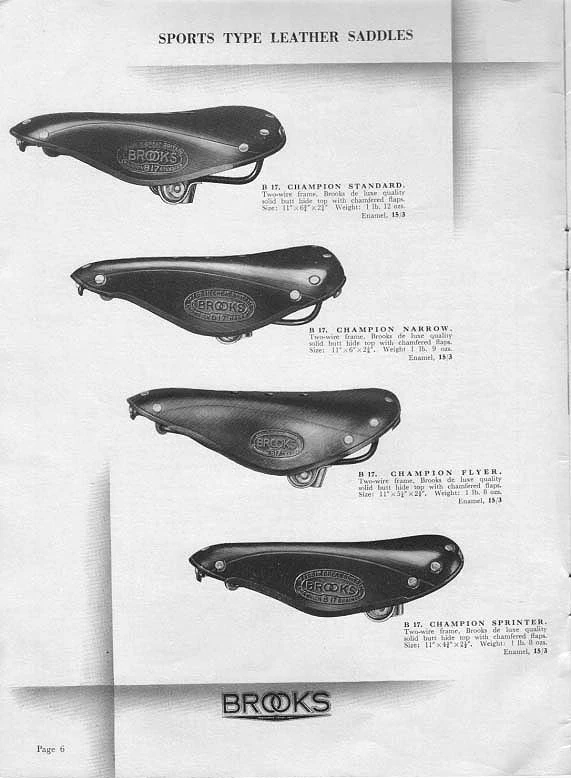
SPORTS TYPE LEATHER SADDLES
B 17. CHAMPION STANDARD.
Two-wire frame. Brooks de luxe quality solid butt hide top with chamfered flaps. Size: 11″ × 6½” × 2¼” [?] Weight: 1 lb. 12 ozs.
Enamel, 15/3
B 17. CHAMPION NARROW.
Two-wire frame. Brooks de luxe quality solid butt hide top with chamfered flaps. Size: 11″ × 6″ × 2¼”. Weight 1 lb. 9 ozs.
Enamel, 15/3
B 17. CHAMPION FLYER.
Two-wire frame. Brooks de luxe quality solid butt hide top with chamfered flaps. Size: 11″ × 5½” × 2¼”. Weight: 1 lb. 8 ozs.
Enamel, 15/3
B 17. CHAMPION SPRINTER.
Two-wire frame. Brooks de luxe quality solid butt hide top with chamfered flaps. Size: 11″ × 4½” × 2¼”. Weight: 1 lb. 8 ozs.
Enamel, 15/3
BROOKS
Page 6
[Four photographs of black leather B 17 Champion saddles (Standard, Narrow, Flyer and Sprinter) stepped diagonally down the page, each with an oval embossed BROOKS B 17 medallion on the flap and its caption at right; the outlined BROOKS wordmark at the foot and a shadowed panel background.]
— Page 8 —
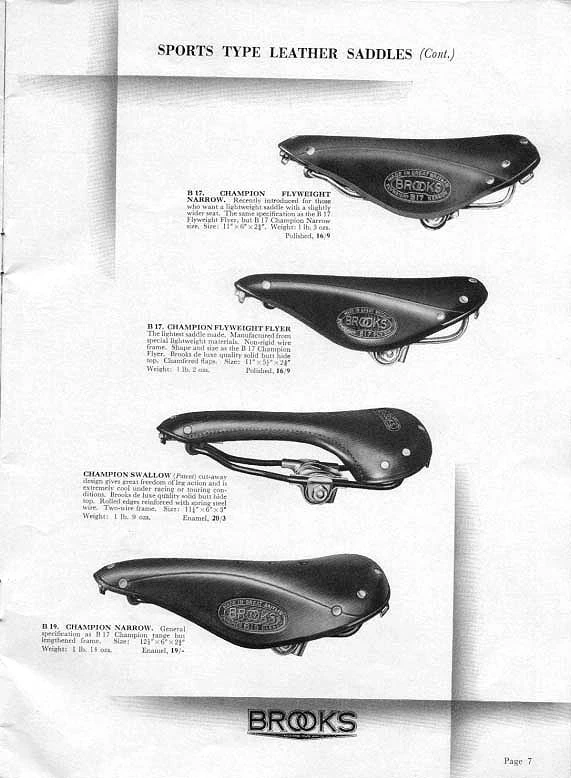
SPORTS TYPE LEATHER SADDLES (Cont.)
B 17. CHAMPION FLYWEIGHT NARROW. Recently introduced for those who want a lightweight saddle with a slightly wider seat. The same specification as the B 17 Flyweight Flyer, but B 17 Champion Narrow size. Size: 11″ × 6″ × 2¼”. Weight: 1 lb. 3 ozs.
Polished, 16/9
B 17. CHAMPION FLYWEIGHT FLYER
The lightest saddle made. Manufactured from special lightweight materials. Non-rigid wire frame. Shape and size as the B 17 Champion Flyer. Brooks de luxe quality solid butt hide top. Chamfered flaps. Size: 11″ × 5½” × 2¼”
Weight: 1 lb. 2 ozs. Polished, 16/9
CHAMPION SWALLOW (Patent) cut-away design gives great freedom of leg action and is extremely cool under racing or touring conditions. Brooks de luxe quality solid butt hide top. Rolled edges reinforced with spring steel wire. Two-wire frame. Size: 11½” × 6″ × 3″
Weight: 1 lb. 9 ozs. Enamel, 20/3
B 19. CHAMPION NARROW. General specification as B 17 Champion range but lengthened frame. Size: 12½” × 6″ × 2¼”
Weight: 1 lb. 14 ozs. Enamel, 19/-
BROOKS
Page 7
[Four photographs of black leather racing saddles stepped down the page: the B 17 Champion Flyweight Narrow and Flyweight Flyer with polished frames, the cut-away Champion Swallow and the long B 19 Champion Narrow, each with its caption; the BROOKS wordmark at the foot on a shadowed panel ground.]
— Page 9 —
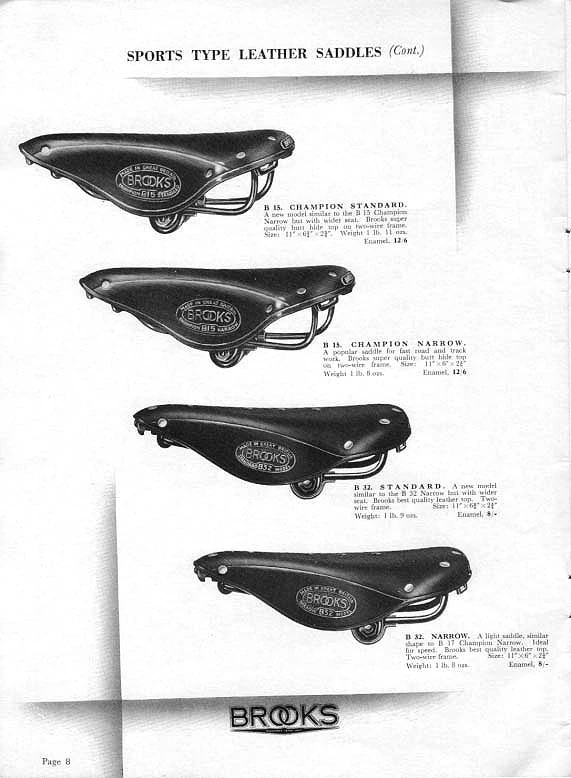
SPORTS TYPE LEATHER SADDLES (Cont.)
B 15. CHAMPION STANDARD.
A new model similar to the B 15 Champion Narrow but with wider seat. Brooks super quality butt hide top on two-wire frame. Size: 11″ × 6½” × 2¼”. Weight 1 lb. 11 ozs.
Enamel, 12/6
B 15. CHAMPION NARROW.
A popular saddle for fast road and track work. Brooks super quality butt hide top on two-wire frame. Size: 11″ × 6″ × 2¼”
Weight 1 lb. 8 ozs. Enamel, 12/6
B 32. STANDARD. A new model similar to the B 32 Narrow but with wider seat. Brooks best quality leather top. Two-wire frame. Size: 11″ × 6½” × 2¼”
Weight: 1 lb. 9 ozs. Enamel, 8/-
B 32. NARROW. A light saddle, similar shape to B 17 Champion Narrow. Ideal for speed. Brooks best quality leather top. Two-wire frame. Size: 11″ × 6″ × 2¼”
Weight: 1 lb. 8 ozs. Enamel, 8/-
BROOKS
Page 8
[Four photographs of black leather two-wire saddles stepped down the page: the B 15 Champion Standard and Narrow and the B 32 Standard and Narrow, each with an oval BROOKS medallion naming the model on the flap and its caption at right; the BROOKS wordmark at the foot on a shadowed panel ground.]
— Page 10 —
SPORTS TYPE LEATHER SADDLES (Cont.)
B 5. Popular sports-type saddle. Brooks good quality leather top. Two-wire Champion type frame. Size: 10½” × 6″ × 2¼”
Weight: 1 lb. 7 ozs. Enamel, 6/6
B 22. Giving the benefits of Brooks scientific racing design at a competitive price. Brooks good quality leather top. Size: 10½” × 6″ × 2¼”. Weight: 1 lb. 7 ozs.
Enamel, 6/-
B 11. CHAMPION. For the fast tourist. Unlooped four-wire frame gives added resilience. Brooks super quality solid butt hide top. Size: 11″ × 6″ × 2¼”
Weight 1 lb. 8 ozs. Enamel, 11/6
B 36. A new racing model similar to the B 11 Champion having unlooped four-wire frame and Brooks best quality leather top. Size: 11″ × 6″ × 2¼”. Weight: 1 lb. 8 ozs.
Enamel, 7/9
BROOKS
Page 9
[Four photographs of black leather sports saddles stepped down the page: the B 5 and B 22 on two-wire frames and the B 11 Champion and B 36 on unlooped four-wire frames, each with an oval BROOKS medallion and its caption at left; the BROOKS wordmark at the foot. Small dark specks along the left margin.]
— Page 11 —
SPORTS TYPE LEATHER SADDLES (Cont.)
B 18. CHAMPION. Similar in shape and size to the B 17 Standard, but the four-wire fitting provides greater resilience. Suitable for long distance touring. Brooks de luxe quality solid butt hide top. Chamfered flaps. Single loop four-wire frame.
Gent’s size: 11″ × 6½” × 2″.
Weight: 1 lb. 10 ozs. Enamel, 14/9
Ladies’ size: 10½” × 6½” × 2″.
Weight: 1 lb. 10 ozs. Enamel, 14/9
B 16. CHAMPION. An entirely new addition to the Champion range that will be especially interesting to lady club riders as well as gentlemen. Leather completely envelops front of saddle. Brooks de luxe quality solid butt hide top. Four-wire frame. Size: 11″ × 7½” × 2¼”. Weight: 1 lb. 10 ozs.
Enamel, 11/6
B 66. CHAMPION. Short rear coil springs give added comfort for the sports rider with a taste for exploration “off the beaten track”. Brooks de luxe quality solid butt hide top. Chamfered flaps. Four-wire upswept bracket. Pivoted peak to reduce side sway. Size: 11″ × 6½” × 3½”
Weight: 2 lbs. 6 ozs. Enamel, 15/3
B 66. CHAMPION. LADIES. A popular semi-sports type saddle with the same specification as the Gent’s model. Size: 10½” × 6½” × 3½”. Weight: 2 lbs. 6 ozs.
Enamel, 15/3
BROOKS
Page 10
[Four photographs of black leather saddles stepped down the page: the B 18 Champion with a looped four-wire frame, the B 16 Champion with leather wrapped round the nose, and the B 66 Champion and B 66 Champion Ladies on short rear coil springs, each captioned at right; the BROOKS wordmark at the foot.]
— Page 12 —
BROOKS PATENT SEAT PILLAR
INTRODUCED to meet the needs of the discerning rider, the BROOKS Patent Seat Pillar provides benefits that the experienced road-man will appreciate instantly. Chief of these advantages is the powerful grip on the saddle providing a riding position that is as firm as a rock. In spite of immense strength, the BROOKS Patent Pillar is lighter in construction than the standard pattern—an important point for the racing man. It is adjustable to a forward racing position or back to a normal riding position—achieved by simply turning the pillar round. Undoubtedly this new pillar, by its simple efficiency, is absolutely the last word in modern cycle equipment.
No. | Diameter | Overall Length | To Telescope Seat Tubes
1 | 1″ | 10¼” [?] | Any size with liner
2 | 1 1/32″ [?] | 10¼” [?] | 1⅛” × 19 gauge [?]
3 | 1 3/64″ [?] or 1.043″ | 10¼” [?] | 1⅛” × 20 ,, [?]
4 | 1 1/16″ [?] | 10¼” [?] | 1⅛” × 22 ,, [?]
5 | 1 5/64″ [?] or 1.072″ | 10¼” [?] | 1⅛” × 24 ,, [?]
PRICE 3/- each
in the sizes shown.
BROOKS PATENT UNDERGUARD
FOR the protection of the underside of the saddle when machine is stripped for racing. The constant shower of mud and water projected on to the saddle when racing over wet roads has a detrimental effect on fine quality leather. Full protection is afforded by the Brooks Patent Underguard, which to every racing cyclist will prove a wise investment. The Underguard is flexible, featherweight, clips on instantly, and is ideal for Brooks Champion Saddles. Three sizes; Standard, Narrow and Flyer. Each 6d.
BROOKS
Page 11
[Upper panel: text and a ruled size table for the Brooks Patent Seat Pillar beside a photograph of three angled pillars, one carrying a leather saddle; lower panel: a drawing of a saddle seen from beneath fitted with the black Patent Underguard, with its text; BROOKS wordmark below. Small dark specks along the left margin.]
— Page 13 —
THREE-COIL LEATHER SADDLES
B 75. Ensures correct cycling pose for riders of roadster model cycles where an upright position is usually assumed. Brooks de luxe quality solid butt hide top on four-wire bracket.
Gent’s size: 10½” × 8½” × 3½”.
Weight: 2 lbs. 6 ozs. Enamel, 13/6
Nickel, 14/9
Ladies’ size: 9½” × 8½” × 3½”.
Weight: 2 lbs. 5 ozs. Enamel, 13/6
Nickel, 14/9
B 73. Brooks super quality solid butt hide top. Four-wire bracket.
Gent’s size: 10½” × 8½” × 3½”.
Weight: 2 lbs. 6 ozs. Enamel, 12/6
Nickel, 13/9
Ladies’ size: 9½” × 8½” × 3½”.
Weight: 2 lbs. 5 ozs. Enamel, 12/6
Nickel, 13/9
B 31. Brooks best quality leather top. Four-wire bracket. Size: 10½” × 8½” × 3½”
Weight: 2 lbs. 4 ozs. Enamel, 8/-
BROOKS
Page 12
[Three photographs of black leather roadster saddles on three-coil spring frames, the B 75, B 73 and B 31, stepped down the page with oval BROOKS medallions on the flaps and captions at right; the BROOKS wordmark at the foot on a shadowed panel ground.]
— Page 14 —
THREE-COIL LEATHER SADDLES (Cont.)
B 31. LADIES. Specification as B 31 Gent’s, but shortened top and turned down peak typical of the B 73L., B 73L. [?] B 2L and B 21L. Size: 9½” × 8½” × 3½” [?]
Weight: 2 lbs. 4 ozs. Enamel, 8/-
B 2. Brooks good quality leather top. Four-wire bracket.
Gent’s size: 10½” × 8½” × 3½” [?].
Weight: 2 lbs. 2 ozs. Enamel, 6/6
Ladies’ size: 9½” × 8½” × 3½” [?].
Weight: 2 lbs. 1 oz. Enamel, 6/6
B 21. Three coil construction on a four-wire bracket at a popular price. Brooks good quality leather top.
Gent’s size: 10½” × 8½” × 3½” [?].
Weight: 2 lbs. 2 ozs. Enamel, 6/-
Ladies’ size: 9½” × 8½” × 3½” [?].
Weight: 2 lbs. 1 oz. Enamel, 6/-
BROOKS
Page 13
[Three halftone photographs of three-coil sprung saddles stepped down the page: the B 31 Ladies with a turned-down peak, the B 2 and the B 21, each with its specification block; a Brooks wordmark sits on a gray shaded band near the foot; small type and fractions are soft in the scan]
— Page 15 —
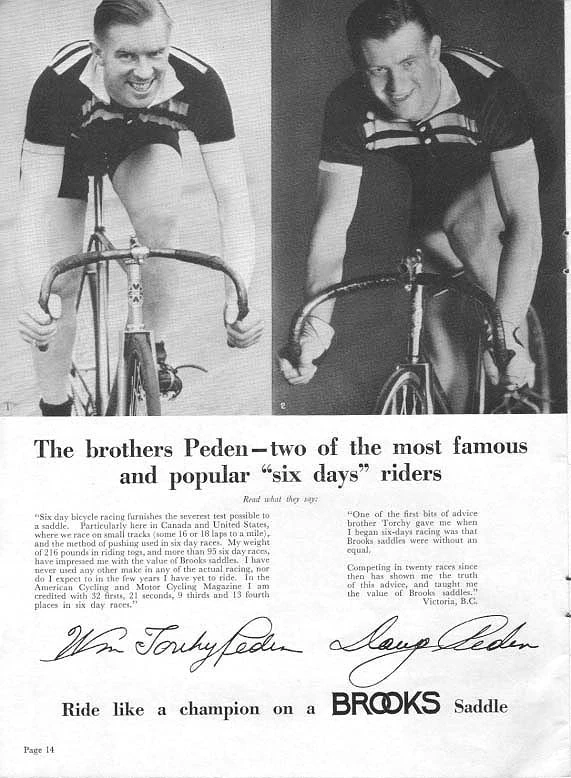
The brothers Peden—two of the most famous and popular “six days” riders
Read what they say:
“Six day bicycle racing furnishes the severest test possible to a saddle. Particularly here in Canada and United States, where we race on small tracks (some 16 or 18 laps to a mile), and the method of pushing used in six day races. My weight of 216 pounds in riding togs, and more than 95 six day races, have impressed me with the value of Brooks saddles. I have never used any other make in any of the actual racing, nor do I expect to in the few years I have yet to ride. In the American Cycling and Motor Cycling Magazine I am credited with 32 firsts, 21 seconds, 9 thirds and 13 fourth places in six day races.”
“One of the first bits of advice brother Torchy gave me when I began six-days racing was that Brooks saddles were without an equal.
Competing in twenty races since then has shown me the truth of this advice, and taught me the value of Brooks saddles.”
Victoria, B.C.
[Facsimile signatures:] Wm. Torchy Peden Doug Peden
Ride like a champion on a BROOKS Saddle
Page 14
[Testimonial page: two halftone portrait photographs side by side at top, numbered 1 and 2, of the Peden brothers in striped jerseys leaning over the drop bars of track bicycles; below, the headline, two quoted testimonials, two facsimile signatures and the slogan with the Brooks wordmark]
— Page 16 —
FOUR-WIRE LEATHER SADDLES
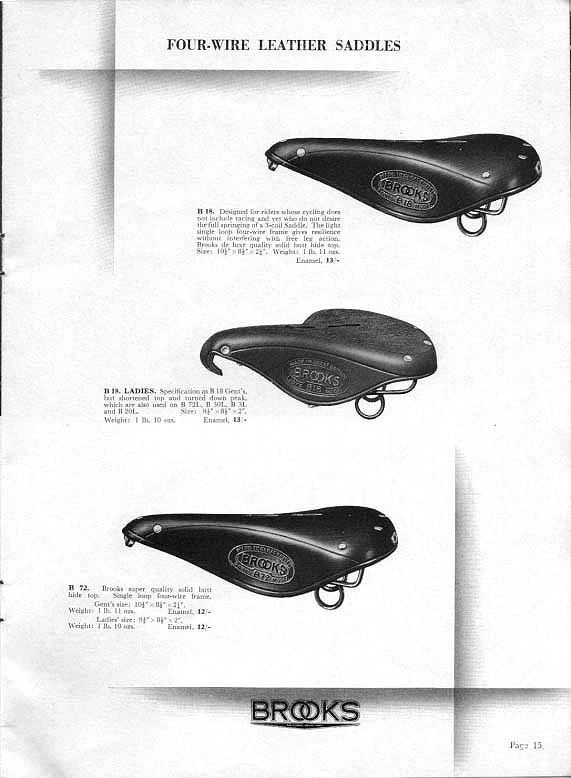
B 18. Designed for riders whose cycling does not include racing and yet who do not desire the full springing of a 3-coil Saddle. The light single loop four-wire frame gives resilience without interfering with free leg action. Brooks de luxe quality solid butt hide top. Size: 10½” × 8½” × 2½” [?]. Weight: 1 lb. 11 ozs.
Enamel, 13/-
B 18. LADIES. Specification as B 18 Gent’s, but shortened top and turned down peak, which are also used on B 72L., B 30L., B 3L and B 20L. Size: 9½” × 8½” × 2″ [?].
Weight: 1 lb. 10 ozs. Enamel, 13/-
B 72. Brooks super quality solid butt hide top. Single loop four-wire frame.
Gent’s size: 10½” × 8½” × 2½” [?].
Weight: 1 lb. 11 ozs. Enamel, 12/-
Ladies’ size: 9½” × 8½” × 2″ [?].
Weight: 1 lb. 10 ozs. Enamel, 12/-
BROOKS
Page 15
[Three halftone photographs of single-loop four-wire saddles stepped down the page: the B 18, the B 18 Ladies with a turned-down peak and the B 72, each with its specification block; Brooks wordmark on a gray shaded band at the foot; fractions are soft in the scan]
— Page 17 —
FOUR-WIRE LEATHER SADDLES (Cont.)
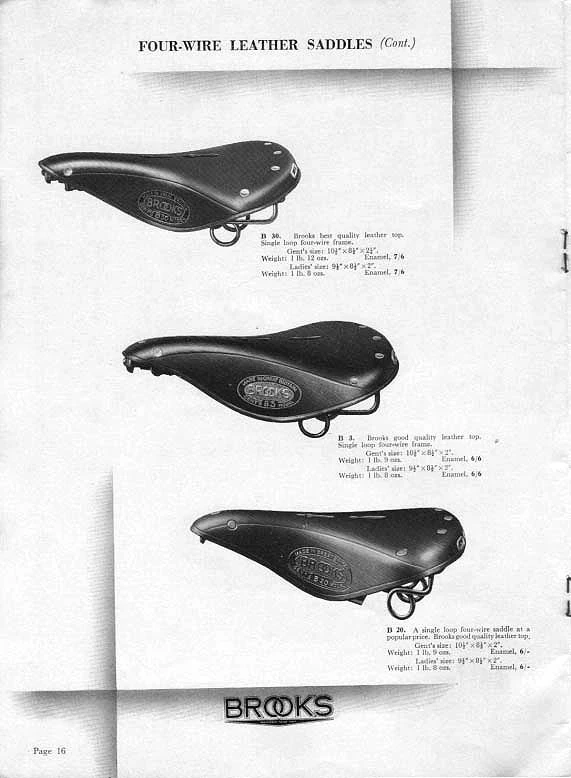
B 30. Brooks best quality leather top. Single loop four-wire frame.
Gent’s size: 10½” × 8½” × 2½” [?].
Weight: 1 lb. 12 ozs. Enamel, 7/6
Ladies’ size: 9½” × 8½” × 2″ [?].
Weight: 1 lb. 8 ozs. Enamel, 7/6
B 3. Brooks good quality leather top. Single loop four-wire frame.
Gent’s size: 10½” × 8½” × 2″ [?].
Weight: 1 lb. 9 ozs. Enamel, 6/6
Ladies’ size: 9½” × 8½” × 2″ [?].
Weight: 1 lb. 8 ozs. Enamel, 6/6
B 20. A single loop four-wire saddle at a popular price. Brooks good quality leather top.
Gent’s size: 10½” × 8½” × 2″ [?].
Weight: 1 lb. 9 ozs. Enamel, 6/-
Ladies’ size: 9½” × 8½” × 2″ [?].
Weight: 1 lb. 8 ozs. Enamel, 6/-
BROOKS
Page 16
[Three halftone photographs of single-loop four-wire saddles stepped down the page: the B 30, the B 3 and the B 20, each with its specification block at right; Brooks wordmark on a gray shaded band at the foot; small dark marks at the right edge are binding or scan artifacts; fractions are soft]
— Page 18 —
The CYCLISTS’ TOURING CLUB—by G. Herbert Stancer Secretary-Manager
PRACTICALLY every cyclist has heard of the Cyclists’ Touring Club, for eleven thousand “appointed houses” in all parts of Britain are specially authorised by the Club to exhibit the winged wheel as a sign of catering excellence. A list of these inns, farmhouses, hotels and refreshment houses is published each year in the C.T.C. Handbook and Touring Guide, which tells the touring cyclist in advance what he will have to pay for meals and accommodation. It also gives information on touring topics, cycling law, ferry charges, railway rates for cycles, reductions in fares for C.T.C. members, and many kindred matters. The Handbook is supplied only to C.T.C. members.
A special Bureau, staffed by experienced cyclists, deals solely with touring questions, and undertakes everything from the planning of tours to the buying of tickets, whilst the Foreign Travel Department saves the visitor to the Continent time, trouble and money by supplying cycle triptyques and all other documents that the cycle tourist may need for himself or his machine.
Free benefits of C.T.C. membership include legal assistance, third-party insurance, illustrated monthly magazine (The C.T.C. Gazette), free route-books of popular British touring grounds, membership of more than 250 local branches, advice on all matters connected with cycling, entry of cycles into foreign countries, as well as reduced railway and steamship fares and cycle and personal insurance premiums. Sixty years ago the Club was founded as the Bicycle Touring Club. Within ten years it had changed its name, and also won the first of its many victories on behalf of British cyclists by getting Parliament to accept the special section the C.T.C. had drafted for inclusion in the Local Government Act. This established once for all the right of cyclists to use the roads, and at the same time abolished cycling rules and regulations that varied from place to place. Since it drew up that now famous “Cyclists’ Magna Charta” the Club has grown tremendously in power, and has become the greatest cycling club in the world. Cyclists who value their present freedom to travel about the glorious British countryside will appreciate the importance of the work of the C.T.C. They will realise the significance of the fact that Britain, the only country where cycle touring has developed to any considerable extent, is the only country where such a body as the C.T.C. exists. The C.T.C. deserves support by all cyclists, for the annual subscription of ten shillings is returned with interest in services and facilities. On a single tour a member can save more than the cost of membership. Further information can be obtained from the offices, 3 Craven Hill, London W.2.
1. The air-way to cycling! 2. Rallying to the cause [?]. 3. The amazing zig-zag road up the Flam [?] Valley (Sweden) [?]. 4. A camping interlude. 5. Wolverhampton cyclists [?] in the Towy [?] Valley, nr. Ystradffin [?]. 6. The C.T.C. 8,000 ft. above sea level! Above the Col du Tourmalet.
Page 17
[Article page: a montage of six numbered halftone photographs at top showing cyclists with a bicycle beside an aircraft, a large group rally of riders, a zig-zag mountain road, campers outside tents, riders on a valley road and two figures on a snowy mountain pass; two columns of text below with italic numbered captions; caption type is very small and soft]
— Page 19 —
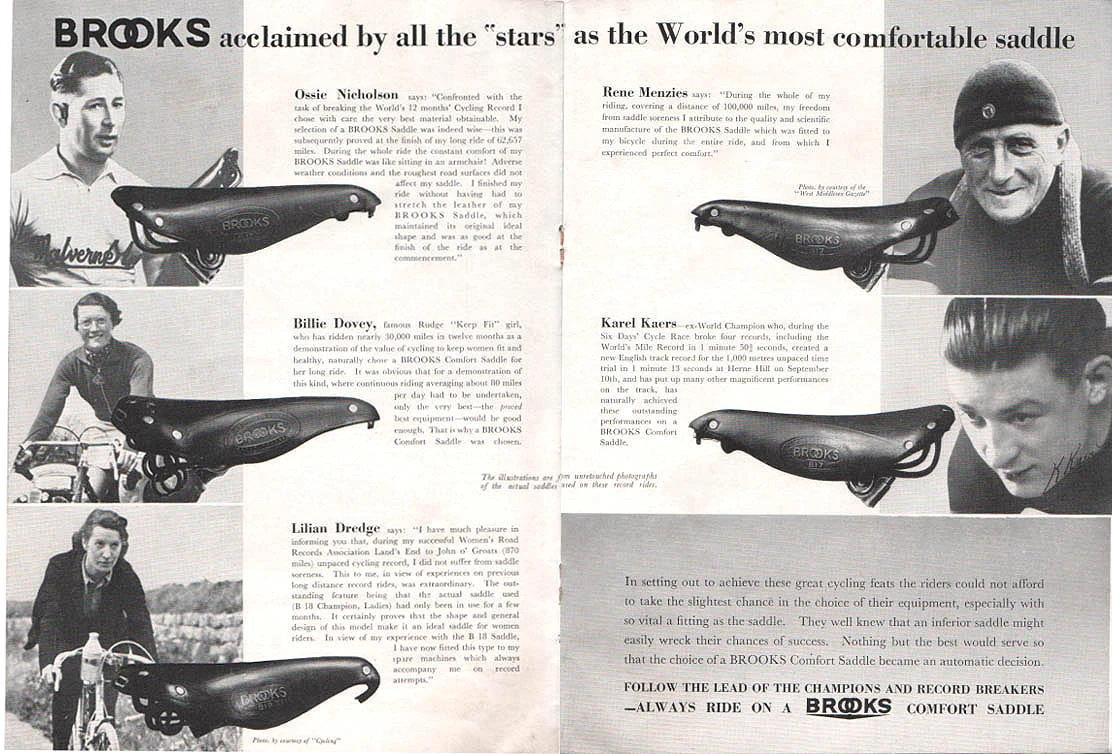
BROOKS acclaimed by all the “stars” as the World’s most comfortable saddle
Ossie Nicholson says: “Confronted with the task of breaking the World’s 12 months’ Cycling Record I chose with care the very best material obtainable. My selection of a BROOKS Saddle was indeed wise—this was subsequently proved at the finish of my long ride of 62,657 miles. During the whole ride the constant comfort of my BROOKS Saddle was like sitting in an armchair! Adverse weather conditions and the roughest road surfaces did not affect my saddle. I finished my ride without having had to stretch the leather of my BROOKS Saddle, which maintained its original ideal shape and was as good at the finish of the ride as at the commencement.”
Billie Dovey, famous Rudge “Keep Fit” girl, who has ridden nearly 30,000 miles in twelve months as a demonstration of the value of cycling to keep women fit and healthy, naturally chose a BROOKS Comfort Saddle for her long ride. It was obvious that for a demonstration of this kind, where continuous riding averaging about 80 miles per day had to be undertaken, only the very best—the proved best equipment—would be good enough. That is why a BROOKS Comfort Saddle was chosen.
The illustrations are from untouched photographs of the actual saddles used on these record rides.
Lilian Dredge says: “I have much pleasure in informing you that, during my successful Women’s Road Records Association Land’s End to John o’ Groats (870 miles) unpaced cycling record, I did not suffer from saddle soreness. This to me, in view of experiences on previous long distance record rides, was extraordinary. The outstanding feature being that the actual saddle used (B 18 Champion, Ladies) had only been in use for a few months. It certainly proves that the shape and general design of this model make it an ideal saddle for women riders. In view of my experience with the B 18 Saddle, I have now fitted this type to my spare machines which always accompany me on record attempts.”
Photo. by courtesy of “Cycling”
[Right-hand page]
Rene Menzies says: “During the whole of my riding, covering a distance of 100,000 miles, my freedom from saddle soreness I attribute to the quality and scientific manufacture of the BROOKS Saddle which was fitted to my bicycle during the entire ride, and from which I experienced perfect comfort.”
Photo. by courtesy of the “West Middlesex Gazette”
Karel Kaers—ex-World Champion who, during the Six Days’ Cycle Race broke four records, including the World’s Mile Record in 1 minute 50⅗ [?] seconds, created a new English track record for the 1,000 metres unpaced time trial in 1 minute 13 seconds at Herne Hill on September 10th, and has put up many other magnificent performances on the track, has naturally achieved these outstanding performances on a BROOKS Comfort Saddle.
In setting out to achieve these great cycling feats the riders could not afford to take the slightest chance in the choice of their equipment, especially with so vital a fitting as the saddle. They well knew that an inferior saddle might easily wreck their chances of success. Nothing but the best would serve so that the choice of a BROOKS Comfort Saddle became an automatic decision.
FOLLOW THE LEAD OF THE CHAMPIONS AND RECORD BREAKERS—ALWAYS RIDE ON A BROOKS COMFORT SADDLE
[A two-page testimonial spread under one headline: at left, halftone portraits of Ossie Nicholson in a Malvern Star jersey, Billie Dovey on a bicycle and Lilian Dredge with her machine, each beside a photograph of her or his worn saddle (one stamped B 18 L); at right, Rene Menzies in a cap and Karel Kaers with a signature, beside B 17 saddles, and a gray closing panel; no printed folios]
— Page 20 —
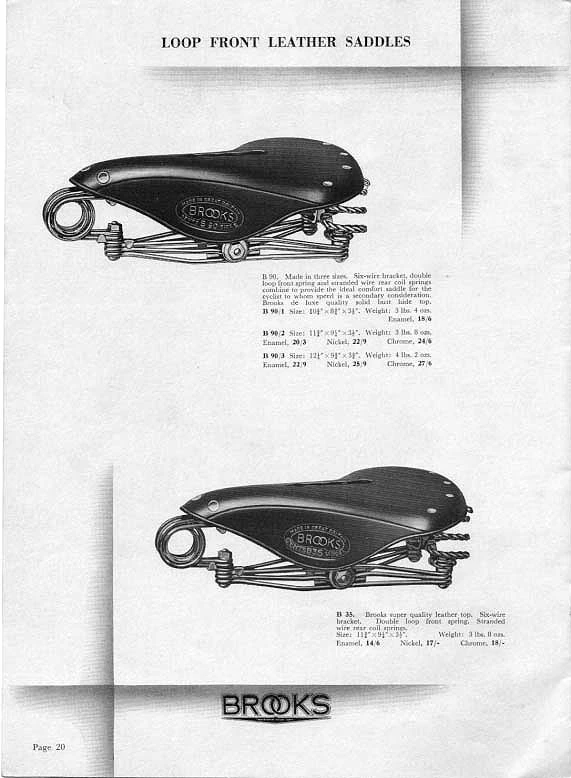
LOOP FRONT LEATHER SADDLES
B 90. Made in three sizes. Six-wire bracket, double loop front spring and stranded wire rear coil springs combine to provide the ideal comfort saddle for the cyclist to whom speed is a secondary consideration. Brooks de luxe quality solid butt hide top.
B 90/1 Size: 10½” × 8½” × 3½” [?]. Weight: 3 lbs. 4 ozs.
Enamel, 18/6
B 90/2 Size: 11½” × 9½” × 3½” [?]. Weight: 3 lbs. 8 ozs.
Enamel, 20/3 Nickel, 22/9 Chrome, 24/6
B 90/3 Size: 12½” × 9½” × 3½” [?]. Weight: 4 lbs. 2 ozs.
Enamel, 22/9 Nickel, 25/9 Chrome, 27/6
B 35. Brooks super quality leather top. Six-wire bracket. Double loop front spring. Stranded wire rear coil springs.
Size: 11½” × 9½” × 3½” [?]. Weight: 3 lbs. 8 ozs.
Enamel, 14/6 Nickel, 17/- Chrome, 18/-
BROOKS
Page 20
[Two halftone photographs of large loop-front saddles with double coiled front springs, six-wire frames and stranded rear coils: the B 90 at top and the B 35 below, each with its specification block; Brooks wordmark on a gray shaded band at the foot; fractions are soft in the scan]
— Page 21 —
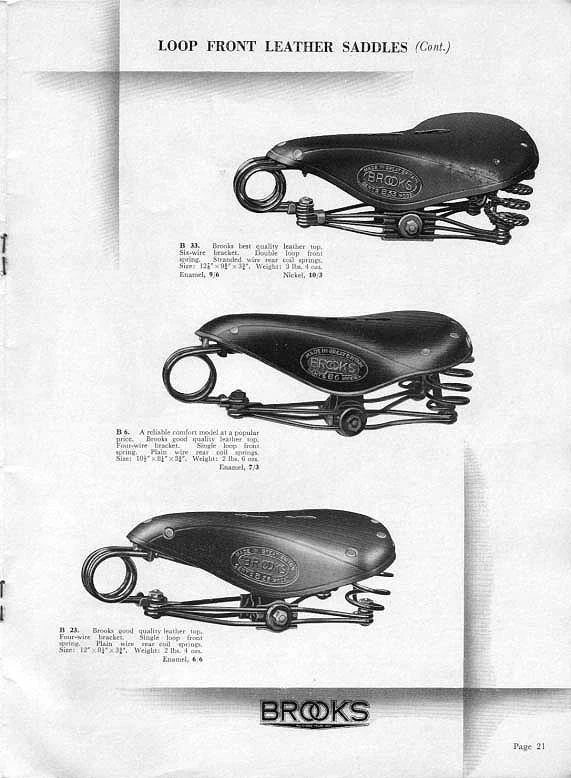
LOOP FRONT LEATHER SADDLES (Cont.)
B 33. Brooks best quality leather top. Six-wire bracket. Double loop front spring. Stranded wire rear coil springs.
Size: 12½” × 9½” × 3½” [?]. Weight: 3 lbs. 4 ozs.
Enamel, 9/6 Nickel, 10/3
B 6. A reliable comfort model at a popular price. Brooks good quality leather top. Four-wire bracket. Single loop front spring. Plain wire rear coil springs.
Size: 10½” × 8½” × 3½” [?]. Weight: 2 lbs. 6 ozs.
Enamel, 7/3
B 23. Brooks good quality leather top. Four-wire bracket. Single loop front spring. Plain wire rear coil springs.
Size: 12″ × 8½” × 3½” [?]. Weight: 2 lbs. 4 ozs.
Enamel, 6/6
BROOKS
Page 21
[Three halftone photographs of loop-front sprung saddles stepped down the page: the B 33 with stranded rear coils, the B 6 and the B 23, each with its specification block; Brooks wordmark on a gray shaded band at the foot; small dark marks at the left edge are binding or scan artifacts]
— Page 22 —
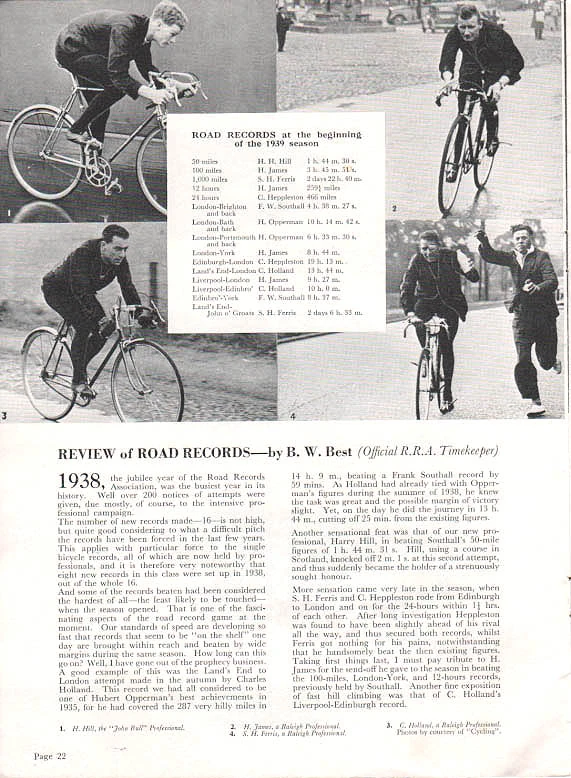
ROAD RECORDS at the beginning of the 1939 season
50 miles H. H. Hill 1 h. 44 m. 30 s. [?]
100 miles H. James 3 h. 45 m. 51⅘ [?] s.
1,000 miles S. H. Ferris 2 days 22 h. 40 m.
12 hours H. James 259¼ [?] miles
24 hours C. Heppleston 466 miles
London-Brighton and back F. W. Southall 4 h. 38 m. 27 s.
London-Bath and back H. Opperman 10 h. 14 m. 42 s.
London-Portsmouth and back H. Opperman 6 h. 33 m. 30 s.
London-York H. James 8 h. 44 m.
Edinburgh-London C. Heppleston 19 h. 13 m.
Land’s End-London C. Holland 13 h. 44 m.
Liverpool-London H. James 9 h. 27 m.
Liverpool-Edinbro’ C. Holland 10 h. 0 m.
Edinbro’-York F. W. Southall 8 h. 37 m. [?]
Land’s End-John o’ Groats S. H. Ferris 2 days 6 h. 33 m.
REVIEW of ROAD RECORDS—by B. W. Best (Official R.R.A. Timekeeper)
1938, the jubilee year of the Road Records Association, was the busiest year in its history. Well over 200 notices of attempts were given, due mostly, of course, to the intensive professional campaign.
The number of new records made—16—is not high, but quite good considering to what a difficult pitch the records have been forced in the last few years. This applies with particular force to the single bicycle records, all of which are now held by professionals, and it is therefore very noteworthy that eight new records in this class were set up in 1938, out of the whole 16.
And some of the records beaten had been considered the hardest of all—the least likely to be touched—when the season opened. That is one of the fascinating aspects of the road record game at the moment. Our standards of speed are developing so fast that records that seem to be “on the shelf” one day are brought within reach and beaten by wide margins during the same season. How long can this go on? Well, I have gone out of the prophecy business. A good example of this was the Land’s End to London attempt made in the autumn by Charles Holland. This record we had all considered to be one of Hubert Opperman’s best achievements in 1935, for he had covered the 287 very hilly miles in 14 h. 9 m., beating a Frank Southall record by 59 mins. As Holland had already tied with Opperman’s figures during the summer of 1938, he knew the task was great and the possible margin of victory slight. Yet, on the day he did the journey in 13 h. 44 m., cutting off 25 min. from the existing figures.
Another sensational feat was that of our new professional, Harry Hill, in beating Southall’s 50-mile figures of 1 h. 44 m. 31 s. [?] Hill, using a course in Scotland, knocked off 2 m. 1 s. at this second attempt, and thus suddenly became the holder of a strenuously sought honour.
More sensation came very late in the season, when S. H. Ferris and C. Heppleston rode from Edinburgh to London and on for the 24-hours within 1½ [?] hrs. of each other. After long investigation Heppleston was found to have been slightly ahead of his rival all the way, and thus secured both records, whilst Ferris got nothing for his pains, notwithstanding that he handsomely beat the then existing figures. Taking first things last, I must pay tribute to H. James for the send-off he gave to the season in beating the 100-miles, London-York, and 12-hours records, previously held by Southall. Another fine exposition of fast hill climbing was that of C. Holland’s Liverpool-Edinburgh record.
1. H. Hill, the “John Bull” Professional. 2. H. James, a Raleigh Professional. 4. S. H. Ferris, a Raleigh Professional. 3. C. Holland, a Raleigh Professional. Photos by courtesy of “Cycling”.
Page 22
[Article page: four numbered halftone photographs at top of professional record riders on road bicycles, one rider being pushed off by a helper, around a white inset table of road records; two columns of text below with italic captions; small type is soft and some fractions are uncertain]
— Page 23 —
HAMMOCK LEATHER SADDLES
B 80. Utilising more than 6 feet of wire this superb release hammock model is in great demand overseas where rough roads and tracks impose the need for an out of the ordinary standard of comfort. Brooks de luxe quality solid butt hide top. Hammock-spring frame with front and rear loops and auxiliary steadying springs. Size 11½” × 9½” × 4″ [?]. Weight: 4 lbs.
Enamel, 19/9 Nickel, 22/6 Chrome, 24/3
B 12. Release hammock saddle. Brooks super quality leather top. Hammock spring frame with front and rear loops.
Size: 11½” × 9½” × 4″ [?]. Weight: 3 lbs. 10 ozs.
Enamel, 14/3 Nickel, 16/6 Chrome, 18/-
BROOKS
Page 23
[Two halftone photographs of release hammock saddles with long wire frames, coiled front loops and large rear drum springs: the B 80 at top and the B 12 below, each with its specification block; Brooks wordmark on a gray shaded band at the foot; a small dark speck above the upper saddle]
— Page 24 —
TENSION COIL LEATHER SADDLES
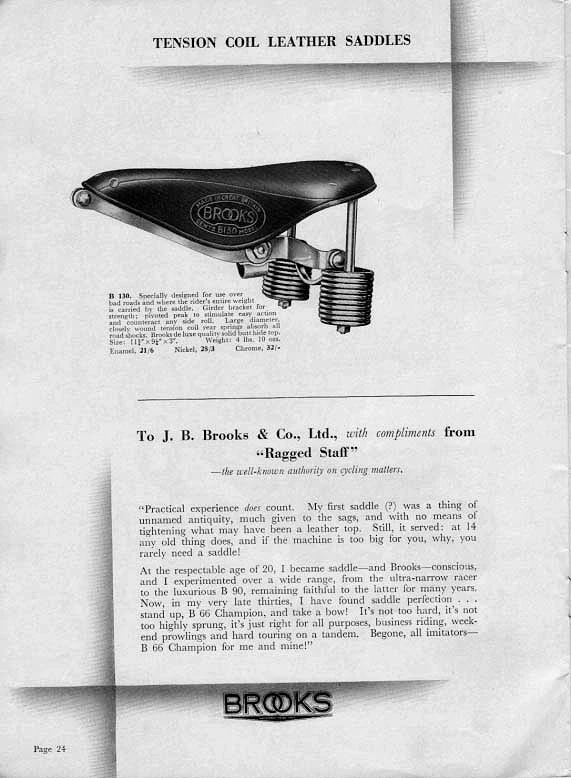
B 130. Specially designed for use over bad roads and where the rider’s entire weight is carried by the saddle. Girder bracket for strength; pivoted peak to stimulate easy action and counteract any side roll. Large diameter, closely wound tension coil rear springs absorb all road shocks. Brooks de luxe quality solid butt hide top.
Size: 11½” × 9½” × 3″ [?]. Weight: 4 lbs. 10 ozs.
Enamel, 21/6 Nickel, 28/3 Chrome, 32/-
To J. B. Brooks & Co., Ltd., with compliments from “Ragged Staff”
—the well-known authority on cycling matters.
“Practical experience does count. My first saddle (?) was a thing of unnamed antiquity, much given to the sags, and with no means of tightening what may have been a leather top. Still, it served: at 14 any old thing does, and if the machine is too big for you, why, you rarely need a saddle!
At the respectable age of 20, I became saddle—and Brooks—conscious, and I experimented over a wide range, from the ultra-narrow racer to the luxurious B 90, remaining faithful to the latter for many years. Now, in my very late thirties, I have found saddle perfection . . . stand up, B 66 Champion, and take a bow! It’s not too hard, it’s not too highly sprung, it’s just right for all purposes, business riding, week-end prowlings and hard touring on a tandem. Begone, all imitators—B 66 Champion for me and mine!”
BROOKS
Page 24
[Upper half: a halftone photograph of the B 130 saddle on a girder bracket with two large tension coil rear springs, with its specification block; a rule; lower half: the “Ragged Staff” testimonial set in larger type; Brooks wordmark on a gray shaded band at the foot]
— Page 25 —
JUVENILE LEATHER SADDLES
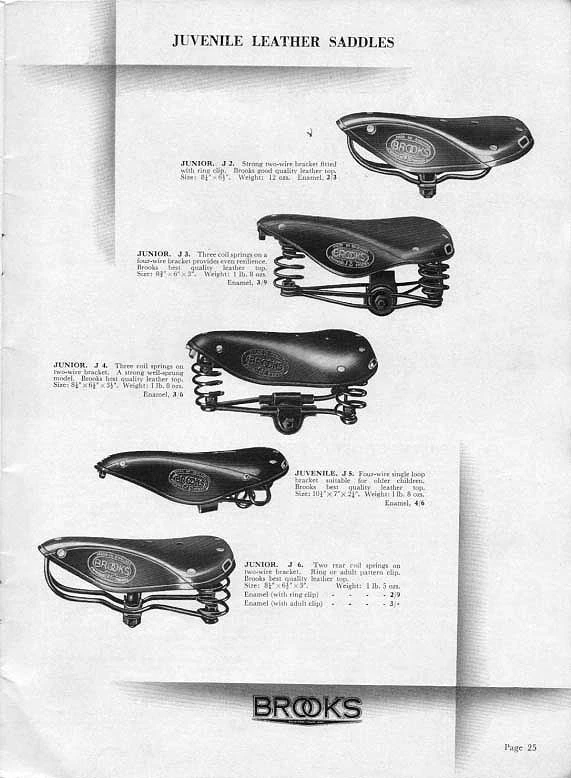
JUNIOR. J 2. Strong two-wire bracket fitted with ring clip. Brooks good quality leather top. Size: 8½” × 6½” [?]. Weight: 12 ozs. Enamel, 2/3
JUNIOR. J 3. Three coil springs on a four-wire bracket provides even resilience. Brooks best quality leather top. Size: 8½” × 6″ × 2″ [?]. Weight: 1 lb. 8 ozs.
Enamel, 3/9
JUNIOR. J 4. Three coil springs on two-wire bracket. A strong well-sprung model. Brooks best quality leather top. Size: 8½” × 6½” × 3½” [?]. Weight: 1 lb. 6 ozs. [?]
Enamel, 3/6
JUVENILE. J 5. Four-wire single loop bracket suitable for older children. Brooks best quality leather top. Size: 10½” × 7″ × 2½” [?]. Weight: 1 lb. 8 ozs.
Enamel, 4/6
JUNIOR. J 6. Two rear coil springs on two-wire bracket. Ring or adult pattern clip. Brooks best quality leather top.
Size: 8½” × 6½” × 3″ [?]. Weight: 1 lb. 5 ozs.
Enamel (with ring clip) – – – – 2/9
Enamel (with adult clip) – – – – 3/-
BROOKS
Page 25
[Five halftone photographs of small children’s saddles zigzagging down the page: the J 2, the three-coil J 3 and J 4, the single-loop J 5 and the two-coil J 6, each with its specification block; Brooks wordmark on a gray shaded band at the foot; a small pen or pencil tick near the top saddle]
— Page 26 —
1
2
3
4
The NATIONAL CYCLISTS’ UNION—by H. N. CROWE, B.A., F.C.I.S.
CYCLING, perhaps more than any other pastime, attracts all sorts of people who practise the art in all sorts of ways. Some regard it purely as an athletic exercise; the mobility of the bicycle appeals to others who use it to take them off the beaten track; others again ride a bicycle because it is easy, more convenient, and the cheapest form of transport. The only thing they have in common is the good health which regular cycling brings.
A national cycling organisation, therefore, if it is to be really “national”, must cater for all—a difficult job, but I think the N.C.U. “fills the bill”.
First of all, any cyclist might become involved in an accident, so the N.C.U. provides legal advice and assistance, and if an accident occurs, the member reports it to the Union, who do the rest.
Next, third-party insurance. Cyclists are only human, and sometimes make mistakes which cause injury or damage; this is where the third-party insurance comes in. The N.C.U.’s Insurance Company looks after the claim, and it costs the member nothing beyond his subscription.
Now let us see what the N.C.U. has to offer pleasure cyclists. They like to cycle on their holidays, take long week-ends occasionally, so the N.C.U. has a Touring Department which will supply a route for a day, a week-end, a week, or for as long as the member wants. It will tell him what to see and the best way to get to his destination. The Touring Department will lend maps; often provide special vouchers for cheaper fares, and supply a copy of the Touring Handbook to show where to stay and what to pay.
If our tourist wants to go abroad, the N.C.U. can supply a triptyque which will take his bicycle through the Customs without payment of duty. Routes, of course, are supplied, together with full information regarding the rules and customs of the countries visited.
“But we are not always touring”, you may object. Of course not, but all the year round the N.C.U. Centres are organising Rallies and other social functions for members, and in many places there are Private Members’ Runs Associations which offer a full Club programme.
Thus the N.C.U. can help you to get more out of cycling; there are, of course, other privileges, and full particulars will be sent if you apply for membership to 35 Doughty Street, W.C.1.
In the meantime, Happy Wheeling.
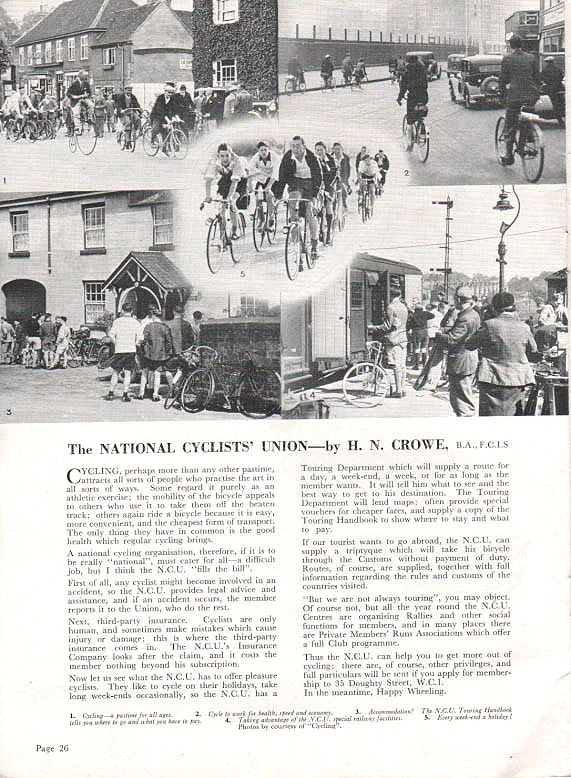
1. Cycling—a pastime for all ages. 2. Cycle to work for health, speed and economy. 3. Accommodation? The N.C.U. Touring Handbook tells you where to go and what you have to pay. 4. Taking advantage of the N.C.U. special railway facilities. 5. Every week-end a holiday!
Photos by courtesy of “Cycling”.
Page 26
[A page with a collage of five numbered black-and-white photographs at top: a club run on a street, a road traffic scene, riders in a group, cyclists outside an inn and cyclists at a railway luggage van; below, a two-column article by H. N. Crowe with numbered captions and the printed folio Page 26.]
— Page 27 —
SPRING SEATS
a BROOKS speciality
A
B
C
D
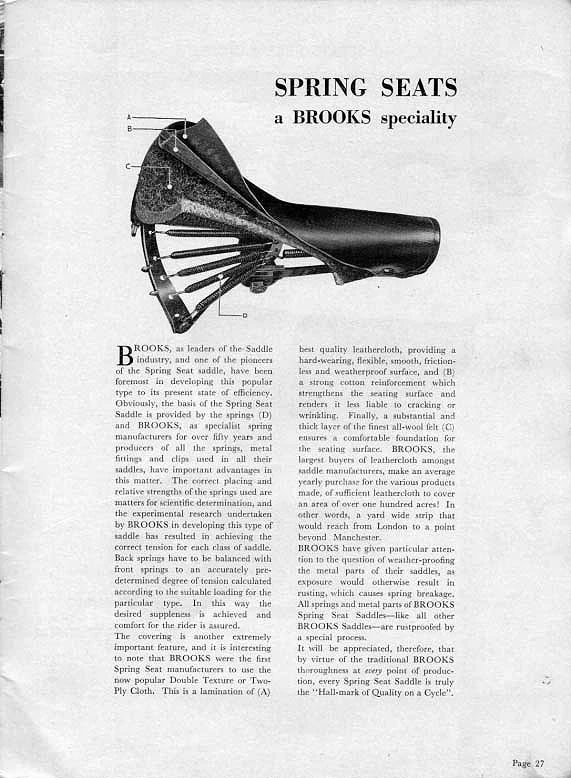
BROOKS, as leaders of the Saddle industry, and one of the pioneers of the Spring Seat saddle, have been foremost in developing this popular type to its present state of efficiency. Obviously, the basis of the Spring Seat Saddle is provided by the springs (D) and BROOKS, as specialist spring manufacturers for over fifty years and producers of all the springs, metal fittings and clips used in all their saddles, have important advantages in this matter. The correct placing and relative strengths of the springs used are matters for scientific determination, and the experimental research undertaken by BROOKS in developing this type of saddle has resulted in achieving the correct tension for each class of saddle. Back springs have to be balanced with front springs to an accurately predetermined degree of tension calculated according to the suitable loading for the particular type. In this way the desired suppleness is achieved and comfort for the rider is assured.
The covering is another extremely important feature, and it is interesting to note that BROOKS were the first Spring Seat manufacturers to use the now popular Double Texture or Two-Ply Cloth. This is a lamination of (A) best quality leathercloth, providing a hard-wearing, flexible, smooth, frictionless and weatherproof surface, and (B) a strong cotton reinforcement which strengthens the seating surface and renders it less liable to cracking or wrinkling. Finally, a substantial and thick layer of the finest all-wool felt (C) ensures a comfortable foundation for the seating surface. BROOKS, the largest buyers of leathercloth amongst saddle manufacturers, make an average yearly purchase for the various products made, of sufficient leathercloth to cover an area of over one hundred acres! In other words, a yard wide strip that would reach from London to a point beyond Manchester.
BROOKS have given particular attention to the question of weather-proofing the metal parts of their saddles, as exposure would otherwise result in rusting, which causes spring breakage. All springs and metal parts of BROOKS Spring Seat Saddles—like all other BROOKS Saddles—are rustproofed by a special process.
It will be appreciated, therefore, that by virtue of the traditional BROOKS thoroughness at every point of production, every Spring Seat Saddle is truly the “Hall-mark of Quality on a Cycle”.
Page 27
[A page with a photograph of a spring seat saddle cut away in layers, lettered A to D for the leathercloth, cotton backing, felt and springs; below, a two-column article on spring seat construction and the printed folio Page 27.]
— Page 28 —
SPRING SEAT SADDLES
S 25/NH. The narrowest of the Spring Seat range. Brooks super quality butt hide top on Suplex spring mattress; all-wool felt interlay. Two-wire frame. Size: 10¾” × 6¾” × 2¼” [?]. Weight: 2 lbs. Enamel, 11/6
S 30/N. Rigid girder frame. Brooks super quality double texture black weatherproof leathercloth top on Suplex spring mattress; all-wool felt interlay. Size: 10¾” × 7″ × 3″ [?]. Weight: 2 lbs. 1 oz. Enamel, 8/9
S 30/1. Rigid girder frame. Brooks super quality double texture black weatherproof leathercloth on Suplex spring mattress; all-wool felt interlay. Size: 10¾” × 8¼” × 3″ [?]. Weight: 2 lbs. 3 ozs. Enamel, 9/-
BROOKS
Page 28
[A page with three photographs of black spring seat saddles stepped down the page, the S 25/NH, S 30/N and S 30/1, each with a specification block; the BROOKS logo at foot over a faint folded-paper background and the printed folio Page 28.]
— Page 29 —
SPRING SEAT SADDLES (Cont.)
S 20/1H. The four-wire bracket and three-coil springs give additional resilience. Brooks super quality leather over Suplex spring mattress; all-wool felt interlay. Size: 10¾” × 8″ × 3½” [?]. Weight: 2 lbs. 10 ozs. Enamel, 12/6
S 20/1. Four-wire bracket and two-coil springs. Brooks super quality double texture black weatherproof leathercloth top on Suplex spring mattress; all-wool felt interlay. Size: 10″ × 8″ × 3½” [?]. Weight: 2 lbs. 8 ozs. Enamel, 11/-
S 20/2. Girder bracket; three coil springs, front being shallow, rear large diameter to obviate side roll. Brooks super quality double texture black weatherproof leathercloth top on Suplex spring mattress; all-wool felt interlay. Size: 11″ × 11″ × 3¾” [?]. Weight: 3 lbs. 12 ozs. Enamel, 13/-. With nickel rear coils, 13/-. Nickel, 13/6
BROOKS
Page 29
[A page with three photographs of black coil-sprung spring seat saddles, the S 20/1H, S 20/1 and S 20/2, each with a specification block; the BROOKS logo at foot over a faint folded-paper background and the printed folio Page 29.]
— Page 30 —
1
2
3
4
5
TRACK RACING . . . by B. W. BEST (The Cyclist)
FLYING around the oval track time after time, the riders fight each other, gaining or losing inch by inch as the finishing line is neared. All the time tens of thousands of excited “fans” raise pandemonium with their shouting, which reaches a crescendo as the winning line is crossed.
Victory or defeat, it has been a wonderful spectacle, and it is seen under ideal conditions if the track is modern. Not too big—say up to a quarter-mile to the lap—steeply banked for speed with safety, and also to enable the spectators to see everything without interference with their view.
The world has many such arenas. Western Europe has the bulk of them, and France is the best equipped. In Britain the work of establishing suitable tracks is progressing, and the day is not far distant when we shall be able to vie with the foreigners in the vital matter of the track. And having thus equipped ourselves, we shall undoubtedly produce a world-beater as well. We are at present making headway in those branches of track sport for which a rider can train on the road, such as pursuit riding, which requires pure unpaced speed and strength. G. H. Fleming, our most successful rider in pursuits during 1938, has proved himself more than equal to some of the best amateurs abroad.
At pure sprinting we do not shine so well, but thousands of sports-followers were highly pleased when Denis Horn, our best sprinter for six years, won his first sprint championship in 1938.
Other championships in 1938 resulted:—25 miles, W. W. Maxfield; 50 miles, R. W. Shand; 1-mile tandem, R. Meller and F. W. Tickler. On grass tracks the titles were won as follows:—Half-mile, W. W. Maxfield; 5 miles, G. A. Newbery.
Two notable track records made in England in 1938 were the professional 1-hour unpaced by H. H. Hill, who covered 26 miles 879 yards at Paddington, London, and the amateur 1-hour motor-paced by H. Oxley, who rode 41 miles 1,634 yards at Herne Hill, London.
The world’s track championships at Amsterdam, Holland, provided one first-class sensation, when Jeff Scherens, the Belgian who won the professional sprint championship for the previous six years, was beaten by the Dutch rider, Arie Van Vliet. Both men have appeared several times in this country. The amateur sprint championship also held some interest for Englishmen, for the winner, J. Van der Vyver, has been a frequent visitor to England since winning the corresponding event in 1937. As he has now become a professional, he will not find it so easy to continue at the top.
1. A motor-paced race in progress. 2. The start of a heat in an important North Country meeting. 3. H. H. Hill, the “John Bull” Professional, putting up the Hour Record at Paddington. 4. Cycle Sprinters in action. 5. K. Kaers [?] motor-paced at Herne Hill.
Photos Nos. 1 and 4 by courtesy of “Cycling”; Nos. 2 and 5 by courtesy of “The Cyclist”; No. 3 by courtesy of “The Bicycle”.
Page 30
[A page with a collage of five numbered black-and-white track racing photographs at top: motor-paced riders behind pacing motorcycles, a heat start, a rider on a track bicycle and a bunch of sprinters; below, a two-column article by B. W. Best with numbered captions and the printed folio Page 30.]
— Page 31 —
1
2
3
4
5
CYCLING FOR WOMEN IS “THE” THING! . . .
says Billie Dovey, the Rudge-Whitworth “Keep Fit” Girl, who rode a 1938 year’s demonstration ride of nearly 30,000 miles in twelve months to prove it! . . . .
WITHOUT hesitation I ask you to take little or no notice of people who would have you believe that cycling for females is . . . “not quite the thing” . . . Why, cycling is “THE” very thing for women and girls!
Before I wholeheartedly decided cycling was “THE” game for me, I was very interested in athletics, swimming and gymnastics generally. But the desire to travel and see some of the pretty corners of our England was always there. So, being healthy, energetic and full of enthusiasm, I went walking and rambling. I found there is little so satisfying as freedom to wander about the countryside. I wanted to go farther afield. It was then that I decided to harness my energy to a bicycle, and ride “far and frequently”.
I wanted to be free from time-tables; to go from my own door into the country and back again under my own power, independent of other forms of travel. Most other club-girls will agree that there is little to compare with the pleasant amazement of one’s first really long ride among the lanes and hedgerows.
* * * *
Yes, there is little doubt about it, this cycling became a happy habit that grew on me. Before long I found myself riding regularly each week-end with a “mixed” club in my district. Girls, you will find yourselves quickly at home in any good “mixed” club, and the male members are usually most helpful with advice.
Touring and club-riding present every attraction to women, and during the next few years I feel certain that many more of our sex will realise that cycling offers them the best value.
* * * *
Our cycling girl is often puzzled just what to wear. No cycling girl should be without a divided skirt, but this garment, as with shorts or a plus-four suit, must essentially be “made-to-measure”. If you have never worn a divided skirt don’t express your opinion until you have tried one. I have worn all kinds of dress, e.g., velvet cord shorts and zipp-wind-jacket; plus-four suit; divided skirt and zipp-jacket, etc. The first-named are my favourites, but I find far less public criticism with my divided skirt.
* * * *
Last year I cycled to most parts of the country, and everywhere found women’s cycling “THE” thing. There’s no denying it . . . more young girls are riding bicycles, and they are going to be that much better for it too!
Page 31
[A page with a collage of five numbered black-and-white photographs of a woman cyclist: with a policeman, with a guardsman in a bearskin, an oval portrait, riding near Big Ben and riding toward the camera on a London street; below, a two-column first-person article and the printed folio Page 31. No caption key is printed.]
— Page 32 —
1
2
3
4
5
MASSED START RACING—by W. J. MILLS, Editor of The Bicycle
ON a summer’s day in 1932 two Englishmen sat talking on a grass bank at the side of the Via Appia, looking back towards Rome.
And out of that talk, massed-start racing in England was born.
The two Englishmen were A. V. Jenner and I, and we agreed that Englishmen would never succeed in the massed-start style until they had the opportunity of competing under the same conditions at home. Returning from Italy we went straight to work to organise a massed-start race in England. A Venue? Brooklands Motor Circuit offered itself as the only piece of enclosed road near London. With some timidity we approached the Brooklands Automobile Racing Club, who extended a very warm sympathy and a ready willingness to help. In the summer of 1933, the first massed-start road event was held. Those who were present will remember the torrential downpour that marked the afternoon. The course chosen might, on a fine day, have been a fair one, but with rain making the surface greasy, the notorious one-in-four Test Hill brought most of the field to their feet.
If the weather had frowned on massed-start racing, riders and spectators were not discouraged; and from that date it has become an integral part of the English cycling programme.
Soon Midland and Northern cyclists wanted to try their hands . . . or rather their legs . . . at this new type of sport, so Donington Park was requisitioned. In the Isle of Man, local cyclists saw their opportunity of putting on an event which would compare with the famous motor-cycle T.T.’s, and so the Isle of Man Bicycle Race emerged.
It is, perhaps, in the Island where massed-start racing is seen at its best. Here, actual road conditions make it a stern test, whereas circuit racing, even at its best, smacks somewhat of the artificial. The long climb up The Mountain in the Island is the severest test of rider and machine that can be imagined, and it is here where the race is won and lost.
The 1939 programme has been planned to produce a world beater, for it is everybody’s ambition to see a Britisher win the world’s cycling road championship. We have sent teams in the past, who, trained on time trials alone, have not had even a remote chance of winning. But in recent years, as our men acquired more experience at massed-start racing, so they have mounted up the international scale; and soon we shall see the coveted title back in British hands.
1. A massed start race on the Brooklands circuit. 2. World’s Professional massed start road championship in Holland. 3. Rounding Ramsey Hairpin in the Isle of Man T.T. 4. Another view of Brooklands racing. 5. Hill climbing in the Isle of Man T.T.
Photos Nos. 1 and 5 by courtesy of “The Bicycle”; Nos. 2 and 3 by courtesy of “The Cyclist”; No. 4 by courtesy of “Cycling”.
Page 32
[A page with a collage of five numbered black-and-white photographs of massed-start road racing: packs of riders on a circuit, a climb watched by spectators and riders rounding a bend; below, a two-column article by W. J. Mills with numbered captions and the printed folio Page 32.]
— Page 33 —
Concerning WEATHERPROOF saddles
AS specialists in the production of the best type of saddle for every requirement, BROOKS are able to offer those riders, whose particular duties necessitate it, the ideal weatherproof model. This model is particularly suited to the requirements of such riders as postmen, messenger boys, or others whose riding on cycles and carrier outfits in all weathers frequently involves leaving the saddle exposed to the elements. To produce a saddle that really will stand up to exceptional demands of this description, BROOKS have successfully produced the special weatherproof top—known as Plyflex—the advantages of which are shown by the accompanying sectional view.
1.
2.
3.
4.
5.
The advantages of using leather as a basis are many, the chief being the durable foundation given to the saddle. Leather also provides the correct degree of tension necessary for comfort, whilst retaining the perfect shape in spite of the very hard usage meted out to this type of saddle. On the BROOKS Plyflex saddle, the exterior weatherproof covering (1) is best quality leathercloth, a material that provides a smooth, frictionless, non-clinging, flexible and hard-wearing surface. This outer weatherproof covering is supported by a strong cotton reinforcement (2) which adds strength to the seating surface and further enhances the non-cracking properties of the leathercloth. Stout Duck Canvas (3) is interposed between the outer surfacing materials and the leather basis to ensure still greater strength and weatherproof qualities. The manifold advantages of the leather foundation (4) have already been dealt with, and in order to give added strength, a layer of fine, square weave, sealed Egyptian Cotton (5) is included on the underside of the saddle for this purpose and also acts as a guard against excessive mud and water thrown up from the road.
In common with all BROOKS Saddles, the metal parts are rust-proofed by a special BROOKS process so that in every conceivable way the BROOKS Plyflex Saddle meets all requirements. Proof of the popularity of these weatherproof saddles is shown by the many big contracts received on behalf of important official organisations. Where a weatherproof saddle is necessary because of the type of service, then BROOKS Plyflex is the obvious and wise choice.
BROOKS
Page 33
[A text page with a drawing of a saddle top peeled back into five numbered layers, from leathercloth to Egyptian cotton, set among the text; the BROOKS logo at foot over a faint folded-paper background and the printed folio Page 33, bound here after printed pages 34 and 35.]
— Page 34 —
WEATHERPROOF SADDLES
P 205. Four-wire bracket. Three large diameter, fine pitch coil springs. Plyflex patent weatherproof top, moulded multi-ply construction; stout leather foundation. Size: 10¾” × 8¼” × 3½” [?]. Weight: 2 lbs. 6 ozs. Enamel, 9/9
P 205. LADIES. Specification as Gent’s, P 205, but with shortened top and turned down peak. Size: 9¾” × 8¼” × 3½” [?]. Weight: 2 lbs. 5 ozs. Enamel, 9/9
P 208. Specially designed for use on carrier bicycles. Girder bracket. Three large strong coil springs. Plyflex patent weatherproof top, moulded multi-ply construction; stout leather foundation. Size: 10¾” × 8¼” × 3½” [?]. Weight: 3 lbs. Enamel, 10/3
BROOKS
Page 34
[A page with three photographs of black coil-sprung Plyflex saddles with oval Plyflex name badges, the P 205 gents, P 205 ladies and P 208 carrier saddle, each with a specification block; the BROOKS logo at foot over a faint folded-paper background and the printed folio Page 34.]
— Page 35 —
WEATHERPROOF SADDLES (Cont.)
P 209. The sports-type weatherproof saddle. Two-wire frame. Plyflex patent weatherproof top, moulded multi-ply construction; stout leather foundation. Size: 11″ × 6″ × 2¼” [?]. Weight: 1 lb. 11 ozs. Enamel, 9/6
P 207. Six-wire bracket. Double loop front spring. Stranded wire rear coil springs. Plyflex patent weatherproof top, moulded multi-ply construction; stout leather foundation. Size: 11¾” × 9¼” × 3½” [?]. Weight: 3 lbs. 10 ozs. Enamel, 14/6
P 211. Release Hammock saddle as B 12. Plyflex patent weatherproof top, moulded multi-ply construction; stout leather foundation. Size: 11¾” × 9¼” × 4″ [?]. Weight: 3 lbs. 12 ozs. Enamel, 14/9
BROOKS
Page 35
[A page with three photographs of black Plyflex weatherproof saddles with oval name badges, the P 209 sports saddle, the P 207 with double loop front spring and the P 211 release hammock saddle with large looped springs, each with a specification block; the BROOKS logo at foot and the printed folio Page 35.]
— Page 36 —
1
2
3
4
5
INTERNATIONAL SIX DAYS CYCLE RACE . . .
SIX-days Cycle Races, promoted often enough on the Continent, are not so frequently staged in this country so that great public interest is focussed on the International meeting at Wembley. For the 1938 “Six-days” at the Empire Pool and Sports Arena, Wembley, 24 entrants, representing the pick of the World’s professional six-days riders, were engaged, thus providing 12 teams. The object of each team is, of course, to cover the greatest distance in the six days, during the whole of which time one member of each team must be on the track. One of the chief excitements of the six-days race is the manœuvre, technically known as the “jam”. A “jam” occurs when one of the competitors attempts to take the lead, an effort that immediately galvanises the whole field into hectic life. Then there are the “primes”—prizes put up by members of the public, firms and clubs—for special efforts, such as sprints, gaining an extra lap or for any other reasonable object that the donor may specify.
Only seven minutes after Tom Webster, the famous cartoonist, had fired the gun that started the race, there was a sensation. Naeye, the Belgian, crashed and was carried off unconscious.
The first recorded leaders were Diot—Ignat and Buysse—Billiet, but it was not long before the leadership began to change hands, and soon the Slaats—Pellenaars combination was ahead.
By the time the half-way mark was reached Buysse—Billiet were again in the lead. On Thursday Karel Kaers broke the existing lap record, his time being 9 3/5 seconds and followed it with a 1-mile Team Trial in 1 min. 52 2/5 seconds, which is a European Record. Then followed a 2-mile Team Trial, with Rousse in 3 mins. 51 4/5 seconds—a European Record.
On Friday, Kaers put in an even more brilliant ride to beat the World 1-mile time Trial Record that had stood for twenty-seven years, in the brilliant time of 1 min. 50 3/5 seconds.
The final day found no fewer than six teams level in the lead, and the excitement during the vital evening “jams” was intense, before Buysse—Billiet, the Belgian pair, narrowly beat Slaats—Pellenaars in one of the most spectacular of all six-day races.
As a matter of course each of the riders in the Wembley Six-days race chose a BROOKS Saddle—men of experience know what is best.
1. “All-out” on the 60° banking. 2. “Taking over”. 3. A “jam” is on! 4. An easy spell. 5. Team work [?].
Photo No. 1 by courtesy of “Cycling”; Nos. 2 and 3 by courtesy of “The Bicycle”; Nos. 4 and 5 by courtesy of “The Cyclist”.
Page 36
[A page with a collage of five numbered black-and-white photographs of six-day riders on a steeply banked indoor track, including a relay hand-sling between team-mates; below, a two-column report with numbered captions and the printed folio Page 36.]
— Page 37 —
LEATHER | SPRING SEAT | WEATHERPROOF
Roadster – Tourist
GENT’S (LOOP FRONT): Leather B 90/1, B 90/2, B 90/3, B 35, B 33, B 6, B 23 | Weatherproof P 207
GENT’S (THREE-COIL): Leather B 75, B 73, B 31, B 2, B 21 | Spring Seat S 20/1 H Solid Leather Top Rear Coil; S 20/1 Rear Coil | Weatherproof P 205
LADIES’ (THREE-COIL): Leather B 75 L, B 73 L, B 31 L, B 2 L, B 21 L | Spring Seat S 20/1 H Solid Leather Top Rear Coil; S 20/1 Rear Coil (Illustrated above) | Weatherproof P 205 L
Lt. Roadster – Lt. Tourist – Safety
GENT’S (FOUR-WIRE): Leather B 16 Ch., B 18, B 72, B 30, B 3, B 20 | Spring Seat S 30/1 GIRDER | Weatherproof P 205 THREE-COIL (Illustrated above)
LADIES’ (FOUR-WIRE): Leather B 16 Ch., B 18 L, B 72 L, B 30 L, B 3 L, B 20 L | Spring Seat S 30/1 (Illustrated above) | Weatherproof P 205 L THREE-COIL (Illustrated above)
LEATHER | SPRING SEAT | WEATHERPROOF
Club – Sports
GENT’S (TWO-WIRE): Leather B 19 Ch. Narrow, B 17 Ch. Standard, B 17 Ch. Narrow, B 17 Ch. Flyer, B 15 Ch. Standard, B 15 Ch. Narrow, B 32 Standard, B 32 Narrow, B 5, B 22 | Spring Seat S 25/NH Solid Leather Top Two-wire; S 30/N GIRDER | Weatherproof P 209
GENT’S (TWO-COIL): Leather B 66 Ch.
GENT’S (FOUR-WIRE): Leather B 18 Ch.
GENT’S (FOUR-WIRE): Leather B 16 Ch., B 11 Ch., B 36
LADIES’ (TWO-COIL): Leather B 66 Ch. L | Spring Seat S 25/NH (Illustrated above)
LADIES’ (FOUR-WIRE): Leather B 16 Ch., B 18 Ch. L | Spring Seat S 30/N (Illustrated above)
Sprint – Lightweight
GENT’S (TWO-WIRE): Leather Champion Swallow, B 17 Ch. Flyweight Narrow, B 17 Ch. Flyweight Flyer, B 17 Ch. Standard, B 17 Ch. Narrow, B 17 Ch. Flyer, B 17 Ch. Sprinter, B 15 Ch. Standard, B 15 Ch. Narrow, B 32 Standard, B 32 Narrow
7½” [?]: B 66 Ch.
6¾” [?]: B 17 Ch. Stand.; B 18 Ch.; B 16 Ch.; B 15 Ch. Stand.; B 32 Stand.
6″ [?]: Ch. Swallow; B 19 Ch. N [?]; B 17 Ch. Fyw. N [?]; B 17 Ch. N; B 15 Ch. N; B 11 Ch.; B 36; B 32 N [?]; B 5; B 22; P 209
5½” [?]: B 17 Ch. Flyw. Flyer [?]; B 17 Ch. Flyer
4¾” [?]: B 17 Ch. Sprinter
WIDTHS OF RACING AND CLUB SADDLES
In order to help you in your choice of the correct BROOKS Comfort Saddle for your particular type of riding, this Chart has been prepared. By following the recommendations it gives, you will be certain of getting the best out of cycling, for you will have the finest saddle it is possible to produce and the model scientifically suited to your requirements. Your local cycle dealer can show you this chart and help you in your choice.
[A landscape saddle selection chart in two halves, ruled into Leather, Spring Seat and Weatherproof columns with rows for Roadster-Tourist, Light Roadster, Club-Sports and Sprint-Lightweight riding, small saddle cuts in each row and an inset of five top-view saddle silhouettes with widths; an explanatory paragraph below. No folio; the tiny width figures are blurred.]
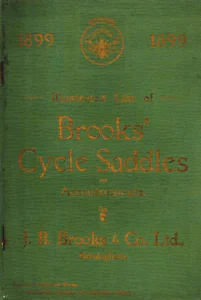 Brooks Catalogue of Cycle Saddles and Accoutrements for 1899
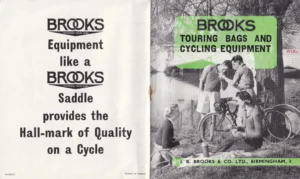 Brooks Touring Bags and Cycling Equipment, List No. 284, about 1939
 Brooks October 1951 Advertisement — Brooks Saddles from AFCO, the Importer
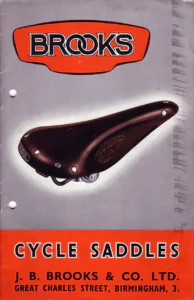 Brooks Cycle Saddles, about 1952
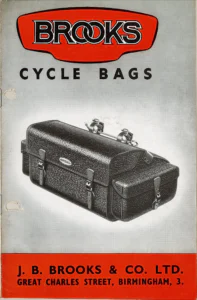 Brooks Catalog — Cycle Bags: Millbrook to Kingsbrook, the P.V.C. Shield and the Quick Release Rod
Ebykr presents this material for research and education. If you hold rights to it or notice an ownership issue, please contact us and we will respond promptly.